

 Zobacz w skali 1:1
 Wyślij
 Udostępnij
 Szczegóły
 Przewodnik

 Pobierz plik obrazu
 Podobne obiekty
 RTG
RTG Pokaz slajdów
 Statystyki
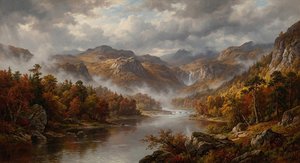
Imaginary River Landscape


 Czytaj więcej
Ręcznie malowana reprodukcja olejowa
Ręcznie malowany obraz olejny na płótnie, wykonany na zamówienie przez naszych artystów w wybranym przez Ciebie wymiarze i oprawie. ( Przełącz na wersję drukowaną Przełącz na wersję cyfrową)




P118B zł10

P118H zł10

P118W zł10

P438Z zł10

P508JH zł12

P508YH zł12

P805H zł10

P805Z zł10

P919BZ zł10

P919G zł10

P919XJ zł10

P959ZH zł10

P968JZ zł12

W106C zł8

W218G zł10

W218JH zł8

W218Y zł10

W307PJ zł10

W316G zł10

W316PJ zł8

W316Y zł10

W398PJ zł8

W4111J zł10

W500HY zł15

W500JH zł15

W692G zł12

W849H zł8

W940BG zł15

W953PJ zł8




Wybierz spośród naszych standardowych rozmiarów, które zachowują oryginalne proporcje dzieła sztuki.

Możesz wprowadzić własne wymiary, aby dopasować obraz do konkretnej ramy lub przestrzeni. Jeśli wybrany rozmiar nie będzie odpowiadał proporcjom oryginału, przytniecie dzieło sztuki lub rozszerzymy je o dodatkowe elementy, ręcznie domalowane przez artystę. Przed rozpoczęciem produkcji wyślemy projekt cyfrowy do Twojej akceptacji.
Należy pamiętać, że podgląd na ekranie nie odzwierciedla rzeczywistego przycinania ani rozszerzania obrazu. Tylko projekt dokładnie pokaże ostateczną kompozycję.
Choć oferujemy możliwość zamówienia niestandardowych rozmiarów, zalecamy wybór wymiaru z gotowej listy, aby zachować oryginalne proporcje dzieła.
Po złożeniu zamówienia zespół OriginalUniqueArt.com skontaktuje się z klientem drogą mailową w celu uzyskania instrukcji i prześle wizualizację projektu
Dostawa na całym świecie () w ciągu 3–4 tygodni zamiast standardowych 5 tygodni. (13 Październik). Bez kompromisów w kwestii jakości.

Bezpłatna ekspresowa wysyłka na cały świat

Wysokiej jakości płótno lniane

Pełne ubezpieczenie transportowe

Gwarancja zwrotu należności celnych i podatków importowych

Gwarancja idealnego odwzorowania barw

100-dniowy okres na zwrot dzieła w przypadku wykrycia wad produkcyjnych

Gwarancja 100% zwrotu pieniędzy

Oferta przy zakupie wielu sztuk
 Opcja ze szkłem jest dostępna wyłącznie w rozmiarach poniżej 110 cm

Imaginary River Landscape
Technika wykonania
Rozmiar reprodukcji
-


Suma do zapłaty
zł 1119
A Symphony of Nature: The Visionary World of Frederic Edwin Church
In the heart of the nineteenth century, a period defined by both rapid industrial expansion and a profound romantic longing for the untouched wild, Frederic Edwin Church emerged as a master storyteller of the American landscape. His work, particularly pieces like Imaginary River Landscape, serves as a window into a world where nature remains untamed, majestic, and deeply spiritual. Painted around 1870, this evocative composition invites the viewer to step away from the clamor of civilization and into a serene, pastoral sanctuary. The painting centers on a magnificent tree, its branches reaching out like welcoming arms, serving as a focal point for a delicate ecosystem of life. Through his brush, Church does not merely depict a scene; he orchestrates a moment of profound stillness, where the rustle of leaves and the soft flutter of wings seem almost audible to the observant soul.
The technique employed in this masterpiece reflects the pinnacle of the Hudson River School tradition. Church was renowned for his ability to marry meticulous, scientific realism with a sense of sublime grandeur. In this landscape, one can observe the careful layering of light and shadow that gives the central tree its sculptural presence. The artist utilizes a delicate palette of verdant greens, earthy ochres, and soft sky tones to create a sense of atmospheric depth. Notice how the birds—some perched in quiet contemplation and others caught in mid-flight—are rendered with such precision that they breathe life into the canvas. This interplay between the stationary strength of the ancient trees and the kinetic energy of the avian inhabitants creates a dynamic tension, a hallmark of Church’s ability to capture the "living" quality of the natural world.
Symbolism and the Emotional Resonance of the Wild
Beyond its aesthetic beauty, Imaginary River Landscape carries a weight of symbolic significance that would have resonated deeply with his contemporary audience. During an era of great change, the depiction of a flourishing, undisturbed habitat served as a poignant reminder of the divine presence within nature. The birds, often symbols of the soul or messengers of the heavens, interact with the landscape in a way that suggests a perfect, harmonious balance. To the collector or the interior designer, this painting offers more than just decoration; it provides an emotional anchor. It is a piece that evokes feelings of tranquility, nostalgia, and a deep-seated reverence for the earth.
For those looking to integrate fine art into a sophisticated living space, a high-quality reproduction of this work offers an unparalleled opportunity to introduce a sense of timelessness and peace. The composition’s balance—with its central anchor and receding background trees—makes it a versatile choice for various interior styles, from classic traditionalism to more contemporary, organic aesthetics. Placing such a piece in a room can transform the atmosphere, turning a modern dwelling into a contemplative retreat. It is an invitation to pause, to breathe, and to reconnect with the enduring beauty of the natural landscape that Church so lovingly immortalized on canvas.
Pytania i odpowiedzi
Czy mogę zobaczyć „Imaginary River Landscape” autorstwa Frederic Edwin Church w różnym oświetleniu?
Dzieło "Imaginary River Landscape" można badać warstwa po warstwie na stronie Prześwietlenie, która stanowi interaktywny podgląd inspirowany stołem świetlnym konserwatora, oferujący jedenaście optycznych odczytów obrazu.
Jakie kolory dominują w „Imaginary River Landscape” autorstwa Frederic Edwin Church?
Kolorystyka dzieła „Imaginary River Landscape” autorstwa Frederic Edwin Church: paleta Neutrals, w której dominuje Espresso (#645136).
Jaki nastrój towarzyszy stylowi Hudson River School w dziele „Imaginary River Landscape”?
Tranquil emocja dzieła „Imaginary River Landscape” współgra z jego stylem Hudson River School.
W jaki sposób kontrast i harmonia łączą się w "Imaginary River Landscape"?
Kompozycja kolorystyczna „Imaginary River Landscape” autorstwa Frederic Edwin Church łączy w sobie Gentle kontrast z Unified Palette harmonią.
Gdzie zaleca się eksponować format Landscape dzieła „Imaginary River Landscape”?
Dzięki formatowi Landscape, reprodukcja dzieła „Imaginary River Landscape” idealnie sprawdzi się w Wellness Center.
Jakie pochodzenie narodowe stoi za Hudson River School dzieła "Imaginary River Landscape"?
"Imaginary River Landscape" łączy nurt Hudson River School z Stany Zjednoczone poprzez miejsce urodzenia jego twórcy.
Czy dzieło "Imaginary River Landscape" jest wolne od praw autorskich?
„Imaginary River Landscape” autorstwa Frederic Edwin Church znajduje się w stanowi domenę publiczną – autorskie prawa majątkowe wygasły. Status ten określa zasady reprodukcji obrazu tego dzieła.
W jaki sposób mogę kupić wydruk „Imaginary River Landscape” autorstwa Frederic Edwin Church?
Odbitkę dzieła „Imaginary River Landscape” autorstwa Frederic Edwin Church można zamówić bezpośrednio na stronie ta strona: szlachetna odbitka na płótnie bawełnianym lub archiwalnym papierze płótnopodobnym.
Biografia artysty
A Pioneer of American Landscape: The Life and Art of Frederic Edwin Church
Frederic Edwin Church, born in Hartford, Connecticut, on May 4th, 1826, emerged as a pivotal figure in the blossoming landscape tradition of 19th-century America. His lineage was steeped in New England history—a direct descendant of Puritan pioneers—and his family’s prosperity afforded him opportunities rare for aspiring artists of the time. This financial stability allowed Church to dedicate himself wholeheartedly to his artistic pursuits, a path that would ultimately lead him to become one of the most celebrated and influential painters of the Hudson River School. His early training began at the age of eighteen under the tutelage of Thomas Cole, the very founder of this distinctly American art movement. These formative years spent in Catskill, New York, were crucial, instilling in Church a deep reverence for nature and a commitment to capturing its grandeur on canvas. The apprenticeship wasn’t merely technical; it was an immersion into a philosophy that saw landscape not just as scenery, but as a reflection of the divine and a symbol of national identity.The Rise of a Master: Style and Influences
Church quickly distinguished himself from his contemporaries through a remarkable ability to blend meticulous realism with a romantic sensibility. His paintings are characterized by an astonishing level of detail, capturing the textures of foliage, the play of light on water, and the imposing scale of mountains with breathtaking accuracy. He meticulously studied geological formations, plant life, and atmospheric conditions, incorporating these observations into his compositions. However, this wasn’t simply photographic representation; Church infused his work with a dramatic flair, employing sweeping panoramic views, vibrant color palettes—often achieved through innovative techniques to capture the fleeting effects of light—and a masterful command of atmospheric perspective. He was deeply influenced by the scientific explorations of Alexander von Humboldt, whose writings on the interconnectedness of nature resonated profoundly with the artist. Church saw in Humboldt’s work a call to experience and depict the world directly, moving beyond purely theoretical knowledge. This influence is evident in his later expeditions to South America and his attempts to convey not just the visual beauty of these landscapes but also their underlying geological and botanical complexities. The Oxbow, completed in 1836, stands as an early testament to this synthesis of observation and imagination—a romantic vision of the American wilderness that would become a hallmark of his style. His technique involved “hidden” brushstrokes, creating smooth surfaces that enhanced the realism and luminosity of his paintings.Ventures into the Wild: Travels and Major Works
Church’s ambition extended beyond the familiar landscapes of New England and New York. Driven by a thirst for firsthand experience and inspired by Humboldt's writings, he embarked on daring expeditions to remote corners of the world. These journeys—to South America in 1853 and 1857, and later to the Arctic regions—provided him with an unparalleled wealth of visual material. The Heart of the Andes, completed in 1859, is perhaps his most ambitious undertaking, a monumental canvas that sought to encapsulate the entire ecosystem of the Andean mountains. The painting was exhibited in a specially constructed gallery, illuminated by skylights, creating an immersive experience for viewers and solidifying Church’s reputation as a master showman as well as an artist. He meticulously documented the flora, fauna, and geological features of these regions, incorporating them into his paintings with remarkable accuracy. His later works, such as *Niagara* (1857), showcased his ability to capture the dramatic power of nature—the cascading water, the swirling mist, and the ethereal light—with breathtaking effect. Church’s expeditions weren't merely about documenting landscapes; they were transformative experiences that shaped his artistic vision and deepened his appreciation for the interconnectedness of all things.A New Approach to Exhibition: The Power of Spectacle
Church revolutionized the way art was presented in America by pioneering immersive exhibition techniques. Recognizing that a painting could be more than just a static object, he sought to create an experience for viewers—a journey into the heart of the depicted landscape. For his monumental canvases like *The Heart of the Andes* and *Icebergs: The North*, Church constructed elaborate galleries with carefully controlled lighting, temperature, and sound effects. He often employed multiple paintings in a single exhibition, creating a panoramic effect that transported viewers to distant lands. These exhibitions were not simply displays of art; they were theatrical events designed to evoke emotion and inspire awe. His approach challenged the traditional notion of the gallery as a quiet space for contemplation and ushered in a new era of public engagement with art.Legacy and Impact on American Art
Frederic Edwin Church’s influence on American landscape painting is undeniable. He elevated the genre to new heights of artistic achievement and popular acclaim, inspiring generations of artists to explore the beauty and majesty of the natural world. His innovative exhibition practices—presenting single paintings in dramatic settings—set a precedent for future art displays and helped to cultivate a broader public appreciation for art. Beyond his painting, Church was also a dedicated conservationist, advocating for the preservation of Niagara Falls and playing a role in the establishment of national parks. He understood that art could be a powerful tool for raising awareness about environmental issues and inspiring action. His home, Olana, designed and built with his own hands overlooking the Hudson River, stands as a testament to his artistic vision and his deep connection to the landscape.- Church’s work bridged the gap between Romanticism and Realism.
- He pioneered immersive exhibition techniques that captivated audiences.
- His advocacy for conservation foreshadowed the modern environmental movement.

Frederic Edwin Church
1826 - 1900 , Stany Zjednoczone
Najważniejsze informacje
- Artistic Movement Or Style: Hudson River School
- Artists Or Movements Influenced By This Artist: ['Amerykańska sztuka krajobrazowa']
- Artists Who Influenced This Artist:
- Thomas Cole
- Alexander von Humboldt
- Date Of Birth: 4 maja 1826
- Date Of Death: 7 kwietnia 1900
- Full Name: Frederic Edwin Church
- Nationality: Amerykański
- Notable Artworks:
- Niagara
- Serce Andów
- Place Of Birth: Hartford, USA
Zobacz także powiązane artykuły
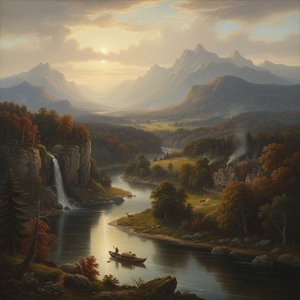
Capturing the American Spirit: A Journey Through Iconic Landscapes and the Legacy of the Hudson River School
Explore the profound beauty of American art history. From the Hudson River School to iconic landscapes, discover a curated journey through the masterpieces that defined a nation's spirit and the enduring legacy of American Romanticism.
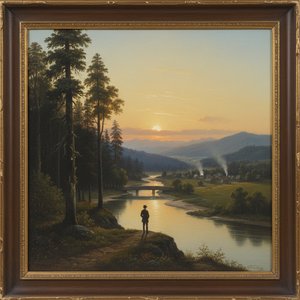
Robert Spencer: Luminism, Narrative & the American Landscape Tradition
Explore the captivating world of Luminism & the Hudson River School with our expert analysis. Discover the history, artists, and enduring beauty of 19th-century American landscape painting. Find museum-quality reproductions at OriginalUniqueArt.
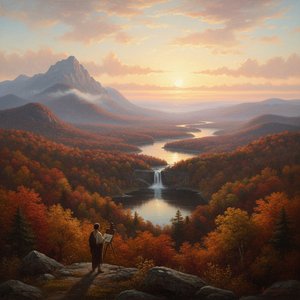
Sublime Krajobrazy: Narodziny Amerykańskiej Tożsamości Artystycznej i Rola Szkoły Hudson River
Odkryj fascynującą historię Szkoły Hudson River i narodziny amerykańskiej tożsamości artystycznej. Poznaj kluczowych artystów, techniki malarskie i inspiracje. Reprodukcje najwyższej jakości na OriginalUniqueArt.com!
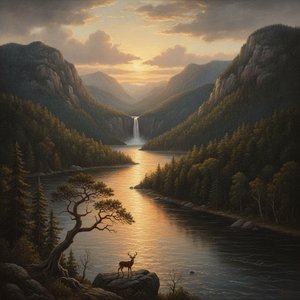
Epic Landscapes & Wild Nature: The Power of the Hudson River School's Sublime Artistry
Explore the breathtaking power of the Hudson River School. Journey through epic American landscapes, from Thomas Cole's sublime vistas to Luminist light, and discover how these timeless masterpieces continue to inspire modern collectors and art lovers worldwide.
Szkoła Rzeki Hudson: 10 arcydzieł, które ukształtowały pejzaż amerykańskiej sztuki | OriginalUniqueArt
Odkryj 10 arcydzieł Szkoły Rzeki Hudson – malarstwo krajobrazowe Cole'a, Churcha i Bierstadta. Poznaj historię artystów i inspiracje romantyzmu amerykańskiego. Reprodukcje obrazów najwyższej jakości na OriginalUniqueArt.com! Eksploruj kolekcję online.


