

 Podgląd w skali 1:1
 Wyślij jako kartkę
 Udostępnij
 Szczegóły dzieła
 Przewodnik

 Pobierz obraz
 Podobne obiekty
 RTG
RTG Pokaz slajdów
 Statystyki
The Empress Eugénie
 Oil On Canvas
- WallArt
- Romanticism
 1854
1854- 19th Century
 92.0 x 73.0 cm
 Rozwiń treść
Giclée / Wydruk artystyczny
Wydruki giclée lub płótna o jakości muzealnej, szybka realizacja i szeroki wybór opcji wykończenia. ( Zamów ręcznie malowaną reprodukcję Przejdź do wersji cyfrowej)




P118B zł10

P118H zł10

P118W zł10

P438Z zł10

P508JH zł12

P508YH zł12

P805H zł10

P805Z zł10

P919BZ zł10

P919G zł10

P919XJ zł10

P959ZH zł10

P968JZ zł12

W106C zł8

W218G zł10

W218JH zł8

W218Y zł10

W307PJ zł10

W316G zł10

W316PJ zł8

W316Y zł10

W398PJ zł8

W4111J zł10

W500HY zł15

W500JH zł15

W692G zł12

W849H zł8

W940BG zł15

W953PJ zł8




Wybierz spośród naszych standardowych rozmiarów, które zachowują oryginalne proporcje dzieła sztuki.

Wpisz wymaganą szerokość i wysokość, aby dopasować grafikę do ramy lub ściany. Wydruk można jedynie przyciąć, nigdy nie powiększając go poza oryginalny obraz, dlatego format o innych proporcjach spowoduje utratę części kompozycji. Przed rozpoczęciem druku prześlemy Ci cyfrowy podgląd do zatwierdzenia. Obraz wyświetlany na tej stronie nie pokazuje rzeczywistego przycięcia — jedynie podgląd oddaje ten efekt.
Dostawa na cały świat () w ciągu 2 tygodni zamiast standardowych 4/5 tygodni. (27 Październik)

Bezpłatna ekspresowa wysyłka na cały świat

Wysokiej jakości płótno lniane

Pełne ubezpieczenie przesyłki

Gwarancja zwrotu należności celnych i podatków importowych

Gwarancja wiernego odwzorowania kolorów

100-dniowa polityka zwrotów (tylko w przypadku wad)

Gwarancja 100% zwrotu pieniędzy

Zniżka przy zakupie wielu sztuk
 Opcja ze szkłem jest dostępna wyłącznie w rozmiarach poniżej 110 cm

The Empress Eugénie
Giclée / Wydruk artystyczny
Wymiary reprodukcji
-


Cena całkowita
zł 307
The Radiance of Imperial Elegance
To gaze upon this portrait of The Empress Eugénie is to step directly into the gilded salons of mid-nineteenth-century Europe. Franz Xavier Winterhalter, master chronicler of aristocracy and empire, has captured not merely a likeness, but an entire epoch—a moment suspended between Romantic flourish and structured imperial power. The subject, resplendent in her luminous yellow gown accented with delicate blue trim, commands the viewer's attention from every angle. Her posture suggests effortless grace, while the tiara crowning her brow speaks volumes of her elevated status. It is a vision of controlled magnificence, where every fold of fabric and every gesture contributes to an overwhelming aura of regal poise.
A Masterclass in Salon Portraiture
Winterhalter’s technique here is nothing short of breathtaking. His ability to render luxurious textiles—the way the yellow silk catches the light, the delicate ruffles cascading down her skirt—is unparalleled. One can almost feel the weight and texture of the fabric through the painted surface. Beyond the central figure, the background unfolds with a sense of vibrant activity; other figures populate the pathway, lending depth and narrative movement to what might otherwise be a static portrait. This masterful composition draws the eye inexorably toward Eugénie, establishing her as the undeniable focal point against a backdrop of social life.
Historical Echoes and Symbolism
Painted in 1854, this work situates itself at a fascinating crossroads in European history. It embodies the height of imperial grandeur while hinting at the societal shifts that would follow. The yellow dress, often associated with joy and prominence, combined with the formality of her attire, speaks to the immense cultural weight carried by figures like Empress Eugénie herself. She represents an ideal—the perfect synthesis of feminine beauty, political influence, and impeccable taste. Owning a reproduction of this piece is not just acquiring art; it is curating a tangible piece of historical narrative for your own space.
Bringing Courtly Drama Home
For the discerning collector or designer whose interiors echo classical opulence, this painting offers unparalleled decorative impact. The rich palette, dominated by sunny yellows and cool blues against softer background tones, provides an immediate focal point capable of elevating any drawing-room, gallery wall, or grand foyer. Winterhalter’s enduring appeal lies in his ability to make the monumental feel intimate, allowing the viewer a moment of connection with historical splendor. It is a piece that whispers tales of balls, diplomacy, and unparalleled courtly life.
CLASSIFICATION: Art ReproductionPytania i odpowiedzi
Jaka jest technika i wymiary oryginału „The Empress Eugénie” – Franz Xaver Winterhalter?
Technika wykonania dzieła „The Empress Eugénie” – Franz Xaver Winterhalter to Oil On Canvas, a jego wymiary to 92 x 73 cm.
Czy istnieje karta informacyjna o „The Empress Eugénie” – Franz Xaver Winterhalter przeznaczona dla studentów?
Dla dzieła „The Empress Eugénie” – Franz Xaver Winterhalter dostępna jest strona Karta informacyjna dla uczniów: nadająca się do druku karta informacyjna o utworze, przygotowana z myślą o uczniach i wykorzystaniu w klasie.
Jaki jest dominujący kolor dzieła „The Empress Eugénie” – Franz Xaver Winterhalter?
Dominującym odcieniem dzieła „The Empress Eugénie” – Franz Xaver Winterhalter jest Ochre to Sepia. Odcień ten stanowi bazową tonację palety barw.
Biografia artysty
A Painter of Kings and Queens: The Life and Art of Franz Xaver Winterhalter
Born in the secluded Black Forest village of Menzenschwand in 1805, Franz Xaver Winterhalter ascended from humble beginnings to become one of Europe’s most sought-after portraitists. His story is not merely that of an artist achieving technical mastery, but of a man who captured an era – the age of burgeoning Romanticism giving way to Victorian propriety and imperial grandeur. The son of a farmer and resin producer, Winterhalter's early life was steeped in the rhythms of rural Germany, yet his artistic inclinations quickly set him apart. A strong family bond, particularly with his painter brother Hermann, nurtured his creative spirit, while formal training at a Benedictine monastery and later under Karl Ludwig Schüler in Freiburg provided foundational skills in drawing and engraving. This initial grounding proved crucial as he transitioned to Munich, securing support from Baron von Eichtal and eventually studying at the Academy of Arts, though finding its academic rigidity somewhat stifling. It was Joseph Karl Stieler, a master of fashionable portraiture, who truly guided his development during these formative years.From Karlsruhe to Parisian Heights: Establishing a Royal Reputation
Winterhalter’s breakthrough arrived in 1828 when he became drawing master to Sophie Margravine of Baden at Karlsruhe. This appointment wasn't simply a job; it was an entry point into the intricate world of European royalty. His talent for capturing likeness and imbuing his subjects with an air of elegance quickly gained recognition, leading to commissions from Grand Duke Leopold of Baden and his wife. However, it was Paris that truly cemented Winterhalter’s fame. Arriving in the French capital in the 1830s, he skillfully navigated the artistic landscape, exhibiting genre scenes like *Il dolce Farniente* and *Il Decameron*, which showcased his academic training while hinting at a burgeoning Romantic sensibility. These works garnered critical attention, but it was his portraits that truly captivated the aristocracy. He became a favorite of King Louis-Philippe, executing over thirty commissions for the royal family and establishing himself as the go-to portraitist for those seeking to project an image of power, refinement, and dynastic legitimacy. His ability to blend realism with flattery – to present his sitters at their most idealized while remaining recognizably themselves – proved irresistible.The Victorian Embrace: A Painter of Imperial Majesty
Winterhalter’s reputation extended beyond France, reaching the British Isles and capturing the attention of Queen Victoria. In 1841, he was summoned to England, initiating a prolific relationship that would see him create over one hundred portraits for the Royal Collection. These weren't merely official commissions; they were intimate glimpses into the lives of the royal family, often commissioned as personal gifts. His portrait of Queen Victoria in 1843, a small and exquisitely detailed work, exemplifies his ability to capture not just physical likeness but also a sense of personality and emotion. The painting, gifted by Victoria to Prince Albert, depicts the young queen with a vulnerable intimacy that belies her regal status. This success solidified Winterhalter’s position as *the* portraitist of European royalty, sought after by Empress Eugénie in France, Empress Elisabeth of Austria, and countless other noble figures. He became a master of dynastic image-making, shaping how these powerful families presented themselves to the world.Style and Legacy: Beyond Likeness
While often criticized by artistic circles for prioritizing flattery over innovation, Winterhalter’s work holds a significant place in art history. His style is characterized by its meticulous detail, luminous color palette, and ability to capture the textures of fabrics and jewels with breathtaking realism. He skillfully blended Romantic sensibilities with Neoclassical precision, creating portraits that were both visually stunning and psychologically insightful. His paintings weren’t simply representations; they were carefully constructed narratives about power, status, and identity. Though he wasn't a revolutionary in the same vein as Delacroix or Courbet, his influence was pervasive. He established a standard for royal portraiture that endured for decades, and his works provide invaluable historical documentation of 19th-century European society. His legacy lies not just in the beauty of his paintings but also in their ability to transport us back to an era of opulent courts, intricate diplomacy, and unwavering social hierarchies. Today, his artworks continue to fascinate, offering a window into a world of elegance, ambition, and enduring artistic skill.A Lasting Impression
Franz Xaver Winterhalter died in Frankfurt in 1873, leaving behind a vast body of work that continues to be celebrated for its technical brilliance and historical significance. His paintings can be found in prominent museums and royal collections around the world, including the National Portrait Gallery in London, the Musée d’Orsay in Paris, and Buckingham Palace.- His ability to capture the essence of his sitters, combined with his mastery of technique, ensured his place as a leading portraitist of his time.
- He remains an important figure for understanding the visual culture of 19th-century Europe and the role of art in shaping perceptions of power and status.
- His works offer a captivating glimpse into the lives of royalty and aristocracy, providing invaluable insights into their world.
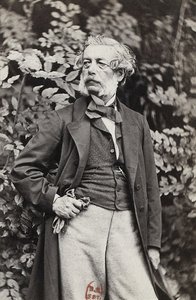
Franz Xaver Winterhalter
1805 - 1873 , Niemcy
Krótka nota
- Artistic Movement Or Style: Romanticizm, portret
- Artists Or Movements Influenced By This Artist: ['Stieler']
- Artists Who Influenced This Artist:
- Peter von Cornelius
- Joseph Karl Stieler
- Date Of Birth: 20 Apr. 1805
- Date Of Death: 8 July 1873
- Full Name: Franz Xaver Winterhalter
- Nationality: Niemiec
- Notable Artworks:
- Empress Eugenie...
- Florinda
- Il dolce farniente
- Place Of Birth: Menzenschwand, Niemcy
Powiązane artykuły
Top 10 Sławnych Obrazów w Odcieniach Ochry Żółtej – Sztuka i Dekoracja Domu
Odkryj 10 najsłynniejszych obrazów w odcieniach ochry żółtej! Van Gogh, Monet i inni mistrzowie. Poznaj historię sztuki, inspiracje kolorystyczne i techniki malarskie. Reprodukcje najwyższej jakości na OriginalUniqueArt.com – udekoruj swój dom arcydziełami!

Sir Francis Grant: Portraiture, Patronage & Victorian Society
Explore the life & work of Sir Francis Grant, a leading Victorian portraitist. Discover his aristocratic clientele, role at the Royal Academy, and enduring artistic legacy. Learn about art patronage in 19th-century Britain.
Top 10 Arcydzieł w Odcieniach Chromowej Żółci – Inspiracje do Wnętrz od OriginalUniqueArt
Odkryj 10 arcydzieł sztuki, w których króluje chromowa żółć! Van Gogh, Monet, Renoir i inni mistrzowie. Inspiracje wnętrzarskie i reprodukcje obrazów najwyższej jakości na OriginalUniqueArt.com. Eksploruj pełną kolekcję online!
The Golden Hue: Exploring Symbolism & Emotion in Yellow Art
Explore the rich symbolism & emotional power of yellow in art history! From Van Gogh to Kandinsky, discover how artists used this vibrant hue. Expert analysis & high-quality reproductions at OriginalUniqueArt.
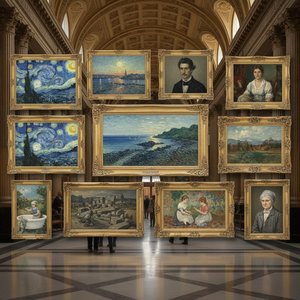
Arcydzieła XIX Wieku: 10 Obrazów Opowiadających Epokę | OriginalUniqueArt
Odkryj 10 arcydzieł XIX wieku! Poznaj historię Monet, Van Gogha i Courbeta. Imesjonizm, realizm, romantyzm – obrazy pełne emocji i piękna czekają na OriginalUniqueArt.com. Znajdź idealny obraz do swojego wnętrza!

