
 Wyślij jako kartkę
 Udostępnij
 Szczegóły dzieła

 Pobierz
 Podobne obiekty
 Pokaz slajdów
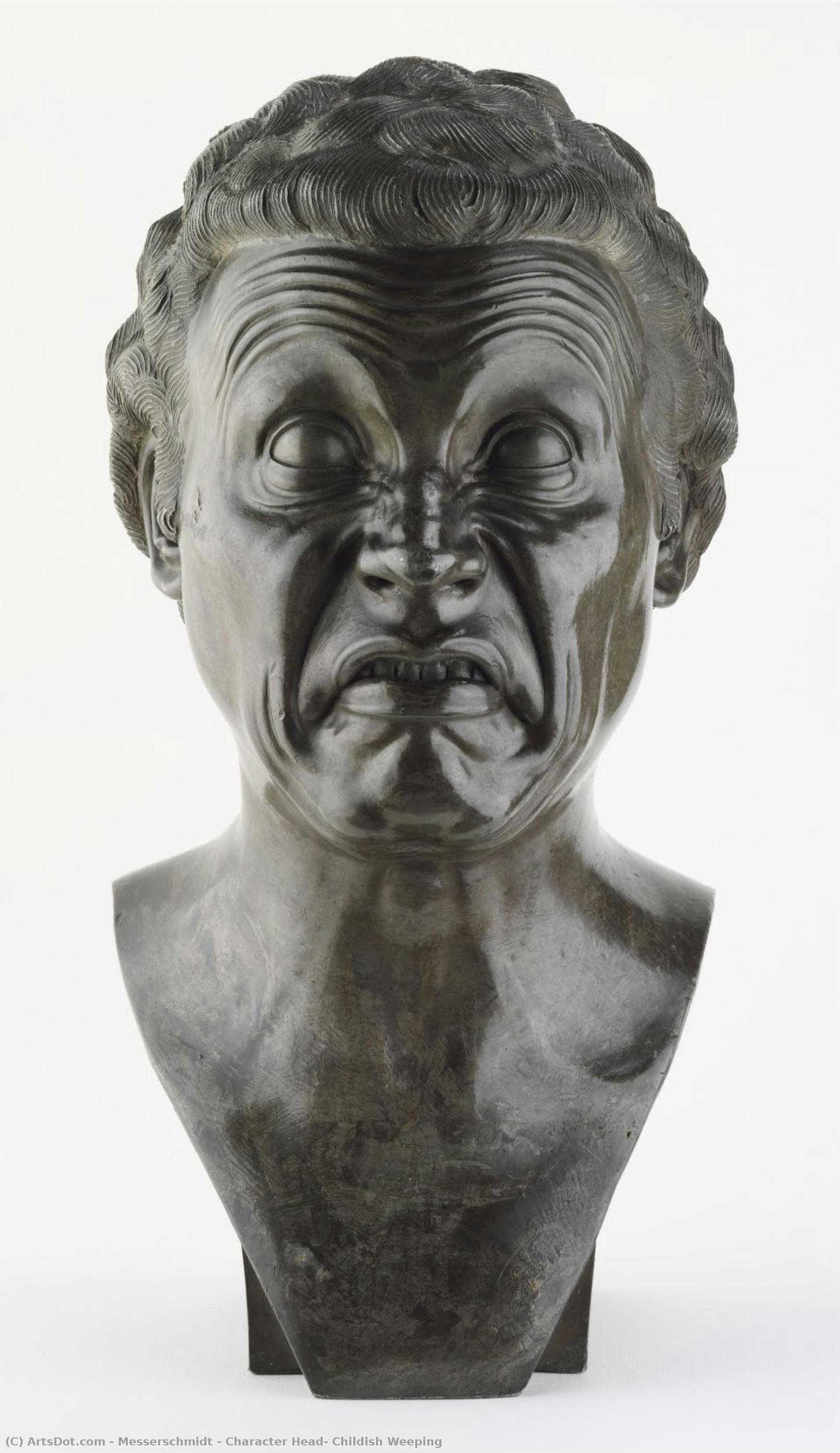
Character Head: Childish Weeping
 Sculpture Bronze
- Sculpture
- Expressionism
 1783
1783 45.0 x 22.0 cm
 Muzeum Sztuki w Budapeszcie
 Rozwiń treść
Giclée / Wydruk artystyczny
Druk giclée lub płótno o jakości muzealnej, szybka realizacja i szeroki wybór opcji wykończenia. ( Zamów ręcznie malowaną reprodukcję Kup obraz wysokiej rozdzielczości)




































Wybierz spośród naszych standardowych rozmiarów, które zachowują oryginalne proporcje dzieła sztuki.

Możesz wprowadzić własne wymiary, aby dopasować dzieło do konkretnej ramy lub przestrzeni. Jeśli wybrany rozmiar nie będzie odpowiadał proporcjom oryginalnego obrazu, przytniecie dzieło lub rozszerzymy obraz za pomocą odbicia lustrzanego lub jednolitego wypełnienia krawędzi. Przed rozpoczęciem produkcji prześlemy cyfrową wizualizację do Twojej akceptacji.
Prosimy pamiętać, że podgląd na ekranie nie odzwierciedla faktycznego przycinania ani rozszerzania. Tylko wizualizacja dokładnie pokaże końcową kompozycję.
Mimo dostępności niestandardowych rozmiarów, zalecamy wybór wymiaru z listy zdefiniowanej, aby zachować oryginalne proporcje.
Dostawa na cały świat () w ciągu 2 tygodni zamiast standardowych 4/5 tygodni. (20 Sierpień)

Bezpłatna ekspresowa wysyłka na cały świat

Wysokiej jakości płótno lniane

Pełne ubezpieczenie przesyłki

Gwarancja zwrotu należności celnych i podatków importowych

Gwarancja wiernego odwzorowania kolorów

Polityka 60-dniowego zwrotu (tylko w przypadku wad)

Gwarancja 100% zwrotu kosztów

Zniżka przy zamówieniu wielu produktów
 Opcja ze szkłem jest dostępna wyłącznie w rozmiarach poniżej 110 cm

Character Head: Childish Weeping
Giclée / Wydruk artystyczny
Wymiary reprodukcji
-


Cena całkowita
$ 80
Opis kolekcjonerski
Franz Xaver Messerschmidt’s “Childish Weeping”: A Portrait of Psychological Intensity
The bronze bust of “Character Head: Childish Weeping,” created by Franz Xaver Messerschmidt in 1783, stands as a singular testament to the burgeoning fascination with psychological exploration within European sculpture. More than simply capturing a likeness—though its face possesses undeniable realism—the piece embodies a profound preoccupation with emotion, foreshadowing the expressive fervor of Expressionism decades before its formal articulation. This artwork isn’t merely aesthetically pleasing; it's a conduit for confronting uncomfortable truths about human vulnerability and despair.A Sculptor Haunted by Obsession
Messerschmidt’s life was tragically curtailed by illness—a mysterious ailment that abruptly halted his promising academic career in Munich. Despite this premature demise, he cemented his reputation as an artist unlike any other, primarily through the production of his iconic “Character Heads.” These busts are not celebratory depictions; they represent a deliberate attempt to distill human emotion into its most distilled form – raw grief, terror, and profound sorrow—a daring stylistic choice that challenged prevailing artistic conventions. The unsettling gaze emanating from the sculpted face compels viewers to confront their own anxieties about mortality and suffering.The Mannerist Influence: Distortion as Expression
Messerschmidt’s sculptural technique exemplifies the influence of Mannerism, a movement characterized by stylized forms, exaggerated proportions, and deliberate distortions intended to heighten emotional impact. Unlike the idealized figures favored by Neoclassical sculptors—who sought harmony and rationality—Messerschmidt deliberately manipulated anatomy to convey psychological states. The rough texture of the bronze surface reflects this artistic ethos; it’s not polished or smoothed but retains subtle imperfections that underscore the sculpture's inherent materiality and contribute to its dramatic atmosphere. Lines are powerfully defined, particularly in the facial muscles and hair, creating a palpable sense of tension and conveying the overwhelming force of emotion.Symbolism Beyond Representation
The “Character Head: Childish Weeping” transcends mere visual representation; it operates on a symbolic level. The exaggerated expression—the downturned mouth, furrowed brow, glistening eyes—represents not just sadness but also a deeper contemplation of existential anguish. Messerschmidt’s intention was to depict the human psyche at its most vulnerable, confronting viewers with uncomfortable questions about grief and loss. The sculpture's somber palette – dominated by browns and grays – reinforces this mood, mirroring the bleakness of the subject matter. It speaks to a universal experience of sorrow, capturing it in a way that anticipates the psychological depth explored by later artists.A Legacy of Emotional Resonance
“Childish Weeping” remains an enduring masterpiece due to its unparalleled ability to evoke empathy and provoke introspection. Its stylistic boldness—the Mannerist distortion—combined with its profound thematic concerns—the exploration of human emotion—solidifies Messerschmidt’s place as a visionary artist who anticipated the expressive currents of the 19th century. It continues to inspire artists and collectors alike, serving as a poignant reminder that art can illuminate the darkest recesses of the human experience.O artyście
Franz Xaver Messerschmidt (1736-1783): Master sculptor of haunting 'Character Heads' – intensely expressive busts exploring human emotion & psychology. A unique precursor to Expressionism.
Franz Xaver Messerschmidt, born in the Bavarian village of Wiesensteig in 1736, occupies a singular and often unsettling position in the history of sculpture. He wasn’t merely a product of his time—a bridge between the opulent late Baroque and the emerging Neoclassical styles—but an artist who seemed to anticipate the emotional intensity of Expressionism nearly a century before its formal emergence. His life, marked by both artistic promise and increasing psychological turmoil, is inextricably linked to his most enduring legacy: the “Character Heads,” busts that capture human emotion in states of raw, almost unbearable intensity. Messerschmidt’s early training was steeped in family tradition; he first learned the craft under the tutelage of his uncle, Johann Baptist Straub, a sculptor working in Munich. This foundational period instilled in him a mastery of traditional techniques, which he further honed through apprenticeships with another uncle, Philipp Jakob Straub, in Graz, and later at the Academy of Fine Arts Vienna, where Jacob Schletterer guided his development. These early works demonstrate a clear proficiency in the prevailing Baroque style, particularly evident in commissions for Empress Maria Theresa—bronze busts and reliefs that adhered to the conventions of courtly representation favored by artists like Balthasar Ferdinand Moll. He was, initially, a sculptor very much *of* his time, skilled at portraying power and status with appropriate grandeur.Early Years & Artistic Training
Messerschmidt’s formative years were defined by familial influence and rigorous artistic instruction. His uncle Johann Baptist Straub, established sculptor in Munich, imparted invaluable knowledge of sculptural craftsmanship—a discipline that would shape Messerschmidt's entire oeuvre. This apprenticeship fostered a deep understanding of Baroque aesthetics, emphasizing anatomical accuracy and idealized beauty – principles reflected prominently in his initial commissions for the imperial court. The Academy of Fine Arts Vienna proved equally influential, where Jacob Schletterer championed Messerschmidt’s artistic ambitions and honed his skills through meticulous observation and experimentation. These experiences solidified his technical prowess and established him firmly within the stylistic currents of his era. His early sculptures showcased a dedication to classical ideals, mirroring the prevailing trends in Viennese art during the mid-18th century.The Genesis of Disquiet: The Character Heads
Around 1769-1770, however, a profound shift began to occur in Messerschmidt’s artistic vision—a transformation that would propel him into uncharted territory and ultimately define his reputation as an artist ahead of his time. While continuing to accept traditional portrait commissions—primarily for the imperial family—he embarked on the creation of what would become his defining work—the Character Heads. These weren't portraits in the conventional sense; they weren’t intended to flatter or commemorate. Instead, they depicted faces contorted in extreme emotional expressions: laughter bordering on hysteria, grief etched into every line, grimaces of anguish and despair. The genesis of this dramatic departure is complex, interwoven with both artistic experimentation and a deepening personal struggle. Accounts from the time, particularly those provided by Friedrich Nicolai following a visit to Messerschmidt in 1781, reveal an artist obsessed with capturing the full spectrum of human emotion—a preoccupation that would become central to his artistic legacy. Nicolai described Messerschmidt’s peculiar method: he would reportedly pinch his own lower ribs, observing the resulting facial contortions in a mirror and then attempting to replicate them in marble or bronze. This self-experimentation suggests a deliberate attempt to access and portray authentic emotional states—a radical departure from the idealized representations favored by Baroque sculptors. Furthermore, Messerschmidt believed he was striving to represent all 64 “canonical grimaces” of the human face—a monumental undertaking that demanded an unprecedented level of anatomical precision and psychological insight. This ambition speaks to a deeper philosophical underpinning—a desire to understand and codify the fundamental expressions of humanity—reflecting influences from Hermetic teachings and mirroring the quest for universal balance championed by Renaissance thinkers.A Sculptor Like No Other: Technique & Style
Messerschmidt’s artistic technique was characterized by meticulous attention to detail and a masterful command of sculptural materials—primarily alabaster and tin-lead alloy. He employed methods honed through years of apprenticeship that prioritized anatomical accuracy and textural nuance, mirroring the standards upheld by leading sculptors of his era. His approach differed markedly from prevailing stylistic conventions; he rejected the polished surfaces and idealized forms characteristic of Neoclassical sculpture, opting instead for a deliberately rough finish that emphasized the expressive power of the material itself. This stylistic choice—a conscious rejection of academic ideals—was particularly evident in his Character Heads, where he exploited the natural grain of alabaster to simulate wrinkles and contours—creating faces that seemed to pulsate with palpable emotion. The resulting sculptures possessed an unsettling immediacy—capturing fleeting moments of psychological turmoil with breathtaking realism. His oeuvre encompassed a diverse range of commissions—from monumental fountains for Viennese palaces to smaller portraits commissioned by aristocratic patrons—demonstrating his versatility as an artist and cementing his reputation as one of the most innovative sculptors of his generation.Legacy & Influence
Despite his tragically premature death in 1783, Franz Xaver Messerschmidt’s influence endured beyond his lifetime. His Character Heads captivated audiences and scholars alike—challenging conventional notions of artistic representation and foreshadowing the expressive fervor of Expressionism. Ernst Kris famously interpreted these unsettling sculptures as a reflection of Messerschmidt's paranoid delusions—a provocative reading that underscored the artist’s profound psychological insight. Historians recognized Messerschmidt as a pioneer in exploring the darker recesses of human emotion—a visionary sculptor who dared to confront uncomfortable truths and push the boundaries of artistic convention. Today, Franz Xaver Messerschmidt is remembered not merely for his technical brilliance but also for his enduring contribution to art history—as an artist whose work continues to inspire contemplation and provoke debate about the nature of human experience. His legacy resides in the unsettling beauty of his Character Heads—a testament to the transformative power of artistic innovation and a poignant reminder that true artistry lies in confronting the complexities of the human psyche.
Franz Xaver Messerschmidt
1736 - 1783 , Bawaria
Krótka nota
- Artistic Movement Or Style: Barok późny, Neoklasycyzm
- Artists Or Movements Influenced By This Artist: ['Expressionizm']
- Artists Who Influenced This Artist:
- Johann Baptist Straub
- Philipp Jakob Straub
- Jacob Schletterer
- Date Of Birth: 6 lutego 1736
- Date Of Death: 19 sierpnia 1783
- Full Name: Franz Xaver Messerschmidt
- Nationality: Niemiecko-austriacki
- Notable Artworks:
- Kopfstücke
- The Yawner
- Childish Weeping
- Place Of Birth: Wiesensteig, Niemcy
Powiązane artykuły

10 Legendarnych Brązów, Które Zrewolucjonizowały Sztukę | OriginalUniqueArt
Odkryj 10 legendarnych rzeźb brązowych, które zrewolucjonizowały sztukę! Poznaj historie Rodina, Donatello i innych mistrzów. Inspiracje wnętrzarskie & reprodukcje najwyższej jakości na OriginalUniqueArt.com.

10 Legendarnych Brązów Rzeźbiarskich, Które Zmieniły Sztukę | OriginalUniqueArt
Odkryj 10 legendarnych rzeźb brązowych od Rodina, Degasa i innych mistrzów! Poznaj historię powstania arcydzieł sztuki i inspiruj się do dekoracji wnętrz. Reprodukcje najwyższej jakości na OriginalUniqueArt.com – zobacz kolekcję!

Trwałe Dziedzictwo Bronzu: Historia, Techniki i Artystyczna Ekspresja dla Kolekcjonera
Poznaj historię i techniki odlewania brązu. Poradnik dla kolekcjonerów o konserwacji, wartościowaniu i inwestycjach w sztukę brązową. Ekspercka wiedza i inspiracje.
Trwała Spuścizna Bronzu: Historia, Technika i Ekspresja Artystyczna dla Kolekcjonera
Poznaj historię i techniki rzeźby z brązu. Ekspercka analiza wartości inwestycyjnej, konserwacji oraz ewolucji stylistycznej dla wymagających kolekcjonerów. Odkryj świat XIX-wiecznych arcydzieł Rodina i innych mistrzów.

Trwała Spuścizna Rzeźby z Brązu: Przewodnik Kolekcjonera po Formie i Znaczeniu Kulturowym
Kompleksowy przewodnik po rzeźbie z brązu dla kolekcjonerów i pasjonatów sztuki. Poznaj historię, techniki, wycenę i konserwację unikalnych dzieł. Ekspercka wiedza i porady inwestycyjne.

