

 Podgląd w skali 1:1
 Wyślij jako kartkę
 Udostępnij
 Szczegóły dzieła
 Przewodnik

 Pobierz obraz
 Podobne obiekty
 RTG
RTG Pokaz slajdów
 Statystyki
The Seesaw


 Rozwiń treść
Giclée / Wydruk artystyczny
Wydruki giclée lub płótna o jakości muzealnej, szybka realizacja i szeroki wybór opcji wykończenia. ( Zamów ręcznie malowaną reprodukcję Przejdź do wersji cyfrowej)




P118B zł10

P118H zł10

P118W zł10

P438Z zł10

P508JH zł12

P508YH zł12

P805H zł10

P805Z zł10

P919BZ zł10

P919G zł10

P919XJ zł10

P959ZH zł10

P968JZ zł12

W106C zł8

W218G zł10

W218JH zł8

W218Y zł10

W307PJ zł10

W316G zł10

W316PJ zł8

W316Y zł10

W398PJ zł8

W4111J zł10

W500HY zł15

W500JH zł15

W692G zł12

W849H zł8

W940BG zł15

W953PJ zł8




Wybierz spośród naszych standardowych rozmiarów, które zachowują oryginalne proporcje dzieła sztuki.

Wpisz wymaganą szerokość i wysokość, aby dopasować grafikę do ramy lub ściany. Wydruk można jedynie przyciąć, nigdy nie powiększając go poza oryginalny obraz, dlatego format o innych proporcjach spowoduje utratę części kompozycji. Przed rozpoczęciem druku prześlemy Ci cyfrowy podgląd do zatwierdzenia. Obraz wyświetlany na tej stronie nie pokazuje rzeczywistego przycięcia — jedynie podgląd oddaje ten efekt.
Dostawa na cały świat () w ciągu 2 tygodni zamiast standardowych 4/5 tygodni. (25 Październik)

Bezpłatna ekspresowa wysyłka na cały świat

Wysokiej jakości płótno lniane

Pełne ubezpieczenie przesyłki

Gwarancja zwrotu należności celnych i podatków importowych

Gwarancja wiernego odwzorowania kolorów

100-dniowa polityka zwrotów (tylko w przypadku wad)

Gwarancja 100% zwrotu pieniędzy

Zniżka przy zakupie wielu sztuk
 Opcja ze szkłem jest dostępna wyłącznie w rozmiarach poniżej 110 cm

The Seesaw
Giclée / Wydruk artystyczny
Wymiary reprodukcji
-


Cena całkowita
zł 307
A Symphony of Symbolism and Delicate Technique
In the quiet, evocative realm of German Symbolism, few works capture the delicate tension between stability and uncertainty as poignantly as Franz Ritter von Stuck’s “The Seesaw.” Completed in 1898, this masterpiece transcends a simple depiction of two figures to become a profound exploration of psychological equilibrium. As one gazes upon the canvas, the viewer is immediately drawn into a world where the physical act of play is imbued with a heavy, almost melancholic significance. The painting serves as a cornerstone of an era that sought to move beyond mere representation, instead using the canvas to illuminate the hidden, often turbulent truths of the human experience.
The composition is masterfully asymmetrical, a deliberate choice by Stuck to mirror the precarious nature of the subject itself. One woman remains firmly planted upon the earth, her gaze directed upward in a moment of quiet contemplation, while her companion leans precariously against the central pole, seeking balance amidst movement. This structural imbalance creates a palpable sense of tension, suggesting a struggle for stability within an ever-shifting reality. The presence of nature—a solitary tree and the subtle inclusion of birds in the background—adds a layer of atmospheric depth, grounding this symbolic drama within a dreamlike, mythic landscape.
The Mastery of Color and Light
Stuck’s technical prowess is most evident in his sophisticated use of color and light to direct the viewer's emotional response. The palette is dominated by muted, monochromatic shades of grey and brown, creating an atmosphere that feels both timeless and slightly somber. However, this subdued environment is brilliantly interrupted by a singular, striking element: the splash of crimson on the seated woman’s dress. This bold contrast does more than just catch the eye; it serves as a focal point for the painting's emotional intensity, highlighting her vulnerability and adding a pulse of life to an otherwise hushed scene.
The artist employed a technique characterized by painstaking, delicate brushwork, a hallmark of the Symbolist movement. Every stroke contributes to a sense of atmospheric depth, where the boundaries between the figures and their environment feel soft yet intentional. For the discerning collector or interior designer, this interplay of light and shadow offers an incredible versatility. The painting possesses a quiet authority that can anchor a room, providing a sophisticated focal point that invites long periods of reflection and conversation.
A Timeless Legacy for the Modern Collector
To possess a reproduction of “The Seesaw” is to bring a piece of art history into the contemporary home. Franz Ritter von Stuck, often referred to as the “Prince of Art,” was a figure who bridged the gap between the rigid academic traditions of the 19th century and the burgeoning energy of modernism. His ability to blend classical precision with deep, psychological mystery makes his work eternally relevant. This painting does not merely decorate a space; it transforms it, offering an intellectual and emotional depth that resonates with anyone drawn to the beauty of the unseen.
Whether you are seeking to inspire guests in a curated gallery setting or looking for a soulful addition to a private study, this work stands as a testament to the power of Symbolism. It is a piece that rewards repeated viewing, revealing new layers of meaning with every encounter—a true investment in the enduring legacy of German fine art.
Pytania i odpowiedzi
Co przedstawia „The Seesaw” – Franz Ritter von Stuck?
„The Seesaw” – Franz Ritter von Stuck przedstawia: mythology, women, balance, contrast, colorsymbolism, landscape, ornamentation.
Czy dzieło „The Seesaw” – Franz Ritter von Stuck jest jasne czy ciemne?
Pod względem postrzeganej jasności, „The Seesaw” – Franz Ritter von Stuck jest shadow.
Ile światła zdają się odbijać kolory dzieła "The Seesaw"?
Jasność zarejestrowana dla „The Seesaw” – Franz Ritter von Stuck wynosi Gentle Luminance.
Biografia artysty
A Life Steeped in Myth and Symbol
Franz Ritter von Stuck, a name that echoes through the halls of German art history, was more than just an artist; he was a cultural phenomenon, a “Prince of Art” as he was affectionately known during his lifetime. Born in 1863 in the tranquil village of Tettenweis near Passau, Bavaria, his journey began not amidst the bustle of urban life but within the quiet rhythms of rural existence – a setting that would profoundly shape his artistic sensibilities. Initially destined for a path mirroring his father’s as a forester, young Franz quickly revealed an undeniable and deeply rooted talent for drawing, a passion that defied the expectations of his family and ultimately steered him towards a radically different destiny. This early aptitude wasn't merely a childhood pastime; it was a nascent flame, a signal of the extraordinary artistic force he would eventually unleash upon the world. His relocation to Munich in 1878 marked not just a geographical shift but a crucial step toward realizing his potential, immersing himself within the vibrant and increasingly progressive art scene of the burgeoning city.The Rise of a Symbolist Master
Stuck’s ascent to prominence was remarkably swift and dramatic. His breakthrough arrived in 1889 with *The Guardian of Paradise*, an arresting painting exhibited at the Munich Glass Palace, instantly captivating critics and securing him a gold medal – a testament to his immediate recognition as a rising star. This wasn't simply a technically proficient work; it announced a new artistic voice—one that skillfully blended the meticulous precision of classical tradition with the evocative mystery and dreamlike imagery characteristic of Symbolism. He quickly became a central figure in challenging the conservative norms of the art establishment, playing a pivotal role in the founding of the Munich Secession in 1892 alongside a group of like-minded artists determined to break free from the constraints of academic rigidity and champion the possibilities of modern art. This act of artistic rebellion wasn’t merely a stylistic choice; it was a declaration of independence, a bold assertion of artistic freedom that resonated deeply within the cultural landscape of the time. Simultaneously, he began exploring sculpture, debuting with *Athlete* in 1892 – a piece demonstrating an impressive versatility and foreshadowing his future mastery across multiple mediums. The subsequent acclaim garnered by *The Sin* (1893), a powerfully dramatic painting that explored themes of temptation and transgression, cemented his reputation as a master of Symbolist painting, captivating audiences with its intense emotionality and psychological depth. This period marked the full flowering of Stuck’s unique style – a potent synthesis of classical form, mythological subject matter, and an undercurrent of profound symbolism.Influences and Artistic Vision
The artistic universe of Franz von Stuck is profoundly shaped by a complex interplay of influences. His early exposure to Arnold Böcklin's hauntingly beautiful mythological scenes in Munich served as a foundational influence, instilling within him a deep appreciation for the power of suggestion and the evocative potential of symbolic imagery. However, Stuck’s artistic vision extended far beyond mere imitation; he synthesized these influences into something uniquely his own, creating works that were both deeply rooted in tradition and strikingly original. He drew inspiration from the Pre-Raphaelites, particularly their emphasis on beauty, emotion, and narrative richness, as well as from Gustave Moreau, whose opulent and richly detailed paintings explored themes of mythology, religion, and the subconscious. Crucially, Stuck wasn’t simply a compiler of influences; he possessed an innate ability to distill these diverse sources into a cohesive and powerfully expressive artistic language. His work is characterized by a sensual intensity, a fascination with the darker aspects of human nature, and a profound engagement with timeless themes—love, loss, desire, and mortality. The recurring motif of the *femme fatale*, embodied in his numerous depictions of Salome – a figure representing both allure and danger – speaks to this underlying preoccupation with the complexities of female power and its potential for both creation and destruction.Major Works and Recognition
Throughout his prolific career, Franz von Stuck produced a vast body of work encompassing paintings, sculptures, prints, and architectural designs. Among his most celebrated achievements are *The Guardian of Paradise* (1889), a masterpiece that established his signature style; *The Sin* (1893), a powerfully dramatic depiction of temptation and transgression; *Salome* (various versions), arguably his most iconic work, exploring themes of desire, power, and the darker aspects of human nature; *Athlete* (1892), a striking sculpture that showcased his sculptural skill; and *Dissonance* (1893), a haunting portrayal of emotional turmoil. His contributions to the art world were widely recognized during his lifetime, culminating in his ennoblement as “Ritter von Stuck” in 1905 – a testament to his artistic achievements and his significant contribution to German culture. He was also appointed to a royal professorship at the Munich Academy, where he mentored a generation of talented artists, including Paul Klee, Wassily Kandinsky, and Josef Albers. His Villa Stuck in Munich, designed by himself, stands as a remarkable architectural achievement – a testament to his artistic vision and a lasting symbol of his creative legacy.Legacy and Enduring Significance
Franz von Stuck’s impact on the art world extends far beyond his individual works. He played a pivotal role in shaping the Symbolist movement in Germany, bridging the gap between academic tradition and modern artistic experimentation. His willingness to challenge established norms, embrace new ideas, and explore unconventional themes paved the way for subsequent generations of artists. His work continues to captivate audiences with its dramatic intensity, mythological richness, and psychological depth, ensuring that his legacy remains vibrant and relevant today. He is remembered not only as a brilliant artist but also as a visionary who helped to redefine the boundaries of art and culture in the late 19th and early 20th centuries. His influence can still be felt in contemporary art, demonstrating the enduring power of his creative spirit.
Franz Ritter von Stuck
1863 - 1928 , Niemcy
Krótka nota
- Artistic Movement Or Style: Symbolizm, Art Nouveau
- Artists Or Movements Influenced By This Artist:
- Paul Klee
- Gustaw Moreau
- Artists Who Influenced This Artist:
- Arnold Böcklin
- Pre-Raphaelici
- Date Of Birth: 23 lutego 1863
- Date Of Death: 30 sierpnia 1928
- Full Name: Franz Ritter von Stuck
- Nationality: Niemiec
- Notable Artworks:
- Wędrowczyni Paradysu
- Salome
- Grzina
- Place Of Birth: Tettenweis, Niemcy
Powiązane artykuły
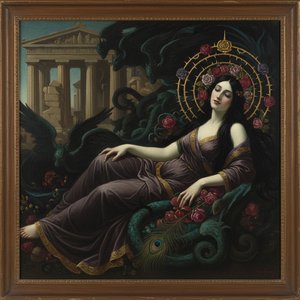
Franz von Stuck: Symbolism, Decadence & the Pursuit of Ideal Beauty
Explore the captivating world of Franz von Stuck, a leading Symbolist painter. Discover his mythological masterpieces, decadent themes, & investment potential. Expert analysis for discerning collectors.

Monochromatyczne Wizje: Estetyka i Historyczne Znaczenie Fotografii Czarno-Białej
Odkryj fascynujący świat fotografii czarno-białej! Poznaj historię, techniki i arcydzieła monochromatycznej sztuki. Inspiracje, porady i analiza wpływu na współczesną estetykę. OriginalUniqueArt.com.

Czarne arcydzieła: Top 10 słynnych obrazów pełnych mroku i ekspresji | OriginalUniqueArt.com
Odkryj 10 słynnych obrazów, w których czerń króluje! Poznaj historie artystów, ekspresjonizm i mroczną paletę barw. Reprodukcje dzieł sztuki najwyższej jakości na OriginalUniqueArt.com – inspiracje do wnętrz i kolekcjonerstwo.

Białe arcydzieła: Top 10 słynnych obrazów pełnych światła i emocji | OriginalUniqueArt.pl
Odkryj 10 najsłynniejszych obrazów, w których biel dominuje i tworzy wyjątkową atmosferę. Poznaj historie Moneta, Van Gogha i innych mistrzów! Reprodukcje najwyższej jakości na OriginalUniqueArt.com – inspiracje wnętrzarskie i kolekcjonerstwo sztuki online.

10 Arcydzieł Ekspresjonizmu Niemieckiego, Które Zdefiniowały Epokę | OriginalUniqueArt
Poznaj 10 arcydzieł ekspresjonizmu niemieckiego – od Kirchnera po Muncha. Odkryj historię, emocje i techniki tych ikonicznych dzieł sztuki. Reprodukcje najwyższej jakości na OriginalUniqueArt.com. Eksploruj kolekcję online!