

 Zobacz w skali 1:1
 Wyślij
 Udostępnij
 Szczegóły
 Przewodnik

 Pobierz plik obrazu
 Podobne obiekty
 RTG
RTG Pokaz slajdów
 Statystyki
Zinc Yellow
 Oil On Canvas
- WallArt
- Abstract Expressionism
 1959
1959- Modern
 236.0 x 201.0 cm
 Chrysler Museum of Art
 Czytaj więcej
Dzieło sztuki prezentowane na tej stronie podlega ochronie prawem autorskim, co oznacza, że nie mamy prawa do tworzenia ani sprzedaży jego identycznej reprodukcji. Ochrona ta jest egzekwowana na mocy umów międzynarodowych, takich jak Konwencja berneńska oraz przez przepisy prawa krajowego, w tym te określone w Prawo autorskie USA – Tytuł 17.
Metoda ta jest w pełni zgodna z przepisami prawa autorskiego, ponieważ nie polega na kopiowaniu ani powielaniu chronionego dzieła. Stanowi ona kreatywną reinterpretację – nowy obraz, który czerpie inspirację z oryginału, ale nie jest z nim tożsamy.
Giclée / Wydruk artystyczny
Wydruki giclée lub płótna o jakości muzealnej, szybka realizacja i szeroki wybór opcji wykończenia. ( Kup ręcznie malowany obraz Przełącz na wersję cyfrową)




P118B zł10

P118H zł10

P118W zł10

P438Z zł10

P508JH zł12

P508YH zł12

P805H zł10

P805Z zł10

P919BZ zł10

P919G zł10

P919XJ zł10

P959ZH zł10

P968JZ zł12

W106C zł8

W218G zł10

W218JH zł8

W218Y zł10

W307PJ zł10

W316G zł10

W316PJ zł8

W316Y zł10

W398PJ zł8

W4111J zł10

W500HY zł15

W500JH zł15

W692G zł12

W849H zł8

W940BG zł15

W953PJ zł8




Wybierz spośród naszych standardowych rozmiarów, które zachowują oryginalne proporcje dzieła sztuki.

Możesz wprowadzić własne wymiary, aby dopasować dzieło do konkretnej ramy lub przestrzeni. Jeśli wybrany rozmiar nie będzie odpowiadał proporcjom oryginalnego obrazu, przytniecie dzieło lub rozszerzymy obraz za pomocą odbicia lustrzanego lub jednolitego wypełnienia krawędzi. Przed rozpoczęciem produkcji prześlemy cyfrową wizualizację do Twojej akceptacji.
Prosimy pamiętać, że podgląd na ekranie nie odzwierciedla faktycznego przycinania ani rozszerzania. Tylko wizualizacja dokładnie pokaże końcową kompozycję.
Mimo dostępności niestandardowych rozmiarów, zalecamy wybór wymiaru z listy zdefiniowanej, aby zachować oryginalne proporcje.
Dostawa na cały świat () w ciągu 2 tygodni zamiast standardowych 4/5 tygodni. (13 Październik)

Bezpłatna ekspresowa wysyłka na cały świat

Wysokiej jakości płótno lniane

Pełne ubezpieczenie transportowe

Gwarancja zwrotu należności celnych i podatków importowych

Gwarancja idealnego odwzorowania barw

100-dniowy okres na zwrot dzieła w przypadku wykrycia wad produkcyjnych

Gwarancja 100% zwrotu pieniędzy

Oferta przy zakupie wielu sztuk
 Opcja ze szkłem jest dostępna wyłącznie w rozmiarach poniżej 110 cm

Zinc Yellow
Giclée / Wydruk artystyczny
Rozmiar reprodukcji
-


Suma do zapłaty
zł 298
A Symphony of Contrast: The Raw Power of Zinc Yellow
In the pantheon of Abstract Expressionism, few works command the immediate, visceral attention of a room quite like Franz Kline’s Zinc Yellow. Completed in 1959, this monumental canvas serves as a breathtaking masterclass in reductive abstraction, where the boundaries between color and form dissolve into a singular, energetic event. At first glance, the viewer is met with an expansive, luminous field of yellow that seems to vibrate against the stark, structural interruptions of dark grey and black. It is not merely a painting; it is a physical presence. The work eschews traditional subject matter in favor of pure, unadulterated movement, inviting the observer to move beyond the search for recognizable figures and instead surrender to the rhythmic tension of the brushstrokes themselves.
The brilliance of this piece lies in its deceptive simplicity. While it may appear as a spontaneous outburst of emotion—a hallmark of the Action Painting movement—the composition is actually a result of profound, deliberate planning. Kline often utilized small oil studies to map out the architectural weight of his larger works, ensuring that each jagged stroke and heavy block of pigment achieved a perfect, precarious balance. This tension between spontaneity and control creates an intoxicating visual experience; the eye is pulled diagonally across the canvas, caught in a dance between the light-filled yellow expanse and the gravity-defying black forms that anchor the composition.
The Architecture of Emotion: Technique and Texture
To stand before a reproduction of Zinc Yellow is to witness the tactile legacy of the New York School. Kline was a master of impasto, applying oil paints with such density that the canvas transforms into a topographical map of artistic struggle. The thick, sculptural layers of pigment create palpable ridges and valleys, catching the light and casting minute shadows that change as one moves around the piece. This heavy application of paint lends the work a sense of permanence and weight, making it an ideal centerpiece for sophisticated interiors where texture is as vital as color.
The palette is intentionally restrained, yet its impact is maximalist. By limiting his vocabulary to the high-contrast relationship between yellow, black, and white, Kline achieves a clarity that transcends time. The white highlights do not merely sit atop the dark masses; they puncture them, acting as breaths of light that prevent the heavy blacks from becoming stagnant. For the collector or interior designer, this piece offers a unique versatility. Its bold, graphic nature allows it to anchor a minimalist modern space with authority, while its rich, painterly texture provides a necessary warmth and soul to more austere architectural settings.
A Legacy of Movement and Modernity
Historically, Zinc Yellow emerged from a period of intense artistic revolution. As part of the New York School, Kline worked alongside titans like Jackson Pollock and Willem de Kooning, yet he carved out a niche that was uniquely his own. While others sought total abstraction through drips and splatters, Kline utilized the language of structural geometry to convey emotional intensity. His work carries the echoes of the Old Masters—the dramatic chiaroscuro of Rembrandt and the commanding presence of Velázquez—reimagined for a mid-century world grappling with new forms of expression.
Ultimately, the enduring appeal of this masterpiece lies in its ability to evoke a sense of emotional release. There is a primal energy within these strokes that resonates with the human spirit, reflecting both the chaos and the underlying order of our existence. Whether viewed as a study in color theory or an exploration of gestural freedom, Zinc Yellow remains a profound statement of modern identity. It is a work that does not just decorate a wall; it transforms an environment, offering a window into the vigorous, searching heart of one of art history's most compelling visionaries.
Pytania i odpowiedzi
Jaką nasycenie i intensywność prezentuje „Zinc Yellow” autorstwa Franciszko Klin”?
Kolory dzieła „Zinc Yellow” autorstwa Franciszko Klin” wykazują Clear Color Presence nasycenie przy Vivid intensywności.
Jakie emocje przekazuje dzieło "Zinc Yellow" należące do nurtu Abstract Expressionism?
W ramach nurtu Abstract Expressionism, dzieło „Zinc Yellow” zostało utrwalone w Energetic tonie.
W jakim pomieszczeniu najlepiej wyeksponować "Zinc Yellow", biorąc pod uwagę jego paletę barw?
Kolorystyka Pastels w dziele „Zinc Yellow” autorstwa Franciszko Klin” idealnie współgra z rekomendowanym wnętrzem: Living Room.
Jakie pochodzenie narodowe stoi za Abstract Expressionism dzieła "Zinc Yellow"?
"Zinc Yellow" zostało stworzone przez Franciszko Klin”, urodzonego w Stany Zjednoczone, w ramach nurtu Abstract Expressionism. Pochodzenie artysty wiąże to dzieło z Abstract Expressionism w wydaniu twórców z Stany Zjednoczone.
Gdzie mogę zobaczyć podgląd dzieła "Zinc Yellow"?
Strona podglądu Podgląd dla dzieła „Zinc Yellow” umożliwia obejrzenie obrazu przed złożeniem zamówienia.
Jak opisany jest nastrój dzieła „Zinc Yellow” autorstwa Franciszko Klin”?
"Zinc Yellow" ma Bold atmosferę.
W jaki sposób mogę obejrzeć „Zinc Yellow” autorstwa Franciszko Klin” w formie pokazu slajdów?
Dostępna jest prezentacja zdjęć: strona Pokaz slajdów dzieła „Zinc Yellow” autorstwa Franciszko Klin”.
Jak bardzo znane jest dzieło "Zinc Yellow" autorstwa Franciszko Klin”?
Poziom popularności odnotowany dla „Zinc Yellow” autorstwa Franciszko Klin” wynosi Iconic.
Biografia artysty
Franz Kline: Pioneer of Abstract Expressionism
Franz Kline, a pivotal figure in the Abstract Expressionist movement, remains an artist whose work resonates with raw power and emotional depth. Born in Wilkes-Barre, Pennsylvania, in 1910, his life was marked by early hardship – the suicide of his father when he was just seven years old cast a long shadow, influencing a sensibility that would later find expression in the stark contrasts defining his art. This formative experience led to a nomadic youth and eventual enrollment at Girard College, a Philadelphia boarding school for boys who had lost their fathers. It was here, amidst structured discipline, that Kline’s artistic inclinations began to surface, nurtured by traditional training in illustration and drafting. He continued his studies at Boston University and later honed his skills at the Heatherley School of Fine Art in London, immersing himself in the works of the Old Masters – Rembrandt, Velázquez, El Greco, Goya, Dürer – and absorbing the nuances of Japanese prints. These early influences, though seemingly distant from his eventual abstract style, laid a foundation for his understanding of composition, light, and the expressive potential of line.Early Life and Artistic Training
Kline’s childhood was profoundly shaped by tragedy; his father’s suicide instilled in him a deep preoccupation with loss and vulnerability—themes that would permeate his artistic vision throughout his life. Seeking refuge from this sorrowful beginning, he moved to Lehighton, Pennsylvania, where he attended high school, developing an appreciation for the natural world alongside formal academic instruction. Recognizing his burgeoning talent, Kline pursued studies at Boston University and Heatherley’s School of Fine Art in London, immersing himself in the stylistic innovations of European masters. Notably, he was captivated by Rembrandt’s masterful use of chiaroscuro—the dramatic interplay of light and dark—and Velázquez’s meticulous observation of detail, informing his approach to rendering form and texture. Simultaneously, Kline absorbed the aesthetic principles of Japanese prints—particularly *ukiyo-e*—where bold lines and simplified shapes conveyed emotion and narrative with remarkable efficiency. These formative experiences instilled in him a disciplined eye for technique and a sensitivity to visual harmony that would prove invaluable as he transitioned toward abstraction.From Representation to Simplification: The Emergence of Abstract Style
Kline’s artistic journey began with figurative painting, producing landscapes, cityscapes, portraits, and murals—works characterized by meticulous realism and detailed observation. However, his artistic trajectory took a decisive turn in 1940 when he undertook the ambitious commission for “Hot Jazz,” a mural series celebrating jazz music for Greenwich Village tavern. This project signaled a deliberate simplification of form, foreshadowing the monumental black-and-white canvases that would define his mature style. Influenced by Willem de Kooning’s suggestion to project sketches onto a wall using a Bell-Opticon projector—an act that dramatically enlarged and transformed the image—Kline experienced a revelation. This transformative process underscored the importance of reducing visual complexity to its essential strokes, prioritizing gesture and line over precise depiction. The resulting paintings weren't merely imitations of reality but expressions of inner feeling—a radical departure from traditional artistic conventions.The Influence of De Kooning and Japanese Prints
Kline’s encounter with Willem de Kooning proved pivotal in unlocking his abstract potential. Recognizing the transformative power of projection, Kline embraced a technique that mirrored the dynamism of Japanese calligraphy—where bold lines convey emotion and meaning with remarkable conciseness. This stylistic affinity reflected Kline’s belief that art should transcend literal representation, prioritizing visceral experience over intellectual analysis. He sought to capture the essence of his subjects through expressive marks—thick, sweeping strokes of black paint on a white ground—creating canvases that pulsated with energy and immediacy. The influence of Rembrandt and Velázquez remained palpable in his early works, informing his understanding of tonal gradation and compositional balance. Similarly, Kline absorbed the aesthetic principles of Japanese prints—particularly *ukiyo-e*—where bold lines and simplified shapes conveyed emotion and narrative with remarkable efficiency. These formative experiences instilled in him a disciplined eye for technique and a sensitivity to visual harmony that would prove invaluable as he transitioned toward abstraction.Legacy and Recognition: A Lasting Impact on Modern Art
Franz Kline’s contribution to Abstract Expressionism cemented his place among the most influential artists of the postwar era. His monumental black-and-white canvases—characterized by their stark contrasts and forceful gestures—became synonymous with the movement's ethos—a rejection of academic conventions in favor of spontaneous expression. Critics initially dismissed Kline’s work as “scribbles,” labeling it devoid of intellectual merit, yet collectors recognized its profound emotional depth and visual power. His paintings gained acclaim at prestigious venues like the Guggenheim Museum and Sidney Janis Gallery, securing his reputation as a visionary artist whose legacy continues to inspire generations of painters. Notably, Kline's influence extended beyond Abstract Expressionism, subtly shaping the development of Minimalism—a movement championed by Donald Judd and Richard Serra—who sought to reduce art to its fundamental forms. His unwavering commitment to gesture and line—coupled with his rejection of representational illusion—established him as a pioneer of a new aesthetic language that remains relevant today. Kline died in New York City in 1962, leaving behind an oeuvre that embodies the spirit of artistic innovation and emotional intensity—a testament to a life dedicated to exploring the expressive possibilities of abstraction.
Franciszko Klin”
1910 - 1962 , Stany Zjednoczone
Najważniejsze informacje
- Artistic Movement Or Style: Abstract Expressionism
- Artists Who Influenced This Artist:
- Rembrandt
- Velasquez
- De Kooning
- Date Of Birth: May 23, 1910
- Date Of Death: May 13, 1962
- Full Name: Franz Kline
- Nationality: American
- Notable Artworks:
- Lehighton
- Mahoning
- Place Of Birth: Wilkes-Barre, USA
Zobacz także powiązane artykuły

Czarne arcydzieła: Top 10 słynnych obrazów pełnych mroku i ekspresji | OriginalUniqueArt.com
Odkryj 10 słynnych obrazów, w których czerń króluje! Poznaj historie artystów, ekspresjonizm i mroczną paletę barw. Reprodukcje dzieł sztuki najwyższej jakości na OriginalUniqueArt.com – inspiracje do wnętrz i kolekcjonerstwo.

25 Arcydzieł Kandinskiego: Kolor, Duchowość i Abstrakcja w Twoim Domu | OriginalUniqueArt.com
Odkryj 25 arcydzieł Wassily Kandinskiego – pioniera abstrakcji i ekspresjonizmu! Poznaj historie, techniki i emocje kryjące się za jego kolorowymi kompozycjami. Reprodukcje obrazów najwyższej jakości na OriginalUniqueArt.com. Eksploruj pełną kolekcję online!

Top 10 arcydzieł ekspresjonizmu abstrakcyjnego – inspiracje dla Twojego wnętrza | OriginalUniqueArt.com
Odkryj 10 arcydzieł ekspresjonizmu abstrakcyjnego – Pollock, Rothko, de Kooning i inni. Poznaj historie artystów, techniki i inspiracje dla Twojego wnętrza. Reprodukcje najwyższej jakości na OriginalUniqueArt.com!
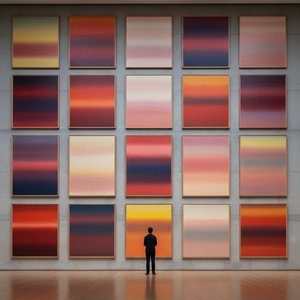
Mark Rothko: 25 Arcydzieł Koloru i Emocji | Reprodukcje Obrazów | OriginalUniqueArt.com
Odkryj 25 arcydzieł Marka Rothko – mistrza abstrakcji i koloru. Poznaj historie, techniki i emocje kryjące się za jego płótnami. Reprodukcje obrazów najwyższej jakości na OriginalUniqueArt.com. Eksploruj kolekcję online!

Geometria Sztuki: 10 Arcydzieł Abstrakcji Geometrycznej | OriginalUniqueArt.com
Odkryj 10 arcydzieł abstrakcji geometrycznej! Poznaj historię Mondriana, Kandinskiego i Maleвича. Inspiracje wnętrzarskie z malarstwem abstrakcyjnym – reprodukcje najwyższej jakości na OriginalUniqueArt.com. Eksploruj kolekcję online!

