Menu

() ·

A painting made for you, by hand

Color drawings

Ręcznie malowana reprodukcja olejowa

Ręcznie malowany obraz olejny na płótnie, wykonany na zamówienie przez naszych artystów w wybranym przez Ciebie wymiarze i oprawie. ( Przełącz na wydania drukowane Przejdź do wersji cyfrowej)

Opis obiektu

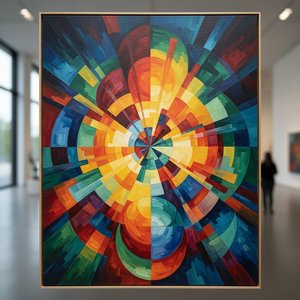
Vibrant abstract expressionist drawing by František Kupka, a pioneer of Orphism and Abstract Art, captures a contemplative woman's face amidst colorful forms and a yellow background – discover this unique piece.

Biografia artysty

František Kupka – pionier abstrakcji! Malarz z Czech, twórca Orfizmu i innowator w użyciu koloru, który kształtował podstawy współczesnego sztuki. Odkryj jego unikalną wizję!

from ·

Chapter 1

How large should it be?

Slide to change the size; the picture on the left shows the frame at its real width. The proportions of the original are kept.

Standardowy format
personalizowane
CM
INCH

Wybierz spośród naszych standardowych rozmiarów, które zachowują oryginalne proporcje dzieła sztuki.

szerokość
wysokość

Wpisz wymaganą szerokość i wysokość, aby obraz pasował do Twojej ramy lub ściany. Ponieważ jest to dzieło malowane ręcznie, w przypadku rozmiaru o innych proporcjach artysta może domalować nieco więcej wokół obrazu lub przyciąć jego fragmenty — wybór należy do Ciebie. Przed rozpoczęciem pracy prześlemy Ci cyfrową wizualizację do zatwierdzenia. Obraz widoczny na tej stronie nie przedstawia rzeczywistego efektu — jedynie wizualizacja oddaje realny rezultat.

Chapter 2

How should it arrive?

Choose the edges of the stretched canvas

Choose your frame

Corner sample of the WhiteWrap canvas edge finish, stretched on lite drewno bars
White zł1
Corner sample of the BlurSideWrap canvas edge finish, stretched on lite drewno bars
Blurside zł1
Corner sample of the ExtendedWrap canvas edge finish, stretched on lite drewno bars
Extended zł1
Corner sample of the P118B picture frame: polistyren formowany, 5 cm wide and 3 cm thick
P118B zł10
Corner sample of the P118H picture frame: polistyren formowany, 5 cm wide and 3 cm thick
P118H zł10
Corner sample of the P118W picture frame: polistyren formowany, 5 cm wide and 3 cm thick
P118W zł10
Corner sample of the P438Z picture frame: polistyren formowany, 5.5 cm wide and 3.5 cm thick
P438Z zł10
Corner sample of the P508JH picture frame: polistyren formowany, 7 cm wide and 3.5 cm thick
P508JH zł12
Corner sample of the P508YH picture frame: polistyren formowany, 7 cm wide and 3.5 cm thick
P508YH zł12
Corner sample of the P805H picture frame: polistyren formowany, 5 cm wide and 3.5 cm thick
P805H zł10
Corner sample of the P805Z picture frame: polistyren formowany, 5 cm wide and 3.5 cm thick
P805Z zł10
Corner sample of the P919BZ picture frame: polistyren formowany, 7 cm wide and 3.5 cm thick
P919BZ zł10
Corner sample of the P919G picture frame: polistyren formowany, 7 cm wide and 3.5 cm thick
P919G zł10
Corner sample of the P919XJ picture frame: polistyren formowany, 7 cm wide and 3.5 cm thick
P919XJ zł10
Corner sample of the P959ZH picture frame: polistyren formowany, 5 cm wide and 3 cm thick
P959ZH zł10
Corner sample of the P968JZ picture frame: polistyren formowany, 6 cm wide and 4 cm thick
P968JZ zł12
Corner sample of the W106C picture frame: lite drewno, 5 cm wide and 3 cm thick
W106C zł8
Corner sample of the W218G picture frame: lite drewno, 5 cm wide and 3 cm thick
W218G zł10
Corner sample of the W218JH picture frame: lite drewno, 5 cm wide and 3 cm thick
W218JH zł8
Corner sample of the W218Y picture frame: lite drewno, 5 cm wide and 3 cm thick
W218Y zł10
Corner sample of the W307PJ picture frame: lite drewno, 6 cm wide and 3 cm thick
W307PJ zł10
Corner sample of the W316G picture frame: lite drewno, 6 cm wide and 3 cm thick
W316G zł10
Corner sample of the W316PJ picture frame: lite drewno, 6 cm wide and 3 cm thick
W316PJ zł8
Corner sample of the W316Y picture frame: lite drewno, 6 cm wide and 3 cm thick
W316Y zł10
Corner sample of the W398PJ picture frame: lite drewno, 5 cm wide and 3 cm thick
W398PJ zł8
Corner sample of the W4111J picture frame: lite drewno, 6.5 cm wide and 3.5 cm thick
W4111J zł10
Corner sample of the W500HY picture frame: lite drewno, 7 cm wide and 5 cm thick
W500HY zł15
Corner sample of the W500JH picture frame: lite drewno, 7 cm wide and 5 cm thick
W500JH zł15
Corner sample of the W692G picture frame: lite drewno, 8 cm wide and 4 cm thick
W692G zł12
Corner sample of the W849H picture frame: lite drewno, 5 cm wide and 3 cm thick
W849H zł8
Corner sample of the W940BG picture frame: lite drewno, 7.5 cm wide and 4.5 cm thick
W940BG zł15
Corner sample of the W953PJ picture frame: lite drewno, 6 cm wide and 3.5 cm thick
W953PJ zł8
Corner sample of the H24-GOLD picture frame: rzeźbione drewno pokryte gipsem, 10 cm wide and 6 cm thick
H24-GOLD zł30
Corner sample of the H24-SILVER picture frame: rzeźbione drewno pokryte gipsem, 10 cm wide and 6 cm thick
H24-SILVER zł30
Corner sample of the H36-GOLD picture frame: rzeźbione drewno pokryte gipsem, 15 cm wide and 6.5 cm thick
H36-GOLD zł45
Corner sample of the H36-SILVER picture frame: rzeźbione drewno pokryte gipsem, 15 cm wide and 6.5 cm thick
H36-SILVER zł45

Moulding: . Overall size with the frame: .

Chapter 3

Who paints it, and should anything change?

Examples of what can be changed: Replace face with customer photo; Add pet (e.g., replace cat with dog); Include hidden message in background; Change background landscape or elements.
After order, OriginalUniqueArt.com team will email client for instructions and provide a mockup preview

Dostawa na całym świecie () w ciągu 3–4 tygodni zamiast standardowych 5 tygodni. (29 Październik). Bez kompromisów w kwestii jakości.

Chapter 4

The finishing touches

A nameplate, as in a museum?

Szczegóły grawerowanej brązowej tabliczki

This elegant plaque features the artist's name and the title of the artwork, finely engraved for a timeless presentation.

It is made from bronze with a refined, elegant finish. The text is precisely laser-engraved for a sharp and permanent result. Measuring 9x2 cm, the plaque is compact yet easy to read. It's built to be durable and scratch-resistant, offering a professional, museum-quality look. Mounting is simple thanks to the included adhesive backing.

Szczegóły przezroczystej tabliczki akrylowej

The plaque includes essential engraved details such as the artist's name, the title of the artwork, the date it was created, the type of media used-like oil on canvas or watercolor-a brief description of the piece, and a QR code that links to the complete artwork information.

It is crafted from clear acrylic, offering a sleek, modern appearance. The text is UV-engraved in black to ensure strong visual contrast. With a size of 10x15 cm, it ensures optimal readability. It comes equipped with two metal hooks for secure wall mounting. The plaque is designed to be weather-resistant, making it suitable for various environments, and it includes interactive features that work seamlessly with smartphone scanning.

Szczegóły czarnej tabliczki akrylowej

This elegant plaque includes engraved information such as the artist's name, the title of the artwork, the date it was created, the type of media used (like oil on canvas or watercolor), a short description of the artwork, and a QR code for quick access to more information.

The plaque itself is made from refined black acrylic with a premium finish. The text is laser-engraved in white for high contrast and readability. Its size is 10x15 cm, designed to be easy to read. It comes with two metal hooks for professional mounting. The design is sleek and fits any interior style. It is also weather-resistant and durable, with built-in digital integration for mobile compatibility.

A protective varnish?

When do you need it?

Chapter 5

Your painting, as you ordered it

Color drawings

Technika reprodukcji

Wymiary reprodukcji

-

Wybitny mistrz artystyczny

Większa szczegółowość, finezja i dodatkowy czas na realizację

-

Opcje oprawy reprodukcji

-

-

W przypadku dzieł sztuki lub reprodukcji, których którykolwiek z boków przekracza 105 cm (około 41 cali), rama zostanie wysłana w formie zestawu do samodzielnego montażu. Metoda ta zapewnia bezpieczną dostawę i zapobiega uszkodzeniom podczas transportu.

Wymagany profesjonalny montaż – nie jest to produkt typu DIY.
Zestaw musi zostać złożony, a płótno naciągnięte przez doświadczonego profesjonalnego ramiarza, przy użyciu kleju do drewna (brak w zestawie), kleszczy do naciągania płótna oraz ścisków, które utrzymają krosna w równej pozycji podczas schnięcia kleju. Nieprawidłowy montaż lub nierównomierne napięcie płótna może trwale uszkodzić dzieło sztuki i nie podlega naszej gwarancji.

  • W zestawie znajdują się wszystkie listwy z litego drewna, precyzyjnie docięte do wymiarów.

  • Montaż odbywa się przy użyciu dołączonych wkrętów oraz kleju do drewna do łączenia narożników, którego zestaw nie zawiera i który musi zostać dostarczony przez ramiarza.

  • Wymagane są profesjonalne narzędzia, których nie ma w zestawie: kleszcze do naciągania płótna (napinacz) oraz zaciski, które pozwolą utrzymać listwy w równej pozycji podczas schnięcia kleju.

Ważne:
Do połączenia narożników niezbędny jest klej do drewna, listwy należy unieruchomić za pomocą ścisków do momentu całkowitego wyschnięcia kleju, a naciągnięcie płótna na złożoną ramę wymaga użycia kleszczy do naciągania płótna. Żaden z tych elementów nie jest dołączony do zestawu. Przed zamówieniem tego rozmiaru zalecamy konsultację z doświadczonym ramiarzem.

Etykieta obiektu

-

-

Lakier ochronny

Lakier z połyskiem (pogłębia kolory, chroni przed światłem i wilgocią)

-

Personalizacja dzieła

Przykłady możliwości personalizacji: zastąp twarz zdjęciem klienta; dodaj zwierzę domowe (np. zamień kota na psa); umieść ukrytą wiadomość w tle; zmień krajobraz lub elementy tła.

-

Ekspresowa

Dostawa na cały świat () w ciągu 3–4 tygodni zamiast standardowych 5 tygodni. (29 Październik). Bez kompromisów w kwestii jakości.

-

Przesyłka ekspresowa

Dostawa na cały świat () w ciągu 5 tygodni. (5 Listopad).

W cenie

Cena całkowita

zł 1155

Suma całkowita zł 1155

Opcja ze szkłem jest dostępna wyłącznie w rozmiarach poniżej 110 cm

Included with every order

  • Bezpłatna ekspresowa wysyłka na cały świat
  • Wysokiej jakości płótno lniane
  • Pełne ubezpieczenie przesyłki
  • Gwarancja zwrotu należności celnych i podatków importowych
  • Gwarancja wiernego odwzorowania kolorów
  • 100-dniowa polityka zwrotów (tylko w przypadku wad)
  • Gwarancja 100% zwrotu pieniędzy
  • Zniżka przy zakupie wielu sztuk

František Kupka’s “Color Drawings”: A Pioneering Exploration of Introspection

“Color Drawings,” attributed to the visionary František Kupka (1871-1957), stands as a pivotal work in the nascent field of abstract art. Born in Opočno, Bohemia, Kupka's artistic trajectory represents a remarkable shift from representational painting to an intensely personal investigation of color and form – a journey that began with traditional academic training but ultimately led him to become one of the earliest pioneers of Simultanism, later known as Orphism.

  • Subject Matter: The central figure, a woman lost in contemplation, immediately draws the viewer into a deeply personal space. Her downward gaze and closed eyes evoke a sense of introspection, inviting us to share her silent moment of reflection.
  • Color Palette: Kupka’s masterful use of color is paramount. The dominant yellow hue creates an ethereal atmosphere, amplifying the emotional resonance of the scene. Blues are strategically employed to emphasize the woman's dress and contribute to the overall sense of serenity and mystery.

The Rise of Simultanism: A Reaction Against Representation

Kupka’s artistic evolution reflects a broader movement occurring at the turn of the 20th century – a rejection of traditional representational painting in favor of exploring the simultaneous effects of color and form. Influenced by artists like Paul Séraphin and earlier experiments with optical illusions, Kupka sought to capture not what he *saw*, but rather how his eye *perceived* color and light. This approach, termed “Simultanism” or “Orphism,” aimed to represent the subjective experience of vision itself.

His time in Paris during the late 1890s was crucial. Exposure to the avant-garde artistic circles and his studies with Laurens provided him with the tools and intellectual framework necessary to develop his radical ideas. The painting’s composition, with its fragmented figures and emphasis on color relationships, is a direct result of this transformative period.

Technique and Composition: A Dance of Color

Kupka's technique in “Color Drawings” is characterized by loose, expressive brushstrokes and a deliberate avoidance of traditional perspective. The painting’s composition isn’t built around a central focal point; instead, the eye is drawn across the canvas through the interplay of color and shape. The figures are rendered with simplified forms, almost dissolving into the surrounding color field – a hallmark of Simultanism.

  • Brushwork: Noticeable gestural marks contribute to the painting’s dynamic energy and convey a sense of immediacy.
  • Color Relationships: The careful juxtaposition of colors creates visual tension and harmony, further enhancing the emotional impact of the work.

Symbolic Resonance and Emotional Impact

"Color Drawings" transcends mere aesthetic pleasure; it’s a profound meditation on the human condition. The solitary figure embodies themes of introspection, vulnerability, and perhaps even spiritual seeking – concerns that resonated deeply with Kupka's own philosophical inquiries. The painting’s evocative atmosphere invites viewers to contemplate their own inner worlds, making it a timeless work of art that continues to captivate audiences today.

Pytania i odpowiedzi

Czy dzieło "Color drawings" posiada podgląd w rozszerzonej rzeczywistości?

„Color drawings” posiada podgląd w rozszerzonej rzeczywistości: strona Podgląd w AR pozwala zobaczyć dzieło w Twojej własnej przestrzeni na kompatybilnym urządzeniu.

Jaki nastrój emocjonalny budzi „Color drawings” – František Kupka?

Emocjonalny ton przypisany do „Color drawings” – František Kupka to Reflective. Oddaje on emocje, jakie wyraża to dzieło.

Jakie wnętrze najlepiej współgra z kolorystyką „Color drawings” – František Kupka?

Dzięki swojej palecie barw Dark, dzieło „Color drawings” – František Kupka idealnie sprawdzi się w Living Room. Kolorystyka jest jedną z przyczyn tej rekomendacji.

More about this painting

Podgląd w skali 1:1 Podgląd AR Przełącz na wydania drukowane Przejdź do wersji cyfrowej Wyślij jako kartkę
Szczegóły dzieła Przewodnik Dodaj do ulubionych Pobierz obraz Podobne obiekty RTG Pokaz slajdów Q&A Statystyki

In numbers

  • 29frames to choose from
  • standard sizes, in its own proportions
  • 5weeks to paint and deliver it

About the original

František Kupka

František Kupka

1871 - 1957, Czechy

Quick facts about František Kupka

  • Artistic Movement Or Style: Abstrakcjonizm, Orficy
  • Artists Or Movements Influenced By This Artist: ['Kandinsky']
  • Date Of Birth: 23 września 1871
  • Date Of Death: 24 czerwca 1957
  • Full Name: František Kupka
  • Nationality: Czeski
  • Notable Artworks:
    • Diski Newton
    • Fugua
  • Place Of Birth: Opočno, Czechy

Biografia artysty

František Kupka: A Pioneer of Abstract Vision

František Kupka, a name inextricably linked to the dawn of abstract art, was born in Opočno, Bohemia – a landscape that would subtly inform his lifelong exploration of form and color. His artistic journey wasn’t a swift ascent but rather a gradual unfolding, deeply rooted in spiritual inquiry and an unwavering pursuit of visual truth. Initially immersed in historical and patriotic themes during his studies at the Prague Academy of Fine Arts and later Vienna, Kupka's early work possessed technical skill yet lacked the distinctive voice that would soon define him. It was his relocation to Paris in 1894, however, that proved pivotal, plunging him into a vibrant artistic milieu where he briefly attended the École des Beaux-Arts and engaged with the intellectual currents of fin-de-siècle – a period characterized by burgeoning interest in symbolism, Neo-Impressionism, and Fauvism. These influences ignited within him a profound desire to transcend mere representation and tap into deeper realms of experience, ultimately leading him toward radical abstraction.

The Seeds of Abstraction: Spiritual Influences and Early Experiments

Kupka’s artistic trajectory wasn't solely driven by aesthetic considerations; it was profoundly shaped by philosophical and spiritual explorations. His engagement with Theosophy – a mystical system blending Eastern religions and Western esotericism – proved particularly transformative. This belief system posited an underlying unity to all things, suggesting that art could access these hidden realities through the manipulation of color, form, and line. He began to believe that art wasn’t simply about mirroring the external world but about revealing its inner essence. This conviction fueled his experimentation with blurring the boundaries between figuration and abstraction, as evidenced in works like *The Beginning of Life*. Here, symbolic imagery – reminiscent of religious iconography – intertwined with nascent abstract elements, creating a visual dialogue between the known and the unknown. Kupka’s interest extended beyond purely spiritual concepts; he was deeply fascinated by scientific theories regarding color and light, seeking to understand their psychological effects on the viewer and incorporating these insights into his artistic process. He wasn't merely interested in replicating colors but in exploring their emotional resonance and potential for evoking specific sensations. This fusion of spiritual inquiry and scientific observation became a defining characteristic of his work throughout his career.

Orphic Cubism and the Language of Color

By the early 1910s, Kupka had embarked on a path that would lead him to become one of the pioneers of abstract art. His paintings from this period – such as *Amorpha: Fugue in Two Colors* (1912) – were among the first truly non-representational works exhibited publicly, challenging conventional notions of artistic representation. He wasn’t simply dismantling form—as some Cubists were doing—but rather creating a new visual language based on pure abstraction. This led to his association with Orphic Cubism (also known as Orphism), a movement spearheaded by Robert Delaunay that emphasized the dynamic interplay of color and light. However, Kupka's approach differed from Delaunay’s; while both explored abstract forms, Kupka often retained a sense of underlying structure and rhythm, evoking musical compositions in his paintings – hence the frequent use of terms like “fugue” and “disks.” His *Disks of Newton* series exemplifies this exploration, depicting circular forms that seem to vibrate with energy and suggest the forces governing the universe. He wasn’t merely creating aesthetically pleasing arrangements; he was attempting to visualize underlying cosmic principles. Kupka's work during this period can be seen as a deliberate attempt to move beyond the limitations of traditional perspective and representation, seeking instead to capture the essence of experience through pure color and form.

Key Works and Lasting Legacy

Throughout his career, Kupka produced a remarkable body of work that continues to fascinate and inspire. *The Colored One* (1908) is considered one of his most significant early abstract paintings, demonstrating his exploration of color relationships and the potential for pure abstraction. *Around a Point* (1913) showcases his interest in geometric forms and their dynamic interplay. His later works, such as *War* (1916-17), reflect the turmoil of World War I, utilizing stark colors and fragmented shapes to convey feelings of chaos and uncertainty. Kupka’s influence extended beyond his individual paintings; he played a vital role in establishing Abstraction-Création in 1931, an international group dedicated to promoting abstract art. His work was recognized internationally, featured in landmark exhibitions such as “Cubism and Abstract Art” at the Museum of Modern Art in New York in 1936. Despite often being overshadowed by more prominent figures like Kandinsky or Mondrian, František Kupka’s pioneering spirit and unique visual language have secured his place as a crucial figure in the history of abstract art – a testament to his unwavering commitment to exploring the boundless possibilities of pure abstraction.

Museum Collections Featuring Kupka's Art

  • Solomon R. Guggenheim Museum (New York, United States) - Extensive collection including *The Colored One* and *Around a Point*.
  • The Paris Museum of Modern Art (Paris, France) – Houses a significant selection of his early works.
  • Galerie Manés (Prague, Czech Republic) – Offers a curated display of Kupka’s paintings and drawings.

Najważniejsze informacje

  • Year: 1894-1957
  • Subject or theme: Introspection
  • Influences:
    • Spiritualism
    • Paris
  • Artist: František Kupka
  • Notable elements: Abstract face, color