

 Zobacz w skali 1:1
 Wyślij
 Udostępnij
 Szczegóły
 Przewodnik

 Pobierz plik obrazu
 Podobne obiekty
 RTG
RTG Pokaz slajdów
 Statystyki
Autumn Sun, Three Goddesses
 Acrylic On Canvas
- WallArt
- Early Abstraction
 1906
1906- 19th Century
 103.0 x 117.0 cm
 Czytaj więcej
Dzieło sztuki prezentowane na tej stronie podlega ochronie prawem autorskim, co oznacza, że nie mamy prawa do tworzenia ani sprzedaży jego identycznej reprodukcji. Ochrona ta jest egzekwowana na mocy umów międzynarodowych, takich jak Konwencja berneńska oraz przez przepisy prawa krajowego, w tym te określone w Prawo autorskie USA – Tytuł 17.
Jako pełną szacunku i legalną alternatywę oferujemy personalizowane, malowane ręcznie dzieła sztuki inspirowane oryginałem. Nasi wykwalifikowani i profesjonalni artyści starannie analizują styl, nastrój oraz artystyczną esencję pierwowzoru, aby stworzyć nowe, unikalne dzieło, które przywołuje te same emocje – pozostając jednocześnie w pełni oryginalną kreacją.
Metoda ta jest w pełni zgodna z przepisami prawa autorskiego, ponieważ nie polega na kopiowaniu ani powielaniu chronionego dzieła. Stanowi ona kreatywną reinterpretację – nowy obraz, który czerpie inspirację z oryginału, ale nie jest z nim tożsamy.
Ręcznie malowana reprodukcja olejowa
Ręcznie malowany obraz olejny na płótnie, wykonany na zamówienie przez naszych artystów w wybranym przez Ciebie wymiarze i oprawie. ( Przełącz na wersję drukowaną Przełącz na wersję cyfrową)




P118B zł10

P118H zł10

P118W zł10

P438Z zł10

P508JH zł12

P508YH zł12

P805H zł10

P805Z zł10

P919BZ zł10

P919G zł10

P919XJ zł10

P959ZH zł10

P968JZ zł12

W106C zł8

W218G zł10

W218JH zł8

W218Y zł10

W307PJ zł10

W316G zł10

W316PJ zł8

W316Y zł10

W398PJ zł8

W4111J zł10

W500HY zł15

W500JH zł15

W692G zł12

W849H zł8

W940BG zł15

W953PJ zł8




Wybierz spośród naszych standardowych rozmiarów, które zachowują oryginalne proporcje dzieła sztuki.

Możesz wprowadzić własne wymiary, aby dopasować obraz do konkretnej ramy lub przestrzeni. Jeśli wybrany rozmiar nie będzie odpowiadał proporcjom oryginału, przytniecie dzieło sztuki lub rozszerzymy je o dodatkowe elementy, ręcznie domalowane przez artystę. Przed rozpoczęciem produkcji wyślemy projekt cyfrowy do Twojej akceptacji.
Należy pamiętać, że podgląd na ekranie nie odzwierciedla rzeczywistego przycinania ani rozszerzania obrazu. Tylko projekt dokładnie pokaże ostateczną kompozycję.
Choć oferujemy możliwość zamówienia niestandardowych rozmiarów, zalecamy wybór wymiaru z gotowej listy, aby zachować oryginalne proporcje dzieła.
Po złożeniu zamówienia zespół OriginalUniqueArt.com skontaktuje się z klientem drogą mailową w celu uzyskania instrukcji i prześle wizualizację projektu
Dostawa na całym świecie () w ciągu 3–4 tygodni zamiast standardowych 5 tygodni. (11 Październik). Bez kompromisów w kwestii jakości.

Bezpłatna ekspresowa wysyłka na cały świat

Wysokiej jakości płótno lniane

Pełne ubezpieczenie transportowe

Gwarancja zwrotu należności celnych i podatków importowych

Gwarancja idealnego odwzorowania barw

100-dniowy okres na zwrot dzieła w przypadku wykrycia wad produkcyjnych

Gwarancja 100% zwrotu pieniędzy

Oferta przy zakupie wielu sztuk
 Opcja ze szkłem jest dostępna wyłącznie w rozmiarach poniżej 110 cm

Autumn Sun, Three Goddesses
Technika wykonania
Rozmiar reprodukcji
-


Suma do zapłaty
zł 1117
A Symphony of Fruit and Femininity: Exploring Kupka’s “Autumn Sun, Three Goddesses”
František Kupka's 1906 painting, "Autumn Sun, Three Goddesses," is a captivating enigma—a work that simultaneously embraces the traditions of Symbolism while boldly venturing toward the nascent territory of abstraction. Measuring 103 x 117 cm, this piece offers a profound meditation on themes of fertility, transformation, and the interplay between humanity and nature, rendered with Kupka’s signature meticulous technique.
The scene depicts three nude women positioned beneath a bountiful apple tree, its branches laden with fruit in various stages of ripeness. The figures aren't merely depicted; they *become* the apples themselves – a deliberate blurring of boundaries that speaks to the core of Kupka’s artistic exploration. Their forms are subtly sculpted to echo the rounded shapes and textures of the fruit, creating an almost hallucinatory effect where human and natural elements merge seamlessly. This technique, characteristic of Kupka's later work, reflects his desire to move beyond representational accuracy towards a more spiritual and symbolic interpretation of reality.
Symbolism Rooted in Fin-de-Siècle Thought
Created during the fin-de-siècle period – a time of profound social and intellectual upheaval – “Autumn Sun, Three Goddesses” resonates with the anxieties and aspirations of the era. The apple, a potent symbol throughout Western art history, carries layers of meaning: from the Garden of Eden’s temptation to knowledge and immortality, through classical mythology's association with Aphrodite (Venus), goddess of love and beauty, to its later representation as a signifier of health and longevity. The presence of three women – a recurring motif in Kupka’s oeuvre – suggests a trinity, perhaps representing the creative forces of nature or the feminine principle itself. The “Autumn Sun” element adds another layer of complexity, evoking themes of decline, harvest, and the cyclical nature of life and death.
Kupka's Technique: Precision and Illusion
Kupka’s meticulous brushwork is immediately apparent in this piece. He employed a glazing technique – applying thin layers of oil paint that were allowed to dry partially before adding subsequent layers – to build up depth, luminosity, and subtle color variations. This method creates an almost stained-glass effect, particularly noticeable in the rendering of the apples themselves. The careful attention to detail extends beyond mere representation; it’s a deliberate attempt to create an illusion of three-dimensionality, drawing the viewer into the scene with remarkable realism despite its symbolic intent. The use of muted earth tones – ochres, browns, and greens – further enhances the painting's sense of timelessness and connection to the natural world.
A Pioneer’s Legacy
"Autumn Sun, Three Goddesses" stands as a crucial work in František Kupka’s artistic development. It exemplifies his transition from representational art towards abstraction, foreshadowing the movements that would dominate early 20th-century art. This reproduction offers an exceptional opportunity to own a piece of art history – a testament to Kupka's visionary approach and his enduring contribution to the evolution of modern art. Its evocative imagery and masterful technique make it a compelling addition to any collection, while its symbolic depth invites contemplation and interpretation.
Pytania i odpowiedzi
Jakie emocje wywołuje „Autumn Sun, Three Goddesses” autorstwa František Kupka?
W "Autumn Sun, Three Goddesses" nastrojowi Ethereal towarzyszy emocja Romantic.
Do jakiego wnętrza polecane jest dzieło „Autumn Sun, Three Goddesses” autorstwa František Kupka?
Zalecaną przestrzenią dla „Autumn Sun, Three Goddesses” autorstwa František Kupka jest Living Room. Sugestia ta może zostać oczywiście dostosowana do Twojego wnętrza.
Kto stworzył "Autumn Sun, Three Goddesses"?
Autorem dzieła „Autumn Sun, Three Goddesses” jest František Kupka. Praca ta figuruje w katalogu pod nazwiskiem František Kupka.
W jakim wieku František Kupka stworzył(a) "Autumn Sun, Three Goddesses"?
Gdy w 1906 roku powstało dzieło „Autumn Sun, Three Goddesses”, František Kupka – urodzony/a w 1871 – miał/a 35 lat.
W którym roku powstało „Autumn Sun, Three Goddesses” autorstwa František Kupka?
Dzieło "Autumn Sun, Three Goddesses" pochodzi z 1906 roku. Data ta pozwala umiejscowić pracę w kontekście twórczości František Kupka oraz epoki, w której powstała.
Do czego zaleca się wykorzystanie reprodukcji „Autumn Sun, Three Goddesses” autorstwa František Kupka?
Reprodukcja dzieła „Autumn Sun, Three Goddesses” autorstwa František Kupka jest polecana do Statement. Sugestia ta wynika z tematyki, nastroju oraz kolorystyki pracy.
Co wyjaśnia sytuację prawną dotyczącą praw autorskich do „Autumn Sun, Three Goddesses” autorstwa František Kupka?
Dzieło "Autumn Sun, Three Goddesses" autorstwa František Kupka znajduje się w nadal chronione prawem autorskim. Okres ochrony praw autorskich liczony jest od daty śmierci artysty, a František Kupka zmarł(a) w 1957.
Biografia artysty
František Kupka: A Pioneer of Abstract Vision
František Kupka, a name inextricably linked to the dawn of abstract art, was born in Opočno, Bohemia – a landscape that would subtly inform his lifelong exploration of form and color. His artistic journey wasn’t a swift ascent but rather a gradual unfolding, deeply rooted in spiritual inquiry and an unwavering pursuit of visual truth. Initially immersed in historical and patriotic themes during his studies at the Prague Academy of Fine Arts and later Vienna, Kupka's early work possessed technical skill yet lacked the distinctive voice that would soon define him. It was his relocation to Paris in 1894, however, that proved pivotal, plunging him into a vibrant artistic milieu where he briefly attended the École des Beaux-Arts and engaged with the intellectual currents of fin-de-siècle – a period characterized by burgeoning interest in symbolism, Neo-Impressionism, and Fauvism. These influences ignited within him a profound desire to transcend mere representation and tap into deeper realms of experience, ultimately leading him toward radical abstraction.The Seeds of Abstraction: Spiritual Influences and Early Experiments
Kupka’s artistic trajectory wasn't solely driven by aesthetic considerations; it was profoundly shaped by philosophical and spiritual explorations. His engagement with Theosophy – a mystical system blending Eastern religions and Western esotericism – proved particularly transformative. This belief system posited an underlying unity to all things, suggesting that art could access these hidden realities through the manipulation of color, form, and line. He began to believe that art wasn’t simply about mirroring the external world but about revealing its inner essence. This conviction fueled his experimentation with blurring the boundaries between figuration and abstraction, as evidenced in works like *The Beginning of Life*. Here, symbolic imagery – reminiscent of religious iconography – intertwined with nascent abstract elements, creating a visual dialogue between the known and the unknown. Kupka’s interest extended beyond purely spiritual concepts; he was deeply fascinated by scientific theories regarding color and light, seeking to understand their psychological effects on the viewer and incorporating these insights into his artistic process. He wasn't merely interested in replicating colors but in exploring their emotional resonance and potential for evoking specific sensations. This fusion of spiritual inquiry and scientific observation became a defining characteristic of his work throughout his career.Orphic Cubism and the Language of Color
By the early 1910s, Kupka had embarked on a path that would lead him to become one of the pioneers of abstract art. His paintings from this period – such as *Amorpha: Fugue in Two Colors* (1912) – were among the first truly non-representational works exhibited publicly, challenging conventional notions of artistic representation. He wasn’t simply dismantling form—as some Cubists were doing—but rather creating a new visual language based on pure abstraction. This led to his association with Orphic Cubism (also known as Orphism), a movement spearheaded by Robert Delaunay that emphasized the dynamic interplay of color and light. However, Kupka's approach differed from Delaunay’s; while both explored abstract forms, Kupka often retained a sense of underlying structure and rhythm, evoking musical compositions in his paintings – hence the frequent use of terms like “fugue” and “disks.” His *Disks of Newton* series exemplifies this exploration, depicting circular forms that seem to vibrate with energy and suggest the forces governing the universe. He wasn’t merely creating aesthetically pleasing arrangements; he was attempting to visualize underlying cosmic principles. Kupka's work during this period can be seen as a deliberate attempt to move beyond the limitations of traditional perspective and representation, seeking instead to capture the essence of experience through pure color and form.Key Works and Lasting Legacy
Throughout his career, Kupka produced a remarkable body of work that continues to fascinate and inspire. *The Colored One* (1908) is considered one of his most significant early abstract paintings, demonstrating his exploration of color relationships and the potential for pure abstraction. *Around a Point* (1913) showcases his interest in geometric forms and their dynamic interplay. His later works, such as *War* (1916-17), reflect the turmoil of World War I, utilizing stark colors and fragmented shapes to convey feelings of chaos and uncertainty. Kupka’s influence extended beyond his individual paintings; he played a vital role in establishing Abstraction-Création in 1931, an international group dedicated to promoting abstract art. His work was recognized internationally, featured in landmark exhibitions such as “Cubism and Abstract Art” at the Museum of Modern Art in New York in 1936. Despite often being overshadowed by more prominent figures like Kandinsky or Mondrian, František Kupka’s pioneering spirit and unique visual language have secured his place as a crucial figure in the history of abstract art – a testament to his unwavering commitment to exploring the boundless possibilities of pure abstraction.Museum Collections Featuring Kupka's Art
- Solomon R. Guggenheim Museum (New York, United States) - Extensive collection including *The Colored One* and *Around a Point*.
- The Paris Museum of Modern Art (Paris, France) – Houses a significant selection of his early works.
- Galerie Manés (Prague, Czech Republic) – Offers a curated display of Kupka’s paintings and drawings.

František Kupka
1871 - 1957 , Czechy
Najważniejsze informacje
- Artistic Movement Or Style: Abstrakcjonizm, Orficy
- Artists Or Movements Influenced By This Artist: ['Kandinsky']
- Date Of Birth: 23 września 1871
- Date Of Death: 24 czerwca 1957
- Full Name: František Kupka
- Nationality: Czeski
- Notable Artworks:
- Diski Newton
- Fugua
- Place Of Birth: Opočno, Czechy
Zobacz także powiązane artykuły
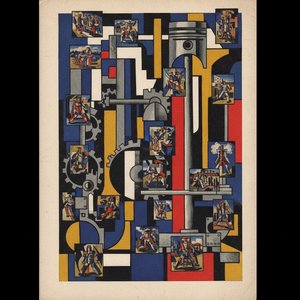
Fernand Léger: 25 Arcydzieł Kubizmu i Maszynerii - Kolekcja OriginalUniqueArt
Odkryj 25 arcydzieł Fernanda Légera – pioniera kubizmu i malarstwa maszyn. Poznaj historię, technikę i inspiracje tych ikonicznych obrazów. Reprodukcje najwyższej jakości na OriginalUniqueArt.com! Eksploruj pełną kolekcję online.

25 Arcydzieł Kandinskiego: Kolor, Duchowość i Abstrakcja w Twoim Domu | OriginalUniqueArt.com
Odkryj 25 arcydzieł Wassily Kandinskiego – pioniera abstrakcji i ekspresjonizmu! Poznaj historie, techniki i emocje kryjące się za jego kolorowymi kompozycjami. Reprodukcje obrazów najwyższej jakości na OriginalUniqueArt.com. Eksploruj pełną kolekcję online!

Top 10 arcydzieł ekspresjonizmu abstrakcyjnego – inspiracje dla Twojego wnętrza | OriginalUniqueArt.com
Odkryj 10 arcydzieł ekspresjonizmu abstrakcyjnego – Pollock, Rothko, de Kooning i inni. Poznaj historie artystów, techniki i inspiracje dla Twojego wnętrza. Reprodukcje najwyższej jakości na OriginalUniqueArt.com!
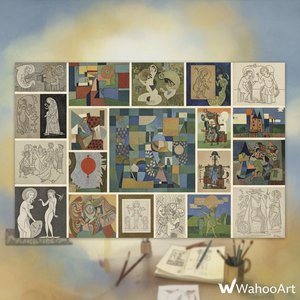
Paul Klee: 25 Arcydzieł Koloru i Formy | Reprodukcje Obrazów Online - OriginalUniqueArt
Odkryj 25 arcydzieł Paula Klee – od abstrakcji po ekspresjonizm. Poznaj historie, techniki i inspiracje malarza. Reprodukcje obrazów najwyższej jakości na OriginalUniqueArt.com. Eksploruj pełną kolekcję online!

Geometria Sztuki: 10 Arcydzieł Abstrakcji Geometrycznej | OriginalUniqueArt.com
Odkryj 10 arcydzieł abstrakcji geometrycznej! Poznaj historię Mondriana, Kandinskiego i Maleвича. Inspiracje wnętrzarskie z malarstwem abstrakcyjnym – reprodukcje najwyższej jakości na OriginalUniqueArt.com. Eksploruj kolekcję online!