

 Podgląd w skali
 Wyślij jako kartkę
 Udostępnij
 Szczegóły dzieła

 Pobierz
 Podobne obiekty
 RTG
RTG Pokaz slajdów
Henry John Roby


 Rozwiń treść
Ręcznie malowana reprodukcja olejowa
Ręcznie malowany obraz olejny na płótnie, wykonany na zamówienie przez naszych artystów w wybranym przez Ciebie wymiarze i oprawie. ( Zamów wydruk Kup obraz wysokiej rozdzielczości)




P118B $10

P118H $10

P118W $10

P438Z $10

P508JH $12

P508YH $12

P805H $10

P805Z $10

P919BZ $10

P919G $10

P919XJ $10

P959ZH $10

P968JZ $12

W106C $8

W218G $10

W218JH $8

W218Y $10

W307PJ $10

W316G $10

W316PJ $8

W316Y $10

W398PJ $8

W4111J $10

W500HY $15

W500JH $15

W692G $12

W849H $8

W940BG $15

W953PJ $8




Wybierz spośród naszych standardowych rozmiarów, które zachowują oryginalne proporcje dzieła sztuki.

Możesz wprowadzić własne wymiary, aby dopasować obraz do konkretnej ramy lub przestrzeni. Jeśli wybrany rozmiar nie będzie odpowiadał proporcjom oryginału, przytniecie dzieło sztuki lub rozszerzymy je o dodatkowe elementy, ręcznie domalowane przez artystę. Przed rozpoczęciem produkcji wyślemy projekt cyfrowy do Twojej akceptacji.
Należy pamiętać, że podgląd na ekranie nie odzwierciedla rzeczywistego przycinania ani rozszerzania obrazu. Tylko projekt dokładnie pokaże ostateczną kompozycję.
Choć oferujemy możliwość zamówienia niestandardowych rozmiarów, zalecamy wybór wymiaru z gotowej listy, aby zachować oryginalne proporcje dzieła.
Po złożeniu zamówienia zespół OriginalUniqueArt.com skontaktuje się z klientem drogą mailową w celu uzyskania instrukcji i prześle wizualizację projektu
Dostawa na całym świecie () w ciągu 3–4 tygodni zamiast standardowych 5 tygodni. (22 Sierpień). Bez kompromisów w kwestii jakości.

Bezpłatna ekspresowa wysyłka na cały świat

Wysokiej jakości płótno lniane

Pełne ubezpieczenie przesyłki

Gwarancja zwrotu należności celnych i podatków importowych

Gwarancja wiernego odwzorowania kolorów

Polityka 60-dniowego zwrotu (tylko w przypadku wad)

Gwarancja 100% zwrotu kosztów

Zniżka przy zamówieniu wielu produktów
 Opcja ze szkłem jest dostępna wyłącznie w rozmiarach poniżej 110 cm

Henry John Roby
Technika reprodukcji
Wymiary reprodukcji
-


Cena całkowita
$ 300
Opis dzieła
Henry John Roby: A Portrait Illuminated by Memory
Frank Bramley’s “Henry John Roby” stands as a poignant emblem of the Newlyn School’s fascination with capturing fleeting moments and distilling emotion into visual form. Executed in 1996, this portrait transcends mere representation; it's an exploration of character, imbued with a subtle luminescence that speaks volumes about its subject and the artist’s masterful command of light.
Subject Matter & Composition
The painting depicts Henry John Roby, an older gentleman distinguished by a prominent white beard and mustache—a visual shorthand for experience and wisdom. He is positioned centrally within a dark background, which serves to amplify the figure's presence and create a dramatic interplay of light and shadow. Bramley’s deliberate framing emphasizes Roby’s face as the focal point, inviting viewers to contemplate his gaze and inner thoughts.
Style & Technique: Impressionistic Light
Bramley adheres firmly to the tenets of Impressionism, prioritizing atmospheric effects over precise detail. The artist skillfully employs glazing techniques—thin layers of translucent paint applied successively—to achieve a velvety surface texture and imbue the canvas with an ethereal glow. Notice how light filters through the dark recesses of the room, illuminating Roby’s face and highlighting the contours of his features. This technique captures not just what is seen but also what is felt – the quiet dignity of age and remembrance.
Historical Context: The Newlyn School & Victorian Portraiture
"Henry John Roby" resides within a rich artistic tradition—the Newlyn School, established in Cornwall during the late Victorian era. Artists associated with this movement sought to depict landscapes and portraits with immediacy and sensitivity, rejecting academic conventions in favor of capturing the essence of their subjects. Bramley’s work reflects the broader Victorian preoccupation with portraying individuals as embodiments of moral virtue and intellectual achievement—a stylistic choice that underscores Roby's status as a respected figure within his community.
Symbolism & Emotional Resonance
The dark background serves as more than just compositional support; it symbolizes introspection and perhaps even melancholy. The soft illumination emanating from Roby’s face conveys warmth, compassion, and an enduring spirit—a testament to the artist's ability to convey profound emotion through subtle visual cues. Ultimately, “Henry John Roby” invites contemplation on themes of time, memory, and the beauty found in quiet solitude.
Concluding Remarks
Frank Bramley’s “Henry John Roby” is a captivating artwork that exemplifies the Newlyn School's commitment to capturing the human spirit. Its masterful use of light and shadow, combined with its evocative composition and symbolic depth, ensures its place as an enduring masterpiece—a portrait not merely of a man but of a moment frozen in time.
O artyście
A Life Immersed in Light and Shadow: The World of Frank Bramley
Frank Bramley, a name now inextricably linked to the evocative spirit of the Newlyn School, was an artist whose profound ability to translate human emotion onto canvas secured his place as a significant figure in British Post-Impressionism. Born in the quiet Lincolnshire village of Sibsey in 1857, his artistic journey – beginning with aspirations as an etcher – ultimately led him to become a celebrated Royal Academician, a testament to unwavering dedication and a remarkably sensitive eye for the lives unfolding around him. Bramley’s formative years were marked by formal art education, initially at Lincoln School of Art before he embarked on a transformative period studying at the prestigious Koninklijke Academie voor Schone Kunsten in Antwerp under Charles Verlat. This time in Belgium instilled within him not only a rigorous technical foundation but also exposure to continental artistic currents that would profoundly shape his mature style. A subsequent sojourn in Venice further broadened his horizons, allowing him to absorb the city’s unique atmosphere and masterfully capture the nuanced interplay of light – an element he would consistently explore throughout his career.The Newlyn School: Capturing Cornish Life
It was within the rugged beauty and authentic character of Cornwall that Bramley truly discovered his artistic voice. Drawn to the burgeoning artist colony in Newlyn, a community captivated by the area’s distinctive light and the unvarnished realities of its fishing communities, he quickly established himself as a key figure. Unlike many of his contemporaries who focused on idyllic depictions of coastal scenes, Bramley was particularly drawn to interior settings – seeking to capture the intimate moments and emotional complexities within domestic spaces. He wasn't merely documenting life; he was delving into the very soul of his subjects, portraying their hardships, joys, and quiet dignity with remarkable empathy. This focus allowed him to explore the interplay of natural and artificial light, creating atmospheric depth and imbuing his paintings with a palpable sense of mood. His technique, characterized by the distinctive ‘square brush’ method – applying paint in a jigsaw pattern of flat strokes – added vibrancy and texture to his canvases, further enhancing their emotional resonance. Works like *A Hopeless Dawn* (1888), now held within the Tate Gallery, exemplify this approach, powerfully conveying a sense of grief and despair through its depiction of a young woman consumed by sorrow.Themes of Loss and Resilience: A Masterful Palette
Bramley’s artistic output is deeply rooted in realism, yet it transcends mere representation through its profound emotional depth. He was profoundly influenced by artists like Jean-François Millet, whose depictions of peasant life resonated with Bramley’s own commitment to portraying the lives of working-class individuals. This influence is evident in works such as *The Fisherman’s Home* (1889) and *Every One His Own Tale* (1885), both exploring themes of loss, hardship, and the quiet dignity of everyday life within Cornish communities. Bramley's palette evolved over time, becoming brighter and more impastoed as he honed his technique, while always remaining grounded in tonal harmony and a sophisticated understanding of color’s emotive power. His ability to capture not just the appearance but also the *feeling* of a scene – the dampness of a Cornish morning, the weariness of a fisherman returning home – is what truly distinguishes his work.Recognition and Legacy: A Lasting Impression
Throughout his career, Frank Bramley garnered significant recognition within the British art establishment. He was elected an Associate of the Royal Academy (ARA) in 1894, a testament to his growing reputation, and achieved full Royal Academician status (RA) in 1911. His talent also extended beyond national borders; he received a gold medal at the prestigious Paris Salon, further solidifying his international acclaim. Interestingly, Bramley was a founding member of the New English Art Club but later resigned following disagreements with fellow artist Walter Sickert, demonstrating his independent spirit and unwavering commitment to his artistic vision. He eventually settled in Grasmere in the Lake District, continuing to exhibit widely until his untimely death in 1915. Frank Bramley’s legacy endures as a poignant reminder of an era defined by social change and artistic innovation. His paintings offer not only aesthetic pleasure but also a profound emotional connection to the lives and experiences of those who came before us, cementing his place as a significant figure in British Post-Impressionism and the Newlyn School.A Continuing Dialogue with the Past
Today, Bramley’s works are held in numerous public and private collections across the globe, including the Tate Gallery, the Royal Cornwall Museum, and the National Portrait Gallery. His paintings continue to captivate audiences with their evocative power and technical brilliance, inviting viewers to contemplate the complexities of human existence and the enduring beauty of the natural world. He remains an artist whose work speaks volumes about Victorian society, offering a valuable glimpse into the lives of ordinary people and reminding us of the universal themes of love, loss, and resilience that transcend time and place. His ability to imbue his canvases with such palpable emotion ensures that Frank Bramley’s artistic voice will continue to resonate for generations to come.
Frank Bramley
1857 - 1915 , Wielka Brytania
Krótka nota
- Artistic Movement Or Style: Post-Impressionizm
- Artists Or Movements Influenced By This Artist: ['Nowa Szkoła Nowej Anglii']
- Artists Who Influenced This Artist: ['Jean-François Millet']
- Date Of Birth: 1857
- Date Of Death: 1915
- Full Name: Frank Bramley
- Nationality: Angielski
- Notable Artworks:
- A Hopeless Dawn
- Dom rybaka
- Każdy swój los
- Place Of Birth: Sibsey, UK
Powiązane artykuły
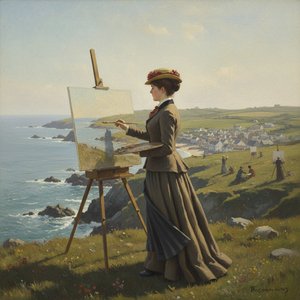
Elizabeth Adela Forbes: A Pioneering Impressionist of the Newlyn School
Explore the life & art of Elizabeth Adela Forbes, a pioneering Impressionist of the Newlyn School. Discover her captivating paintings, unique style, and lasting legacy with OriginalUniqueArt.
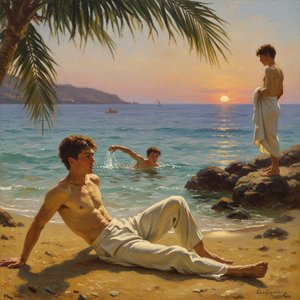
Henry Scott Tuke: Sunlit Masculinity & the Pastoral Ideal in Victorian Painting
Explore the captivating world of Henry Scott Tuke's paintings – a master of British Impressionism renowned for his intimate depictions of youth and sunlit maritime scenes. Discover his legacy & aesthetic influence.
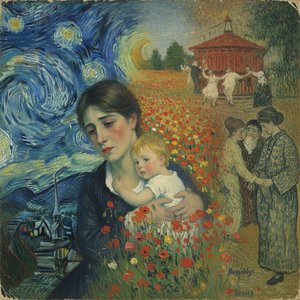
Capturing the Soul: The Most Emotionally Moving Impressionist and Post-Impressionist Masterpieces
Discover the profound emotional depth of Impressionist and Post-Impressionist masterpieces. Explore how legends like Monet, Van Gogh, and Gauguin captured light and soul through evocative landscapes and vibrant brushwork for a timeless connection to art history.
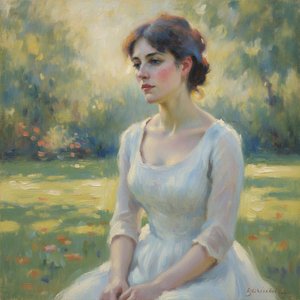
Capturing the Soul: The Ethereal Magic and Timeless Technique of Impressionist Portraiture
Discover the ethereal beauty of Impressionist portraiture. Explore how masters like Monet and Renoir captured light and soul through brushwork, and learn how to bring this timeless magic into your home with exquisite, hand-painted oil reproductions from OriginalUniqueArt.com.

The Luminous Presence: Capturing the Soul and Beauty of the Human Figure in Impressionist Art
Immerse yourself in the luminous world of Impressionist portraiture. Discover how masters like Monet and Renoir captured the soul through light and color. Explore our exquisite, hand-painted oil reproductions designed to bring the timeless beauty of the human figure into your home.

