
() ·
Obraz stworzony dla Ciebie, własnoręcznie
Ręcznie malowana reprodukcja olejowa
Ręcznie malowany obraz olejny na płótnie, wykonany na zamówienie przez naszych artystów w wybranym przez Ciebie wymiarze i oprawie. ( Przełącz na wydania drukowane Przejdź do wersji cyfrowej)
Biografia artysty
Discover François de Nomé's surrealist landscapes & bizarre cityscapes! French Baroque painter known for nightmarish ruins, Venetian capriccios, & unique artistic vision.
 Rozwiń treść
od ·
Rozdział 1
Jak duży powinien być ten format?
Przesuń suwak, aby zmienić rozmiar; obraz po lewej stronie przedstawia ramę w jej rzeczywistej szerokości. Zachowano proporcje oryginału.
Wybierz spośród naszych standardowych rozmiarów, które zachowują oryginalne proporcje dzieła sztuki.

Wpisz wymaganą szerokość i wysokość, aby obraz pasował do Twojej ramy lub ściany. Ponieważ jest to dzieło malowane ręcznie, w przypadku rozmiaru o innych proporcjach artysta może domalować nieco więcej wokół obrazu lub przyciąć jego fragmenty — wybór należy do Ciebie. Przed rozpoczęciem pracy prześlemy Ci cyfrową wizualizację do zatwierdzenia. Obraz widoczny na tej stronie nie przedstawia rzeczywistego efektu — jedynie wizualizacja oddaje realny rezultat.
Rozdział 2
W jaki sposób ma zostać dostarczone?
Wybierz krawędzie płótna naciągniętego na ramę
Wybierz ramę

Białe krawędzie zł1

rozmyte krawędzie zł1

Przedłużony zł1

P118B zł10

P118H zł10

P118W zł10

P438Z zł10

P508JH zł12

P508YH zł12

P805H zł10

P805Z zł10

P919BZ zł10

P919G zł10

P919XJ zł10

P959ZH zł10

P968JZ zł12

W106C zł8

W218G zł10

W218JH zł8

W218Y zł10

W307PJ zł10

W316G zł10

W316PJ zł8

W316Y zł10

W398PJ zł8

W4111J zł10

W500HY zł15

W500JH zł15

W692G zł12

W849H zł8

W940BG zł15

W953PJ zł8

H24-GOLD zł30

H24-SILVER zł30

H36-GOLD zł45

H36-SILVER zł45
W oprawie
Profil: . Wymiar całkowity w ramie: .
Rozdział 3
Kto go maluje i czy coś powinno ulec zmianie?
Po złożeniu zamówienia zespół OriginalUniqueArt.com skontaktuje się z klientem drogą mailową w celu uzyskania instrukcji i prześle podgląd projektu
Dostawa na całym świecie () w ciągu 3–4 tygodni zamiast standardowych 5 tygodni. (10 Listopad). Bez kompromisów w kwestii jakości.
Rozdział 4
Ostatnie szlify
Tabliczka informacyjna, jak w muzeum?
Szczegóły grawerowanej brązowej tabliczki
This elegant plaque features the artist's name and the title of the artwork, finely engraved for a timeless presentation.
It is made from bronze with a refined, elegant finish. The text is precisely laser-engraved for a sharp and permanent result. Measuring 9x2 cm, the plaque is compact yet easy to read. It's built to be durable and scratch-resistant, offering a professional, museum-quality look. Mounting is simple thanks to the included adhesive backing.
Szczegóły przezroczystej tabliczki akrylowej
The plaque includes essential engraved details such as the artist's name, the title of the artwork, the date it was created, the type of media used-like oil on canvas or watercolor-a brief description of the piece, and a QR code that links to the complete artwork information.
It is crafted from clear acrylic, offering a sleek, modern appearance. The text is UV-engraved in black to ensure strong visual contrast. With a size of 10x15 cm, it ensures optimal readability. It comes equipped with two metal hooks for secure wall mounting. The plaque is designed to be weather-resistant, making it suitable for various environments, and it includes interactive features that work seamlessly with smartphone scanning.
Szczegóły czarnej tabliczki akrylowej
This elegant plaque includes engraved information such as the artist's name, the title of the artwork, the date it was created, the type of media used (like oil on canvas or watercolor), a short description of the artwork, and a QR code for quick access to more information.
The plaque itself is made from refined black acrylic with a premium finish. The text is laser-engraved in white for high contrast and readability. Its size is 10x15 cm, designed to be easy to read. It comes with two metal hooks for professional mounting. The design is sleek and fits any interior style. It is also weather-resistant and durable, with built-in digital integration for mobile compatibility.
Werniks ochronny?
Kiedy potrzebujesz dostawy?
Rozdział 5
Twoje dzieło, dokładnie tak, jak zamówiłeś

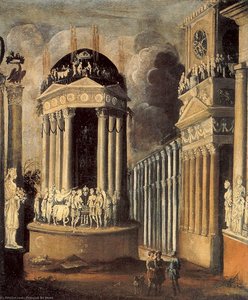
Architectural Capriccio
Technika reprodukcji
Wymiary reprodukcji
-

Wybitny mistrz artystyczny
Większa szczegółowość, finezja i dodatkowy czas na realizację
-

Opcje oprawy reprodukcji
-
-
W przypadku dzieł sztuki lub reprodukcji, których którykolwiek z boków przekracza 105 cm (około 41 cali), rama zostanie wysłana w formie zestawu do samodzielnego montażu. Metoda ta zapewnia bezpieczną dostawę i zapobiega uszkodzeniom podczas transportu.
Wymagany profesjonalny montaż – nie jest to produkt typu DIY.
Zestaw musi zostać złożony, a płótno naciągnięte przez doświadczonego profesjonalnego ramiarza, przy użyciu kleju do drewna (brak w zestawie), kleszczy do naciągania płótna oraz ścisków, które utrzymają krosna w równej pozycji podczas schnięcia kleju. Nieprawidłowy montaż lub nierównomierne napięcie płótna może trwale uszkodzić dzieło sztuki i nie podlega naszej gwarancji.
 W przypadku dzieł sztuki lub reprodukcji, których którykolwiek z boków przekracza 105 cm (około 41 cali), rama zostanie wysłana w formie zestawu do samodzielnego montażu. Metoda ta zapewnia bezpieczną dostawę i zapobiega uszkodzeniom podczas transportu.
W zestawie znajdują się wszystkie listwy z litego drewna, precyzyjnie docięte do wymiarów.
Montaż odbywa się przy użyciu dołączonych wkrętów oraz kleju do drewna do łączenia narożników, którego zestaw nie zawiera i który musi zostać dostarczony przez ramiarza.
Wymagane są profesjonalne narzędzia, których nie ma w zestawie: kleszcze do naciągania płótna (napinacz) oraz zaciski, które pozwolą utrzymać listwy w równej pozycji podczas schnięcia kleju.
Ważne:
Do połączenia narożników niezbędny jest klej do drewna, listwy należy unieruchomić za pomocą ścisków do momentu całkowitego wyschnięcia kleju, a naciągnięcie płótna na złożoną ramę wymaga użycia kleszczy do naciągania płótna. Żaden z tych elementów nie jest dołączony do zestawu. Przed zamówieniem tego rozmiaru zalecamy konsultację z doświadczonym ramiarzem.

Etykieta obiektu
-
-

Lakier ochronny
Lakier z połyskiem (pogłębia kolory, chroni przed światłem i wilgocią)
-

Personalizacja dzieła
Przykłady możliwości personalizacji: zastąp twarz zdjęciem klienta; dodaj zwierzę domowe (np. zamień kota na psa); umieść ukrytą wiadomość w tle; zmień krajobraz lub elementy tła.
-

Ekspresowa
Dostawa na cały świat () w ciągu 3–4 tygodni zamiast standardowych 5 tygodni. (10 Listopad). Bez kompromisów w kwestii jakości.
-
Przesyłka ekspresowa
Dostawa na cały świat () w ciągu 5 tygodni. (17 Listopad).
W cenie
Cena całkowita
zł 1178
Opcja ze szkłem jest dostępna wyłącznie w rozmiarach poniżej 110 cm
W każdym zamówieniu
- Bezpłatna ekspresowa wysyłka na cały świat
- Wysokiej jakości płótno lniane
- Pełne ubezpieczenie przesyłki
- Gwarancja zwrotu należności celnych i podatków importowych
- Gwarancja wiernego odwzorowania kolorów
- 100-dniowa polityka zwrotów (tylko w przypadku wad)
- Gwarancja 100% zwrotu pieniędzy
- Zniżka przy zakupie wielu sztuk


 Podgląd w skali 1:1
 Wyślij jako kartkę
 Udostępnij
 Szczegóły dzieła
 Przewodnik

 Pobierz obraz
 Podobne obiekty
 RTG
RTG Pokaz slajdów
 Pytania i odpowiedzi
 Statystyki
W liczbach
- 1622rok powstania dzieła
- 29dostępne ramy do wyboru
- standardowe formaty, w ich własnych proporcjach
- 5tygodni na namalowanie i dostarczenie dzieła
O oryginale

- 96.0 x 80.0 cm


François De Nomé
1593 - 1623, France
Krótkie informacje o François De Nomé
- Artistic Movement Or Style: Baroque
- Artists Or Movements Influenced By This Artist:
- Salvatore Rosa
- Piranesi
- Artists Who Influenced This Artist:
- Alessandro Magnasco
- Michelangelo Cerquozzi
- Belisario Corenzio
- Date Of Birth: 1593
- Date Of Death: 1623
- Full Name: François de Nomé
- Nationality: French
- Notable Artworks:
- Fantastic Ruins with Saint Augustine and the Child
- The Tomb of Solomon
- The Martyrdom of a female Saint
- Place Of Birth: Metz, France
Biografia artysty
The Enigmatic Visionary of Decay
François de Nomé remains one of the most captivating enigmas in the annals of Baroque art history, a painter whose very identity was once lost within the shadows of a collective pseudonym. Born in 1593 in the quiet region of Metz, Lorraine, his early life set the stage for a journey that would lead him from the workshops of Rome to the vibrant, dramatic atmosphere of Naples. Around 1602, de Nomé entered the Roman art scene, immersing himself in the studio of the Flemish landscape painter Balthasar Lauwers. It was during this formative period that he began to hone a technical mastery over light and perspective, yet his true artistic soul would only reveal itself through a fascination with the ephemeral and the broken.
For centuries, the works attributed to de Nomé were shrouded in mystery, mistakenly credited to a single mysterious figure known as Monsù Desiderio. It was not until recent scholarly investigations that art historians untangled this web of attribution, discovering that what was once thought to be the output of one man was actually the collaborative brilliance of at least three distinct artists, including de Nomé and Didier Barra. This revelation has transformed our understanding of his legacy, transforming him from a mere footnote in a collective identity into a singular, visionary voice capable of conjuring worlds that feel both ancient and hauntingly prophetic.
A Landscape of Ruin and Surrealism
The oeuvre of François de Nomé is defined by an unsettling, almost post-apocalyptic aesthetic that defies the idealized beauty typical of his contemporaries. Rather than seeking out lush, verdant vistas, de Nomé turned his gaze toward decrepit ruins, crumbling architectures, and desolate, barren landscapes. His canvases often feature massive, decaying structures silhouetted against heavy, overcast skies, creating a sense of profound isolation. Within these vast, skeletal remains, tiny, almost microscopic figures—often saints or biblical protagonists—wander through the debris, their smallness emphasizing the overwhelming scale of time and decay.
His technique is masterfully atmospheric, utilizing oil on canvas to create indistinct edges and a muted, earthy palette that evokes a sense of dust and antiquity. There is a palpable psychological drama in his work; he does not merely paint buildings, but rather the anxiety of collapse. By employing an illusionistic depth and a soft, hazy perspective, he invites the viewer into a dreamlike state where reality and nightmare blur. This approach predates modern surrealism by centuries, as he utilized the architectural capriccio—a whimsical architectural fantasy—to explore themes of memory, loss, and the inevitable triumph of nature over man-made grandeur.
Legacy and Artistic Significance
While de Nomé’s specific style did not become a dominant trend for Italian landscape painters in the following century, his contribution to the emotional depth of the Baroque period is undeniable. His most celebrated achievement lies in his ability to manipulate architectural reality to serve a higher, more symbolic purpose. A prime example is his depiction of the Venetian Piazza San Marco; while he meticulously recreates the essential structures of the piazza, he imbues them with an eerie stillness and invented details that transform a real location into a haunting, imaginary space.
The historical significance of de Nomé lies in his rejection of the conventional. In an era often preoccupied with the glorification of power and divine order, he chose to find beauty in the fractured and the forgotten. His work serves as a bridge between the classical fascination with antiquity and a much more modern, visceral reaction to the fragility of civilization. Today, de Nomé is celebrated not just as a painter of ruins, but as a master of the sublime, an artist who captured the haunting beauty of a world in transition.