
 Podgląd w skali 1:1
 Wyślij jako kartkę
 Udostępnij
 Szczegóły dzieła
 Przewodnik

 Pobierz obraz
 Podobne obiekty
 RTG
RTG Pokaz slajdów
 Q&A
Q&A Statystyki
Bathsheba Bathing

- 103.0 x 129.0 cm


 Rozwiń treść
Giclée / Wydruk artystyczny
Wydruki giclée lub płótna o jakości muzealnej, szybka realizacja i szeroki wybór opcji wykończenia. ( Zamów ręcznie malowaną reprodukcję Przejdź do wersji cyfrowej)




P118B zł10

P118H zł10

P118W zł10

P438Z zł10

P508JH zł12

P508YH zł12

P805H zł10

P805Z zł10

P919BZ zł10

P919G zł10

P919XJ zł10

P959ZH zł10

P968JZ zł12

W106C zł8

W218G zł10

W218JH zł8

W218Y zł10

W307PJ zł10

W316G zł10

W316PJ zł8

W316Y zł10

W398PJ zł8

W4111J zł10

W500HY zł15

W500JH zł15

W692G zł12

W849H zł8

W940BG zł15

W953PJ zł8




Wybierz spośród naszych standardowych rozmiarów, które zachowują oryginalne proporcje dzieła sztuki.

Wpisz wymaganą szerokość i wysokość, aby dopasować grafikę do ramy lub ściany. Wydruk można jedynie przyciąć, nigdy nie powiększając go poza oryginalny obraz, dlatego format o innych proporcjach spowoduje utratę części kompozycji. Przed rozpoczęciem druku prześlemy Ci cyfrowy podgląd do zatwierdzenia. Obraz wyświetlany na tej stronie nie pokazuje rzeczywistego przycięcia — jedynie podgląd oddaje ten efekt.
Dostawa na cały świat () w ciągu 2 tygodni zamiast standardowych 4/5 tygodni. (31 Październik)

Bezpłatna ekspresowa wysyłka na cały świat

Wysokiej jakości płótno lniane

Pełne ubezpieczenie przesyłki

Gwarancja zwrotu należności celnych i podatków importowych

Gwarancja wiernego odwzorowania kolorów

100-dniowa polityka zwrotów (tylko w przypadku wad)

Gwarancja 100% zwrotu pieniędzy

Zniżka przy zakupie wielu sztuk
 Opcja ze szkłem jest dostępna wyłącznie w rozmiarach poniżej 110 cm

Bathsheba Bathing
Giclée / Wydruk artystyczny
Wymiary reprodukcji
-


Cena całkowita
zł 311
A Moment of Grace: Solimena's "Bathsheba Bathing"
Francesco Solimena’s “Bathsheba Bathing,” painted in 1725, is more than just a depiction of a biblical scene; it’s a masterful exploration of light, gesture, and the subtle drama of human interaction. Executed during the height of Neapolitan Baroque grandeur, this work exemplifies Solimena's remarkable ability to infuse religious subjects with an intensely personal and emotionally resonant quality. Measuring 103 x 129 cm, the painting immediately draws the viewer into a carefully constructed tableau – Bathsheba, poised in her vulnerability, becomes the focal point of a complex interplay between modesty, observation, and perhaps even illicit desire.
- Subject Matter: The scene is drawn from the biblical story of David and Bathsheba. However, Solimena doesn’t present a straightforward narrative; instead, he captures a fleeting moment – the act of bathing itself – transforming it into an intimate and psychologically charged portrayal.
- Style & Technique: Solimena was renowned for his meticulous technique, particularly in fresco painting. “Bathsheba Bathing” demonstrates this mastery through its incredibly detailed rendering of fabrics, skin tones, and the play of light on water. His use of *sfumato*, a subtle blurring effect, creates an atmosphere of hazy beauty and adds to the sense of immediacy.
The Artist's Hand: Solimena’s Neapolitan Baroque
Born in Canelle di Serino in 1657, Francesco Solimena was steeped in the artistic traditions of Naples from a young age. His early training under his father, Angelo Solimena, and subsequent studies with established masters like Francesco di Maria and Giacomo del Po, shaped him into one of the most significant figures of Neapolitan Baroque painting. Solimena’s work is characterized by its dramatic lighting, dynamic compositions, and an almost obsessive attention to detail – qualities that were hallmarks of the period's artistic fervor. The patronage of Cardinal Vincenzo Orsini was crucial in establishing Solimena as a leading artist, allowing him to undertake increasingly ambitious commissions, including large-scale fresco cycles for churches and palaces.
- Fresco Technique: Solimena’s expertise in *buon fresco* (painting directly onto wet plaster) ensured the longevity of his works, contributing to their remarkable preservation.
- Compositional Dynamics: The arrangement of figures – Bathsheba at the center, surrounded by attendants and observers – creates a sense of movement and visual tension, reflecting the Baroque fascination with dynamism and emotional expression.
Symbolism & Emotional Resonance
Beyond its technical brilliance, “Bathsheba Bathing” is rich in symbolic meaning. The act of bathing itself has long been associated with purification and vulnerability. The presence of the dogs adds an element of both protection and potential danger – a subtle reminder of the complexities inherent in David’s pursuit of Bathsheba. The carefully positioned bowl, possibly containing water for her bath or used by someone else, further emphasizes the scene's intimate and potentially fraught nature. Solimena masterfully evokes a sense of quiet contemplation and unspoken emotion, inviting viewers to ponder the motivations and feelings of those involved.
Historical Context: Painted in 1725, this work reflects the continuing influence of Baroque ideals – grandeur, drama, and emotional intensity – within the artistic landscape of Naples. It stands as a testament to Solimena’s ability to synthesize these influences into a uniquely personal and compelling style.A Timeless Masterpiece: Reproduction Possibilities
OriginalUniqueArt offers meticulously crafted hand-painted reproductions of “Bathsheba Bathing,” allowing you to bring this iconic Baroque masterpiece into your home or office. Our skilled artisans employ the same techniques and attention to detail as Solimena himself, ensuring an authentic representation of this remarkable work. Choose from a range of sizes to perfectly suit your space and enjoy owning a piece of art history.
Pytania i odpowiedzi
Jaki rozmiar i orientacja są zalecane dla wydruku dzieła „Bathsheba Bathing” – Francesco Solimena?
Rozmiar Large, orientacja Landscape: to sugerowane parametry druku dla dzieła „Bathsheba Bathing” – Francesco Solimena.
Jaka paleta barw została wykorzystana w „Bathsheba Bathing” – Francesco Solimena?
„Bathsheba Bathing” – Francesco Solimena wykorzystuje Earthy paletę barw, która definiuje ogólny charakter kolorystyczny dzieła.
Jakie inne pseudonimy lub nazwy stosuje Francesco Solimena?
Francesco Solimena jest znany/a również pod pseudonimami: Abbot Ciccio.
Biografia artysty
A Neapolitan Master of Baroque Grandeur
Francesco Solimena, born in the small Italian town of Canale di Serino near Avellino in 1657, emerged as one of the most significant figures in Neapolitan painting during the late Baroque period. His artistic journey began within a family already steeped in artistic tradition; his father, Angelo Solimena, served as his initial instructor, collaborating with him on early projects like the Paradise fresco for the cathedral of Nocera. This foundational experience instilled in young Francesco a deep appreciation for technique and composition – a meticulous approach that would characterize much of his later work. He further refined his skills under the tutelage of Francesco di Maria and Giacomo del Po, absorbing diverse influences that would ultimately shape his distinctive style, blending Roman grandeur with the vibrant spirit of Naples. The patronage of Cardinal Vincenzo Orsini proved pivotal, providing encouragement and opportunities that allowed Solimena to establish himself as an independent artist by the 1680s, undertaking increasingly ambitious fresco commissions for prominent churches and palaces throughout the region.Forging a Style: Echoes of Rome in Neapolitan Splendor
Solimena’s artistic voice is immediately recognizable through its warm, brownish shadowing – a technique deeply indebted to the Roman Baroque masters Luca Giordano and Giovanni Lanfranco. He didn't merely imitate; instead, he synthesized these influences into a uniquely Neapolitan aesthetic. The hallmarks of his work include dynamic compositions brimming with emotional intensity, reflecting the Baroque period’s penchant for grandeur and theatricality. He possessed an exceptional ability to capture movement and drama within his scenes – whether depicting biblical narratives or mythological allegories – drawing viewers directly into the heart of the action. Solimena's paintings are characterized by a masterful use of *chiaroscuro*, creating dramatic contrasts between light and shadow that heighten the emotional impact of each scene. His compositions often feature elaborate architectural settings, subtly suggesting depth and space while simultaneously focusing attention on the figures within them. This careful balance between setting and subject is a hallmark of his distinctive style.A Prolific Output: Frescoes, Altarpieces, and Mythological Visions
Francesco Solimena was an extraordinarily prolific artist, leaving behind a vast body of work encompassing a wide range of subjects and formats. He excelled in large-scale fresco cycles, transforming the interiors of Neapolitan churches and palaces into vibrant displays of religious fervor and aristocratic splendor. His frescoes for the church of San Paolo Maggiore, depicting scenes from the life of St. Paul, are particularly renowned for their dramatic intensity and masterful use of color. His altarpieces are equally impressive, showcasing his ability to convey complex theological narratives with both emotional depth and technical brilliance. These works often feature a multitude of figures arranged in elaborate compositions, each carefully rendered with meticulous detail. Beyond his religious commissions, Solimena also demonstrated a mastery of mythological scenes, imbuing classical tales with dramatic energy and sensuous beauty – as evidenced by his *Allegory of Rule*, currently housed in the State Hermitage Museum in St. Petersburg. His depictions of weddings and courtly occasions further showcase his versatility, capturing the elegance and opulence of Neapolitan society.The Atelier and its Legacy: Shaping a Generation of Artists
From the 1690s onward, Solimena’s studio became a dominant force in Naples, shaping the artistic landscape of the city for decades. It wasn't simply a workshop; it was a vibrant center of artistic learning and innovation. Solimena trained numerous pupils who went on to become prominent artists in their own right – including Francesco de Mura, Giuseppe Bonito, Pietro Capelli, and Corrado Giaquinto. These students absorbed Solimena’s techniques and stylistic principles, carrying them forward into the next generation of Neapolitan painters. His influence extended beyond mere technical skill; he instilled in his pupils a deep appreciation for composition, color theory, and dramatic storytelling – qualities that would define the artistic landscape of Naples for years to come. The studio's remarkable productivity—churning out altarpieces, frescoes, and canvases at an astonishing rate—testified to Solimena’s organizational skills and his ability to manage a large team of artists.A Lasting Impact: Solimena’s Place in Art History
Francesco Solimena died in 1747 at Barra, near Naples, leaving behind an enduring legacy that continues to be celebrated through exhibitions, scholarly studies, and reproductions available today. He stands as one of the most important figures in Neapolitan Baroque painting – a master who successfully synthesized Roman influences with local traditions to create a distinctive style that defined artistic production in Naples for generations. His works remain admired for their dramatic flair, technical mastery, and enduring beauty, offering a captivating glimpse into the vibrant cultural life of 18th-century Italy. Solimena’s legacy extends beyond his individual creations; he played a crucial role in shaping the artistic identity of Naples, leaving an indelible mark on the city's cultural heritage.
Francesco Solimena
1657 - 1747 , Włochy
Krótka nota
- Artistic Movement Or Style: Barok
- Artists Or Movements Influenced By This Artist:
- Francesco de Mura
- Giuseppe Bonito
- Artists Who Influenced This Artist:
- Luca Giordano
- Giovanni Lanfranco
- Date Of Birth: 4 października 1657
- Date Of Death: 3 kwietnia 1747
- Full Name: Francesco Solimena
- Nationality: Włoski
- Notable Artworks:
- Allegoria Rządu
- Freski w Neapolu
- Jan Chrzciciel
- Place Of Birth: Canale di Serino, Włochy
Powiązane artykuły

Trwała Spuścizna Fresku: Technika, Historia i Wyraz Artystyczny w Różnych Kulturach
Odkryj fascynujący świat fresków! Poznaj historię, technikę tworzenia i wybitnych artystów. Ekspercka analiza konserwacji i współczesne zastosowania malowideł ściennych. Inspiracje dla wnętrz i pasjonatów sztuki.

Fresk jako Rodzinna Spuścizna: Utrwalenie Dziedzictwa na Ścianach
Odkryj sztukę fresku! Poznaj historię, technikę i inspiracje. Zamów spersonalizowany fresk rodzinny – trwałe dzieło sztuki dla przyszłych pokoleń. Profesjonalna konserwacja i ochrona.

Fresk: Technika, Historia i Artystyczna Ekspresja – Od Antyku do Współczesności
Poznaj historię i technikę fresku – od antycznych korzeni po współczesne zastosowania. Ekspercka analiza, konserwacja i inspiracje dla miłośników sztuki. Odkryj trwałość i piękno malowideł ściennych!

Sztuka, która ożywia przestrzeń: Emocjonalna siła fresku we wnętrzu
Poznaj fascynujący świat fresków! Ekspercka wiedza o technice, historii i konserwacji malowideł ściennych. Inspiracje dla wnętrz i możliwość zamówienia unikalnego dzieła sztuki.
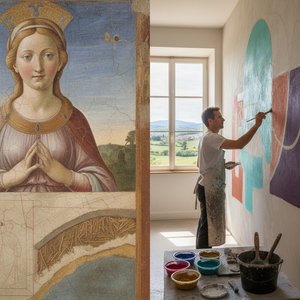
The Enduring Legacy of Fresco Painting: Techniques, History & Contemporary Relevance
Explore the rich history & enduring artistry of fresco painting – from Giotto to Michelangelo! Discover techniques, conservation efforts, & modern applications. Learn how OriginalUniqueArt brings this timeless art form to your home.