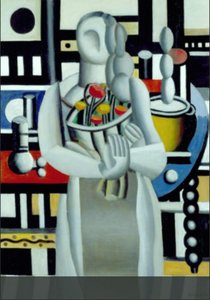
Wersja olejowa
 Wszystko o The dance







































 W przypadku dzieł sztuki lub reprodukcji, których którykolwiek z boków przekracza 105 cm (około 41 cali), rama zostanie wysłana w formie zestawu do samodzielnego montażu. Metoda ta zapewnia bezpieczną dostawę i zapobiega uszkodzeniom podczas transportu.


A Rhythmic Convergence of Form and Motion
Fernand Léger’s 1932 masterpiece, The Dance, serves as a breathtaking window into the heart of the modern era. At first glance, the viewer is swept up in a whirlwind of activity, where figures are caught in various states of repose and exuberant movement. It is not merely a depiction of a gathering; it is a carefully orchestrated symphony of geometric shapes. Léger, often celebrated as a Geometric Surrealist, eschews traditional anatomical precision in favor of cylinders, cubes, and bold lines. This reduction of the human form into architectural elements creates a mesmerizing rhythm that mirrors the very pulse of life itself. The composition vibrates with an energy that feels both primal and profoundly modern, inviting the observer to lose themselves in the swirling patterns of the dancers.The Tactile Brilliance of Faceted Painting
Beyond the striking composition lies a technical mastery that demands close inspection. Léger utilized a technique known as faceted painting, applying thick, deliberate layers of pigment to create a surface that possesses its own physical presence. The palette is unapologetically bold, dominated by primary reds, yellows, and blues that clash and harmonize with startling intensity. These vibrant hues are set against cooler, more muted backgrounds, creating a sense of depth despite the intentional flattening of perspective. For the collector or interior designer, this texture offers a captivating sensory experience; when captured in a high-quality reproduction, the interplay of light across these simulated thick strokes brings a dynamic, sculptural quality to any wall, making it a centerpiece of modern decor.Echoes of the Machine Age
To understand The Dance is to understand the tension of the early twentieth century. Amidst the swirling figures, Léger integrates objects that speak to the burgeoning industrial landscape—clocks, sports equipment, and mechanical shapes that suggest a world increasingly defined by technology. This juxtaposition of organic human movement with rigid, man-made objects reflects the artist's fascination with the Machine Age. There is a profound symbolism in how the figures seem both part of and distinct from their mechanical surroundings, capturing the era's struggle to find humanity within an increasingly automated reality. It is this complex emotional layer—the balance between chaos and order, nature and industry—that gives the painting its enduring power, making it an essential piece for those who appreciate art that challenges the intellect while stirring the soul.Pytania i odpowiedzi
Czy The dance jest dziełem namalowanym ręcznie, czy wydrukiem?
Malowane ręcznie: wykwalifikowany artysta wykonuje olejną kopię The dance na płótnie lnianym.
Jaki rozmiar wybrać dla The dance?
Dostępne rozmiary obejmują zakres od 34.8 x 28.7 cm (zł782) do 242.0 x 199.7 cm (zł6928); tabela na tej stronie przedstawia główne warianty oraz ich ceny.
Ile trwa dostawa?
Czas dostawy wynosi od 4 do 5 tygodni, przy czym oferujemy bezpłatną ekspresową wysyłkę na cały świat; na tej stronie dostępna jest również opcja pilnej produkcji. Możesz dokonać zwrotu w ciągu 100 dni z pełnym zwrotem kosztów, bez żadnych dodatkowych warunków.
Jakiej techniki użył/a Fernand Léger w pracy The dance?
Oil On Canvas
 Podgląd w skali 1:1

 Wyślij jako kartkę
 Udostępnij
 Szczegóły dzieła
 Karta informacyjna


 Pobierz obraz
 Podobne obiekty
 RTG
 Pokaz slajdów
 Pytania i odpowiedzi

 Statystyki