Rozmiar tekstu

() ·

Obraz stworzony dla Ciebie, własnoręcznie

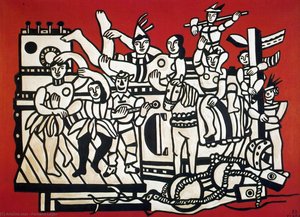
La grande parade sur fond rouge

Ręcznie malowana reprodukcja olejowa

Ręcznie malowany obraz olejny na płótnie, wykonany na zamówienie przez naszych artystów w wybranym przez Ciebie wymiarze i oprawie. ( Przełącz na wydania drukowane Przejdź do wersji cyfrowej)

Opis obiektu

Monumental obraz Fernand Légera "La grande parade sur fond rouge" z 1953 roku przedstawiający grupę ludzi na koniu i elementy architektury mechanicznej – ikoniczny przykład tubizmu.

Biografia artysty

Fernand Léger (1881-1955) – francuski malarz i rzeźbiarz, pionier Kubizmu i Tubismu. Jego obrazy celebrują nowoczesność, maszynę i ludzką formę. Kluczowy dla sztuki XX wieku.

od ·

Rozdział 1

Jak duży powinien być ten format?

Przesuń suwak, aby zmienić rozmiar; obraz po lewej stronie przedstawia ramę w jej rzeczywistej szerokości. Zachowano proporcje oryginału.

Standardowy format
personalizowane
CM
INCH

Wybierz spośród naszych standardowych rozmiarów, które zachowują oryginalne proporcje dzieła sztuki.

szerokość
wysokość

Wpisz wymaganą szerokość i wysokość, aby obraz pasował do Twojej ramy lub ściany. Ponieważ jest to dzieło malowane ręcznie, w przypadku rozmiaru o innych proporcjach artysta może domalować nieco więcej wokół obrazu lub przyciąć jego fragmenty — wybór należy do Ciebie. Przed rozpoczęciem pracy prześlemy Ci cyfrową wizualizację do zatwierdzenia. Obraz widoczny na tej stronie nie przedstawia rzeczywistego efektu — jedynie wizualizacja oddaje realny rezultat.

Rozdział 2

W jaki sposób ma zostać dostarczone?

Wybierz krawędzie płótna naciągniętego na ramę

Wybierz ramę

Corner sample of the WhiteWrap canvas edge finish, stretched on lite drewno bars
Białe krawędzie zł1
Corner sample of the BlurSideWrap canvas edge finish, stretched on lite drewno bars
rozmyte krawędzie zł1
Corner sample of the ExtendedWrap canvas edge finish, stretched on lite drewno bars
Przedłużony zł1
Corner sample of the P118B picture frame: polistyren formowany, 5 cm wide and 3 cm thick
P118B zł10
Corner sample of the P118H picture frame: polistyren formowany, 5 cm wide and 3 cm thick
P118H zł10
Corner sample of the P118W picture frame: polistyren formowany, 5 cm wide and 3 cm thick
P118W zł10
Corner sample of the P438Z picture frame: polistyren formowany, 5.5 cm wide and 3.5 cm thick
P438Z zł10
Corner sample of the P508JH picture frame: polistyren formowany, 7 cm wide and 3.5 cm thick
P508JH zł12
Corner sample of the P508YH picture frame: polistyren formowany, 7 cm wide and 3.5 cm thick
P508YH zł12
Corner sample of the P805H picture frame: polistyren formowany, 5 cm wide and 3.5 cm thick
P805H zł10
Corner sample of the P805Z picture frame: polistyren formowany, 5 cm wide and 3.5 cm thick
P805Z zł10
Corner sample of the P919BZ picture frame: polistyren formowany, 7 cm wide and 3.5 cm thick
P919BZ zł10
Corner sample of the P919G picture frame: polistyren formowany, 7 cm wide and 3.5 cm thick
P919G zł10
Corner sample of the P919XJ picture frame: polistyren formowany, 7 cm wide and 3.5 cm thick
P919XJ zł10
Corner sample of the P959ZH picture frame: polistyren formowany, 5 cm wide and 3 cm thick
P959ZH zł10
Corner sample of the P968JZ picture frame: polistyren formowany, 6 cm wide and 4 cm thick
P968JZ zł12
Corner sample of the W106C picture frame: lite drewno, 5 cm wide and 3 cm thick
W106C zł8
Corner sample of the W218G picture frame: lite drewno, 5 cm wide and 3 cm thick
W218G zł10
Corner sample of the W218JH picture frame: lite drewno, 5 cm wide and 3 cm thick
W218JH zł8
Corner sample of the W218Y picture frame: lite drewno, 5 cm wide and 3 cm thick
W218Y zł10
Corner sample of the W307PJ picture frame: lite drewno, 6 cm wide and 3 cm thick
W307PJ zł10
Corner sample of the W316G picture frame: lite drewno, 6 cm wide and 3 cm thick
W316G zł10
Corner sample of the W316PJ picture frame: lite drewno, 6 cm wide and 3 cm thick
W316PJ zł8
Corner sample of the W316Y picture frame: lite drewno, 6 cm wide and 3 cm thick
W316Y zł10
Corner sample of the W398PJ picture frame: lite drewno, 5 cm wide and 3 cm thick
W398PJ zł8
Corner sample of the W4111J picture frame: lite drewno, 6.5 cm wide and 3.5 cm thick
W4111J zł10
Corner sample of the W500HY picture frame: lite drewno, 7 cm wide and 5 cm thick
W500HY zł15
Corner sample of the W500JH picture frame: lite drewno, 7 cm wide and 5 cm thick
W500JH zł15
Corner sample of the W692G picture frame: lite drewno, 8 cm wide and 4 cm thick
W692G zł12
Corner sample of the W849H picture frame: lite drewno, 5 cm wide and 3 cm thick
W849H zł8
Corner sample of the W940BG picture frame: lite drewno, 7.5 cm wide and 4.5 cm thick
W940BG zł15
Corner sample of the W953PJ picture frame: lite drewno, 6 cm wide and 3.5 cm thick
W953PJ zł8
Corner sample of the H24-GOLD picture frame: rzeźbione drewno pokryte gipsem, 10 cm wide and 6 cm thick
H24-GOLD zł30
Corner sample of the H24-SILVER picture frame: rzeźbione drewno pokryte gipsem, 10 cm wide and 6 cm thick
H24-SILVER zł30
Corner sample of the H36-GOLD picture frame: rzeźbione drewno pokryte gipsem, 15 cm wide and 6.5 cm thick
H36-GOLD zł45
Corner sample of the H36-SILVER picture frame: rzeźbione drewno pokryte gipsem, 15 cm wide and 6.5 cm thick
H36-SILVER zł45

Profil: . Wymiar całkowity w ramie: .

Rozdział 3

Kto go maluje i czy coś powinno ulec zmianie?

Przykłady możliwych zmian: Zastąpienie twarzy zdjęciem klienta; Dodanie zwierzęcia (np. zamiana kota na psa); Ukrycie wiadomości w tle; Zmiana krajobrazu lub elementów tła.
Po złożeniu zamówienia zespół OriginalUniqueArt.com skontaktuje się z klientem drogą mailową w celu uzyskania instrukcji i prześle podgląd projektu

Dostawa na całym świecie () w ciągu 3–4 tygodni zamiast standardowych 5 tygodni. (4 Listopad). Bez kompromisów w kwestii jakości.

Rozdział 4

Ostatnie szlify

Tabliczka informacyjna, jak w muzeum?

Szczegóły grawerowanej brązowej tabliczki

This elegant plaque features the artist's name and the title of the artwork, finely engraved for a timeless presentation.

It is made from bronze with a refined, elegant finish. The text is precisely laser-engraved for a sharp and permanent result. Measuring 9x2 cm, the plaque is compact yet easy to read. It's built to be durable and scratch-resistant, offering a professional, museum-quality look. Mounting is simple thanks to the included adhesive backing.

Szczegóły przezroczystej tabliczki akrylowej

The plaque includes essential engraved details such as the artist's name, the title of the artwork, the date it was created, the type of media used-like oil on canvas or watercolor-a brief description of the piece, and a QR code that links to the complete artwork information.

It is crafted from clear acrylic, offering a sleek, modern appearance. The text is UV-engraved in black to ensure strong visual contrast. With a size of 10x15 cm, it ensures optimal readability. It comes equipped with two metal hooks for secure wall mounting. The plaque is designed to be weather-resistant, making it suitable for various environments, and it includes interactive features that work seamlessly with smartphone scanning.

Szczegóły czarnej tabliczki akrylowej

This elegant plaque includes engraved information such as the artist's name, the title of the artwork, the date it was created, the type of media used (like oil on canvas or watercolor), a short description of the artwork, and a QR code for quick access to more information.

The plaque itself is made from refined black acrylic with a premium finish. The text is laser-engraved in white for high contrast and readability. Its size is 10x15 cm, designed to be easy to read. It comes with two metal hooks for professional mounting. The design is sleek and fits any interior style. It is also weather-resistant and durable, with built-in digital integration for mobile compatibility.

Werniks ochronny?

Kiedy potrzebujesz dostawy?

Rozdział 5

Twoje dzieło, dokładnie tak, jak zamówiłeś

La grande parade sur fond rouge

Technika reprodukcji

Wymiary reprodukcji

-

Wybitny mistrz artystyczny

Większa szczegółowość, finezja i dodatkowy czas na realizację

-

Opcje oprawy reprodukcji

-

-

W przypadku dzieł sztuki lub reprodukcji, których którykolwiek z boków przekracza 105 cm (około 41 cali), rama zostanie wysłana w formie zestawu do samodzielnego montażu. Metoda ta zapewnia bezpieczną dostawę i zapobiega uszkodzeniom podczas transportu.

Wymagany profesjonalny montaż – nie jest to produkt typu DIY.
Zestaw musi zostać złożony, a płótno naciągnięte przez doświadczonego profesjonalnego ramiarza, przy użyciu kleju do drewna (brak w zestawie), kleszczy do naciągania płótna oraz ścisków, które utrzymają krosna w równej pozycji podczas schnięcia kleju. Nieprawidłowy montaż lub nierównomierne napięcie płótna może trwale uszkodzić dzieło sztuki i nie podlega naszej gwarancji.

  • W zestawie znajdują się wszystkie listwy z litego drewna, precyzyjnie docięte do wymiarów.

  • Montaż odbywa się przy użyciu dołączonych wkrętów oraz kleju do drewna do łączenia narożników, którego zestaw nie zawiera i który musi zostać dostarczony przez ramiarza.

  • Wymagane są profesjonalne narzędzia, których nie ma w zestawie: kleszcze do naciągania płótna (napinacz) oraz zaciski, które pozwolą utrzymać listwy w równej pozycji podczas schnięcia kleju.

Ważne:
Do połączenia narożników niezbędny jest klej do drewna, listwy należy unieruchomić za pomocą ścisków do momentu całkowitego wyschnięcia kleju, a naciągnięcie płótna na złożoną ramę wymaga użycia kleszczy do naciągania płótna. Żaden z tych elementów nie jest dołączony do zestawu. Przed zamówieniem tego rozmiaru zalecamy konsultację z doświadczonym ramiarzem.

Etykieta obiektu

-

-

Lakier ochronny

Lakier z połyskiem (pogłębia kolory, chroni przed światłem i wilgocią)

-

Personalizacja dzieła

Przykłady możliwości personalizacji: zastąp twarz zdjęciem klienta; dodaj zwierzę domowe (np. zamień kota na psa); umieść ukrytą wiadomość w tle; zmień krajobraz lub elementy tła.

-

Ekspresowa

Dostawa na cały świat () w ciągu 3–4 tygodni zamiast standardowych 5 tygodni. (4 Listopad). Bez kompromisów w kwestii jakości.

-

Przesyłka ekspresowa

Dostawa na cały świat () w ciągu 5 tygodni. (11 Listopad).

W cenie

Cena całkowita

zł 1173

Suma całkowita zł 1173

Opcja ze szkłem jest dostępna wyłącznie w rozmiarach poniżej 110 cm

W każdym zamówieniu

  • Bezpłatna ekspresowa wysyłka na cały świat
  • Wysokiej jakości płótno lniane
  • Pełne ubezpieczenie przesyłki
  • Gwarancja zwrotu należności celnych i podatków importowych
  • Gwarancja wiernego odwzorowania kolorów
  • 100-dniowa polityka zwrotów (tylko w przypadku wad)
  • Gwarancja 100% zwrotu pieniędzy
  • Zniżka przy zakupie wielu sztuk

Fernand Léger: A Pioneer of Tubism and the Celebration of Modernity

Fernand Léger (1881-1955) stands as a monumental figure in the landscape of 20th-century art, recognized not merely for his prolific output but for fundamentally reshaping artistic expression. Born Joseph Fernand Henri Léger in Argentan, Normandy, he emerged from humble beginnings – witnessing firsthand the physicality of rural life – to become one of Paris’s most influential voices within the burgeoning avant-garde movement. Unlike many artists of his era who retreated into abstraction as a refuge from representational art, Léger boldly embraced it as a tool for confronting and glorifying the transformative forces of industrialization and technological advancement. This conviction fueled his artistic journey, propelling him from architectural studies to a career dedicated to capturing the dynamism and geometric precision characteristic of the machine age.

The Large One Parades on Red Background: A Visual Symphony

“Grand parade sur fond rouge,” completed in 1953, exemplifies Léger’s signature style – Tubism – a radical departure from traditional painting techniques that would forever alter artistic perception. This monumental canvas measures 114 x 156 cm and immediately commands attention with its vibrant crimson hue dominating the composition. Léger's masterful manipulation of color isn’t merely decorative; it serves as an integral element in conveying the energy and rhythm of urban life, mirroring the relentless movement of trains and factories. The painting depicts a procession of figures – stylized human forms rendered in simplified geometric shapes – traversing across a horizontal band of scarlet pigment. This bold chromatic choice underscores the artwork's central theme: the triumphant march forward into an era defined by innovation and progress.

Decoding Geometric Forms and Symbolic Resonance

Tubism, developed by Léger alongside Pablo Picasso and Georges Braque, represents more than just stylistic experimentation; it embodies a philosophical stance rooted in the belief that visual representation could effectively communicate complex ideas about the human condition within the context of industrial society. Léger meticulously reduced organic forms to basic geometric primitives – cylinders, cubes, spheres – rejecting illusionistic depth and perspective in favor of flattened planes that emphasize spatial relationships. This deliberate simplification isn’t an abandonment of observation but rather a heightened awareness of underlying structural principles. The inclusion of elements like a clock, bowl, and books adds layers of symbolic significance, prompting contemplation on time, nourishment, and knowledge—concepts considered crucial for navigating the challenges and opportunities presented by modernity.

A Legacy Beyond Cubism: Pop Art's Precursor

While Léger’s influence extends beyond Tubism, arguably his most enduring contribution lies in establishing himself as a precursor to Pop Art. His willingness to engage with popular culture and mass media – evident in works like “The Large One Parades on Red Background” – foreshadowed the movement’s embrace of everyday subjects and techniques derived from advertising and printmaking. Léger's unwavering conviction that art could serve as a conduit for communicating ideas about contemporary life resonated deeply with artists who would later revolutionize visual culture. He remains an artist whose work continues to inspire awe and provoke discussion, cementing his place as one of the most important figures in shaping the artistic landscape of the 20th century.

Where to Acquire Authentic Reproductions

Interested in experiencing the grandeur of Léger’s vision firsthand? High-quality reproductions of “Grand parade sur fond rouge” are available at OriginalUniqueArt.com and other reputable art platforms, allowing you to bring this iconic masterpiece into your home or office. Explore our curated collection today!

Pytania i odpowiedzi

Jaki rozmiar "La grande parade sur fond rouge" jest sugerowany do Salon lub strefa dzienna?

Zalecane zestawienie dla „La grande parade sur fond rouge” – Fernand Léger: wydruk w formacie Duży format do Salon lub strefa dzienna.

Jaki poziom luminancji ma „La grande parade sur fond rouge” – Fernand Léger?

Kolory dzieła "La grande parade sur fond rouge" charakteryzują się luminancją na poziomie Delikatna luminancja.

Jak bardzo znane jest dzieło "La grande parade sur fond rouge" autorstwa Fernand Léger?

"La grande parade sur fond rouge" jest klasyfikowane jako Uznany/a.

Więcej o tym obrazie

Podgląd w skali 1:1 Podgląd AR Przełącz na wydania drukowane Przejdź do wersji cyfrowej Wyślij jako kartkę
Szczegóły dzieła Przewodnik Dodaj do ulubionych Pobierz obraz Podobne obiekty RTG Pokaz slajdów Pytania i odpowiedzi Statystyki

W liczbach

  • 1953rok powstania dzieła
  • 29dostępne ramy do wyboru
  • standardowe formaty, w ich własnych proporcjach
  • 5tygodni na namalowanie i dostarczenie dzieła
Fernand Léger

Fernand Léger

1881 - 1955, Francja

Krótkie informacje o Fernand Léger

  • Artistic Movement Or Style: Cubizm, Tubizm
  • Artists Or Movements Influenced By This Artist: ['Pop Art']
  • Artists Who Influenced This Artist: ['Paul Cézanne']
  • Date Of Birth: 4 lutego 1881
  • Date Of Death: 17 sierpnia 1955
  • Full Name: Fernand Léger
  • Nationality: Francuz
  • Notable Artworks:
    • Nudes in the Forest
    • Machine Element
    • The Great Parade
  • Place Of Birth: Argentan, Francja

Biografia artysty

A Life Forged in Form: The World of Fernand Léger

Fernand Léger, born Joseph Fernand Henri Léger in 1881 amidst the rural landscapes of Argentan, Normandy, stands as a pivotal figure in the evolution of modern art. His journey from the farmlands of his youth to the forefront of Parisian avant-garde circles is a testament to an unwavering artistic vision and a relentless pursuit of capturing the spirit of the machine age. Unlike many of his contemporaries who embraced abstraction as a retreat from representation, Léger sought to *integrate* modernity – its dynamism, its mechanical forms, its very essence – into a new visual language that was both powerfully abstract and deeply rooted in the observable world. His early life, steeped in the physicality of agricultural labor, provided a grounding contrast to the industrialized future he would so passionately depict. Initially destined for architecture, Léger’s path shifted towards painting after arriving in Paris around 1900, supporting himself through drafting work while honing his artistic skills. This period was marked by traditional academic training, but it wasn't until encountering the groundbreaking work of Paul Cézanne that a true transformation began to unfold.

The Birth of ‘Tubism’ and the Section d’Or

Cézanne’s retrospective in 1907 acted as a catalyst, liberating Léger from conventional representation and propelling him towards a more geometric and structural approach. He began dismantling forms, analyzing their underlying structures, and rebuilding them on canvas with a newfound emphasis on solidity and volume. This exploration quickly led him into the orbit of Cubism, but Léger wasn’t content to simply replicate the styles of Picasso or Braque. Instead, he developed his own distinct idiom – a personal form of Cubism that critics playfully dubbed “Tubism.” Characterized by cylindrical forms, flattened planes, and bold color contrasts, Tubism celebrated the machine aesthetic long before it became a widespread artistic preoccupation. It was an art born from observing the burgeoning industrial world, recognizing beauty in its functional shapes and mechanical rhythms. Léger’s approach differed significantly; he retained a sense of volume and depth, unlike some Cubists who completely flattened their subjects. This resulted in a dynamic interplay between solidity and flatness, creating a unique visual experience. The period also saw him actively participating in the avant-garde scene, joining forces with artists like Jean Metzinger, Henri Le Fauconnier, Francis Picabia, and Marcel Duchamp within the Puteaux Group, also known as the Section d’Or (The Golden Section). This group, comprised of intellectuals and artists, explored mathematical principles of harmony and proportion, seeking to infuse their art with a sense of order and rationality. Their collective investigations pushed the boundaries of artistic expression, laying the groundwork for future developments in abstract art.

War, Mechanization, and a New Aesthetic

The outbreak of World War I profoundly impacted Léger’s life and work. Serving at the front from 1914 to 1916 exposed him to the brutal realities of modern warfare – artillery barrages, aerial combat, and the dehumanizing effects of mechanized conflict. This experience didn't lead to disillusionment or a rejection of modernity; rather, it solidified his fascination with machines and their power. Sketches made during his service documented the stark beauty of military technology, transforming instruments of destruction into subjects of artistic contemplation. The repetitive patterns of trenches, the gleaming metal of tanks, and the angular forms of aircraft became sources of inspiration for his later paintings. Upon returning to civilian life, Léger’s aesthetic underwent a further evolution. His paintings began to reflect a more streamlined, mechanistic sensibility, celebrating the dynamism and efficiency of the industrial world. *Soldier with a Pipe* (1916) exemplifies this shift, showcasing simplified forms and bold colors that evoke the feeling of mechanical precision. This wasn't merely an aesthetic choice; it was a philosophical statement – an affirmation of modernity’s potential for progress and renewal, even in the wake of devastating conflict.

The Development of Style: From Cubism to ‘Tubism’ and Beyond

Léger’s artistic journey wasn’t static. While “Tubism” defined his early work, he continually experimented with different approaches. He moved away from the strict geometric forms of his initial Tubist paintings, incorporating more figurative elements and exploring new color palettes. During the 1920s, influenced by Surrealism and the rise of urban life, Léger’s style became increasingly dynamic and expressive. His *Paysages animés* (Animated Landscapes) series from 1921 showcased figures and animals seamlessly integrated into streamlined compositions, blurring the boundaries between organic and inorganic forms. He also experimented with sculpture and filmmaking, creating innovative works that combined painting, ceramics, and moving images. The influence of Marcel Duchamp’s “ready-mades” is evident in Léger's use of industrial objects as subjects for his paintings, further demonstrating his engagement with the modern world. His work during this period can be characterized by a vibrant energy, a sense of movement, and an optimistic vision of the future.

Legacy and Lasting Influence

In his post-war years, Léger continued to explore the intersection of art and industry, creating works that celebrated modern life with a unique blend of abstraction and figuration. His *Cityscapes* series reflected the bustling energy of urban centers, while his portraits captured the essence of everyday people. Léger’s influence on subsequent generations of artists is undeniable. His bold simplification of form, his embrace of industrial imagery, and his celebration of popular culture anticipated the emergence of Pop Art decades later. Artists like Roy Lichtenstein and Andy Warhol owe a clear debt to Léger's pioneering work. He bridged the gap between abstract art and figurative representation, demonstrating that it was possible to create works that were both intellectually rigorous and visually engaging. Today, Fernand Léger’s paintings are held in major museums worldwide, including the Musée d'Art et d'Histoire in France and the Musée National Fernand Léger, dedicated solely to his work. He remains a towering figure of 20th-century art – a visionary who dared to find beauty in the machine age and to translate its energy onto canvas with unparalleled boldness and originality. His legacy is not merely as a painter, but as a prophet of modernity. A true pioneer whose work continues to resonate with audiences today.

Najważniejsze informacje

  • Artist: Fernand Léger
  • Artistic style: Styl naibozyński
  • Title: La grande parade sur fond rouge
  • Influences: Cubizm
  • Dimensions: 114 x 156 cm
  • Medium: Farba olejna

Quiz o sztuce

Do każdego pytania dotyczy tylko jedna poprawna odpowiedź.

Pytanie 1:
Jak nazywa się obraz Ferdynanda Légera?
Pytanie 2:
W jakim stylu został wykonany obraz?
Pytanie 3:
Kiedy powstał obraz?
Pytanie 4:
Czy obraz przedstawia ludzi?
Pytanie 5:
Jaką technikę wykorzystał twórca obrazu?