Zobacz w skali 1:1
 Wyślij
 Udostępnij
 Szczegóły
 Przewodnik

 Pobierz plik obrazu
 Podobne obiekty
 RTG
RTG Pokaz slajdów
 Statystyki
Studium figury
 Akryl na papierze
- Symbolism, Parallelism
 1903
1903- – XIX wiek
 47.0 x 31.0 cm
 Muzeum Narodowe Bośni i Hercegowiny
 Czytaj więcej
Giclée / Wydruk artystyczny
Wydruki giclée lub płótna o jakości muzealnej, szybka realizacja i szeroki wybór opcji wykończenia. ( Kup ręcznie malowany obraz Przełącz na wersję cyfrową)




P118B zł10

P118H zł10

P118W zł10

P438Z zł10

P508JH zł12

P508YH zł12

P805H zł10

P805Z zł10

P919BZ zł10

P919G zł10

P919XJ zł10

P959ZH zł10

P968JZ zł12

W106C zł8

W218G zł10

W218JH zł8

W218Y zł10

W307PJ zł10

W316G zł10

W316PJ zł8

W316Y zł10

W398PJ zł8

W4111J zł10

W500HY zł15

W500JH zł15

W692G zł12

W849H zł8

W940BG zł15

W953PJ zł8




Wybierz spośród naszych standardowych rozmiarów, które zachowują oryginalne proporcje dzieła sztuki.

Wpisz wymaganą szerokość i wysokość, aby dopasować grafikę do ramy lub ściany. Wydruk można jedynie przyciąć, nigdy nie powiększając go poza oryginalny obraz, dlatego format o innym proporcji spowoduje utratę części kompozycji. Przed rozpoczęciem druku prześlemy Ci cyfrowy podgląd do zatwierdzenia. Obraz wyświetlany na tej stronie nie pokazuje rzeczywistego przycięcia — jedynie podgląd oddaje ten efekt.
Dostawa na cały świat () w ciągu 2 tygodni zamiast standardowych 4/5 tygodni. (20 Październik)

Bezpłatna ekspresowa wysyłka na cały świat

Wysokiej jakości płótno lniane

Pełne ubezpieczenie transportowe

Gwarancja zwrotu należności celnych i podatków importowych

Gwarancja idealnego odwzorowania barw

100-dniowy okres na zwrot dzieła w przypadku wykrycia wad produkcyjnych

Gwarancja 100% zwrotu pieniędzy

Oferta przy zakupie wielu sztuk
 Opcja ze szkłem jest dostępna wyłącznie w rozmiarach poniżej 110 cm

Studium figury
Giclée / Wydruk artystyczny
Rozmiar reprodukcji
-


Suma do zapłaty
zł 303
Ferdinand Hodler’s ‘Figure Study’: A Window into Swiss Symbolism
The drawing before us – “Figure Study” by Ferdinand Hodler, created in 1903 – is more than just a depiction of three women; it's a carefully constructed meditation on beauty, mortality, and the elusive nature of perception. Executed with delicate pencil strokes on paper, this work embodies the core tenets of Swiss Symbolism, a movement that sought to express inner emotions and spiritual truths rather than simply mirroring reality. Hodler’s approach was profoundly influenced by his personal tragedies – the early deaths of his father and brothers – which instilled within him a deep awareness of life's fragility and a fascination with themes of loss and remembrance. This sensitivity is palpable in the quiet dignity and contemplative poses of the figures.
A Study in Parallelism and Form
Hodler’s technique, often referred to as “parallelism,” is immediately apparent. The composition is divided into a grid-like structure, suggesting an analytical approach yet simultaneously creating a sense of order and control. The figures are rendered with simplified forms, almost geometric in their clarity, yet imbued with a remarkable sense of movement and grace. Notice how the lines flow organically, avoiding sharp angles or overly detailed rendering. This deliberate abstraction allows Hodler to focus on capturing the essence of each woman – her posture, her gaze (or lack thereof), and the subtle interplay between them. The muted tonal palette—primarily shades of grey and brown—further enhances this effect, contributing to a mood of quiet introspection.
Symbolic Gestures and Emotional Resonance
The positioning of the women is laden with symbolic meaning. The woman on the left, hands gently clasped behind her back, exudes an air of composure and perhaps even melancholy. The central figure’s stance, with arms relaxed at her sides, suggests a moment of quiet observation or contemplation. And the third woman, seemingly looking downward, invites speculation about her thoughts and feelings. Hodler deliberately avoids explicit narrative; he doesn't tell us *what* is happening, but rather allows us to project our own interpretations onto the scene. This ambiguity is central to the power of Symbolist art – it encourages a deeply personal engagement with the work.
Contextualizing Hodler’s Vision: Albin Egger-Lienz and Beyond
Hodler's work resonates strongly within the broader artistic landscape of early 20th century Switzerland. Artists like Albin Egger-Lienz, known for his expressive depictions of Tyrolean life, shared a similar interest in exploring psychological depth and emotional intensity. Cuno Amiet, another prominent Swiss painter, also drew inspiration from Pont-Aven School and Expressionism, further enriching the artistic dialogue of the time. Hodler’s ‘Figure Study’ stands as a testament to this vibrant creative environment, reflecting both its formal innovations and its profound engagement with human experience. It's a piece that invites us to consider not just what we see, but *how* we perceive – and what those perceptions might reveal about ourselves.
At OriginalUniqueArt.com, we are proud to offer meticulously crafted hand-painted reproductions of Ferdinand Hodler’s ‘Figure Study’. Experience the beauty and emotional depth of this iconic artwork in a way that captures the artist's original vision with unparalleled fidelity. Explore more details about this fascinating piece on Google Arts & Culture.
Pytania i odpowiedzi
Jakie są wymiary oryginalnego dzieła „Studium figury” autorstwa Ferdinand Hodler?
„Studium figury” w swojej oryginalnej formie ma wymiary 47 x 31 cm. Oryginalne wymiary stanowią pomocną wskazówkę przy wyborze rozmiaru reprodukcji.
Czy „Studium figury” autorstwa Ferdinand Hodler to jasne czy ciemne dzieło?
Ogólnie rzecz biorąc, "Studium figury" charakteryzuje się poziomem świetlisty. Postrzegana jasność opisuje, jak jasne lub ciemne wydaje się dzieło.
Jaki jest ogólny nastrój dzieła „Studium figury” autorstwa Ferdinand Hodler?
Ogólny nastrój dzieła „Studium figury” autorstwa Ferdinand Hodler to Romantyczny. Nastrój ten oddaje ogólną atmosferę pracy.
Biografia artysty
A Life Etched in Symbolism: The World of Ferdinand Hodler
Ferdinand Hodler, a name inextricably linked to the landscape of Swiss painting and the evocative language of symbolism, emerged from modest beginnings to become one of the most significant artists of the late 19th and early 20th centuries. Born in Bern, Switzerland, in 1853, his life was profoundly shaped by early loss – a recurring theme that would deeply inform his artistic vision. The untimely deaths of his father and two younger brothers before he reached adolescence cast a long shadow, instilling within him a profound contemplation of mortality and the fleeting nature of existence. These experiences, interwoven with an acute sensitivity to the beauty and power of the natural world, became central tenets of his evolving oeuvre. Initially apprenticed to decorative painters, Hodler’s innate talent quickly transcended mere craftsmanship; he yearned for formal training and artistic exploration beyond the constraints of commercial work. This ambition led him to Geneva in 1871, where he immersed himself in study, attending science lectures alongside diligently copying masterpieces at the city's museum – a rigorous education that laid the foundation for his future innovations.From Realism to ‘Parallelism’: Forging a Unique Vision
Hodler’s artistic journey was characterized by constant evolution and an unwavering pursuit of expressive power. His early works reflected the prevailing realist style of the time – portraits, landscapes, and genre scenes executed with meticulous detail. However, he soon found himself constrained by these conventions, seeking a means to convey deeper emotional truths and philosophical ideas. This quest led him towards Symbolism, a movement that rejected naturalistic representation in favor of subjective experience and evocative imagery. Yet Hodler didn’t simply adopt the tenets of Symbolism; instead, he forged his own unique path, developing what he termed “parallelism.” This distinctive style involved arranging figures and forms in rhythmic, almost geometric patterns, creating a sense of both harmony and tension – a visual representation of interconnectedness. It was an attempt to depict not just *what* he saw, but *how* he felt – the underlying emotional currents that connected all things. The Night, completed in 1890, stands as a prime example, showcasing his ability to evoke mood and atmosphere through carefully orchestrated forms and muted colors. The painting’s initial reception was controversial, highlighting the challenges faced by artists pushing against established norms. Despite this criticism, it garnered attention in Paris, establishing Hodler’s reputation beyond Switzerland's borders and signaling the arrival of a truly original voice.Landmarks in Paint: Key Works and Their Significance
Throughout his prolific career, Hodler produced a remarkable body of work that continues to resonate with audiences today. The Day, completed in 1893, stands as one of his most ambitious and celebrated achievements – a monumental historical painting depicting the Battle of Marignano. This artwork is not merely a depiction of military conflict; it’s a complex meditation on life, death, and renewal, rendered with an arresting blend of realism and visionary intensity. The sheer scale and emotional weight of The Day cemented Hodler’s position as a leading figure in European art. Other notable works include numerous depictions of the Swiss Alps, imbued with a sense of awe-inspiring grandeur – landscapes that capture both the physical beauty and spiritual resonance of the mountains. He also created portraits that reveal his profound understanding of human psychology, often capturing fleeting moments of emotion and introspection. Works like Truth II (1897) demonstrate Hodler’s ability to blend classical forms with modern sensibilities, creating images that are both timeless and strikingly contemporary – a testament to his innovative spirit. His paintings weren't merely representations; they were emotional landscapes, inviting viewers to contemplate the fundamental questions of existence.Influences and Artistic Development
Hodler’s artistic development was shaped by a confluence of influences. Initially, he studied under local artists in Bern, absorbing traditional techniques and stylistic conventions. However, his move to Geneva exposed him to the work of Hans Holbein, Titian, and Nicolas Poussin – masters whose mastery of composition and technique profoundly impacted his own approach. More significantly, Hodler’s association with Louis Duchosal, a poet-symbolist, proved pivotal in shaping his artistic vision. Duchosal's enthusiasm for Baudelaire and Wagner introduced Hodler to the core tenets of Symbolism – an emphasis on subjective experience, dreamlike imagery, and the exploration of hidden emotions. This encounter led him away from strict realism and towards a more expressive and symbolic style. He also drew inspiration from contemporary artistic movements such as Art Nouveau, evident in his use of flowing lines and decorative elements. Hodler’s work reflects a constant dialogue between tradition and innovation, resulting in a uniquely personal and compelling aesthetic.A Lasting Legacy: Influence and Historical Context
Ferdinand Hodler’s influence extended far beyond the borders of Switzerland. His innovative use of symbolism and his development of “parallelism” paved the way for Expressionism, with its emphasis on subjective emotion and distorted forms. Artists who followed in his footsteps recognized him as a precursor to their own explorations of inner experience. Hodler's work also resonated with broader cultural currents of the late 19th and early 20th centuries – a period marked by rapid social change, scientific advancements, and a growing sense of existential anxiety. His paintings offered a visual language for grappling with these complex issues, providing solace and insight in an increasingly uncertain world. Today, Hodler’s works are held in major museums across Europe and beyond, ensuring that his artistic vision continues to inspire and challenge generations of viewers. He remains a towering figure in Swiss art history, celebrated not only for his technical skill but also for his profound emotional depth and unwavering commitment to exploring the mysteries of the human condition.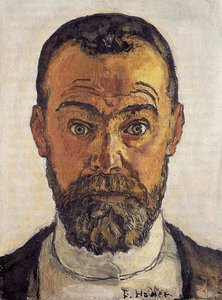
Ferdinand Hodler
1853 - 1918 , Szwajcaria
Najważniejsze informacje
- Artistic Movement Or Style: Symbolizm, Paralelizmy
- Artists Or Movements Influenced By This Artist: ['Ekspresjonizm']
- Artists Who Influenced This Artist:
- Courbet
- Gauguin
- Date Of Birth: 1853
- Date Of Death: 1918
- Full Name: Ferdinand Hodler
- Nationality: Szwajcarski
- Notable Artworks:
- Noc
- Dzień
- Prawda II
- Place Of Birth: Bern, Szwajcaria
Zobacz także powiązane artykuły
The Power of Graphite: Mastering Depth, Texture, and Detail in the Art of Pencil Drawing
Explore the profound artistry of graphite drawing. Discover professional techniques for mastering depth, texture, and detail through a lens of art history, from classical sketches to modern masterpieces. Elevate your understanding of the pencil medium with our expert guide.

Ferdinand Hodler: Symbolism, Parallelism & the Quest for Universal Harmony
Explore the captivating world of Ferdinand Hodler, Swiss Symbolist painter renowned for his evocative landscapes & pioneering 'parallelism'. Discover his life, key works, and lasting influence on art history. Own a hand-painted reproduction today!
The Alchemy of Carbon: Mastering Depth, Texture, and Precision in the Art of Graphite Drawing
Discover the sophisticated mastery of graphite drawing. Explore expert techniques for achieving profound depth, intricate texture, and hyper-realistic detail through the alchemy of carbon, curated for the discerning art enthusiast and professional collector.
The Nuances of Graphite: Exploring Emotional Depth & Technical Mastery in Pencil Drawing
Explore the captivating world of graphite drawing! Discover its rich history, master essential techniques like chiaroscuro, and learn how artists evoke emotion through this timeless medium. Expert insights for art enthusiasts.

Mastering the Line: A Comprehensive Expert Guide to Technical Precision and Expressive Depth in Drawing
Elevate your artistic practice with this expert guide to mastering the line. Discover advanced techniques in graphite, charcoal, and contour drawing designed for art students seeking technical precision and expressive depth in their fine art studies.