Zobacz w skali 1:1
 Wyślij
 Udostępnij
 Szczegóły
 Przewodnik

 Pobierz plik obrazu
 Podobne obiekty
 RTG
RTG Pokaz slajdów
 Statystyki
Portret samego siebie nr 1

 Czytaj więcej
Giclée / Wydruk artystyczny
Wydruki giclée lub płótna o jakości muzealnej, szybka realizacja i szeroki wybór opcji wykończenia. ( Kup ręcznie malowany obraz Przełącz na wersję cyfrową)




P118B zł10

P118H zł10

P118W zł10

P438Z zł10

P508JH zł12

P508YH zł12

P805H zł10

P805Z zł10

P919BZ zł10

P919G zł10

P919XJ zł10

P959ZH zł10

P968JZ zł12

W106C zł8

W218G zł10

W218JH zł8

W218Y zł10

W307PJ zł10

W316G zł10

W316PJ zł8

W316Y zł10

W398PJ zł8

W4111J zł10

W500HY zł15

W500JH zł15

W692G zł12

W849H zł8

W940BG zł15

W953PJ zł8




Wybierz spośród naszych standardowych rozmiarów, które zachowują oryginalne proporcje dzieła sztuki.

Możesz wprowadzić własne wymiary, aby dopasować dzieło do konkretnej ramy lub przestrzeni. Jeśli wybrany rozmiar nie będzie odpowiadał proporcjom oryginalnego obrazu, przytniecie dzieło lub rozszerzymy obraz za pomocą odbicia lustrzanego lub jednolitego wypełnienia krawędzi. Przed rozpoczęciem produkcji prześlemy cyfrową wizualizację do Twojej akceptacji.
Prosimy pamiętać, że podgląd na ekranie nie odzwierciedla faktycznego przycinania ani rozszerzania. Tylko wizualizacja dokładnie pokaże końcową kompozycję.
Mimo dostępności niestandardowych rozmiarów, zalecamy wybór wymiaru z listy zdefiniowanej, aby zachować oryginalne proporcje.
Dostawa na cały świat () w ciągu 2 tygodni zamiast standardowych 4/5 tygodni. (10 Październik)

Bezpłatna ekspresowa wysyłka na cały świat

Wysokiej jakości płótno lniane

Pełne ubezpieczenie transportowe

Gwarancja zwrotu należności celnych i podatków importowych

Gwarancja idealnego odwzorowania barw

100-dniowy okres na zwrot dzieła w przypadku wykrycia wad produkcyjnych

Gwarancja 100% zwrotu pieniędzy

Oferta przy zakupie wielu sztuk
 Opcja ze szkłem jest dostępna wyłącznie w rozmiarach poniżej 110 cm

Portret samego siebie nr 1
Giclée / Wydruk artystyczny
Rozmiar reprodukcji
-


Suma do zapłaty
zł 298
Ferdinand Hodler’s “Self Portrait 1”: A Window into Expressionist Soul
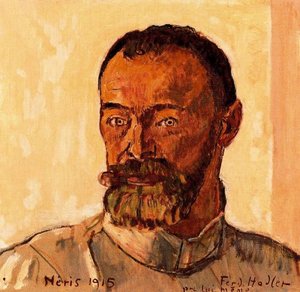
Ferdinand Hodler, born in Bern in 1853, stands as a pivotal figure in Swiss art history—a painter who wrestled with profound grief and channeled his sorrow into an artistic vision that transcends mere representation. His early life was marked by devastating loss; the untimely deaths of his father and two younger brothers instilled within him a preoccupation with mortality that would permeate his oeuvre, shaping his approach to capturing emotion and exploring themes of vulnerability. This formative experience undeniably fueled his artistic impulse, propelling him beyond conventional decorative painting towards a stylistic exploration rooted in psychological depth.- Subject Matter: Hodler’s “Self Portrait 1” presents a direct gaze from the artist himself—a portrait not merely of likeness but of inner contemplation. The composition centers on his face and upper torso, positioned slightly off-center to imbue the artwork with dynamism.
- Style & Technique: The painting embodies Expressionism, prioritizing emotional conveyance over meticulous realism. Visible brushstrokes dominate the surface, creating a textured appearance that speaks volumes about the artist’s process. Impasto technique—the thick application of paint—is particularly prominent, layering colors to sculpt form and amplify textural richness.
- Color Palette & Lighting: Hodler employs an earthy palette dominated by browns, ochres, and muted greens, fostering a sense of warmth and introspection. Soft diffused lighting casts gentle shadows that accentuate facial features, avoiding harsh contrasts and emphasizing subtlety.
Symbolism Beyond Surface Appearance
Hodler’s artistic choices extend beyond mere visual aesthetics; they are infused with symbolic resonance. The artist's gaze—direct yet melancholic—communicates a profound awareness of existence’s fragility, mirroring the emotional landscape shaped by his personal tragedies. Furthermore, the subdued color tones contribute to an atmosphere of solemn seriousness, reflecting Hodler’s preoccupation with themes of grief and remembrance. These elements elevate “Self Portrait 1” beyond a simple depiction of identity into a meditation on human experience.Historical Context & Artistic Influence
Hodler emerged during the Belle Époque—a period characterized by optimism alongside anxieties about societal change—yet his artistic sensibilities aligned with the burgeoning Expressionist movement. Influenced by artists like Edvard Munch and Vincent van Gogh, Hodler sought to capture subjective emotion rather than objective observation. “Self Portrait 1” exemplifies this stylistic commitment, demonstrating a willingness to confront uncomfortable truths and explore psychological complexities—a courageous stance that cemented Hodler’s legacy as one of Switzerland's foremost artistic innovators.Emotional Impact & Artistic Legacy
“Self Portrait 1” continues to resonate with viewers today due to its unflinching honesty and evocative portrayal of inner turmoil. It serves as a poignant reminder of the transformative power of art—its ability to distill profound emotions into visual form. Hodler’s masterpiece stands as an enduring testament to his artistic vision, inviting contemplation on themes of loss, vulnerability, and the pursuit of authentic self-expression—a timeless exploration of the human condition that secures its place within the canon of Expressionist art.Pytania i odpowiedzi
Gdzie mogę kupić wydruk „Portret samego siebie nr 1” autorstwa Ferdinand Hodler?
Odbitkę dzieła „Portret samego siebie nr 1” autorstwa Ferdinand Hodler można zamówić bezpośrednio na stronie ta strona: szlachetna odbitka na płótnie bawełnianym lub archiwalnym papierze płótnopodobnym.
Skąd pochodzą odwiedzający „Portret samego siebie nr 1” autorstwa Ferdinand Hodler?
Strona Statystyki dzieła „Portret samego siebie nr 1” autorstwa Ferdinand Hodler przedstawia statystyki odwiedzin: miesięczną liczbę wyświetleń tego dzieła, porównanie z najczęściej oglądanymi pracami artysty oraz informacje o pochodzeniu odwiedzających.
Czy mogę zamówić olejną reprodukcję "Portret samego siebie nr 1"?
Ręcznie malowane reprodukcje dzieła „Portret samego siebie nr 1” autorstwa Ferdinand Hodler można nabyć na stronie ta strona: ręcznie malowana reprodukcja olejowa na płótnie lnianym, zamawiając je poprzez ta strona.
Jaki nastrój i emocje wyraża „Portret samego siebie nr 1” autorstwa Ferdinand Hodler?
W "Portret samego siebie nr 1" nastrojowi Spokój towarzyszy emocja Refleksyjny.
Kto stworzył "Portret samego siebie nr 1"?
Dzieło "Portret samego siebie nr 1" przypisuje się Ferdinand Hodler.
W jaki sposób kontrast i harmonia łączą się w "Portret samego siebie nr 1"?
W "Portret samego siebie nr 1" Oświadczenie kontrast współgra z Silna spójność kolorystyczna harmonią.
Czy istnieje przewodnik dla „Portret samego siebie nr 1” autorstwa Ferdinand Hodler?
Strona Przewodnik dzieła „Portret samego siebie nr 1” autorstwa Ferdinand Hodler oferuje dwustronicową kartę informacyjną w formacie do druku: samo dzieło wraz z tabelą identyfikacyjną, oś czasu umieszczającą je w latach życia artysty, inne prace tego twórcy, zmierzoną paletę kolorystyczną oraz gotowe do skopiowania cytaty w czterech stylach.
Biografia artysty
A Life Etched in Symbolism: The World of Ferdinand Hodler
Ferdinand Hodler, a name inextricably linked to the landscape of Swiss painting and the evocative language of symbolism, emerged from modest beginnings to become one of the most significant artists of the late 19th and early 20th centuries. Born in Bern, Switzerland, in 1853, his life was profoundly shaped by early loss – a recurring theme that would deeply inform his artistic vision. The untimely deaths of his father and two younger brothers before he reached adolescence cast a long shadow, instilling within him a profound contemplation of mortality and the fleeting nature of existence. These experiences, interwoven with an acute sensitivity to the beauty and power of the natural world, became central tenets of his evolving oeuvre. Initially apprenticed to decorative painters, Hodler’s innate talent quickly transcended mere craftsmanship; he yearned for formal training and artistic exploration beyond the constraints of commercial work. This ambition led him to Geneva in 1871, where he immersed himself in study, attending science lectures alongside diligently copying masterpieces at the city's museum – a rigorous education that laid the foundation for his future innovations.From Realism to ‘Parallelism’: Forging a Unique Vision
Hodler’s artistic journey was characterized by constant evolution and an unwavering pursuit of expressive power. His early works reflected the prevailing realist style of the time – portraits, landscapes, and genre scenes executed with meticulous detail. However, he soon found himself constrained by these conventions, seeking a means to convey deeper emotional truths and philosophical ideas. This quest led him towards Symbolism, a movement that rejected naturalistic representation in favor of subjective experience and evocative imagery. Yet Hodler didn’t simply adopt the tenets of Symbolism; instead, he forged his own unique path, developing what he termed “parallelism.” This distinctive style involved arranging figures and forms in rhythmic, almost geometric patterns, creating a sense of both harmony and tension – a visual representation of interconnectedness. It was an attempt to depict not just *what* he saw, but *how* he felt – the underlying emotional currents that connected all things. The Night, completed in 1890, stands as a prime example, showcasing his ability to evoke mood and atmosphere through carefully orchestrated forms and muted colors. The painting’s initial reception was controversial, highlighting the challenges faced by artists pushing against established norms. Despite this criticism, it garnered attention in Paris, establishing Hodler’s reputation beyond Switzerland's borders and signaling the arrival of a truly original voice.Landmarks in Paint: Key Works and Their Significance
Throughout his prolific career, Hodler produced a remarkable body of work that continues to resonate with audiences today. The Day, completed in 1893, stands as one of his most ambitious and celebrated achievements – a monumental historical painting depicting the Battle of Marignano. This artwork is not merely a depiction of military conflict; it’s a complex meditation on life, death, and renewal, rendered with an arresting blend of realism and visionary intensity. The sheer scale and emotional weight of The Day cemented Hodler’s position as a leading figure in European art. Other notable works include numerous depictions of the Swiss Alps, imbued with a sense of awe-inspiring grandeur – landscapes that capture both the physical beauty and spiritual resonance of the mountains. He also created portraits that reveal his profound understanding of human psychology, often capturing fleeting moments of emotion and introspection. Works like Truth II (1897) demonstrate Hodler’s ability to blend classical forms with modern sensibilities, creating images that are both timeless and strikingly contemporary – a testament to his innovative spirit. His paintings weren't merely representations; they were emotional landscapes, inviting viewers to contemplate the fundamental questions of existence.Influences and Artistic Development
Hodler’s artistic development was shaped by a confluence of influences. Initially, he studied under local artists in Bern, absorbing traditional techniques and stylistic conventions. However, his move to Geneva exposed him to the work of Hans Holbein, Titian, and Nicolas Poussin – masters whose mastery of composition and technique profoundly impacted his own approach. More significantly, Hodler’s association with Louis Duchosal, a poet-symbolist, proved pivotal in shaping his artistic vision. Duchosal's enthusiasm for Baudelaire and Wagner introduced Hodler to the core tenets of Symbolism – an emphasis on subjective experience, dreamlike imagery, and the exploration of hidden emotions. This encounter led him away from strict realism and towards a more expressive and symbolic style. He also drew inspiration from contemporary artistic movements such as Art Nouveau, evident in his use of flowing lines and decorative elements. Hodler’s work reflects a constant dialogue between tradition and innovation, resulting in a uniquely personal and compelling aesthetic.A Lasting Legacy: Influence and Historical Context
Ferdinand Hodler’s influence extended far beyond the borders of Switzerland. His innovative use of symbolism and his development of “parallelism” paved the way for Expressionism, with its emphasis on subjective emotion and distorted forms. Artists who followed in his footsteps recognized him as a precursor to their own explorations of inner experience. Hodler's work also resonated with broader cultural currents of the late 19th and early 20th centuries – a period marked by rapid social change, scientific advancements, and a growing sense of existential anxiety. His paintings offered a visual language for grappling with these complex issues, providing solace and insight in an increasingly uncertain world. Today, Hodler’s works are held in major museums across Europe and beyond, ensuring that his artistic vision continues to inspire and challenge generations of viewers. He remains a towering figure in Swiss art history, celebrated not only for his technical skill but also for his profound emotional depth and unwavering commitment to exploring the mysteries of the human condition.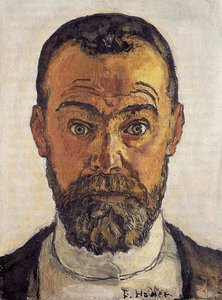
Ferdinand Hodler
1853 - 1918 , Szwajcaria
Najważniejsze informacje
- Artistic Movement Or Style: Symbolizm, Paralelizmy
- Artists Or Movements Influenced By This Artist: ['Ekspresjonizm']
- Artists Who Influenced This Artist:
- Courbet
- Gauguin
- Date Of Birth: 1853
- Date Of Death: 1918
- Full Name: Ferdinand Hodler
- Nationality: Szwajcarski
- Notable Artworks:
- Noc
- Dzień
- Prawda II
- Place Of Birth: Bern, Szwajcaria
Zobacz także powiązane artykuły
The Soul of Impressionism: Why Oil on Canvas Captures Eternal Light and Timeless Emotion
Discover the enchanting alchemy of Impressionism. Explore how the mastery of oil on canvas, through glazing and impasto, captures eternal light and emotion. Perfect for lovers of Monet and Van Gogh seeking the profound depth of hand-painted fine art.
10 arcydzieł malarstwa olejnego, które na zawsze zmieniły sztukę | OriginalUniqueArt.com
Poznaj 10 arcydzieł malarstwa olejowego, które zrewolucjonizowały świat sztuki! Van Gogh, Monet, Picasso i inni – odkryj historie, techniki i emocje w słynnych obrazach. Reprodukcje najwyższej jakości na OriginalUniqueArt.com. Eksploruj kolekcję online!

Trwała Spuścizna Malarstwa Olejnego: Technika, Historia i Współczesna Praktyka
Poznaj historię i techniki malarstwa olejnego. Poradniki dla artystów, informacje o konserwacji oraz możliwość zamówienia wysokiej jakości reprodukcji obrazów. Ekspercka wiedza i gwarancja trwałości dzieł sztuki.

Olej na płótnie: Historia, techniki i ponadczasowy urok malarskiego medium
Poznaj historię i techniki malarstwa olejowego! Od renesansowych mistrzów po współczesne zastosowania – wszystko o oleju na płótnie. Poradniki, konserwacja i inspiracje dla pasjonatów sztuki.

Trwała Spuścizna Malarstwa Olejnego: Technika, Historia i Estetyczny Wpływ
Poznaj historię i technikę malarstwa olejnego! Eksperckie artykuły o konserwacji, renowacji oraz współczesnych zastosowaniach. Dowiedz się więcej o mistrzach i trwałości obrazów olejnych.