Symbolism · 1910
Lumberjack, study (Ferdinand Hodler, 1910)
Ferdinand Hodler (1853–1918) stworzył Lumberjack, study. Dzieło pochodzi z 1910. Należy do nurtu Symbolism. Wykonano w technice Acrylic On Canvas. Przechowywane jest w Muzeum Narodowe Bośni i Hercegowiny w Sarajewo, Bośnia i Hercegowina. Wymiary to 43 × 44 cm.
- 1910
- Acrylic On Canvas
- 43 × 44 cm
- Muzeum Narodowe Bośni i Hercegowiny, Sarajewo

 Podgląd w skali 1:1

 Ręcznie malowany obraz olejny
 Wyślij jako kartkę
 Udostępnij
 Karta informacyjna


 Pobierz obraz
 Podobne obiekty
 RTG
 Pokaz slajdów
 Pytania i odpowiedzi

 Statystyki
Lumberjack, study w skrócie
- Tytuł
- Lumberjack, study
- Artysta
- Ferdinand Hodler (1853–1918)
- Miejsce urodzenia artysty
- Berno, Szwajcaria
- Data powstania
- 1910
- Technika wykonania
- Acrylic On Canvas
- Wymiary
- 43 × 44 cm
- Gdzie można je zobaczyć
- Muzeum Narodowe Bośni i Hercegowiny, Sarajewo, Bośnia i Hercegowina
- Ruch
- Symbolism
- Epoka
- 19th Century
- Temat
- lumberjack figure, axe and wood theme, symbolic drawing”,, swiss artist style”,, vintage illustration”, “black & white art”
Co przedstawia Lumberjack, study?
The Raw Essence of Labor: Ferdinand Hodler’s “Lumberjack, Study”
Ferdinand Hodler's "Lumberjack, Study," painted in 1910, isn’t merely a depiction of a man wielding an axe; it’s a profound meditation on the human condition, rendered with the characteristic Symbolist precision that defined the artist’s career. Born in Bern, Switzerland, Hodler’s life was deeply intertwined with themes of loss and mortality – experiences he channeled into his art through a lens of quiet observation and evocative symbolism. This particular work, executed during a period of intense artistic experimentation for Hodler, captures a moment of potent physicality alongside an underlying sense of melancholy, inviting the viewer to contemplate the dignity and inherent struggle within everyday labor.
- Subject Matter: The central figure is a powerfully built lumberjack, poised in the act of swinging his axe. The focus isn’t on heroic action, but rather on the concentrated effort and raw physicality of the task at hand.
- Style & Technique: Hodler employs a distinctive “parallelism” technique – a simultaneous depiction of multiple viewpoints within a single composition. Here, we see the lumberjack from several angles simultaneously, creating a sense of dynamism and capturing the essence of his movement. The brushstrokes are loose and expressive, contributing to the work’s immediate impact.
A Window into Symbolist Thought
Hodler was a key figure in the Swiss Symbolist movement, an artistic current that sought to express inner emotions and ideas rather than simply representing external reality. Symbolism rejected academic realism, favoring suggestive imagery and evocative color palettes. In “Lumberjack, Study,” this is evident in the muted tones of the landscape – a hazy sky and indistinct trees – which serve not as literal representations but as symbolic anchors for the figure’s emotional state. The darkness surrounding the lumberjack hints at the hardships and uncertainties of his life, while the upward swing of the axe can be interpreted as an aspiration towards something beyond the immediate toil.
The choice of a lumberjack as subject is itself significant. It represents a connection to the land, to physical labor, and to a fundamental human need for survival – themes that resonated deeply with Symbolist artists grappling with questions of identity and purpose in a rapidly changing world.Historical Context & The Bernese Landscape
Bern, Hodler’s birthplace, provided a constant source of inspiration. The rolling hills and forests surrounding the city were frequently depicted in his work, imbued with a sense of timelessness and spiritual resonance. “Lumberjack, Study” reflects this connection to the landscape, grounding the figure within a recognizable yet subtly idealized Bernese setting. The painting was created during a period of significant social change in Switzerland – the rise of industrialization and urbanization were challenging traditional ways of life. Hodler’s work can be seen as both a reflection of these changes and a nostalgic yearning for simpler times.
Emotional Resonance & A Legacy of Quiet Intensity
Despite its seemingly straightforward subject matter, “Lumberjack, Study” possesses a remarkable emotional depth. The lumberjack's face is largely obscured, inviting the viewer to project their own feelings and interpretations onto the figure. There’s a palpable sense of solitude and resilience in his posture – a quiet dignity born from hard work and perhaps, a touch of melancholy. Hodler masterfully captures this complex interplay of strength and vulnerability, creating an image that continues to resonate with viewers today. Reproductions of this powerful study offer a glimpse into the soul of a remarkable artist and a poignant reflection on the human experience.
W którym muzeum znajduje się Lumberjack, study?
Muzeum Narodowe Bośni i Hercegowiny
Sarajewo, Bośnia i Hercegowina
Przystań Odporności: Dusza Sarajewa W samym sercu Sarajewa, miasta, które przetrwało najgłębsze burze XX wieku, wznosi się Narodowa Galeria Bośni i Hercegowiny jako świetlisty testament nieprzemijającej potęgi ludzkiej kreatywności. Przekroczenie jej progów to wejście do przestrzeni, w której blizny historii spotykają się z triumfem artystycznego ducha, oferując głęboki dialog między burzliwą przeszłością a pełną nadziei przyszłością. Galeria służy jako sanktuarium, w którym zbiorowa pamięć narodu zostaje utrwalona w delikatnych pociągnięciach pędzla i ciężkich teksturach kamienia.


Zdjęcia w wysokiej rozdzielczości dzieła Lumberjack, study

Domena publiczna: artysta zmarł w 1918.
Inne rozmiary, kadrowanie i cytowanie →Ferdinand Hodler, Lumberjack, study (1910), Muzeum Narodowe Bośni i Hercegowiny. Domena publiczna
Odpowiedzi na pytania dotyczące Lumberjack, study
Gdzie można obecnie zobaczyć dzieło „Lumberjack, study” – Ferdinand Hodler?
„Lumberjack, study” – Ferdinand Hodler znajduje się w zbiorach Muzeum Narodowe Bośni i Hercegowiny, Sarajewo, Bośnia i Hercegowina. Informacja o muzeum dotyczy oryginału, a nie reprodukcji.
W którym roku powstało dzieło "Lumberjack, study"?
„Lumberjack, study” – Ferdinand Hodler powstało w 1910.
Z jakiej techniki wykorzystano "Lumberjack, study"?
Ferdinand Hodler wykorzystał/a technikę Acrylic On Canvas w pracy „Lumberjack, study”. Technika ta definiuje materię oryginalnego dzieła.
Jakie są wymiary oryginału "Lumberjack, study"?
Wymiary dzieła „Lumberjack, study” – Ferdinand Hodler to 43 x 44 cm. Reprodukcje można zamówić w innych rozmiarach, zachowując te same proporcje.
Co przedstawia „Lumberjack, study” – Ferdinand Hodler?
„Lumberjack, study” – Ferdinand Hodler przedstawia: lumberjack figure, axe and wood theme, symbolic drawing”,, swiss artist style”,, vintage illustration”, “black & white art”, “hodler’s study”.
Czy obraz „Lumberjack, study” – Ferdinand Hodler można swobodnie reprodukować?
Jeśli chodzi o prawa autorskie, "Lumberjack, study" znajduje się w należy do domeny publicznej – autorskie prawa majątkowe wygasły.
Kto stworzył "Lumberjack, study"?
Autorstwo dzieła "Lumberjack, study" przypisuje się Ferdinand Hodler.
Do jakiego nurtu w sztuce należy „Lumberjack, study” – Ferdinand Hodler?
„Lumberjack, study” to dzieło należące do nurtu Symbolism. Nurt ten określa tradycję artystyczną, w której osadzone jest dzieło.
Do którego okresu twórczości Ferdinand Hodler należy dzieło "Lumberjack, study"?
"Lumberjack, study" reprezentuje Late Medieval twórczości Ferdinand Hodler.
O artyście: Ferdinand Hodler
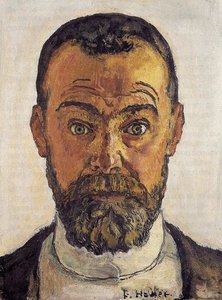
1853–1918, Szwajcaria
Ferdinand Hodler
Architektura śmiertelności Urodzony w 1853 roku w Bernie, w Szwajcarii, Ferdinand Hodler spędził wczesne lata w cieniu cichej, nieustającej żałoby. Zanim osiągnął wiek dojrzewania, gruźlica, która zabrała jego ojca i dwóch młodszych braci, pozostawiła pustkę w jego domu. To wczesne spotkanie ze stratą stało się powracającym motywem w jego twórczości, cieniem, który towarzyszył mu od skromnych początków praktyki rzemieślniczej aż po szczyty kariery zawodowej. Rozpoczął naukę jako malarz dekorator, pomagając ojczymowi w pracach przy komercyjnych szyldach, co dało mu praktyczne wykształcenie i wykształciło w nim precyzyjną kontrolę nad linią i formą.
Inne prace Ferdinand Hodler
 Eiger, Monch and Jungfrau in Moonlight1908
 Woman in Ecstasy1911
 Sunset on Lake Geneva1915
 Study of two figures1897

Eseje o Lumberjack, study
 Głębia Emocji w Sztuce: Historyczna Analiza Reprezentacji AfektuOdkryj fascynującą historię emocji w sztuce! Analiza baroku, romantyzmu i psychologii koloru. Poznaj obrazy wzbudzające silne uczucia i zro…
 Mastering Parallelism: The Top 25 Essential Artworks by Ferdinand HodlerExplore 25 iconic Ferdinand Hodler masterpieces and his unique Parallelism style. Discover the full collection on OriginalUniqueArt.com.
 The Subjective Lens: Examining Emotional Depth in Expressionist ArtExplore the profound emotional depth of Expressionist masters like Munch and Schiele. Discover the power of subjective art today.