Symbolism
Day (Truth) (Ferdinand Hodler)
Ferdinand Hodler (1853–1918) stworzył Day (Truth). Należy do nurtu Symbolism. Wykonano w technice Oil On Canvas. Przechowywane jest w Art Institute of Chicago w Chicago, Stany Zjednoczone Ameryki.
- Oil On Canvas
- Art Institute of Chicago

 Podgląd w skali 1:1

 Ręcznie malowany obraz olejny
 Wyślij jako kartkę
 Udostępnij
 Karta informacyjna


 Pobierz obraz
 Podobne obiekty
 RTG
 Pokaz slajdów
 Pytania i odpowiedzi

 Statystyki
Day (Truth) w skrócie
- Tytuł
- Day (Truth)
- Artysta
- Ferdinand Hodler (1853–1918)
- Miejsce urodzenia artysty
- Berno, Szwajcaria
- Technika wykonania
- Oil On Canvas
- Gdzie można je zobaczyć
- Art Institute of Chicago, Chicago, Stany Zjednoczone Ameryki
- Ruch
- Symbolism
- Epoka
- 19th Century
- Temat
- man, nude figure, rock, landscape, sky, brown
Co przedstawia Day (Truth)?
Identification of the Artwork and Artist
The canvas known as Day (Truth) emerges from the hand of Ferdinand Hodler, a significant figure in the evolution of Swiss art. Created about 1906, this work captures a moment of profound stillness. It exists at the intersection of Symbolism and Landscape Painting, reflecting the shifting tides of 19th-century artistic thought. The piece carries the weight of a specific era, where the boundaries between the physical world and the spiritual realm begin to blur.
Ferdinand Hodler brings a unique vision to this composition, moving away from the strictures of realism to explore deeper rhythms of existence. In Day (Truth), the artist seeks to translate the essence of a single moment into a visual language of form and light. The work belongs to a period where the landscape becomes a vessel for existential reflection, a place where the human presence and the natural environment are inextricably linked through a shared, rhythmic geometry.
Composition and Visual Elements
The canvas unfolds with a monumental presence, capturing a moment where the first light of dawn breathes life into the very concept of unity. A serene arrangement of figures mirrors the unfolding morning, creating a rhythmic, visual heartbeat that pulses through the scene. These figures, depicted in states of nakedness, move through the landscape in a way that suggests the unfolding stages of daybreak. Their postures, much like blossoming petals, seem to respond to the increasing brightness of the sky, weaving human form into the very rhythm of the natural world.
Symmetry governs the space, establishing a sense of cosmic harmony that feels both tranquil and profoundly powerful. This structural order is defined by rhythmic symmetry and deep, espresso-toned shadows that anchor the composition. The eye is guided by the horizon line and the movement of the clouds, leading toward a central focus that symbolizes a spiritual awakening. Through this deliberate arrangement, the painting transcends a simple landscape, becoming a meditation on existence itself, where the physical and the spiritual are bound together by a shared, geometric grace.
Technical Details and Medium
The medium of oil on canvas breathes life into this composition, allowing for a layering of thin washes that build an atmospheric effect. These layers create a soft, diffused light that wraps around the figure, casting a gentle glow that avoids harsh shadows. The texture of the work reveals a subtle interplay between the smooth, ethereal quality of the sky and the palpable roughness of the rocky base. Every brushstroke contributes to a sense of weight and permanence, grounding the spiritual essence of the scene in physical substance.
This work functions as a masterclass in Symbolism, where the artist employs his signature theory of parallelism to structure the visual experience. Rhythmic patterns emerge through the arrangement of forms, mirroring the natural order of the cosmos. The composition moves with a rhythmic, visual heartbeat, capturing the ephemeral beauty of daybreak and transforming it into a structured, eternal presence. Through this deliberate application of geometry and repetition, the painting transcends mere representation to touch upon the profound rhythms of existence.
W którym muzeum znajduje się Day (Truth)?
Art Institute of Chicago
Chicago, Stany Zjednoczone Ameryki
Przegląd Art Institute of Chicago Art Institute of Chicago to prywatne, non-profit muzeum sztuki położone w Chicago, w stanie Illinois, w Stanach Zjednoczonych Ameryki. Od momentu swojego założenia w 1879 roku, instytucja ta stała się kluczowym punktem na mapie kulturalnej, dominując w przestrzeni Grant Park. Obecnie powierzchnia muzeum obejmuje niemal milion stóp kwadratowych, oferując różnorodne przestrzenie, które skrywają ogromne zbiory ludzkiej ekspresji.


Zdjęcia w wysokiej rozdzielczości dzieła Day (Truth)

Domena publiczna: artysta zmarł w 1918.
Inne rozmiary, kadrowanie i cytowanie →Ferdinand Hodler, Day (Truth), Art Institute of Chicago. Domena publiczna
Odpowiedzi na pytania dotyczące Day (Truth)
Gdzie można obecnie zobaczyć dzieło „Day (Truth)” – Ferdinand Hodler?
„Day (Truth)” – Ferdinand Hodler znajduje się w zbiorach Art Institute of Chicago, Chicago, Stany Zjednoczone Ameryki. Informacja o muzeum dotyczy oryginału, a nie reprodukcji.
W jakiej technice wykonano „Day (Truth)” – Ferdinand Hodler?
Technika wykonania dzieła „Day (Truth)” – Ferdinand Hodler to Oil On Canvas. Reprodukcje mają na celu wierne oddanie wyglądu tej techniki.
Co przedstawia "Day (Truth)"?
Tematyka obecna w „Day (Truth)” – Ferdinand Hodler obejmuje man, nude figure, rock, landscape, sky, brown, tan. Razem stanowią one podsumowanie tematyki dzieła.
Czy obraz „Day (Truth)” – Ferdinand Hodler można swobodnie reprodukować?
Status praw autorskich dla „Day (Truth)” – Ferdinand Hodler: dzieło znajduje się w należy do domeny publicznej – autorskie prawa majątkowe wygasły. Określa to, czy reprodukcje obrazu mogą być sporządzane swobodnie.
Któremu artyście przypisuje się "Day (Truth)"?
„Day (Truth)” zostało stworzone przez Ferdinand Hodler. Informacje na tej stronie dotyczą oryginalnego dzieła autorstwa Ferdinand Hodler.
Do jakiego nurtu artystycznego należy „Day (Truth)” – Ferdinand Hodler?
Nurt związany z „Day (Truth)” – Ferdinand Hodler to Symbolism. Ta klasyfikacja sytuuje dzieło wśród pokrewnych artystów i dzieł sztuki.
Do którego etapu twórczości Ferdinand Hodler należy dzieło „Day (Truth)”?
"Day (Truth)" reprezentuje Mature Period twórczości Ferdinand Hodler.
Co wyjaśnia sytuację prawną dotyczącą praw autorskich do „Day (Truth)” – Ferdinand Hodler?
Status praw autorskich do dzieła „Day (Truth)” – należy do domeny publicznej – autorskie prawa majątkowe wygasły – wynika z faktu, że artysta zmarł w 1918.
Czy dzieło "Day (Truth)" pozostało w ojczyźnie swojego artysty?
Nie – dzieło znajduje się poza granicami kraju artysty. Dzieło "Day (Truth)" znajduje się w zbiorach Stany Zjednoczone Ameryki, podczas gdy Ferdinand Hodler urodził(a) się w Szwajcaria.
O artyście: Ferdinand Hodler
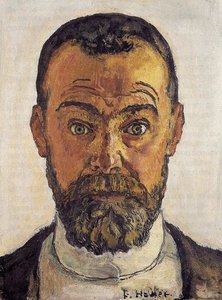
1853–1918, Szwajcaria
Ferdinand Hodler
Architektura śmiertelności Urodzony w 1853 roku w Bernie, w Szwajcarii, Ferdinand Hodler spędził wczesne lata w cieniu cichej, nieustającej żałoby. Zanim osiągnął wiek dojrzewania, gruźlica, która zabrała jego ojca i dwóch młodszych braci, pozostawiła pustkę w jego domu. To wczesne spotkanie ze stratą stało się powracającym motywem w jego twórczości, cieniem, który towarzyszył mu od skromnych początków praktyki rzemieślniczej aż po szczyty kariery zawodowej. Rozpoczął naukę jako malarz dekorator, pomagając ojczymowi w pracach przy komercyjnych szyldach, co dało mu praktyczne wykształcenie i wykształciło w nim precyzyjną kontrolę nad linią i formą.
Inne prace Ferdinand Hodler
 Eiger, Monch and Jungfrau in Moonlight1908
 Woman in Ecstasy1911
 Sunset on Lake Geneva1915
 Study of two figures1897
Eseje o Day (Truth)
 19th century Swiss painters19th-century Swiss painters like Arnold Böcklin, Ferdinand Hodler, and Henry Fuseli defined an era. Find museum-quality reproductions on Or…
 Mastering Parallelism: The 25 Most Iconic Artworks by Ferdinand HodlerImmerse yourself in the rhythmic beauty of Ferdinand Hodler. Explore 25 iconic masterpieces of Swiss Symbolism and Parallelism. From soulfu…
 Swiss artworks of the 1910sSwiss art from the 1910s featuring masterpieces by Paul Klee, Ferdinand Hodler, and Félix Vallotton. View the full collection on OriginalUn…