

 Zobacz w skali 1:1
 Wyślij
 Udostępnij
 Szczegóły

 Pobierz plik obrazu
 Podobne obiekty
 RTG
RTG Pokaz slajdów
 Statystyki
Cupid with a Tambourine
 Etching
- WallArt
- Symbolist Illustration
 19th Century
 14.0 x 10.0 cm
 Hammer Museum
 Czytaj więcej
Ręcznie malowana reprodukcja olejowa
Ręcznie malowany obraz olejny na płótnie, wykonany na zamówienie przez naszych artystów w wybranym przez Ciebie wymiarze i oprawie. ( Przełącz na wersję drukowaną Przełącz na wersję cyfrową)




P118B $10

P118H $10

P118W $10

P438Z $10

P508JH $12

P508YH $12

P805H $10

P805Z $10

P919BZ $10

P919G $10

P919XJ $10

P959ZH $10

P968JZ $12

W106C $8

W218G $10

W218JH $8

W218Y $10

W307PJ $10

W316G $10

W316PJ $8

W316Y $10

W398PJ $8

W4111J $10

W500HY $15

W500JH $15

W692G $12

W849H $8

W940BG $15

W953PJ $8




Wybierz spośród naszych standardowych rozmiarów, które zachowują oryginalne proporcje dzieła sztuki.

Możesz wprowadzić własne wymiary, aby dopasować obraz do konkretnej ramy lub przestrzeni. Jeśli wybrany rozmiar nie będzie odpowiadał proporcjom oryginału, przytniecie dzieło sztuki lub rozszerzymy je o dodatkowe elementy, ręcznie domalowane przez artystę. Przed rozpoczęciem produkcji wyślemy projekt cyfrowy do Twojej akceptacji.
Należy pamiętać, że podgląd na ekranie nie odzwierciedla rzeczywistego przycinania ani rozszerzania obrazu. Tylko projekt dokładnie pokaże ostateczną kompozycję.
Choć oferujemy możliwość zamówienia niestandardowych rozmiarów, zalecamy wybór wymiaru z gotowej listy, aby zachować oryginalne proporcje dzieła.
Po złożeniu zamówienia zespół OriginalUniqueArt.com skontaktuje się z klientem drogą mailową w celu uzyskania instrukcji i prześle wizualizację projektu
Dostawa na całym świecie () w ciągu 3–4 tygodni zamiast standardowych 5 tygodni. (18 Wrzesień). Bez kompromisów w kwestii jakości.

Bezpłatna ekspresowa wysyłka na cały świat

Wysokiej jakości płótno lniane

Pełne ubezpieczenie transportowe

Gwarancja zwrotu należności celnych i podatków importowych

Gwarancja idealnego odwzorowania barw

100-dniowy okres na zwrot dzieła w przypadku wykrycia wad produkcyjnych

Gwarancja 100% zwrotu pieniędzy

Oferta przy zakupie wielu sztuk
 Opcja ze szkłem jest dostępna wyłącznie w rozmiarach poniżej 110 cm

Cupid with a Tambourine
Technika wykonania
Rozmiar reprodukcji
-


Suma do zapłaty
$ 300
Felicien Rops’s “Cupid with a Tambourine”: A Study in Melancholic Beauty
Felicien Rops's "Cupid with a Tambourine," an etching from 1875, is not merely a depiction of the Roman god of love; it’s a carefully constructed tableau of wistful contemplation and subtle unease. Rops, a pivotal figure bridging Realism, Symbolism, and the nascent world of illustrated storytelling, masterfully employs line and tone to evoke an atmosphere far deeper than simple romantic imagery. The work, now housed within the UCLA Grunwald Center for the Graphic Arts at the Hammer Museum, offers a glimpse into Rops’s uniquely shadowed vision – one that frequently explored themes of beauty intertwined with melancholy and a fascination with the darker corners of human experience.
A Technical Masterpiece: Line, Tone, and Etching
The etching itself is a testament to Rops's technical skill. The foundation lies in the meticulous process of etching – a technique involving scratching lines into a metal plate (typically copper) before applying ink and then transferring the image onto paper through pressure. Rops’s control over this medium is remarkable, evidenced by the incredibly fine, delicate lines that delineate Cupid’s features, his wings, and even the scattered leaves beneath him. The use of hatching and cross-hatching creates a rich tapestry of tones, lending depth and volume to the composition without resorting to broad, flat areas of color. Notice how the varying density of these lines subtly suggests texture – the rough surface of the ground, the smooth curve of the tambourine, and the delicate folds in Cupid’s clothing.
Symbolism and Emotional Resonance: A Quiet Lament
Beyond its technical brilliance, “Cupid with a Tambourine” is laden with symbolic meaning. The figure of Cupid himself is presented not as an exuberant embodiment of passion, but rather in a posture of quiet introspection. He’s seated cross-legged, holding the tambourine close – an instrument often associated with celebration and joy – yet his gaze is averted, suggesting a detachment from the very emotions he represents. The setting, a simple ground plane strewn with leaves, reinforces this sense of solitude. The choice of a muted color palette—primarily shades of gray, white, and black—contributes to the overall mood of melancholy. It’s as if Rops is inviting us to contemplate not the fleeting pleasures of love, but its deeper, more complex implications – perhaps even hinting at the bittersweet nature of longing and unfulfilled desire.
Contextualizing a Symbolist Vision
To fully appreciate “Cupid with a Tambourine,” it’s crucial to understand Rops's place within the broader context of 19th-century art. He was deeply influenced by Symbolism, an artistic movement that sought to express subjective emotions and ideas rather than objective reality. Rops shared this interest in exploring the darker side of human experience, often depicting scenes of beauty intertwined with decay, death, and psychological distress. His work frequently drew inspiration from mythology, folklore, and literature – particularly works by Edgar Allan Poe and Charles Baudelaire. The etching’s quiet intensity and evocative atmosphere align perfectly with the aesthetic sensibilities of the Symbolist movement, offering a poignant meditation on love, loss, and the human condition.
A Timeless Image for Collectors and Designers
“Cupid with a Tambourine” remains a powerfully resonant image today. Its exquisite craftsmanship, evocative symbolism, and haunting beauty make it an ideal choice for collectors seeking works of art that transcend mere decoration. The piece’s understated elegance also lends itself beautifully to interior design – its muted tones and contemplative mood providing a sophisticated counterpoint to brighter spaces. Reproductions, such as those offered by OriginalUniqueArt.com, allow us to experience the full impact of Rops's vision without the limitations of the original medium, ensuring that this timeless image continues to captivate audiences for generations to come.
Biografia artysty
A Shadowy Visionary: The Life and Art of Félicien Rops
Félicien Victor Joseph Rops, born in 1833 in the Belgian town of Namur, emerged as a pivotal figure bridging the gap between Realism, Symbolism, and the burgeoning world of modern graphic storytelling. His life, steeped in both bourgeois comfort – his father was a prosperous textile manufacturer – and a restless artistic spirit, unfolded against a backdrop of rapid social and intellectual change. Early training at local academies provided a foundation, but it was his move to Brussels at twenty that truly ignited his creative trajectory. Though briefly enrolled at the University of Brussels, Rops found himself drawn inexorably towards the Académie de Saint-Luc, where he honed his skills not just in painting and drawing, but also in the art of satire through lithography. His early work quickly gained recognition in student magazines like *Le Crocodile* and *L'Uylenspiegel*, establishing him as a gifted caricaturist with a keen eye for societal foibles. These formative years weren’t merely about developing technical proficiency; they were about finding his voice, a voice that would soon become synonymous with challenging conventions and exploring the darker recesses of the human psyche.Early Years and Artistic Foundations
Rops's childhood in Namur instilled in him a profound appreciation for detail and observation—qualities that would permeate his artistic endeavors throughout his life. His father’s textile business afforded him financial stability, allowing him to pursue his passions without undue constraint. However, it was his enrollment at the Université Libre de Bruxelles that exposed him to intellectual currents shaping Europe during the Belle Époque. Here he cultivated connections with fellow students and thinkers who fostered a spirit of critical inquiry—a characteristic that would prove invaluable in his subsequent artistic explorations. Recognizing his talent for drawing and etching, Rops diligently honed his skills under the tutelage of accomplished instructors, preparing him for a career dedicated to visual expression. His initial fascination with caricature quickly blossomed into a mastery of satire, utilizing humor as a tool for social commentary—a stylistic hallmark that would define much of his oeuvre. The influence of Honoré Daumier and Paul Gavarni served as formative models, guiding Rops’s approach to depicting human figures and capturing the nuances of everyday life.Parisian Encounters and Artistic Transformation
The year 1862 marked a decisive turning point in Rops's artistic journey when he relocated to Paris—a city brimming with artistic innovation and intellectual ferment. Immediately immersing himself in the vibrant Parisian milieu, he encountered influential printmakers Félix Bracquemond and Jules Ferdinand Jacquemart, who championed intaglio techniques—etching and aquatint—and encouraged him to experiment with new approaches to image-making. Rejecting lithography as a medium for conveying psychological depth and social critique, Rops dedicated himself wholeheartedly to mastering these more sophisticated printmaking methods. This commitment yielded extraordinary results: his prints became renowned for their meticulous detail, dramatic chiaroscuro, and haunting atmosphere—qualities that distinguished him from many of his contemporaries. Yet, perhaps the most transformative encounter during this period was his friendship with Charles Baudelaire—a poet whose exploration of beauty within decay profoundly resonated with Rops’s own artistic sensibilities. Inspired by Baudelaire's aesthetic vision, Rops embarked on a daring stylistic quest—one that would culminate in collaborations that cemented his reputation as a pioneer of Symbolism and Decadence.Symbolist Visionary: Exploring Darkness and Desire
Rops’s artistic style is immediately recognizable for its intricate detail, dramatic chiaroscuro – the interplay of light and shadow – and a haunting atmosphere that permeates his work. He wasn't simply depicting scenes; he was conveying psychological states, emotional intensities often veiled in ambiguity. His fascination with the darker aspects of human nature—particularly eroticism and obsession—became central to his artistic expression. Influenced by Nietzsche’s philosophy of will and Wagnerian opera, Rops sought to depict the sublime—the awe-inspiring grandeur of existence—often juxtaposed with grotesque imagery and unsettling narratives. He skillfully employed soft-ground etching, a technique rarely utilized by his peers, combining it with mezzotint or aquatint, sometimes adding hand-coloring to further enhance the mood and texture of his plates. Works like “Pornokratès” (1878), a powerfully unsettling depiction of female power and transgression, “Satan Sowing Seeds” (from *Les Sataniques*, 1882), and illustrations for Jules Barbey d’Aurevilly's *Les Diaboliques* exemplify his unflinching exploration of taboo subjects—a characteristic that distinguished him from many artists of his time. Beyond these iconic images, Rops demonstrated a remarkable versatility, producing text comics and sequential drawings for Belgian student magazines – making him a true pioneer of the comic strip form. His illustrations for Octave Uzanne’s “Son Altesse la Femme” (1885) showcase his ability to capture both exquisite beauty and underlying decadence—reflecting the complex anxieties of the fin de siècle.Legacy and Influence
Rops's artistic legacy extends far beyond his individual masterpieces. He profoundly impacted subsequent generations of artists—particularly Edvard Munch and Max Klinger—who adopted his innovative printmaking techniques and embraced his fearless exploration of psychological themes. His willingness to confront uncomfortable truths—to depict the grotesque alongside the sublime—challenged conventional aesthetic norms and paved the way for artistic experimentation in the 20th century. Rops’s work continues to resonate today, celebrated for its artistic merit, historical significance, and unwavering commitment to portraying the human condition with uncompromising honesty. He remains a key figure in the Symbolist movement and a visionary pioneer of both graphic art and comics—his shadowy world continuing to captivate and provoke audiences more than a century after his death.
Felician Rops
1833 - 1898 , Belgia
Najważniejsze informacje
- Artistic Movement Or Style: Symbolizm, Decadencja
- Artists Or Movements Influenced By This Artist:
- Edvard Munch
- Max Klinger
- Artists Who Influenced This Artist:
- Félix Bracquemond
- Jules Jacquemart
- Charles Baudelaire
- Date Of Birth: 7 lipca 1833
- Date Of Death: 23 sierpnia 1898
- Full Name: Félicien Victor Joseph Rops
- Nationality: Belgijski
- Notable Artworks:
- Pornokratès
- Satan Sowing Seeds
- The Temptation of St. Anthony
- Place Of Birth: Namur, Belgia
Zobacz także powiązane artykuły

The Intricate World of Etching: A Historical Survey of Technique, Aesthetic Evolution, and Enduring Artistic Impact
Explore the rich history of etching, from its origins to modern practice. Discover techniques, key artists like Rembrandt, and insights for collectors. A comprehensive guide by OriginalUniqueArt.
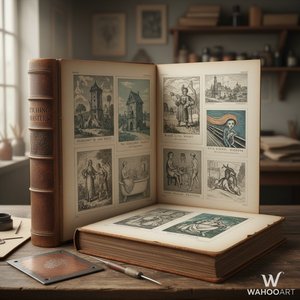
10 Legendarnych Rycin, Które Zrewolucjonizowały Sztukę | OriginalUniqueArt
Odkryj 10 legendarnych rycin Rembrandta, Dürera i Goi! Poznaj historię mistrzów grafiki, ich techniki i wpływ na sztukę. Reprodukcje najwyższej jakości – idealne do Twojego wnętrza. OriginalUniqueArt.com

Rytownictwo artystyczne: Historia, techniki i trwałe dziedzictwo w sztuce
Poznaj historię i techniki grafiki artystycznej – od drzeworytu po litografię. Ekspercka analiza, wpływ na ikonografię i współczesną sztukę. Odkryj trwałe dziedzictwo rytownictwa!
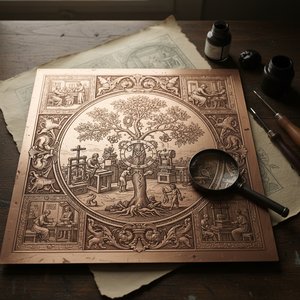
The Art of Etching: Mastering Lines, Texture, and Depth in the Intaglio Tradition
Explore the intricate world of etching and intaglio printmaking. Discover how masters use acid and metal to create profound textures and lines, from Romanticism to modern era, through an expert lens of art history and technical mastery.
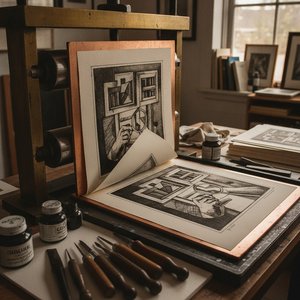
Etching Unlocked: The Sharp, High-Impact Art of Line and Shadow for the Modern Collector
Master the high-impact world of etching. Explore the transformative power of line and shadow through the intaglio tradition, from its armor-making origins to modern collecting strategies for the sophisticated art enthusiast.