

 Podgląd w skali 1:1
 Wyślij jako kartkę
 Udostępnij
 Szczegóły dzieła
 Przewodnik

 Pobierz obraz
 Podobne obiekty
 RTG
RTG Pokaz slajdów
 Statystyki
Excerpt from Coimbra
 Oil On Canvas
- WallArt
- Contemporary Realism
 1922
1922 44.0 x 44.0 cm
 Grão Vasco National Museum
 Rozwiń treść
Dzieło sztuki prezentowane na tej stronie podlega ochronie prawem autorskim, co oznacza, że nie mamy prawa do tworzenia ani sprzedaży jego identycznej reprodukcji. Ochrona ta jest egzekwowana na mocy umów międzynarodowych, takich jak Konwencja berneńska oraz przez przepisy prawa krajowego, w tym te określone w Prawo autorskie USA – Tytuł 17.
Metoda ta jest w pełni zgodna z przepisami prawa autorskiego, ponieważ nie polega na kopiowaniu ani powielaniu chronionego dzieła. Stanowi ona kreatywną reinterpretację – nowy obraz, który czerpie inspirację z oryginału, ale nie jest z nim tożsamy.
Giclée / Wydruk artystyczny
Wydruki giclée lub płótna o jakości muzealnej, szybka realizacja i szeroki wybór opcji wykończenia. ( Zamów ręcznie malowaną reprodukcję Przejdź do wersji cyfrowej)




P118B zł10

P118H zł10

P118W zł10

P438Z zł10

P508JH zł12

P508YH zł12

P805H zł10

P805Z zł10

P919BZ zł10

P919G zł10

P919XJ zł10

P959ZH zł10

P968JZ zł12

W106C zł8

W218G zł10

W218JH zł8

W218Y zł10

W307PJ zł10

W316G zł10

W316PJ zł8

W316Y zł10

W398PJ zł8

W4111J zł10

W500HY zł15

W500JH zł15

W692G zł12

W849H zł8

W940BG zł15

W953PJ zł8




Wybierz spośród naszych standardowych rozmiarów, które zachowują oryginalne proporcje dzieła sztuki.

Wpisz wymaganą szerokość i wysokość, aby dopasować grafikę do ramy lub ściany. Wydruk można jedynie przyciąć, nigdy nie powiększając go poza oryginalny obraz, dlatego format o innych proporcjach spowoduje utratę części kompozycji. Przed rozpoczęciem druku prześlemy Ci cyfrowy podgląd do zatwierdzenia. Obraz wyświetlany na tej stronie nie pokazuje rzeczywistego przycięcia — jedynie podgląd oddaje ten efekt.
Dostawa na cały świat () w ciągu 2 tygodni zamiast standardowych 4/5 tygodni. (28 Październik)

Bezpłatna ekspresowa wysyłka na cały świat

Wysokiej jakości płótno lniane

Pełne ubezpieczenie przesyłki

Gwarancja zwrotu należności celnych i podatków importowych

Gwarancja wiernego odwzorowania kolorów

100-dniowa polityka zwrotów (tylko w przypadku wad)

Gwarancja 100% zwrotu pieniędzy

Zniżka przy zakupie wielu sztuk
 Opcja ze szkłem jest dostępna wyłącznie w rozmiarach poniżej 110 cm

Excerpt from Coimbra
Giclée / Wydruk artystyczny
Wymiary reprodukcji
-


Cena całkowita
zł 308
A Glimpse of Rural Brazil: Fausto Ruy Pinato’s “Excerpt from Coimbra”
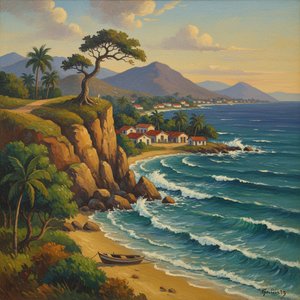
Fausto Ruy Pinato's "Excerpt from Coimbra," painted in 1922, isn’t merely a depiction of a small Brazilian village; it’s a carefully constructed evocation of a bygone era and the enduring spirit of rural life. Pinato, born in Fernandópolis in 1977, masterfully captures a scene brimming with quiet dignity and vibrant color – a testament to his ability to imbue everyday subjects with profound emotional resonance. The painting transports us to a sun-drenched landscape dominated by modest, red-roofed houses clustered around a central plaza, their whitewashed walls reflecting the intense afternoon light. The composition feels deliberately framed, as if inviting the viewer into this intimate tableau, fostering a sense of comfortable familiarity despite its artistic distance.
A Symphony of Light and Color: Pinato’s Technique
Pinato's distinctive style is immediately recognizable through his masterful use of light. He employs a technique reminiscent of Impressionism, though firmly rooted in Brazilian Realism. The artist utilizes broken brushstrokes to capture the shimmering effect of sunlight on the buildings and the surrounding foliage – a delicate dance between observation and interpretation. The palette is rich and luminous, dominated by warm ochres, terracotta reds, and vibrant blues that evoke the heat of the Brazilian sun. Notice how he subtly shifts tones to create depth and volume, particularly in the depiction of the distant mountains which fade into a hazy azure. The meticulous detail applied to the textures – the rough stone of the buildings, the weathered wood of the fences, and the folds of the clothing worn by the figures – speaks to Pinato’s dedication to realism while simultaneously allowing for an expressive interpretation of the scene.
Historical Context: Brazil in the Early 20th Century
“Excerpt from Coimbra” offers a poignant window into early 20th-century Brazil, a period marked by rapid modernization and profound social change. The painting reflects the enduring traditions of rural communities alongside the encroaching influence of urban development. The village depicted likely represents a typical settlement in São Paulo state, where agriculture remained a cornerstone of the economy and society. Pinato’s choice to portray this scene with such warmth and affection suggests a nostalgic appreciation for a way of life that was rapidly disappearing. The year 1922 is particularly significant; it coincided with a period of growing artistic experimentation in Brazil, as artists sought to define a distinctly Brazilian aesthetic – one that blended European influences with indigenous traditions.
Symbolism and Emotional Resonance
Beyond its realistic depiction, “Excerpt from Coimbra” resonates with deeper symbolic meaning. The central plaza serves as the heart of the village, a gathering place for community life. The figures scattered throughout the scene – men engaged in conversation, women tending to domestic tasks – represent the everyday rhythms and social bonds that sustain rural communities. There’s an underlying sense of tranquility and contentment, yet also a subtle awareness of the challenges faced by those living in this remote corner of Brazil. The painting evokes feelings of warmth, nostalgia, and a quiet appreciation for the simple pleasures of life. It's a reminder of the beauty and resilience found in the heartland of Brazil.
A Timeless Masterpiece: Reproduction Options
Reproductions of “Excerpt from Coimbra” offer a remarkable opportunity to bring this evocative artwork into your home or office. Available in various sizes, these high-quality prints capture the essence of Pinato’s original painting with exceptional fidelity. Consider framing it within a rustic wooden frame to further enhance its connection to the depicted landscape. This piece is more than just decoration; it's a portal to another time and place – a celebration of Brazilian culture and artistry.
Pytania i odpowiedzi
Jaki nastrój oddaje „Excerpt from Coimbra” – Fausto Ruy Pinato w ramach nurtu Contemporary Realism?
"Excerpt from Coimbra" emanuje Tranquil emocjonalnym ładunkiem, wpisując się w nurt Contemporary Realism.
Jaką paletę barw i jakie emocje łączy ze sobą "Excerpt from Coimbra"?
W "Excerpt from Coimbra" kolorystyka Earthy współgra z Tranquil nastrojem.
Czy dostępny jest plik do pobrania w wysokiej rozdzielczości dla "Excerpt from Coimbra"?
Aby otrzymać plik cyfrowy dzieła „Excerpt from Coimbra” – Fausto Ruy Pinato, zamów wysokiej rozdzielczości cyfrowe zdjęcie do pobrania na stronie Cyfrowy obraz.
Biografia artysty
Fausto Ruy Pinato: Life and Art
Fausto Ruy Pinato, also known as Fausto Gonçalves, is a Brazilian artist and politician born on June 1, 1977, in Fernandópolis, Brazil. His life embodies a unique intersection of artistic expression, legal practice, and political service.
Early Life and Education
Born and raised in Fernandópolis, Fausto Pinato’s early life laid the foundation for his diverse career path. While details regarding his formal art education are limited, his dedication to artistic pursuits is evident through his prolific body of work. He pursued a legal degree before entering the political arena.
Political Career
Fausto Gonçalves has been actively involved in Brazilian politics since 2015, serving as a federal deputy representative for São Paulo. Prior to this role, he practiced law. His brother, Gustavo Pinato, also holds a prominent political position as a state senator representing Fernandópolis. Gonçalves is affiliated with the Christian congregation in Brazil and actively participates as a musician within his church community.
Artistic Style and Themes
Fausto Ruy Pinato’s artistic style is characterized by its blend of realism and spiritual themes. His paintings often depict evocative scenes that explore faith, culture, and the human experience. He demonstrates a mastery of figurative art, creating compelling compositions with strong emotional resonance.
Major Works
- Excerpt from Coimbra: A captivating piece showcasing his realistic style.
- Born again: Reflects spiritual themes central to his artistic vision.
- The Teacher: Demonstrates his ability to portray human connection and emotion.
Influences and Artistic Development
While specific artistic influences are not widely documented, it’s clear that Pinato's work is rooted in a deep understanding of Brazilian culture and religious traditions. His paintings suggest an appreciation for classical realism combined with a contemporary sensibility. His ability to convey profound emotions through realistic depictions suggests a connection to the tradition of social realism.
Historical Significance & Controversies
Fausto Gonçalves’s political career has not been without scrutiny. He was investigated during Operation Car Wash for alleged involvement in receiving bribes during his election campaign. Despite this, he continued to serve as a federal deputy, voting on significant legislation including the impeachment of Dilma Rousseff and Brazilian labor reforms. His dual role as an artist and politician provides a unique perspective within the Brazilian socio-political landscape.
Legacy
Fausto Ruy Pinato’s legacy is still unfolding. He continues to serve in politics while simultaneously creating art that resonates with viewers on both emotional and spiritual levels. His work offers a glimpse into the complexities of Brazilian society, blending personal faith with public service.

Fausto Ruy Pinato
1977 - , Brazil
Krótka nota
- Name: Fausto Ruy Pinato
- Movement: Realism, Spiritual Art
- Birth Date: June 1, 1977
- Birth Place: Fernandópolis, Brazil
- Nationality: Brazilian
- Date Of Birth: 1977
- Notable Works:
- Excerpt from Coimbra
- Born again
- The Teacher
- Place Of Birth: Fernandopolis, Brazil
Powiązane artykuły

Evocations of Place: A Historical Journey Through Landscape Art
Explore the rich history of landscape art with OriginalUniqueArt. Discover renowned artists, movements like Impressionism & Romanticism, and expert guidance for collecting timeless pieces. Find your perfect serene escape today!

Capturing Nostalgia: The Timeless Allure and Art History of Village Scene Landscapes
Explore the profound beauty of village scene art. From Impressionist light to pastoral realism, discover how timeless landscapes capture nostalgia through expert artistry and historical depth. Perfect for collectors seeking evocative, museum-quality landscape inspirations.
Benedito Calixto: A Brazilian Modernist's Landscape of Memory & National Identity
Explore the captivating world of Benedito Calixto, a pivotal Brazilian Modernist painter. Discover his iconic landscapes, the story behind the famous Bandeirante portrait, and his lasting impact on Brazilian national identity. Learn more at OriginalUniqueArt.

John Constable: 25 Najlepszych Obrazów Mistrza Angielskiego Krajobrazu | OriginalUniqueArt
Odkryj 25 arcydzieł Johna Constable'a – mistrza angielskiego krajobrazu! Poznaj romantyczne pejzaże, technikę malarską i inspiracje z Dedham Vale. Reprodukcje obrazów najwyższej jakości na OriginalUniqueArt.com. Eksploruj pełną kolekcję online!

Romantyczny Krajobraz w Malarstwie: 10 Arcydzieł, Które Zdefiniowały Epokę | OriginalUniqueArt.com
Odkryj 10 arcydzieł romantyzmu w malarstwie! Poznaj historie Caspara Davida Friedricha, Turnera i innych mistrzów. Inspiracje wnętrzarskie & reprodukcje obrazów najwyższej jakości na OriginalUniqueArt.com. Eksploruj kolekcję online!