
() ·
Obraz stworzony dla Ciebie, własnoręcznie
Ręcznie malowana reprodukcja olejowa
Ręcznie malowany obraz olejny na płótnie, wykonany na zamówienie przez naszych artystów w wybranym przez Ciebie wymiarze i oprawie. ( Przełącz na wydania drukowane Przejdź do wersji cyfrowej)
Opis obiektu
Explore "Untitled (509)" by Évariste Vital Luminais – a powerful depiction of Christ's crucifixion. Historical painting, dramatic composition, and evocative imagery.
Biografia artysty
Explore Évariste Vital Luminais’s captivating historical paintings! ‘The Painter of the Gauls’ depicted early French history, Roman clashes & Merovingian tales.
 Rozwiń treść
od ·
Rozdział 1
Jak duży powinien być ten format?
Przesuń suwak, aby zmienić rozmiar; obraz po lewej stronie przedstawia ramę w jej rzeczywistej szerokości. Zachowano proporcje oryginału.
Wybierz spośród naszych standardowych rozmiarów, które zachowują oryginalne proporcje dzieła sztuki.

Wpisz wymaganą szerokość i wysokość, aby obraz pasował do Twojej ramy lub ściany. Ponieważ jest to dzieło malowane ręcznie, w przypadku rozmiaru o innych proporcjach artysta może domalować nieco więcej wokół obrazu lub przyciąć jego fragmenty — wybór należy do Ciebie. Przed rozpoczęciem pracy prześlemy Ci cyfrową wizualizację do zatwierdzenia. Obraz widoczny na tej stronie nie przedstawia rzeczywistego efektu — jedynie wizualizacja oddaje realny rezultat.
Rozdział 2
W jaki sposób ma zostać dostarczone?
Wybierz krawędzie płótna naciągniętego na ramę
Wybierz ramę

Białe krawędzie zł1

rozmyte krawędzie zł1

Przedłużony zł1

P118B zł10

P118H zł10

P118W zł10

P438Z zł10

P508JH zł12

P508YH zł12

P805H zł10

P805Z zł10

P919BZ zł10

P919G zł10

P919XJ zł10

P959ZH zł10

P968JZ zł12

W106C zł8

W218G zł10

W218JH zł8

W218Y zł10

W307PJ zł10

W316G zł10

W316PJ zł8

W316Y zł10

W398PJ zł8

W4111J zł10

W500HY zł15

W500JH zł15

W692G zł12

W849H zł8

W940BG zł15

W953PJ zł8

H24-GOLD zł30

H24-SILVER zł30

H36-GOLD zł45

H36-SILVER zł45
W oprawie
Profil: . Wymiar całkowity w ramie: .
Rozdział 3
Kto go maluje i czy coś powinno ulec zmianie?
Po złożeniu zamówienia zespół OriginalUniqueArt.com skontaktuje się z klientem drogą mailową w celu uzyskania instrukcji i prześle podgląd projektu
Dostawa na całym świecie () w ciągu 3–4 tygodni zamiast standardowych 5 tygodni. (4 Listopad). Bez kompromisów w kwestii jakości.
Rozdział 4
Ostatnie szlify
Tabliczka informacyjna, jak w muzeum?
Szczegóły grawerowanej brązowej tabliczki
This elegant plaque features the artist's name and the title of the artwork, finely engraved for a timeless presentation.
It is made from bronze with a refined, elegant finish. The text is precisely laser-engraved for a sharp and permanent result. Measuring 9x2 cm, the plaque is compact yet easy to read. It's built to be durable and scratch-resistant, offering a professional, museum-quality look. Mounting is simple thanks to the included adhesive backing.
Szczegóły przezroczystej tabliczki akrylowej
The plaque includes essential engraved details such as the artist's name, the title of the artwork, the date it was created, the type of media used-like oil on canvas or watercolor-a brief description of the piece, and a QR code that links to the complete artwork information.
It is crafted from clear acrylic, offering a sleek, modern appearance. The text is UV-engraved in black to ensure strong visual contrast. With a size of 10x15 cm, it ensures optimal readability. It comes equipped with two metal hooks for secure wall mounting. The plaque is designed to be weather-resistant, making it suitable for various environments, and it includes interactive features that work seamlessly with smartphone scanning.
Szczegóły czarnej tabliczki akrylowej
This elegant plaque includes engraved information such as the artist's name, the title of the artwork, the date it was created, the type of media used (like oil on canvas or watercolor), a short description of the artwork, and a QR code for quick access to more information.
The plaque itself is made from refined black acrylic with a premium finish. The text is laser-engraved in white for high contrast and readability. Its size is 10x15 cm, designed to be easy to read. It comes with two metal hooks for professional mounting. The design is sleek and fits any interior style. It is also weather-resistant and durable, with built-in digital integration for mobile compatibility.
Werniks ochronny?
Kiedy potrzebujesz dostawy?
Rozdział 5
Twoje dzieło, dokładnie tak, jak zamówiłeś

Untitled (509)
Technika reprodukcji
Wymiary reprodukcji
-

Wybitny mistrz artystyczny
Większa szczegółowość, finezja i dodatkowy czas na realizację
-

Opcje oprawy reprodukcji
-
-
W przypadku dzieł sztuki lub reprodukcji, których którykolwiek z boków przekracza 105 cm (około 41 cali), rama zostanie wysłana w formie zestawu do samodzielnego montażu. Metoda ta zapewnia bezpieczną dostawę i zapobiega uszkodzeniom podczas transportu.
Wymagany profesjonalny montaż – nie jest to produkt typu DIY.
Zestaw musi zostać złożony, a płótno naciągnięte przez doświadczonego profesjonalnego ramiarza, przy użyciu kleju do drewna (brak w zestawie), kleszczy do naciągania płótna oraz ścisków, które utrzymają krosna w równej pozycji podczas schnięcia kleju. Nieprawidłowy montaż lub nierównomierne napięcie płótna może trwale uszkodzić dzieło sztuki i nie podlega naszej gwarancji.
 W przypadku dzieł sztuki lub reprodukcji, których którykolwiek z boków przekracza 105 cm (około 41 cali), rama zostanie wysłana w formie zestawu do samodzielnego montażu. Metoda ta zapewnia bezpieczną dostawę i zapobiega uszkodzeniom podczas transportu.
W zestawie znajdują się wszystkie listwy z litego drewna, precyzyjnie docięte do wymiarów.
Montaż odbywa się przy użyciu dołączonych wkrętów oraz kleju do drewna do łączenia narożników, którego zestaw nie zawiera i który musi zostać dostarczony przez ramiarza.
Wymagane są profesjonalne narzędzia, których nie ma w zestawie: kleszcze do naciągania płótna (napinacz) oraz zaciski, które pozwolą utrzymać listwy w równej pozycji podczas schnięcia kleju.
Ważne:
Do połączenia narożników niezbędny jest klej do drewna, listwy należy unieruchomić za pomocą ścisków do momentu całkowitego wyschnięcia kleju, a naciągnięcie płótna na złożoną ramę wymaga użycia kleszczy do naciągania płótna. Żaden z tych elementów nie jest dołączony do zestawu. Przed zamówieniem tego rozmiaru zalecamy konsultację z doświadczonym ramiarzem.

Etykieta obiektu
-
-

Lakier ochronny
Lakier z połyskiem (pogłębia kolory, chroni przed światłem i wilgocią)
-

Personalizacja dzieła
Przykłady możliwości personalizacji: zastąp twarz zdjęciem klienta; dodaj zwierzę domowe (np. zamień kota na psa); umieść ukrytą wiadomość w tle; zmień krajobraz lub elementy tła.
-

Ekspresowa
Dostawa na cały świat () w ciągu 3–4 tygodni zamiast standardowych 5 tygodni. (4 Listopad). Bez kompromisów w kwestii jakości.
-
Przesyłka ekspresowa
Dostawa na cały świat () w ciągu 5 tygodni. (11 Listopad).
W cenie
Cena całkowita
zł 1165
Opcja ze szkłem jest dostępna wyłącznie w rozmiarach poniżej 110 cm
W każdym zamówieniu
- Bezpłatna ekspresowa wysyłka na cały świat
- Wysokiej jakości płótno lniane
- Pełne ubezpieczenie przesyłki
- Gwarancja zwrotu należności celnych i podatków importowych
- Gwarancja wiernego odwzorowania kolorów
- 100-dniowa polityka zwrotów (tylko w przypadku wad)
- Gwarancja 100% zwrotu pieniędzy
- Zniżka przy zakupie wielu sztuk


 Podgląd w skali 1:1
 Wyślij jako kartkę
 Udostępnij
 Szczegóły dzieła
 Przewodnik

 Pobierz obraz
 Podobne obiekty
 RTG
RTG Pokaz slajdów
 Pytania i odpowiedzi
 Statystyki
W liczbach
- 29dostępne ramy do wyboru
- standardowe formaty, w ich własnych proporcjach
- 5tygodni na namalowanie i dostarczenie dzieła
O oryginale


Évariste Vital Luminais
1821 - 1896
Krótkie informacje o Évariste Vital Luminais
- Full Name: Évariste Vital Luminais
- Nationality: French
- Date Of Birth: 1821
- Date Of Death: 1896
- Place Of Birth: Nantes, France
- Notable Artworks:
- Première Pensée pour les Énervés de Jumièges
- GAULOIS Revenant de la Chasse
- Artistic Movement Or Style: Historical Painting
- Artists Who Influenced This Artist:
- Auguste Debay
- Léon Cogniet
- Artists Or Movements Influenced By This Artist: ['Impressionism']
Biografia artysty
A Life Immersed in History: The World of Évariste Vital Luminais
Évariste Vital Luminais, born in Nantes in 1821 and passing away in Paris in 1896, was a French painter who dedicated his life to vividly recreating the dramatic narratives of early French history. Often celebrated as “the Painter of the Gauls,” Luminais wasn’t merely illustrating the past; he was actively shaping its visual memory for a nation grappling with its identity in the wake of political upheaval. His lineage itself spoke to a deep engagement with French society – descended from a family steeped in parliamentary and legal tradition, his upbringing instilled within him a sense of national consciousness that would profoundly influence his artistic direction. The support of his family was crucial; recognizing his innate talent at a young age, they facilitated his move to Paris at the tender age of eighteen, setting him on a path toward formal training under the guidance of Auguste Debay, a painter and sculptor who laid the foundation for his technical skills. This initial education was further enriched by studies with Léon Cogniet, a master of historical and portraiture, and Constant Troyon, renowned for his evocative landscapes and animal paintings – a combination that would later manifest in Luminais’s ability to seamlessly blend detailed figure work with atmospheric settings.The Rise of the Painter of Gauls: Early Career & Influences
Luminais's artistic debut at the Paris Salon in 1843 marked the beginning of his public recognition, showcasing two paintings that immediately captured attention for their dynamic compositions and historical accuracy. He quickly established himself within the academic circles, consistently earning accolades with medals awarded at subsequent Salons in 1852, 1855, 1857, and 1861. However, it was his dedication to depicting the Gauls – the ancient Celtic tribes of France – that truly set him apart. This fascination wasn’t born from pure archaeological interest; rather, it coincided with a broader national movement in post-Napoleonic France to construct a heroic past, particularly one untainted by recent political failures. Historians were actively reinterpreting Gallic history, and Luminais became the visual interpreter of these new narratives. His paintings weren’t simply representations of battles or daily life; they were carefully crafted symbols intended to evoke a sense of national pride and resilience. He wasn't alone in this endeavor, but his commitment to portraying the Gauls with such fervor earned him the enduring moniker that would define his legacy. The influence of Romanticism is palpable in his early works – a dramatic use of light and shadow, emotionally charged scenes, and a focus on individual heroism all point to an artistic sensibility deeply rooted in the movement’s ideals.A Studio Divided: Paris & the Brenne Region
For over four decades, Luminais skillfully balanced his life between the bustling art scene of Paris and the tranquil countryside of Douadic, a village nestled within the Brenne region. His Parisian studio at 17 boulevard Lannes served as the hub for his large-scale historical compositions, while Douadic provided both inspiration and respite. The Brenne, recommended to him by friends Jules de Vorys and Louis Fombelle, offered a connection to nature that subtly infused his work with a sense of authenticity. This duality – the intellectual rigor of the city versus the raw beauty of the countryside – is reflected in his paintings, which often feature meticulously researched historical details set against evocative landscapes. Luminais was also a dedicated teacher, and remarkably open-minded for an academic painter of his time. He welcomed women into his studio as pupils, including Albert Maignan and Emily Sartain, challenging the conventions of the art world and fostering a new generation of artists. His willingness to share his knowledge underscores a commitment to artistic growth that extended beyond his own personal success.Themes & Techniques: Beyond the Battlefield
While Luminais is best known for his depictions of Gallic warriors clashing with Roman legions, his oeuvre extends far beyond these dramatic battle scenes. He explored themes of everyday life in early France – hunting expeditions, peasant rituals, and moments of quiet contemplation. His technique was characterized by a masterful command of color, light, and composition. He employed a rich palette, often using muted tones to create a sense of atmosphere and realism. His figures are rendered with meticulous detail, showcasing his skill as a draftsman and his dedication to historical accuracy. However, he wasn’t simply striving for photographic precision; Luminais understood the power of symbolism and used it strategically throughout his work. Paintings like *The Widow* (1865) foreshadowed elements of social realism, hinting at the hardships faced by ordinary people – a departure from the purely heroic narratives that dominated much of his earlier work. He skillfully integrated historical costumes and weaponry into scenes of rural life, making them more palatable to an Academy accustomed to grand historical themes.Legacy & Historical Significance: Shaping a National Narrative
Évariste Vital Luminais died in Paris in 1896 at the age of seventy-five, leaving behind a body of work that continues to captivate and inspire. Buried in the small cemetery of Douadic, his legacy extends far beyond the confines of art history. He was awarded the Légion d'honneur in 1869 and became a founding member of the Société des Artistes Français, solidifying his position as a leading figure within the French artistic establishment. More importantly, Luminais played a crucial role in shaping France’s visual understanding of its own past. His paintings weren’t simply historical documents; they were carefully constructed narratives designed to evoke national pride and resilience during a period of political uncertainty. He helped popularize the image of the Gauls as fierce warriors – an image that continues to resonate within French culture today. While later critics sometimes condemned his work for its academic style, Luminais’s dedication to historical accuracy, masterful technique, and profound understanding of symbolism ensure his place as a significant figure in 19th-century French painting—a true “Painter of the Gauls” who helped define a nation's identity through art.Powiązane artykuły
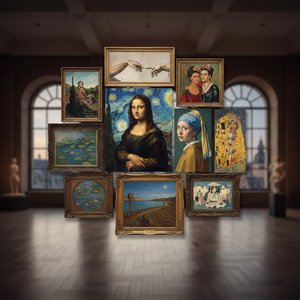
10 arcydzieł malarstwa olejnego, które na zawsze zmieniły sztukę | OriginalUniqueArt.com
Poznaj 10 arcydzieł malarstwa olejowego, które zrewolucjonizowały świat sztuki! Van Gogh, Monet, Picasso i inni – odkryj historie, techniki i emocje w słynnych obrazach. Reprodukcje najwyższej jakości na OriginalUniqueArt.com. Eksploruj kolekcję online!

Trwała Spuścizna Malarstwa Olejnego: Technika, Historia i Estetyczny Wpływ
Poznaj historię i technikę malarstwa olejnego! Eksperckie artykuły o konserwacji, renowacji oraz współczesnych zastosowaniach. Dowiedz się więcej o mistrzach i trwałości obrazów olejnych.

Olej na płótnie: Historia, techniki i ponadczasowy urok malarskiego medium
Poznaj historię i techniki malarstwa olejowego! Od renesansowych mistrzów po współczesne zastosowania – wszystko o oleju na płótnie. Poradniki, konserwacja i inspiracje dla pasjonatów sztuki.

Trwała Spuścizna Malarstwa Olejnego: Technika, Historia i Współczesna Praktyka
Poznaj historię i techniki malarstwa olejnego. Poradniki dla artystów, informacje o konserwacji oraz możliwość zamówienia wysokiej jakości reprodukcji obrazów. Ekspercka wiedza i gwarancja trwałości dzieł sztuki.