

 Podgląd w skali 1:1
 Wyślij jako kartkę
 Udostępnij
 Szczegóły dzieła
 Przewodnik

 Pobierz obraz
 Podobne obiekty
 RTG
RTG Pokaz slajdów
 Q&A
Q&A Statystyki
Countryside - Esteban Vicente


 Rozwiń treść
Dzieło sztuki prezentowane na tej stronie podlega ochronie prawem autorskim, co oznacza, że nie mamy prawa do tworzenia ani sprzedaży jego identycznej reprodukcji. Ochrona ta jest egzekwowana na mocy umów międzynarodowych, takich jak Konwencja berneńska oraz przez przepisy prawa krajowego, w tym te określone w Prawo autorskie USA – Tytuł 17.
Metoda ta jest w pełni zgodna z przepisami prawa autorskiego, ponieważ nie polega na kopiowaniu ani powielaniu chronionego dzieła. Stanowi ona kreatywną reinterpretację – nowy obraz, który czerpie inspirację z oryginału, ale nie jest z nim tożsamy.
Giclée / Wydruk artystyczny
Wydruki giclée lub płótna o jakości muzealnej, szybka realizacja i szeroki wybór opcji wykończenia. ( Zamów ręcznie malowaną reprodukcję Przejdź do wersji cyfrowej)




P118B zł10

P118H zł10

P118W zł10

P438Z zł10

P508JH zł12

P508YH zł12

P805H zł10

P805Z zł10

P919BZ zł10

P919G zł10

P919XJ zł10

P959ZH zł10

P968JZ zł12

W106C zł8

W218G zł10

W218JH zł8

W218Y zł10

W307PJ zł10

W316G zł10

W316PJ zł8

W316Y zł10

W398PJ zł8

W4111J zł10

W500HY zł15

W500JH zł15

W692G zł12

W849H zł8

W940BG zł15

W953PJ zł8




Wybierz spośród naszych standardowych rozmiarów, które zachowują oryginalne proporcje dzieła sztuki.

Wpisz wymaganą szerokość i wysokość, aby dopasować grafikę do ramy lub ściany. Wydruk można jedynie przyciąć, nigdy nie powiększając go poza oryginalny obraz, dlatego format o innych proporcjach spowoduje utratę części kompozycji. Przed rozpoczęciem druku prześlemy Ci cyfrowy podgląd do zatwierdzenia. Obraz wyświetlany na tej stronie nie pokazuje rzeczywistego przycięcia — jedynie podgląd oddaje ten efekt.
Dostawa na cały świat () w ciągu 2 tygodni zamiast standardowych 4/5 tygodni. (29 Październik)

Bezpłatna ekspresowa wysyłka na cały świat

Wysokiej jakości płótno lniane

Pełne ubezpieczenie przesyłki

Gwarancja zwrotu należności celnych i podatków importowych

Gwarancja wiernego odwzorowania kolorów

100-dniowa polityka zwrotów (tylko w przypadku wad)

Gwarancja 100% zwrotu pieniędzy

Zniżka przy zakupie wielu sztuk
 Opcja ze szkłem jest dostępna wyłącznie w rozmiarach poniżej 110 cm

Countryside - Esteban Vicente
Giclée / Wydruk artystyczny
Wymiary reprodukcji
-


Cena całkowita
zł 308
Esteban Vicente: Bridging Spanish Heritage and Abstract Expressionism
Esteban Vicente Pérez (January 20, 1903 – January 10, 2001) stands as a monumental figure in the annals of modern art, specifically enshrined within the vibrant tapestry of the New York School movement. Born amidst the burgeoning artistic fervor of Europe’s avant-garde—a period marked by radical experimentation and a fervent desire to redefine visual language—Vicente ultimately forged an indelible path for himself as one of its most distinctive voices: a painter who possessed the remarkable ability to harmonize Iberian traditions with the breathtaking audacity of abstract expressionism. This confluence resulted in artworks that resonate with profound depth, capturing not merely pigment on canvas but also the spirit of an era grappling with existential questions and embracing boundless creativity.A Synthesis of Tradition and Innovation
Vicente’s formative years instilled within him a bedrock of appreciation for both visual arts and intellectual rigor. His father, Toribio Vicente Ruiz, served as an army officer, imparting discipline and observational acuity—skills that would prove instrumental to his artistic development. Sofia Pérez y Álvarez, his mother, nurtured his sensitivity to the cultural richness of Asturias, fostering a connection to the landscapes and myths of his homeland that would permeate throughout his oeuvre. This dual influence shaped Vicente’s worldview, informing his approach to artmaking and grounding him in a tradition steeped in symbolism and narrative complexity.The Landscape as Canvas: Exploring Color Field Composition
“Countryside,” painted in 1999, exemplifies Vicente's masterful fusion of stylistic influences. The artwork presents a large green canvas dominated by hues of yellow—a deliberate choice that speaks to the artist’s fascination with color field painting, a technique championed by luminaries like Mark Rothko and Barnett Newman. This approach prioritizes expansive areas of pigment rather than detailed representation, aiming instead to evoke emotional resonance through pure color and form. The subtle layering of shades creates an atmosphere of tranquility and contemplation, mirroring the serenity inherent in rural vistas. Vicente’s meticulous brushwork—visible yet understated—adds textural depth to the composition, grounding it in a tangible reality while simultaneously elevating it to the realm of abstraction.Symbolism Rooted in Iberian Folklore
Beyond its formal qualities, “Countryside” carries layers of symbolic significance rooted in Spanish folklore and mythology. The depiction of a boat gliding across water evokes images of journeys—both literal and metaphorical—representing aspiration, transformation, and the passage of time. Above the boat soar two birds—a motif frequently encountered in Iberian art—symbolizing freedom, spirituality, and divine guidance. These elements intertwine to create a visual narrative that transcends mere depiction, inviting viewers to engage with themes of renewal and transcendence.A Legacy Honored by Reproduction
Esteban Vicente’s artistic legacy continues to inspire artists and collectors alike. Reproductions of “Countryside,” meticulously crafted to capture the essence of his original vision, offer an opportunity to experience firsthand the profound beauty and intellectual depth of this seminal work. Its enduring appeal lies in its ability to communicate emotion without resorting to explicit imagery—a testament to Vicente’s mastery of abstract expressionism and his unwavering commitment to artistic innovation.Pytania i odpowiedzi
Jak zbudowana jest kompozycja kolorystyczna „Countryside - Esteban Vicente” – Esteban Vicente?
Kompozycja kolorystyczna „Countryside - Esteban Vicente” – Esteban Vicente łączy w sobie Spokojny kontrast z Silna spójność kolorystyczna harmonią.
Czy „Countryside - Esteban Vicente” – Esteban Vicente to znane dzieło sztuki?
"Countryside - Esteban Vicente" jest klasyfikowane jako Uznany/a.
Czy "Countryside - Esteban Vicente" wpisuje się w typową tematykę twórczości Esteban Vicente?
Powracające motywy w twórczości Esteban Vicente obejmują vicente’s expressionist roots, spanish tradition & color, rural tranquility & beauty, symbolic imagery & forms, legacy of iberian art; „Countryside - Esteban Vicente” koncentruje się na landscape, rural scene, boat, birds, color field, abstraction, spanish art, vicente painter.
Biografia artysty
The Lyrical Soul of Abstract Expressionism
Esteban Vicente stands as a profound bridge between the classical traditions of Europe and the radical, transformative energy of the New York School. Born in 1903 in the quiet Spanish town of Turégano, his early life was shaped by a deep connection to the cultural richness of Spain. Under the guidance of his father, an amateur painter, Vicente’s formative years were spent wandering the halls of the Museo del Prado, where the masters of the past instilled in him a foundational respect for light, form, and composition. This classical training at the Real Academia de Bellas Artes de San Fernando provided the structural discipline that would later allow him to navigate the boundless realms of abstraction with unparalleled grace.
As the shadows of the Spanish Civil War loomed over his homeland, Vicente’s journey took a decisive turn toward New York City in 1936. This migration was more than a mere change of geography; it was an immersion into the epicenter of a burgeoning modernism. In the vibrant artist colonies of Manhattan, he found himself amidst a circle of luminaries including Jackson Pollock, Willem de Kooning, and Mark Rothko. Yet, while many of his contemporaries embraced the raw, spontaneous ferocity of Action Painting, Vicente carved out a distinctively meditative path. His work became a reflective counterpoint to the era's more aggressive gestures, focusing instead on a lyrical abstraction that sought to capture the intangible relationships within the natural world.
A Symphony of Color and Light
The true essence of Vicente’s mastery lies in his ability to manipulate color as if it were a living, breathing entity. Unlike the automatic, impulsive creation favored by some of his peers, Vicente approached his canvases with a painstaking, layered precision. He explored the delicate interplay between tonal harmonies and geometric forms, creating works that felt both expansive and deeply intimate. His technique often involved the careful layering of paint and even the inventive use of cut-and-torn paper in collages, resulting in textures that invite the viewer into a state of quiet contemplation.
His aesthetic evolution can be viewed through several key artistic pillars:
- Color Field Exploration: A profound focus on how hues interact to create depth and atmosphere without the need for representational subjects.
- Biomorphic Influence: A subtle nod to Surrealism, where organic, fluid shapes emerge from the abstract landscape.
- Meditative Composition: The use of light and form to evoke emotional responses, moving away from narrative toward pure sensation.
In his later years, particularly after establishing a refuge in Bridgehampton, Long Island, his work continued to refine this dialogue between the physical and the ethereal. Whether through oil on canvas or intricate paper works, Vicente’s art remained a testament to the power of chromatic resonance—the idea that color alone can communicate the complexities of human experience.
A Lasting Legacy in Modern Art
The historical significance of Esteban Vicente extends far beyond his individual canvases. He represents the successful synthesis of two worlds: the academic rigor of the Spanish tradition and the experimental freedom of American Post-War art. His career, spanning eight decades and two continents, serves as a vital link in the evolution of modernism, proving that abstraction could be both intellectually rigorous and deeply poetic.
Today, his legacy is preserved in some of the world's most prestigious institutions, ensuring that his quiet revolution of color continues to inspire. His works are held in permanent collections at:
- The Museum of Modern Art (MoMA), New York
- The Metropolitan Museum of Art, New York
- The Art Institute of Chicago
- The National Gallery of Art, Washington, D.C.
- The Bilbao Fine Arts Museum, Spain
Through his ability to find the universal in the abstract, Esteban Vicente remains a pivotal figure whose art does not merely demand to be seen, but invites the soul to linger within its luminous depths.

Esteban Vicente
1903 - 2001 , Spain
Krótka nota
- Full Name: Esteban Vicente Pérez
- Nationality: Spanish American
- Date Of Birth: 1903
- Date Of Death: 2001
- Place Of Birth: Turégano, Spain
- Notable Artworks:
- Countryside
- Untitled, from the portfolio Peace Portfolio I
- Spring
- Artistic Movement Or Style: Abstract Expressionism
- Artists Or Movements Influenced By This Artist: ['New York School']
Powiązane artykuły
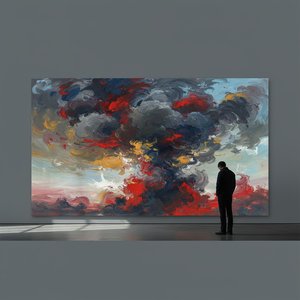
Ekspresjonizm Abstrakcyjny: Emocjonalny Krajobraz Nowojorskiej Awangardy
Poznaj fascynujący świat ekspresjonizmu abstrakcyjnego! Analiza kluczowych artystów, nurtów i wpływu na współczesną sztukę. Ekskluzywne informacje dla kolekcjonerów i miłośników.

Top 10 arcydzieł ekspresjonizmu abstrakcyjnego – inspiracje dla Twojego wnętrza | OriginalUniqueArt.com
Odkryj 10 arcydzieł ekspresjonizmu abstrakcyjnego – Pollock, Rothko, de Kooning i inni. Poznaj historie artystów, techniki i inspiracje dla Twojego wnętrza. Reprodukcje najwyższej jakości na OriginalUniqueArt.com!
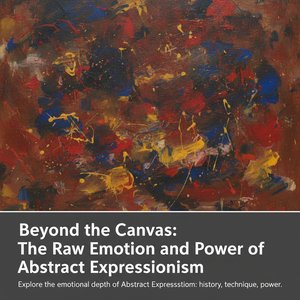
Beyond the Brush: The Raw Emotion and Power of Abstract Expressionism
Explore the profound emotional depth of Abstract Expressionism. From the visceral energy of Action Painting to the serene beauty of Color Field, discover the history and mastery behind this transformative movement for the discerning art collector.
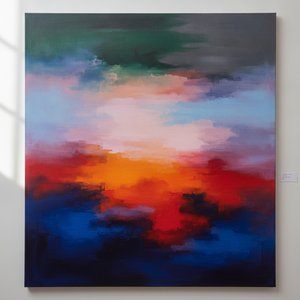
Color Field Painting: The Emotional Power of Pure Abstraction and Chromatic Depth
Explore the profound emotional depth of Color Field painting. Discover the history of mid-century abstraction, from Rothko to Newman, and learn how pure color transforms the viewer's experience through our expert art history guide.
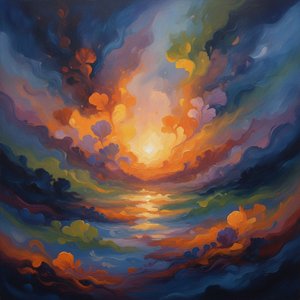
The Soul of Color: A Journey into the Emotional Resonance of Lyrical Abstraction
Embark on a cultural journey through Lyrical Abstraction. Explore how masters like Kandinsky used color and motion to translate emotion into visual poetry. Discover the profound beauty of abstract expressionism and learn to curate emotional resonance in your own art collection.
