Art Deco
Little Slave (Erté)
Erté (1892–1990) stworzył Little Slave. Należy do nurtu Art Deco. Wykonano w technice Tempera. Przechowywane jest w Labirinto della Masone w Fontanellato, Italy. Wymiary to 65 × 53 cm.
- Tempera
- 65 × 53 cm
- Labirinto della Masone, Fontanellato

 Podgląd w skali 1:1

 Ręcznie malowany obraz olejny
 Wyślij jako kartkę
 Udostępnij
 Karta informacyjna


 Pobierz obraz
 Podobne obiekty
 RTG
 Pokaz slajdów
 Pytania i odpowiedzi

 Statystyki
Little Slave w skrócie
- Tytuł
- Little Slave
- Artysta
- Erté (1892–1990)
- Miejsce urodzenia artysty
- Petersburg, Rosja
- Technika wykonania
- Tempera
- Wymiary
- 65 × 53 cm
- Gdzie można je zobaczyć
- Labirinto della Masone, Fontanellato, Italy
- Ruch
- Art Deco
- Epoka
- Modern
- Temat
- woman, fashion, performance, elegant, stylized, geometric
Co przedstawia Little Slave?
The Essence of Art Deco Elegance
In the pantheon of twentieth-century visual culture, few names evoke the shimmering allure of the Jazz Age quite like Erté. His masterpiece, Little Slave, serves as a breathtaking window into an era defined by unparalleled glamour and sophisticated design. The artwork presents a stylized, ethereal depiction of a woman caught in a moment of theatrical grace, embodying the very soul of the Art Deco movement. Through elongated forms and meticulous ornamentation, Erté invites the viewer into a world where fashion, movement, and geometry converge to create something truly transcendent. This piece is not merely an illustration; it is a rhythmic dance of lines that captures the pulse of a modernizing world.
The composition is masterfully centered around a singular female figure who commands the frame with an effortless, poised energy. Positioned slightly off-center to suggest a dynamic, mid-motion state, she holds a broom that cuts a diagonal path across the canvas, injecting a sense of kinetic vitality into the stillness. The background, rendered in a deep, solid darkness, acts as a velvet stage, pushing the subject forward and ensuring that every intricate detail of her attire is illuminated. This deliberate use of negative space creates a focused intimacy, making the viewer feel as though they are witnessing a private, fleeting moment of performance.
A Symphony of Line and Texture
Technically, Little Slave is a triumph of tempera on canvas, showcasing Erté’s legendary precision. The artist utilizes strong, clean lines to define the silhouette of the figure, contrasting the fluid, organic curves of her pose with the more structured, geometric motifs found within her costume. There is a palpable sense of texture achieved through delicate brushwork; one can almost feel the weight of the patterned fabric and the soft, feathery touch of the broom. The color palette is a masterclass in restrained luxury, relying on a sophisticated harmony of creams, whites, browns, and subtle glints of gold to evoke an atmosphere of timeless opulence.
The lighting within the piece is soft and diffused, casting a gentle glow that smooths the transitions between form and shadow. This lack of harsh contrast contributes to the artwork's polished, almost dreamlike quality. By flattening the perspective—a hallmark of the Art Deco aesthetic—Erté emphasizes the decorative nature of the work, transforming the canvas into a luxurious tapestry of design. For the discerning collector or interior designer, this piece offers a sophisticated focal point that brings a sense of historical depth and rhythmic elegance to any curated space.
Symbolism and Emotional Resonance
Beyond its aesthetic brilliance, Little Slave carries a profound emotional weight. The title introduces a compelling layer of complexity, inviting us to contemplate the juxtaposition between the subject's refined, aristocratic appearance and the symbolic implications of her role. The broom, an instrument of labor and service, stands in stark contrast to the lavishness of her costume, perhaps hinting at a narrative of hidden strength or the theatricality of social roles. This tension between elegance and toil creates a hauntingly beautiful melancholy that lingers in the mind long after the first viewing.
For those seeking to infuse their surroundings with inspiration, this reproduction offers more than just decoration; it offers an encounter with history. It is a piece that speaks to the enduring power of beauty and the intricate dance between grace and reality. Whether placed in a contemporary gallery setting or a classic study, Little Slave remains a captivating testament to Erté’s vision—a vision that continues to define the very meaning of modern luxury.
W którym muzeum znajduje się Little Slave?
Labirinto della Masone
Fontanellato, Italy
A Verdant Odyssey: The Soul of Labirinto della Masone In the quiet, fertile plains of Fontanellato, where the whispers of the River Po meet the historical echoes of the Duchy of Parma, lies a sanctuary that defies simple categorization. The Labirinto della Masone is not merely a destination; it is a profound sensory experience, a living tapestry woven from the threads of literature, nature, and fine art. Conceived by the visionary polymath Franco Maria Ricci, this extraordinary complex serves as a physical manifestation of a dream shared with his close friend, the Argentine master Jorge Luis Borges.


Zdjęcia w wysokiej rozdzielczości dzieła Little Slave

Chronione prawem autorskim: pliki te służą wyłącznie do osobistego wglądu i nie stanowią licencji na ich powielanie.
Erté, Little Slave, Labirinto della Masone.
Odpowiedzi na pytania dotyczące Little Slave
W którym muzeum znajduje się oryginał "Little Slave"?
„Little Slave” – Erté znajduje się w zbiorach Labirinto della Masone, Fontanellato, Italy. Informacja o muzeum dotyczy oryginału, a nie reprodukcji.
W jakiej technice wykonano „Little Slave” – Erté?
Technika wykonania dzieła „Little Slave” – Erté to Tempera. Reprodukcje mają na celu wierne oddanie wyglądu tej techniki.
Jakie są wymiary oryginalnego dzieła „Little Slave” – Erté?
Wymiary dzieła „Little Slave” – Erté to 65 x 53 cm. Reprodukcje można zamówić w innych rozmiarach, zachowując te same proporcje.
Co przedstawia "Little Slave"?
Tematyka obecna w „Little Slave” – Erté obejmuje woman, fashion, performance, elegant, stylized, geometric, dark. Razem stanowią one podsumowanie tematyki dzieła.
Czy „Little Slave” – Erté znajduje się w domenie publicznej?
„Little Slave” – Erté znajduje się w domenie publicznej (nadal objęte ochroną prawa autorskiego). Status ten określa zasady reprodukcji obrazu tego dzieła.
Kto jest autorem dzieła "Little Slave"?
Autorem dzieła „Little Slave” jest Erté. Praca ta figuruje w katalogu pod nazwiskiem Erté.
Do jakiego nurtu w sztuce należy „Little Slave” – Erté?
„Little Slave” – Erté należy do nurtu Art Deco. Nurt ten stanowi stylistyczny kontekst dzieła.
Do którego okresu twórczości Erté należy dzieło „Little Slave”?
W dorobku artystycznym Erté dzieło „Little Slave” przypada na Mature Period. Ten etap pozwala zestawić je z innymi pracami twórcy.
Czy dzieło „Little Slave” autorstwa Erté znajduje się w domenie publicznej i dlaczego?
Dzieło "Little Slave" autorstwa Erté znajduje się w nadal objęte ochroną prawa autorskiego. Okres ochrony praw autorskich liczony jest od daty śmierci artysty, a Erté zmarł(a) w 1990.
O artyście: Erté

1892–1990, Rosja
Erté
Early Life and Artistic Awakening Romain de Tirtoff, znany na świecie jako Erté, urodził się w życiu pełnym przywilejów i tradycji w Petersburgu, Rosji, 23 listopada 1892 roku. Jego pochodzenie sięgało wieków wstecz do rodu Tatarów chanów, a jego ojciec służył z odznaczeniem jako admirał w Imperialnej Marynarce Wojennej. Mimo wszystko, młody Romain nie miał jednak przeznaczenia na fale, lecz sferę sztuki – pasję, która rozkwitła we wczesnym dzieciństwie, podopieczność ukochanej matki i egzotyczną urodę miniatur perskich znalezionych w bibliotece ojca. Te skomplikowane wzory stały się subtelnym, lecz trwałym wpływem na jego późniejsze prace, nadając im poczucie luksusowego detalu i stylizowanej elegancji.
Inne prace Erté
 Evening Night
 At the Theatre, Trapeze
 Fantasia
 At the Theatre, Golden Calf
Eseje o Little Slave
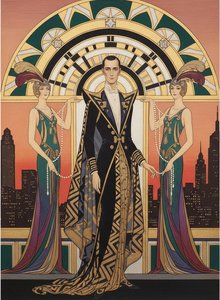 Erté: The Art Deco Visionary Who Defined Modern GlamourExplore the glamorous world of Erté, the 'Father of Art Deco'. Discover his iconic fashion illustrations, stunning sculptures & enduring le…
 Trzy płótna, trzy emocje: Rola wyboru w kształtowaniu odbioru dzieła sztukiOdkryj fascynujący świat sztuki! Poznaj neuroestetyczne podstawy odbioru dzieł, wpływ kontekstu i techniki malarskiej na emocje. Analiza ob…
 The Theatrical Elegance of Art Deco: The Line Work and Fashion Genius of ErtéDiscover the unparalleled elegance of Art Deco through the lens of Erté. Explore a masterclass in linear precision, theatrical costume desi…