German Expressionism
Doris standing (Ernst Ludwig Kirchner)
Ernst Ludwig Kirchner (1880–1938) stworzył Doris standing. Należy do nurtu German Expressionism. Wykonano w technice Acrylic On Canvas.
- Acrylic On Canvas

 Podgląd w skali 1:1

 Ręcznie malowany obraz olejny
 Wyślij jako kartkę
 Udostępnij
 Karta informacyjna


 Pobierz obraz
 Podobne obiekty
 RTG
 Pokaz slajdów
 Pytania i odpowiedzi

 Statystyki
Doris standing w skrócie
- Tytuł
- Doris standing
- Artysta
- Ernst Ludwig Kirchner (1880–1938)
- Miejsce urodzenia artysty
- Aschaffenburg, Niemcy
- Technika wykonania
- Acrylic On Canvas
- Temat
- woman, interior, texture, color palette, bold brushstrokes, urban landscape
Co przedstawia Doris standing?
Doris Standing: A Study in Expressionist Tension
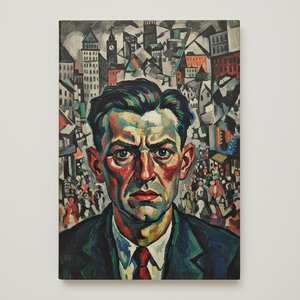
Ernst Ludwig Kirchner’s “Doris Standing” is more than just a portrait; it's a distillation of the anxieties and emotional complexities characteristic of German Expressionism. Painted circa 1923, this artwork captures a moment frozen in time—a woman posed formally against a backdrop that pulsates with restless energy.
- Subject Matter: The painting depicts Doris Speed, an English actress known for her role in “Coronation Street,” presenting her as a figure of quiet contemplation amidst the vibrant chaos of modern life.
- Style & Technique: Kirchner’s signature Expressionist style is evident in every brushstroke. Thick impasto—a technique where paint is applied thickly onto the canvas—dominates the composition, creating palpable texture and conveying an immediacy that transcends mere representation. Bold colors – deep blues and purples for Doris' dress juxtaposed with yellows and greens in the background – heighten the emotional impact.
- Composition: The portrait adheres to a vertical format, emphasizing Doris’ posture and attire. Her hands clasped before her contribute to a sense of stillness despite the dynamic environment behind her. Lines are employed expressively rather than realistically; short, choppy brushstrokes generate movement and texture throughout the painting.
Historical Context: The Brücke Movement
Kirchner’s work emerged from “Die Brücke,” a pivotal artistic group that challenged academic conventions and sought to depict the psychological realities of the era. Founded in Dresden in 1909, Die Brücke aimed to express inner turmoil and disillusionment—themes powerfully reflected in Kirchner's oeuvre. The movement reacted against the prevailing optimism of bourgeois society, embracing distortion and fragmentation as tools for conveying emotional truth.
- Influence: Kirchner’s exploration of psychological depth aligns with broader artistic currents of his time, reflecting a desire to confront uncomfortable realities and explore the darker side of human experience.
- Symbolism: The vibrant background—particularly the reds—symbolizes the turbulent energy of urban life, contrasting sharply with Doris' serene expression. This juxtaposition underscores the tension between inner stillness and external pressures.
Emotional Resonance
"Doris Standing" evokes feelings of melancholy and restraint. Kirchner’s deliberate use of muted colors and simplified forms contributes to a mood of introspection—a quiet contemplation that invites viewers to consider themes of isolation and vulnerability. The painting's textured surface encourages tactile engagement, mirroring the emotional intensity conveyed through its visual elements.
- Artist’s Intent: Kirchner sought to capture not just an image but also a feeling—a profound awareness of human condition amidst the uncertainties of modernity.
- Interior Design Inspiration: The artwork's palette and textural qualities could inspire designers seeking to create spaces that convey understated elegance and emotional depth.
Material & Reproduction Considerations
Executed in oil paint on canvas, “Doris Standing” exemplifies the meticulous craftsmanship of Expressionist artists. Reproductions aim to faithfully recreate the original’s textural richness and color vibrancy using high-quality printing techniques. Careful attention to detail ensures that the artwork's emotive power is preserved in a durable and aesthetically pleasing format.
Zdjęcia w wysokiej rozdzielczości dzieła Doris standing
Domena publiczna: artysta zmarł w 1938.
Ernst Ludwig Kirchner, Doris standing. Domena publiczna
Odpowiedzi na pytania dotyczące Doris standing
W jakiej technice wykonano „Doris standing” – Ernst Ludwig Kirchner?
Technika wykonania dzieła „Doris standing” – Ernst Ludwig Kirchner to Acrylic On Canvas. Reprodukcje mają na celu wierne oddanie wyglądu tej techniki.
Co przedstawia „Doris standing” – Ernst Ludwig Kirchner?
Tematyka obecna w „Doris standing” – Ernst Ludwig Kirchner obejmuje woman, interior, texture, color palette, bold brushstrokes, urban landscape, emotion. Razem stanowią one podsumowanie tematyki dzieła.
Czy obraz „Doris standing” – Ernst Ludwig Kirchner można swobodnie reprodukować?
„Doris standing” – Ernst Ludwig Kirchner znajduje się w domenie publicznej (należy do domeny publicznej – autorskie prawa majątkowe wygasły). Status ten określa zasady reprodukcji obrazu tego dzieła.
Kto stworzył "Doris standing"?
„Doris standing” zostało stworzone przez Ernst Ludwig Kirchner. Informacje na tej stronie dotyczą oryginalnego dzieła autorstwa Ernst Ludwig Kirchner.
Do jakiego nurtu w sztuce należy „Doris standing” – Ernst Ludwig Kirchner?
„Doris standing” to dzieło należące do nurtu German Expressionism. Nurt ten określa tradycję artystyczną, w której osadzone jest dzieło.
Do którego okresu twórczości Ernst Ludwig Kirchner należy dzieło „Doris standing”?
"Doris standing" reprezentuje Berlin Period twórczości Ernst Ludwig Kirchner.
Z czego wynika obecny status praw autorskich dzieła "Doris standing"?
Status praw autorskich do dzieła „Doris standing” – należy do domeny publicznej – autorskie prawa majątkowe wygasły – wynika z faktu, że artysta zmarł w 1938.
Jakie miejsce w dorobku twórczym Ernst Ludwig Kirchner zajmuje dzieło "Doris standing"?
"Doris standing" wpisuje się w nurt German Expressionism w twórczości Ernst Ludwig Kirchner, której charakterystyczne motywy obejmują dürer inspiration, modern anxiety, social critique, expressionist legacy, psychological depth.
Jakie miejsce zajmuje „Doris standing” wśród powracających motywów w twórczości Ernst Ludwig Kirchner?
Powracające motywy w twórczości Ernst Ludwig Kirchner obejmują dürer inspiration, modern anxiety, social critique, expressionist legacy, psychological depth; „Doris standing” koncentruje się na woman, interior, texture, color palette, bold brushstrokes, urban landscape, emotion.
O artyście: Ernst Ludwig Kirchner

1880–1938, Niemcy
Ernst Ludwig Kirchner
Wczesne lata, rodzina i wykształcenie artystyczne Ernst Ludwig Kirchner przyszedł na świat 6 maja 1880 roku w Aschaffenburg w Niemczech. Jego dzieciństwo i młodość naznaczone były częstymi przeprowadzkami rodziny, wynikającymi z pracy jego ojca, Ernsta Kirchnera, technika chemicznego w przemyśle papierniczym. To nietrwałe, nomadyczne życie sprawiło, że od 1886 roku rodzina zamieszkała we Frankfurcie nad Menem, po okresie spędzonym w Perlen niedaleko Lucerny w Szwajcarii między latami 1887 a 1889. Jako dziecko był uważnym obserwatorem otoczenia, często wpatrując się przez okno swojej sypialni w tętniącą życiem aktywność lokalnego dworca kolejowego.
O Ernst Ludwig Kirchner Najważniejsze dzieła Ernst Ludwig Kirchner
Inne prace Ernst Ludwig Kirchner
 Judżet Parys
 Kąpiący się w Moritzburgu1909
 Ulica w Berlinie
 Fränzi vor geschnitztem Stuhl1910
Eseje o Doris standing
 25 Masterpieces by Ernst Ludwig Kirchner: The Soul of German ExpressionismImmerse yourself in the raw emotion of German Expressionism. Explore 25 iconic masterpieces by Ernst Ludwig Kirchner, from bold urban scene…
 The Vibrant World of Ernst Ludwig Kirchner: A Definitive Guide to German ExpressionismExplore the raw emotion of German Expressionism through a definitive guide to Ernst Ludwig Kirchner. Discover how his bold colors and disto…
 Comparing Der Blaue Reiter and Die Brücke: Two Paths of German ExpressionismMaster the differences between Die Brücke and Der Blaue Reiter. Explore the roots of German Expressionism now.