
 Podgląd w skali 1:1
 Wyślij jako kartkę
 Udostępnij
 Szczegóły dzieła
 Przewodnik

 Pobierz obraz
 Podobne obiekty
 RTG
RTG Pokaz slajdów
 Pytania i odpowiedzi
 Statystyki
Die Amselfuh


 Rozwiń treść
Giclée / Wydruk artystyczny
Wydruki giclée lub płótna o jakości muzealnej, szybka realizacja i szeroki wybór opcji wykończenia. ( Zamów ręcznie malowaną reprodukcję Przejdź do wersji cyfrowej)




P118B zł10

P118H zł10

P118W zł10

P438Z zł10

P508JH zł12

P508YH zł12

P805H zł10

P805Z zł10

P919BZ zł10

P919G zł10

P919XJ zł10

P959ZH zł10

P968JZ zł12

W106C zł8

W218G zł10

W218JH zł8

W218Y zł10

W307PJ zł10

W316G zł10

W316PJ zł8

W316Y zł10

W398PJ zł8

W4111J zł10

W500HY zł15

W500JH zł15

W692G zł12

W849H zł8

W940BG zł15

W953PJ zł8




Wybierz spośród naszych standardowych rozmiarów, które zachowują oryginalne proporcje dzieła sztuki.

Wpisz wymaganą szerokość i wysokość, aby dopasować grafikę do ramy lub ściany. Wydruk można jedynie przyciąć, nigdy nie powiększając go poza oryginalny obraz, dlatego format o innych proporcjach spowoduje utratę części kompozycji. Przed rozpoczęciem druku prześlemy Ci cyfrowy podgląd do zatwierdzenia. Obraz wyświetlany na tej stronie nie pokazuje rzeczywistego przycięcia — jedynie podgląd oddaje ten efekt.
Dostawa na cały świat () w ciągu 2 tygodni zamiast standardowych 4/5 tygodni. (9 Listopad)

Bezpłatna ekspresowa wysyłka na cały świat

Wysokiej jakości płótno lniane

Pełne ubezpieczenie przesyłki

Gwarancja zwrotu należności celnych i podatków importowych

Gwarancja wiernego odwzorowania kolorów

100-dniowa polityka zwrotów (tylko w przypadku wad)

Gwarancja 100% zwrotu pieniędzy

Zniżka przy zakupie wielu sztuk
 Opcja ze szkłem jest dostępna wyłącznie w rozmiarach poniżej 110 cm

Die Amselfuh
Giclée / Wydruk artystyczny
Wymiary reprodukcji
-


Cena całkowita
zł 317
Die Amselfuh: An Expressionist Journey Through Purple Mountains
Ernst Ludwig Kirchner’s “Die Amselfuh” (The Alpine Chamois), painted in 1923, is more than just a landscape; it's a visceral embodiment of the anxieties and exhilarations that defined German Expressionism. This large-scale oil on canvas immediately commands attention with its dramatic use of purple hues dominating the mountainous backdrop – a deliberate choice reflecting the emotional intensity Kirchner sought to convey rather than a literal representation of nature.
- The Artist's Vision: Kirchner, a founding member of Die Brücke (The Bridge), was driven by a desire to depict not what he *saw*, but what he *felt*. His work rejects the detached objectivity of Impressionism and Academic painting, instead prioritizing subjective experience and psychological depth.
- Technique & Composition: Notice the bold, almost violent brushstrokes that define the jagged peaks and rugged terrain. Kirchner’s technique is characterized by a deliberate lack of blending, creating a sense of dynamism and unrest. The composition itself – figures scattered across the vast landscape – reinforces this feeling of isolation and vulnerability within a powerful natural environment.
- Color as Emotion: The prevalence of purple isn't merely aesthetic; it’s deeply symbolic. Purple has long been associated with spirituality, mystery, and even melancholy—emotions that resonate powerfully within Kirchner’s work. It amplifies the sense of awe and perhaps a touch of dread evoked by the imposing mountains.
A Window into the Zeitgeist: Historical Context & Expressionism
"Die Amselfuh" was created during a period of significant social and political upheaval in Germany. The aftermath of World War I had left a nation grappling with disillusionment, trauma, and uncertainty. Kirchner’s art reflects this mood – a sense of alienation, anxiety, and the search for meaning amidst chaos. The painting's adventurous theme—individuals exploring a challenging landscape—can be interpreted as a metaphor for humanity’s struggle to navigate an increasingly complex world.
- Die Brücke Movement: Kirchner was a key figure in Die Brücke, a group of artists who sought to break away from the conventions of the art establishment and explore new forms of expression. Their work often depicted urban scenes, portraits, and landscapes with a raw, emotional intensity.
- Symbolism of the Dog: The presence of a dog within the scene adds another layer of interpretation. Dogs have historically represented loyalty, companionship, and instinct – qualities that might be seen as lacking in the increasingly fragmented society of the time.
Decoding the Landscape: Symbolism & Interpretation
Beyond its technical brilliance, “Die Amselfuh” is rich with symbolic meaning. The rugged mountains represent both physical and psychological challenges – a daunting landscape mirroring the inner turmoil of the figures within it. The act of exploration itself symbolizes a search for identity and purpose in a world undergoing rapid transformation. The painting’s atmosphere isn't one of idyllic beauty; it’s charged with tension, suggesting a confrontation with the unknown.
- The Figures: The scattered figures, climbing and exploring, represent humanity’s attempts to assert control over nature and its own destiny.
- Scale & Perspective: Kirchner masterfully uses scale and perspective to emphasize the insignificance of human beings in the face of the immense power of the natural world.
A Legacy of Emotional Intensity – Reproduction Options Available
“Die Amselfuh” remains a powerful testament to Kirchner’s artistic vision and the enduring legacy of German Expressionism. OriginalUniqueArt offers meticulously crafted hand-painted reproductions that capture the essence of this iconic work, allowing you to bring its emotional intensity into your own space. Each reproduction is created using archival materials and traditional techniques, ensuring lasting beauty and authenticity. Explore our options for a bespoke artwork that will captivate and inspire.
Pytania i odpowiedzi
Czy dzieło "Die Amselfuh" posiada podgląd w rozszerzonej rzeczywistości?
„Die Amselfuh” posiada podgląd w rozszerzonej rzeczywistości: strona Podgląd w AR pozwala zobaczyć dzieło w Twojej własnej przestrzeni na kompatybilnym urządzeniu.
Jaki format i orientacja druku są sugerowane dla „Die Amselfuh” – Ernst Ludwig Kirchner?
Rozmiar Large, orientacja Landscape: to sugerowane parametry druku dla dzieła „Die Amselfuh” – Ernst Ludwig Kirchner.
Jaki układ ma „Die Amselfuh” – Ernst Ludwig Kirchner?
Format dzieła „Die Amselfuh” to Landscape. Jest to pomocna informacja podczas planowania miejsca, w którym zostanie umieszczona reprodukcja.
Biografia artysty
A Life Forged in Expression: The World of Ernst Ludwig Kirchner
Ernst Ludwig Kirchner, a name inextricably linked to the raw emotional intensity of German Expressionism, emerged from a Germany poised on the cusp of profound transformation. His birth in Aschaffenburg, Bavaria, in 1880, wasn’t merely an arrival into the world; it was the beginning of a life deeply interwoven with artistic innovation and shadowed by personal struggles. The shifting landscapes that defined his early years – dictated by his father's profession as a paper chemist – instilled within him a persistent sense of displacement, a feeling that would become a recurring theme in his art. From Frankfurt to Perlen, nestled beside Lake Lucerne, and finally settling in Chemnitz, Kirchner absorbed the anxieties and rapid modernization sweeping across Germany. Initially pursuing architecture at the Königliche Technische Hochschule in Dresden, he ultimately found his true calling in painting, fueled by an admiration for masters like Albrecht Dürer – particularly his masterful woodcuts – and a growing disillusionment with the constraints of academic tradition. He discovered kinship amongst fellow rebels: Fritz Bleyl, Karl Schmidt-Rottluff, and Erich Heckel, forging bonds that would irrevocably shape the trajectory of 20th-century art.The Bridge Between Worlds: Die Brücke and Artistic Revolution
In 1905, Kirchner became a founding member of *Die Brücke* (“The Bridge”), an artistic collective dedicated to bridging the gap between established aesthetics and a more visceral, emotionally charged form of expression. This wasn’t simply a stylistic decision; it represented a fundamental philosophical stance. The group sought inspiration from sources often overlooked by the art establishment – the primal art of Africa and Oceania, the intensely colored works of Vincent van Gogh, and the haunting psychological depth of Edvard Munch. Rejecting the idealized beauty championed by academic painting, *Die Brücke* embraced distortion, jarring color palettes, and expressive brushwork to convey the anxieties and alienation inherent in modern life. Kirchner’s early works, born from this collaborative spirit, pulsed with a restless energy, reflecting the group's shared desire to break free from artistic conventions. The studio became a crucible for experimentation, a space where social norms were challenged alongside artistic traditions. The exploration of the human form, particularly the female nude, within both urban and natural settings, became a recurring motif, allowing Kirchner to delve into themes of movement, emotion, and the complexities of modern existence.Berlin’s Concrete Heart: Urban Landscapes and Psychological Depth
Following his relocation to Berlin in 1911, Kirchner's artistic focus intensified, centering on the city’s stark realities. He captured the frenetic energy of urban life with a distinctive intensity – not merely depicting streets and buildings, but conveying the psychological impact of being immersed within them. Paintings like *The Street* (1908) are powerful portraits of alienation, reflecting the anonymity and isolation experienced by individuals navigating the sprawling metropolis. Kirchner’s use of color became even more dramatic, employing bold contrasts to heighten the sense of unease and disorientation. He wasn't interested in romanticizing urban life; instead, he presented a brutally honest depiction of its anxieties, capturing the feeling of being overwhelmed by the sheer scale and relentless pace of modern existence. This unflinching gaze established him as a chronicler of his time, an artist who dared to confront the darker undercurrents of societal progress.A Style Defined: Color, Distortion, and Emotional Resonance
Kirchner’s artistic style is immediately recognizable for its distinctive characteristics. He wielded color not as a tool for faithful representation, but as a means of evoking powerful emotional responses – vibrant, often non-naturalistic hues that amplified the sense of unease or intensity within his compositions. His brushstrokes were energetic and visible, contributing to the overall feeling of immediacy and raw emotion. Figures and objects were frequently distorted or elongated, reflecting a subjective rather than objective reality. Kirchner’s work is characterized by a deliberate rejection of traditional perspective and a preference for flattened planes and simplified forms. This stylistic approach wasn't merely an aesthetic choice; it was a conscious effort to convey the psychological impact of his subjects – to capture their inner turmoil and emotional state. The influence of artists like Van Gogh, with his expressive brushwork and intense color palettes, is readily apparent in Kirchner’s work, as is the haunting psychological depth found in Munch's paintings.Tragedy and Legacy: A Lasting Impact
Kirchner’s life was tragically marked by personal struggles. The horrors of World War I triggered a severe mental breakdown, forcing him to retreat to Switzerland in search of solace. However, even during his exile, he continued to create, his work reflecting the lingering trauma and isolation he experienced. The rise of Nazism brought further hardship; over 600 of his works were confiscated and deemed “degenerate” art – a devastating blow that underscored the political climate’s hostility towards modern artistic expression. Facing persecution and declining health, Kirchner tragically took his own life in Davos, Switzerland, in 1938. Despite this heartbreaking end, Ernst Ludwig Kirchner's legacy remains profoundly influential. He stands as a central figure of German Expressionism, inspiring generations of artists with his bold style, emotionally resonant depictions of modern life, and unwavering commitment to artistic truth. His work continues to be exhibited in major museums worldwide, serving as a powerful reminder of the enduring power of art to confront, challenge, and ultimately illuminate the human condition.- Influenced By: Albrecht Dürer, Vincent van Gogh, Edvard Munch, Primitive Art (African & Oceanic)
- Influenced: Kirchner’s work profoundly impacted subsequent generations of Expressionist and Modern artists. His exploration of psychological themes and his innovative use of color and form continue to inspire contemporary art practices.

Ernst Ludwig Kirchner
1880 - 1938 , Niemcy
Krótka nota
- Artistic Movement Or Style: Ekspresjonizm
- Artists Or Movements Influenced By This Artist:
- Die Brücke
- Nowoczesny sztuka
- Artists Who Influenced This Artist:
- Dürer
- Van Gogh
- Munch
- Date Of Birth: 6 maja 1880
- Date Of Death: 15 czerwca 1938
- Full Name: Ernst Ludwig Kirchner
- Nationality: Niemiec
- Notable Artworks:
- The Street
- Leaping Dancer
- Place Of Birth: Aschaffenburg, Niemcy
Powiązane artykuły
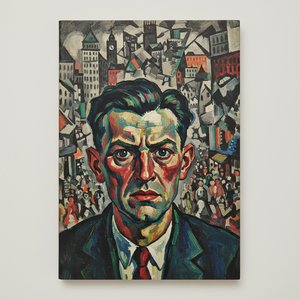
The Vibrant World of Ernst Ludwig Kirchner: A Definitive Guide to German Expressionism
Explore the raw emotion of German Expressionism through a definitive guide to Ernst Ludwig Kirchner. Discover how his bold colors and distorted forms redefined modern art history, from Berlin street scenes to iconic masterpieces.
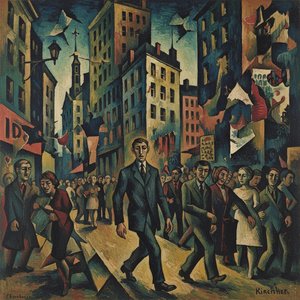
Ernst Ludwig Kirchner: Expressionism's Urban Anxiety & the Fragmentation of Modern Identity
Explore the powerful world of Ernst Ludwig Kirchner and German Expressionism. Discover his iconic paintings, Die Brücke group, and the movement's exploration of urban anxiety & modern identity. Expert analysis for collectors & enthusiasts.

10 Arcydzieł Ekspresjonizmu Niemieckiego, Które Zdefiniowały Epokę | OriginalUniqueArt
Poznaj 10 arcydzieł ekspresjonizmu niemieckiego – od Kirchnera po Muncha. Odkryj historię, emocje i techniki tych ikonicznych dzieł sztuki. Reprodukcje najwyższej jakości na OriginalUniqueArt.com. Eksploruj kolekcję online!

Unmasking Emotion: A Journey Through the Raw Power and Visceral Beauty of German Expressionism
Explore the raw emotional power of German Expressionism. From Kirchner to Die Brücke, discover how artists used distortion and vibrant color to unmask the human psyche. A deep dive into art history for the discerning collector and enthusiast.
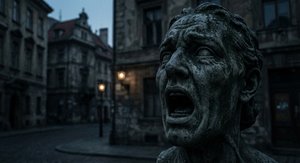
Wizceralny krzyk narodu: Ekspresjonizm niemiecki i emocjonalna deformacja w sztuce
Odkryj głębię ekspresjonizmu niemieckiego! Analiza Die Brücke, Kirchnera, Heckela i Nolde. Poznaj emocjonalną siłę deformacji w sztuce i jej wpływ na współczesny świat. Ekspercka analiza dla miłośników historii sztuki.


