Expressionism
Marsh landscape (Emil Nolde)
Emil Nolde (1867–1956) stworzył Marsh landscape. Należy do nurtu Expressionism. Wykonano w technice Watercolor.
- Watercolor

 Podgląd w skali 1:1

 Ręcznie malowany obraz olejny
 Wyślij jako kartkę
 Udostępnij
 Karta informacyjna


 Pobierz obraz
 Podobne obiekty
 RTG
 Pokaz slajdów
 Pytania i odpowiedzi

 Statystyki
Marsh landscape w skrócie
- Tytuł
- Marsh landscape
- Artysta
- Emil Nolde (1867–1956)
- Miejsce urodzenia artysty
- Nolde, Dania
- Technika wykonania
- Watercolor
- Ruch
- Expressionism
- Epoka
- Modern
- Temat
- marsh, houses, sky, clouds, waterway, green
Co przedstawia Marsh landscape?
Identification of the Artwork and Artist
Marsh landscape emerges from the canvas as a direct window into the expressive spirit of Emil Nolde. The scene captures a quiet, atmospheric moment within a marshland, where the land and sky meet in a dance of color and light. This work reflects the artist's deep, personal connection to the natural world, a bond that defined his creative life from his beginnings in the rural, agrarian landscapes of his youth until his death in 1956.
Born in 1867 in Nolde, Denmark, the artist carries the rhythms of the Danish and Frisian countryside into his brushstrokes. His identity is inextricably linked to the very soil and water he depicts, having transitioned from the tactile labor of woodcarving to the fluid, urgent application of paint. In Marsh landscape, we see the result of this transformation, where the physical environment is translated through a lens of intense, subjective feeling.
The painting exists as a piece of Expressionism, moving beyond simple representation to find the pulse of the marsh. It is a work that prioritizes the internal sensation of the landscape over a literal likeness. Through this approach, Emil Nolde transforms a simple view of houses and waterways into a profound encounter with the essence of the natural environment.
The Composition and Visual Elements
The scene unfolds in a wide-angle, panoramic view of the marshland. A horizontal arrangement anchors the landscape, placing clusters of houses in the foreground to act as focal points amidst the expansive terrain. A winding path or waterway cuts through the greenery, leading the eye toward the horizon and creating a sense of depth. This movement draws the viewer deeper into the marshy expanse.
Above the land, a dramatic sky dominates the upper portion of the canvas. The celestial space feels immense, pressing down upon the earth with heavy, swirling clouds. Perspective is achieved through the careful use of size diminution, as the houses appear smaller as they recede into the distance. Overlapping forms further establish the layers of the environment, building a sense of physical space within the composition.
Technique, Materials and Support
The medium breathes with the immediacy of watercolor or gouache, a choice that allows the artist to capture the shifting light of the marshland with urgent, direct movement. Layers of color wash over one another, creating a sense of depth that feels both translucent and heavy. These washes do not merely sit upon the surface; they seem to pool and flow, mimicking the very water and sky they seek to represent. The pigment moves with a certain speed, as if the artist is racing to fix a fleeting moment of atmosphere before it vanishes.
Visible brushstrokes define the very substance of the scene. Rather than smooth, blended transitions, the paint is applied in distinct, gestural strokes that leave a palpable texture across the surface. This layering of pigment creates a physical presence, where the ridges of the brush meet the paper to build a sense of weight. The texture is not a byproduct of the process but a vital part of the work's energy, giving the clouds and the marshland a tactile, lived-in quality. Every mark feels intentional, contributing to the overall sense of movement within the landscape.
The Expressive Style and Color Palette
The scene breathes with an Expressionistic intensity, where the landscape is felt through a subjective lens rather than a literal one. Every brushstroke carries a sense of urgency, pushing the boundaries of how color can be used to convey a specific moment of light. The marshland unfolds in deep, saturated greens, grounding the composition in the damp reality of the wetlands. Amidst this verdant expanse, small houses emerge, punctuated by sharp red accents that draw the eye through the center of the view. These touches of color provide a rhythmic contrast against the organic forms of the earth.
Above the horizon, the sky dominates the canvas with a dramatic, swirling energy. Yellows and oranges wash across the heavens, suggesting the warm, diffused glow of a twilight hour or an overcast afternoon. This warmth meets the cooler, heavier tones of the clouds, which are rendered in deep purples and blues. The interplay between these opposing temperatures creates a palpable sense of movement, as if the atmosphere itself is in a state of constant flux. The colors do not merely sit upon the surface; they seem to possess a weight and substance that defines the very shape of the clouds and the terrain below.
Related Works by Emil Nolde
The artist's fascination with the shifting moods of the coast and the sky reveals itself in other compositions. One finds a similar pull toward the wetlands in Marsh landscape with peasent houses. The landscape breathes with a sense of solitude in many of his pieces. In Autumn Sea, created about 1908, the water and atmosphere command the viewer's attention. The horizon meets the weight of the clouds in a way that feels both restless and immediate.
His exploration of form often moves toward the psychological and the primal. Around 1906-1907, he produced Masks, a work that leans into the expressive power of primitive forms. This search for a deeper, more visceral visual language also appears in his religious subjects. In 1909, he produced The Mocking of Christ, capturing the intensity of the moment through a focus on emotion rather than literal likeness.
Zdjęcia w wysokiej rozdzielczości dzieła Marsh landscape
Domena publiczna: artysta zmarł w 1956.
Emil Nolde, Marsh landscape. Domena publiczna
Odpowiedzi na pytania dotyczące Marsh landscape
W jakiej technice wykonano „Marsh landscape” – Emil Nolde?
„Marsh landscape” wykonano w technice Watercolor.
Co przedstawia "Marsh landscape"?
Tematyka obecna w „Marsh landscape” – Emil Nolde obejmuje marsh, houses, sky, clouds, waterway, green, orange, purple. Razem stanowią one podsumowanie tematyki dzieła.
Czy dzieło "Marsh landscape" znajduje się w domenie publicznej?
Status praw autorskich dla „Marsh landscape” – Emil Nolde: dzieło znajduje się w należy do domeny publicznej – autorskie prawa majątkowe wygasły. Określa to, czy reprodukcje obrazu mogą być sporządzane swobodnie.
Kto stworzył "Marsh landscape"?
„Marsh landscape” zostało stworzone przez Emil Nolde. Informacje na tej stronie dotyczą oryginalnego dzieła autorstwa Emil Nolde.
Do jakiego nurtu należy "Marsh landscape"?
„Marsh landscape” to dzieło należące do nurtu Expressionism. Nurt ten określa tradycję artystyczną, w której osadzone jest dzieło.
Czy dzieło „Marsh landscape” autorstwa Emil Nolde znajduje się w domenie publicznej i dlaczego?
„Marsh landscape” – Emil Nolde jest należy do domeny publicznej – autorskie prawa majątkowe wygasły. Okres ochrony praw autorskich liczony jest od śmierci artysty, która nastąpiła w 1956.
W jaki sposób "Marsh landscape" wpisuje się w tematykę i styl twórczości Emil Nolde?
"Marsh landscape" dzieli z innymi dziełami Emil Nolde styl właściwy dla Expressionism oraz powracające motywy: post-impressionism, die brücke, expressionism, subjective emotion, nature's pulse.
Jakie miejsce zajmuje „Marsh landscape” wśród powracających motywów w twórczości Emil Nolde?
„Marsh landscape” przedstawia marsh, houses, sky, clouds, waterway, green, orange, purple, podczas gdy powracające motywy u Emil Nolde to post-impressionism, die brücke, expressionism, subjective emotion, nature's pulse. Porównanie tych dwóch elementów ukazuje, jak dzieło nawiązuje do typowej dla tego artysty tematyki.
O artyście: Emil Nolde
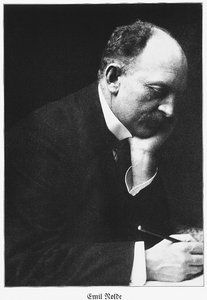
1867–1956, Dania
Emil Nolde
Życie i tożsamość Emila Nolde Urodzony 7 sierpnia 1867 roku jako Hans Emil Hansen, człowiek, który miał stać się znany jako Emil Nolde, dorastał w pobliżu wioski Nolde w Księstwie Szlezwick. Jego wczesne lata zostały ukształtowane przez wiejskie, rolnicze życie jego rodziny. Z czasem jednak odszedł od tej ścieżki, wybierając pracę rzeźbiarza w drewnie i dekoratora mebli. Ten dotykowy, fizyczny trud poprzedził jego zwrot ku malarstwu i grafice.
Inne prace Emil Nolde
 Sunset
 Sea with Red Sky
 Couple on the beach1903
 Masks1911
Eseje o Marsh landscape
 10 Arcydzieł Impresjonizmu Krajobrazowego, Które Zdefiniowały SztukęOdkryj 10 arcydzieł impresjonizmu krajobrazowego! Poznaj historie Moneta, Renoir'a i Van Gogha. Inspiracje wnętrzarskie, techniki malarskie…
 The Art of Stillness: A Study of Serenity in Village LandscapesExplore the profound tranquility of village landscapes through the eyes of masters like Cézanne and Constable. Discover the art of serenity.
 Emile Nolde: A Journey into Expressionist Nature & the Primal SelfExplore the powerful Expressionism of Emile Nolde – a pioneer of emotive landscapes & spiritual themes. Discover his journey, influences, a…