Post-Impressionism
Garden path (Emil Nolde)
Emil Nolde (1867–1956) stworzył Garden path. Należy do nurtu Post-Impressionism.

 Podgląd w skali 1:1

 Ręcznie malowany obraz olejny
 Wyślij jako kartkę
 Udostępnij
 Karta informacyjna


 Pobierz obraz
 Podobne obiekty
 RTG
 Pokaz slajdów
 Pytania i odpowiedzi

 Statystyki
Garden path w skrócie
- Tytuł
- Garden path
- Artysta
- Emil Nolde (1867–1956)
- Miejsce urodzenia artysty
- Nolde, Dania
- Temat
- vibrant flowers, impasto texture, red floral art, nature painting, german art, post-impressionism
Co przedstawia Garden path?
A Symphony of Red: Exploring Emile Nolde’s “Garden Path”
“Garden Path” by German-Danish Expressionist painter Emile Nolde is a captivating oil painting that plunges the viewer into an intensely vibrant floral world. More than a simple depiction of flowers, this artwork is an exploration of color, texture, and emotion – a hallmark of Nolde’s unique artistic vision.Subject & Composition
The composition centers around a dense cluster of brilliantly red blossoms set against a backdrop of lush green foliage. The artist eschews precise botanical representation, instead prioritizing the *feeling* of being immersed within a flourishing garden. There's an almost overwhelming abundance conveyed through the tightly packed forms and energetic brushwork. Nolde doesn’t offer a clear “path” in the traditional sense; rather, the viewer is invited to lose themselves within the floral mass itself – a path into sensation.Style & Technique: A Post-Impressionist Force
Nolde's style firmly aligns with Post-Impressionism, and particularly echoes the expressive power of Vincent van Gogh. The painting is defined by its bold, unrestrained brushstrokes and a palpable sense of movement. Impasto – the thick application of paint – is central to the work’s impact; the surface isn't merely painted *on*, it’s built *up*, creating a nearly sculptural texture that invites tactile engagement. Lines are implied rather than explicitly drawn, contributing to a dreamlike quality and blurring the boundaries between individual forms. The flattened perspective further emphasizes this immersive experience, drawing the viewer directly into the heart of the flowers.Historical Context: A Pioneer of Expressionism
Emile Nolde (1867-1956) was a pivotal figure in early 20th-century art, and a founding member of Die Brücke (“The Bridge”), a group of German Expressionist artists. This movement sought to convey subjective emotion and inner experience rather than objective reality. Nolde’s work, along with that of his contemporaries, represented a radical departure from traditional artistic conventions. Despite facing controversy – his art was deemed “degenerate” by the Nazi regime – Nolde remained committed to his unique vision, pushing the boundaries of color and form.Symbolism & Emotional Impact
The dominant use of red is particularly significant. Red often symbolizes passion, energy, vitality, and even a fleeting moment in time. Within the context of Nolde’s work, it can also be interpreted as representing the raw power of nature and the intensity of emotional experience. The overall effect is one of exuberance and unrestrained joy, yet there's also an underlying sense of wildness and untamed energy.For Collectors & Designers
“Garden Path” offers a powerful statement piece for any collection or interior space. Its vibrant color palette and dynamic texture will inject life and energy into a room. The painting’s expressive quality lends itself well to both modern and traditional settings, adding a touch of artistic sophistication and emotional depth. A high-quality reproduction would capture the essence of Nolde's technique, bringing the vibrancy and passion of this remarkable artwork into your home or office.- Style: Post-Impressionism, Expressionism
- Materials: Oil on Canvas
- Key Features: Impasto technique, vibrant color palette, expressive brushwork, flattened perspective.
Zdjęcia w wysokiej rozdzielczości dzieła Garden path

Domena publiczna: artysta zmarł w 1956.
Inne rozmiary, kadrowanie i cytowanie →Emil Nolde, Garden path. Domena publiczna
Odpowiedzi na pytania dotyczące Garden path
Co przedstawia „Garden path” – Emil Nolde?
„Garden path” – Emil Nolde przedstawia: vibrant flowers, impasto texture, red floral art, nature painting, german art, post-impressionism, abstract blooms.
Czy dzieło "Garden path" znajduje się w domenie publicznej?
Status praw autorskich dla „Garden path” – Emil Nolde: dzieło znajduje się w należy do domeny publicznej – autorskie prawa majątkowe wygasły. Określa to, czy reprodukcje obrazu mogą być sporządzane swobodnie.
Któremu artyście przypisuje się "Garden path"?
Autorem dzieła „Garden path” jest Emil Nolde. Praca ta figuruje w katalogu pod nazwiskiem Emil Nolde.
Do jakiego nurtu artystycznego należy „Garden path” – Emil Nolde?
„Garden path” to dzieło należące do nurtu Post-Impressionism. Nurt ten określa tradycję artystyczną, w której osadzone jest dzieło.
Do którego okresu twórczości Emil Nolde należy dzieło "Garden path"?
"Garden path" reprezentuje Mature Period twórczości Emil Nolde.
Z czego wynika obecny status praw autorskich dzieła "Garden path"?
Status praw autorskich do dzieła „Garden path” – należy do domeny publicznej – autorskie prawa majątkowe wygasły – wynika z faktu, że artysta zmarł w 1956.
Jakie miejsce w dorobku twórczym Emil Nolde zajmuje dzieło "Garden path"?
"Garden path" dzieli z innymi dziełami Emil Nolde styl właściwy dla Post-Impressionism oraz powracające motywy: key post-impressional work, exploration of color, emotional intensity, van gogh's brushwork, expressionist color, impressionist texture, passionate energy, fleeting beauty.
Jakie miejsce zajmuje „Garden path” wśród powracających motywów w twórczości Emil Nolde?
„Garden path” przedstawia vibrant flowers, impasto texture, red floral art, nature painting, german art, post-impressionism, abstract blooms, podczas gdy powracające motywy u Emil Nolde to key post-impressional work, exploration of color, emotional intensity, van gogh's brushwork, expressionist color, impressionist texture, passionate energy, fleeting beauty. Porównanie tych dwóch elementów ukazuje, jak dzieło nawiązuje do typowej dla tego artysty tematyki.
O artyście: Emil Nolde
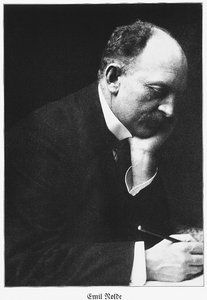
1867–1956, Dania
Emil Nolde
Życie i tożsamość Emila Nolde Urodzony 7 sierpnia 1867 roku jako Hans Emil Hansen, człowiek, który miał stać się znany jako Emil Nolde, dorastał w pobliżu wioski Nolde w Księstwie Szlezwick. Jego wczesne lata zostały ukształtowane przez wiejskie, rolnicze życie jego rodziny. Z czasem jednak odszedł od tej ścieżki, wybierając pracę rzeźbiarza w drewnie i dekoratora mebli. Ten dotykowy, fizyczny trud poprzedził jego zwrot ku malarstwu i grafice.
Inne prace Emil Nolde
 Sunset
 Sea with Red Sky
 Couple on the beach1903
 Masks1911
Eseje o Garden path
 25 Masterpieces by Alexej von Jawlensky: The Soul of ExpressionismImmerse yourself in the vibrant world of Alexej von Jawlensky. Explore 25 iconic Expressionist masterpieces, from soulful portraits to bold…
 Expressionism vs. New Objectivity: Emotion vs. Precision in German ArtMaster the tension between Expressionist emotion and New Objectivity precision. Explore the soul of German modern art now.
 Amédée Masclef: Navigating Symbolism & Sentiment in Late 19th-Century French Landscape PaintingExplore the evocative landscapes of Amédée Masclef, a key figure bridging Barbizon realism & Symbolist sentiment. Discover his exquisite bo…