Rozmiar tekstu

() ·

Obraz stworzony dla Ciebie, własnoręcznie

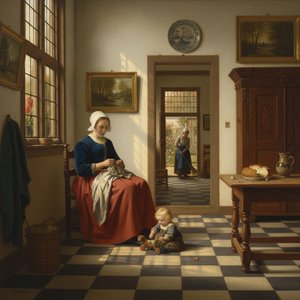
A Sermon in the Oude Kerk, Delft

Ręcznie malowana reprodukcja olejowa

Ręcznie malowany obraz olejny na płótnie, wykonany na zamówienie przez naszych artystów w wybranym przez Ciebie wymiarze i oprawie. ( Przełącz na wydania drukowane Przejdź do wersji cyfrowej)

Opis obiektu

Experience Emanuel de Witte's 'A Sermon in the Oude Kerk,' a captivating 1651 painting depicting a Dutch church service with intriguing details and atmosphere.

Biografia artysty

Emanuel de Witte (1617-1692) – holenderski malarz barokowy znany z sugestywnych wnętrz kościelnych i scen rodzajowych. Jego mistrzowskie użycie światła i perspektywy tworzy wciągające wrażenia, kontrastując z precyzyjnym podejściem Saenredama.

od ·

Rozdział 1

Jak duży powinien być ten format?

Przesuń suwak, aby zmienić rozmiar; obraz po lewej stronie przedstawia ramę w jej rzeczywistej szerokości. Zachowano proporcje oryginału.

Standardowy format
personalizowane
CM
INCH

Wybierz spośród naszych standardowych rozmiarów, które zachowują oryginalne proporcje dzieła sztuki.

szerokość
wysokość

Wpisz wymaganą szerokość i wysokość, aby obraz pasował do Twojej ramy lub ściany. Ponieważ jest to dzieło malowane ręcznie, w przypadku rozmiaru o innych proporcjach artysta może domalować nieco więcej wokół obrazu lub przyciąć jego fragmenty — wybór należy do Ciebie. Przed rozpoczęciem pracy prześlemy Ci cyfrową wizualizację do zatwierdzenia. Obraz widoczny na tej stronie nie przedstawia rzeczywistego efektu — jedynie wizualizacja oddaje realny rezultat.

Rozdział 2

W jaki sposób ma zostać dostarczone?

Wybierz krawędzie płótna naciągniętego na ramę

Wybierz ramę

Corner sample of the WhiteWrap canvas edge finish, stretched on lite drewno bars
Białe krawędzie zł1
Corner sample of the BlurSideWrap canvas edge finish, stretched on lite drewno bars
rozmyte krawędzie zł1
Corner sample of the ExtendedWrap canvas edge finish, stretched on lite drewno bars
Przedłużony zł1
Corner sample of the P118B picture frame: polistyren formowany, 5 cm wide and 3 cm thick
P118B zł10
Corner sample of the P118H picture frame: polistyren formowany, 5 cm wide and 3 cm thick
P118H zł10
Corner sample of the P118W picture frame: polistyren formowany, 5 cm wide and 3 cm thick
P118W zł10
Corner sample of the P438Z picture frame: polistyren formowany, 5.5 cm wide and 3.5 cm thick
P438Z zł10
Corner sample of the P508JH picture frame: polistyren formowany, 7 cm wide and 3.5 cm thick
P508JH zł12
Corner sample of the P508YH picture frame: polistyren formowany, 7 cm wide and 3.5 cm thick
P508YH zł12
Corner sample of the P805H picture frame: polistyren formowany, 5 cm wide and 3.5 cm thick
P805H zł10
Corner sample of the P805Z picture frame: polistyren formowany, 5 cm wide and 3.5 cm thick
P805Z zł10
Corner sample of the P919BZ picture frame: polistyren formowany, 7 cm wide and 3.5 cm thick
P919BZ zł10
Corner sample of the P919G picture frame: polistyren formowany, 7 cm wide and 3.5 cm thick
P919G zł10
Corner sample of the P919XJ picture frame: polistyren formowany, 7 cm wide and 3.5 cm thick
P919XJ zł10
Corner sample of the P959ZH picture frame: polistyren formowany, 5 cm wide and 3 cm thick
P959ZH zł10
Corner sample of the P968JZ picture frame: polistyren formowany, 6 cm wide and 4 cm thick
P968JZ zł12
Corner sample of the W106C picture frame: lite drewno, 5 cm wide and 3 cm thick
W106C zł8
Corner sample of the W218G picture frame: lite drewno, 5 cm wide and 3 cm thick
W218G zł10
Corner sample of the W218JH picture frame: lite drewno, 5 cm wide and 3 cm thick
W218JH zł8
Corner sample of the W218Y picture frame: lite drewno, 5 cm wide and 3 cm thick
W218Y zł10
Corner sample of the W307PJ picture frame: lite drewno, 6 cm wide and 3 cm thick
W307PJ zł10
Corner sample of the W316G picture frame: lite drewno, 6 cm wide and 3 cm thick
W316G zł10
Corner sample of the W316PJ picture frame: lite drewno, 6 cm wide and 3 cm thick
W316PJ zł8
Corner sample of the W316Y picture frame: lite drewno, 6 cm wide and 3 cm thick
W316Y zł10
Corner sample of the W398PJ picture frame: lite drewno, 5 cm wide and 3 cm thick
W398PJ zł8
Corner sample of the W4111J picture frame: lite drewno, 6.5 cm wide and 3.5 cm thick
W4111J zł10
Corner sample of the W500HY picture frame: lite drewno, 7 cm wide and 5 cm thick
W500HY zł15
Corner sample of the W500JH picture frame: lite drewno, 7 cm wide and 5 cm thick
W500JH zł15
Corner sample of the W692G picture frame: lite drewno, 8 cm wide and 4 cm thick
W692G zł12
Corner sample of the W849H picture frame: lite drewno, 5 cm wide and 3 cm thick
W849H zł8
Corner sample of the W940BG picture frame: lite drewno, 7.5 cm wide and 4.5 cm thick
W940BG zł15
Corner sample of the W953PJ picture frame: lite drewno, 6 cm wide and 3.5 cm thick
W953PJ zł8
Corner sample of the H24-GOLD picture frame: rzeźbione drewno pokryte gipsem, 10 cm wide and 6 cm thick
H24-GOLD zł30
Corner sample of the H24-SILVER picture frame: rzeźbione drewno pokryte gipsem, 10 cm wide and 6 cm thick
H24-SILVER zł30
Corner sample of the H36-GOLD picture frame: rzeźbione drewno pokryte gipsem, 15 cm wide and 6.5 cm thick
H36-GOLD zł45
Corner sample of the H36-SILVER picture frame: rzeźbione drewno pokryte gipsem, 15 cm wide and 6.5 cm thick
H36-SILVER zł45

Profil: . Wymiar całkowity w ramie: .

Rozdział 3

Kto go maluje i czy coś powinno ulec zmianie?

Przykłady możliwych zmian: Zastąpienie twarzy zdjęciem klienta; Dodanie zwierzęcia (np. zamiana kota na psa); Ukrycie wiadomości w tle; Zmiana krajobrazu lub elementów tła.
Po złożeniu zamówienia zespół OriginalUniqueArt.com skontaktuje się z klientem drogą mailową w celu uzyskania instrukcji i prześle podgląd projektu

Dostawa na całym świecie () w ciągu 3–4 tygodni zamiast standardowych 5 tygodni. (6 Listopad). Bez kompromisów w kwestii jakości.

Rozdział 4

Ostatnie szlify

Tabliczka informacyjna, jak w muzeum?

Szczegóły grawerowanej brązowej tabliczki

This elegant plaque features the artist's name and the title of the artwork, finely engraved for a timeless presentation.

It is made from bronze with a refined, elegant finish. The text is precisely laser-engraved for a sharp and permanent result. Measuring 9x2 cm, the plaque is compact yet easy to read. It's built to be durable and scratch-resistant, offering a professional, museum-quality look. Mounting is simple thanks to the included adhesive backing.

Szczegóły przezroczystej tabliczki akrylowej

The plaque includes essential engraved details such as the artist's name, the title of the artwork, the date it was created, the type of media used-like oil on canvas or watercolor-a brief description of the piece, and a QR code that links to the complete artwork information.

It is crafted from clear acrylic, offering a sleek, modern appearance. The text is UV-engraved in black to ensure strong visual contrast. With a size of 10x15 cm, it ensures optimal readability. It comes equipped with two metal hooks for secure wall mounting. The plaque is designed to be weather-resistant, making it suitable for various environments, and it includes interactive features that work seamlessly with smartphone scanning.

Szczegóły czarnej tabliczki akrylowej

This elegant plaque includes engraved information such as the artist's name, the title of the artwork, the date it was created, the type of media used (like oil on canvas or watercolor), a short description of the artwork, and a QR code for quick access to more information.

The plaque itself is made from refined black acrylic with a premium finish. The text is laser-engraved in white for high contrast and readability. Its size is 10x15 cm, designed to be easy to read. It comes with two metal hooks for professional mounting. The design is sleek and fits any interior style. It is also weather-resistant and durable, with built-in digital integration for mobile compatibility.

Werniks ochronny?

Kiedy potrzebujesz dostawy?

Rozdział 5

Twoje dzieło, dokładnie tak, jak zamówiłeś

A Sermon in the Oude Kerk, Delft

Technika reprodukcji

Wymiary reprodukcji

-

Wybitny mistrz artystyczny

Większa szczegółowość, finezja i dodatkowy czas na realizację

-

Opcje oprawy reprodukcji

-

-

W przypadku dzieł sztuki lub reprodukcji, których którykolwiek z boków przekracza 105 cm (około 41 cali), rama zostanie wysłana w formie zestawu do samodzielnego montażu. Metoda ta zapewnia bezpieczną dostawę i zapobiega uszkodzeniom podczas transportu.

Wymagany profesjonalny montaż – nie jest to produkt typu DIY.
Zestaw musi zostać złożony, a płótno naciągnięte przez doświadczonego profesjonalnego ramiarza, przy użyciu kleju do drewna (brak w zestawie), kleszczy do naciągania płótna oraz ścisków, które utrzymają krosna w równej pozycji podczas schnięcia kleju. Nieprawidłowy montaż lub nierównomierne napięcie płótna może trwale uszkodzić dzieło sztuki i nie podlega naszej gwarancji.

  • W zestawie znajdują się wszystkie listwy z litego drewna, precyzyjnie docięte do wymiarów.

  • Montaż odbywa się przy użyciu dołączonych wkrętów oraz kleju do drewna do łączenia narożników, którego zestaw nie zawiera i który musi zostać dostarczony przez ramiarza.

  • Wymagane są profesjonalne narzędzia, których nie ma w zestawie: kleszcze do naciągania płótna (napinacz) oraz zaciski, które pozwolą utrzymać listwy w równej pozycji podczas schnięcia kleju.

Ważne:
Do połączenia narożników niezbędny jest klej do drewna, listwy należy unieruchomić za pomocą ścisków do momentu całkowitego wyschnięcia kleju, a naciągnięcie płótna na złożoną ramę wymaga użycia kleszczy do naciągania płótna. Żaden z tych elementów nie jest dołączony do zestawu. Przed zamówieniem tego rozmiaru zalecamy konsultację z doświadczonym ramiarzem.

Etykieta obiektu

-

-

Lakier ochronny

Lakier z połyskiem (pogłębia kolory, chroni przed światłem i wilgocią)

-

Personalizacja dzieła

Przykłady możliwości personalizacji: zastąp twarz zdjęciem klienta; dodaj zwierzę domowe (np. zamień kota na psa); umieść ukrytą wiadomość w tle; zmień krajobraz lub elementy tła.

-

Ekspresowa

Dostawa na cały świat () w ciągu 3–4 tygodni zamiast standardowych 5 tygodni. (6 Listopad). Bez kompromisów w kwestii jakości.

-

Przesyłka ekspresowa

Dostawa na cały świat () w ciągu 5 tygodni. (13 Listopad).

W cenie

Cena całkowita

zł 1173

Suma całkowita zł 1173

Opcja ze szkłem jest dostępna wyłącznie w rozmiarach poniżej 110 cm

W każdym zamówieniu

  • Bezpłatna ekspresowa wysyłka na cały świat
  • Wysokiej jakości płótno lniane
  • Pełne ubezpieczenie przesyłki
  • Gwarancja zwrotu należności celnych i podatków importowych
  • Gwarancja wiernego odwzorowania kolorów
  • 100-dniowa polityka zwrotów (tylko w przypadku wad)
  • Gwarancja 100% zwrotu pieniędzy
  • Zniżka przy zakupie wielu sztuk

The Soul of a Sacred Space: Emanuel de Witte’s ‘Interior of the Oude Kerk’

Emanuel de Witte's “A Sermon in the Oude Kerk, Delft” isn’t merely a painting; it’s an invitation. An invitation to step through its painted doorway and experience the quiet reverence, the diffused light, and the palpable sense of history within one of Holland’s most iconic churches. Completed around 1650, this remarkable work transcends simple architectural documentation, instead capturing the very *feeling* of being present in a sacred space – a feat rarely achieved by his contemporary, Pieter Saenredam, whose meticulous renderings focused primarily on precise lines and structures. De Witte sought to evoke atmosphere, to translate the spiritual essence of the Oude Kerk into a visual experience that resonates deeply with the viewer.

The painting immediately draws the eye through its masterful use of light. It’s not a bright, overtly dramatic illumination; rather, it's a soft, almost ethereal glow filtering through the stained glass windows and illuminating dust motes dancing in the air. This subtle lighting creates an illusion of depth, pulling the viewer into the heart of the church. Notice how De Witte doesn’t simply depict the architecture – he renders the *impression* of light upon it, imbuing the scene with a sense of tranquility and contemplation. The perspective is subtly skewed, lending a dreamlike quality to the space, as if we are momentarily transported into another realm.

A Window into Delft’s Golden Age

Delft itself holds immense historical significance. The Oude Kerk, dating back to the 14th century, has been a focal point of Dutch life for centuries, witnessing pivotal moments in the nation's history – from the arrival of William of Orange to the rise of the Dutch East India Company. De Witte’s painting serves as a poignant reminder of this rich heritage. The inclusion of details like the genealogical panels and the organ—symbols of both civic pride and religious devotion—ground the scene firmly within Delft’s identity. The presence of a dog, calmly observing the sermon, adds an unexpected layer of humanism, suggesting that even in a place of solemnity, everyday life continues to unfold.

Furthermore, the painting reflects the burgeoning artistic and intellectual climate of 17th-century Delft. The city was a hub for trade, craftsmanship, and innovation – particularly in the production of Delft Blue pottery, a style that would become synonymous with Dutch artistry. De Witte’s meticulous attention to detail and his ability to capture the nuances of light and shadow were hallmarks of this era's artistic flourishing. The painting is not just a religious scene; it’s a microcosm of Delft itself – vibrant, complex, and deeply rooted in tradition.

Symbolism and Emotional Resonance

Beyond its historical context, “A Sermon in the Oude Kerk” is rich in symbolism. The grave in the foreground serves as a potent reminder of mortality—a grounding element within the otherwise ethereal space. The figures present are not idealized representations; they are ordinary people engaged in a common ritual. This accessibility invites viewers to connect with the scene on a personal level, fostering a sense of shared humanity and spiritual connection. The painting’s overall mood is one of quiet contemplation and reverence—a feeling that lingers long after you've turned away from the canvas.

De Witte masterfully uses color to enhance this emotional impact. The muted tones of brown, gray, and gold create a sense of warmth and intimacy, while the splashes of blue in the stained glass windows add a touch of vibrancy and spiritual energy. The painting’s composition—with its diagonal lines and carefully arranged elements—guides the viewer's eye through the space, creating a dynamic yet harmonious visual experience.

A Legacy of Atmospheric Mastery

Emanuel de Witte’s “Interior of the Oude Kerk” stands as a testament to his unique artistic vision. Unlike Pieter Saenredam, who meticulously documented architectural details, De Witte prioritized capturing the *feeling* of space—the light, the atmosphere, and the spiritual essence of sacred interiors. This painting is not simply a representation of a church; it’s an immersive experience that transports the viewer to another time and place. Reproductions of this work continue to captivate audiences today, offering a glimpse into the soul of Delft and the enduring power of art to evoke emotion and inspire contemplation.

Pytania i odpowiedzi

Jaki rozmiar i orientacja są zalecane dla wydruku dzieła „A Sermon in the Oude Kerk, Delft” – Emanuel De Witte?

Zalecany rozmiar wydruku dzieła „A Sermon in the Oude Kerk, Delft” – Emanuel De Witte to Medium w orientacji Portrait.

Czy „A Sermon in the Oude Kerk, Delft” – Emanuel De Witte należy do najbardziej pożądanych dzieł w nurcie Baroque?

„A Sermon in the Oude Kerk, Delft” figuruje w katalogu jako dzieło o Recognized wśród prac należących do nurtu Baroque.

Jaki nastrój budzi "A Sermon in the Oude Kerk, Delft"?

Ogólny nastrój dzieła „A Sermon in the Oude Kerk, Delft” – Emanuel De Witte to Calm. Nastrój ten oddaje ogólną atmosferę pracy.

Więcej o tym obrazie

Podgląd w skali 1:1 Podgląd AR Przełącz na wydania drukowane Przejdź do wersji cyfrowej Wyślij jako kartkę
Szczegóły dzieła Przewodnik Dodaj do ulubionych Pobierz obraz Podobne obiekty RTG Pokaz slajdów Pytania i odpowiedzi Statystyki

W liczbach

  • 1651rok powstania dzieła
  • 29dostępne ramy do wyboru
  • standardowe formaty, w ich własnych proporcjach
  • 5tygodni na namalowanie i dostarczenie dzieła
Emanuel De Witte

Emanuel De Witte

1617 - 1692, Holandia

Krótkie informacje o Emanuel De Witte

  • Artistic Movement Or Style: Barok
  • Artists Or Movements Influenced By This Artist: ['Późniejsi artyści']
  • Artists Who Influenced This Artist: ['Evert van Aelst']
  • Date Of Birth: 1617
  • Date Of Death: 1692
  • Full Name: Emanuel de Witte
  • Nationality: Holenderski
  • Notable Artworks:
    • Oude Kerk Amsterdam
    • Wnętrze kościoła
  • Place Of Birth: Alkmaar, Holandia

Biografia artysty

A Life in Perspective: The World of Emanuel de Witte

Emanuel de Witte, a name perhaps less instantly recognizable than some of his Dutch Golden Age contemporaries, nevertheless occupies a significant and fascinating niche within the pantheon of 17th-century masters. Born in Alkmaar in 1617, De Witte’s artistic journey was one marked by both remarkable talent and considerable personal turmoil – a duality that seems to subtly infuse itself into the very atmosphere of his paintings. He wasn't driven by meticulous architectural documentation like Pieter Saenredam; instead, he sought to capture the *feeling* of space, the quality of light, and the subtle drama unfolding within sacred interiors. His canvases aren’t merely representations of churches; they are immersive experiences, inviting viewers into a world of quiet contemplation and spiritual resonance.

From Delft Training to Amsterdam's Embrace

De Witte’s early life provided a solid foundation for his artistic pursuits. His father, a schoolmaster, instilled in him an appreciation for learning and intellectual curiosity – qualities that would later manifest in his careful observation of perspective and light. He formally entered the art world by joining the Guild of St Luke in Alkmaar in 1636, but it was his subsequent apprenticeship with Evert van Aelst in Delft that proved particularly formative. Van Aelst, a renowned still-life painter, imparted to De Witte a keen eye for detail and a masterful command of light and shadow – skills that would become hallmarks of his mature style. Initially, De Witte explored various genres—portraits, mythological scenes, religious narratives—but it was upon relocating to Amsterdam in 1651 that he truly found his calling. The city’s wealth of magnificent churches provided an inexhaustible source of inspiration, and he began to specialize in depicting their awe-inspiring interiors. He didn't simply replicate existing church spaces; rather, he skillfully synthesized elements from different buildings, creating idealized interiors that felt both familiar and subtly otherworldly.

Master of Atmosphere and Imaginary Spaces

Amsterdam proved pivotal for De Witte's artistic development. He didn’t just paint what he saw; he painted *how* it felt to be in those spaces. The Oude Kerk in Amsterdam became a frequent subject, appearing repeatedly on his canvases from various vantage points. But these weren’t straightforward depictions. De Witte manipulated perspective, played with light and shadow, and populated the spaces with carefully arranged figures – often anonymous worshippers – to evoke a specific mood or atmosphere. As Walter Liedtke noted, his primary interest lay not in the architecture itself but in “the space itself – its light, color, sheer extent, and mood.” This emphasis on atmospheric effect distinguishes him from more rigidly topographical painters of the era. He wasn’t concerned with precise accuracy; he was interested in creating a *feeling* of grandeur, reverence, and spiritual depth. His paintings are filled with a sense of quiet solemnity, as if one were stepping into a sacred space themselves.

The Influence of Light and Perspective

De Witte's technique was deceptively simple yet profoundly effective. He often employed a limited palette – predominantly browns, grays, and ochres – to create a sense of muted depth and atmosphere. He meticulously studied the effects of light filtering through stained glass windows, casting dramatic shadows and highlighting architectural details. His use of perspective wasn't always mathematically precise; he sometimes exaggerated certain elements to heighten the emotional impact of the scene. He frequently used *chiaroscuro* – the contrast between light and dark – to draw the viewer’s eye to key figures or focal points within the composition. This masterful manipulation of light and perspective is what truly sets his work apart, transforming ordinary churches into extraordinary realms of spiritual contemplation.

A Life Marked by Shadows

Despite his artistic success, De Witte's personal life was plagued by hardship. The death of his first wife brought profound grief, and subsequent legal troubles involving his second wife and daughter cast a long shadow over his later years. Financial difficulties led him to the humiliating position of indentured servitude to an art dealer, Joris de Wijs, a situation he ultimately breached, leading to further complications. Contemporary accounts paint a picture of a volatile temperament – a man prone to shouting at clients and engaging in disputes. This inner turmoil perhaps contributed to the unevenness of his later work, but it also adds another layer of complexity to our understanding of the artist and his creations. Tragically, De Witte’s life came to a devastating end in 1692 when he reportedly attempted suicide by hanging himself from a canal bridge; the rope broke, and he drowned. It was a grim finale for a man who had dedicated his life to capturing the beauty and serenity of sacred spaces.

Legacy and Enduring Influence

Emanuel de Witte stands as an important figure in the last phase of architectural painting in the Netherlands, bridging the gap between meticulous documentation and atmospheric interpretation. His innovative use of light and perspective influenced subsequent generations of artists, and his paintings continue to offer valuable insights into 17th-century Dutch religious life and social customs. Today, works by De Witte are held in prestigious collections worldwide – at the Metropolitan Museum of Art, the National Gallery of Art, and the Rijksmuseum, among others—testifying to his enduring legacy as a master of perspective, atmosphere, and emotional resonance. He reminds us that art is not merely about what we see but how we *feel* when we look.

Najważniejsze informacje

  • Subject or theme: Religious sermon
  • Title: A Sermon in the Oude Kerk, Delft
  • Year: 1651
  • Artist: Emanuel de Witte
  • Artistic style: Atmospheric interiors

Quiz o sztuce

Do każdego pytania dotyczy tylko jedna poprawna odpowiedź.

Pytanie 1:
What is the primary subject depicted in Emanuel de Witte’s ‘A Sermon in the Oude Kerk, Delft’?
Pytanie 2:
In what year was ‘A Sermon in the Oude Kerk, Delft’ painted?
Pytanie 3:
The painting features a dog in the lower right corner. What does this detail likely symbolize?
Pytanie 4:
Emanuel de Witte is known for his masterful use of light. What is one key characteristic of his approach to depicting light in these interiors?
Pytanie 5:
What historical period does ‘A Sermon in the Oude Kerk, Delft’ primarily represent?