
 Podgląd w skali 1:1
 Wyślij jako kartkę
 Udostępnij
 Szczegóły dzieła
 Przewodnik

 Pobierz obraz
 Podobne obiekty
 RTG
RTG Pokaz slajdów
 Q&A
Q&A Statystyki
Life Drawing

- 71.0 x 91.0 cm


 Rozwiń treść
Dzieło sztuki prezentowane na tej stronie podlega ochronie prawem autorskim, co oznacza, że nie mamy prawa do tworzenia ani sprzedaży jego identycznej reprodukcji. Ochrona ta jest egzekwowana na mocy umów międzynarodowych, takich jak Konwencja berneńska oraz przez przepisy prawa krajowego, w tym te określone w Prawo autorskie USA – Tytuł 17.
Metoda ta jest w pełni zgodna z przepisami prawa autorskiego, ponieważ nie polega na kopiowaniu ani powielaniu chronionego dzieła. Stanowi ona kreatywną reinterpretację – nowy obraz, który czerpie inspirację z oryginału, ale nie jest z nim tożsamy.
Giclée / Wydruk artystyczny
Wydruki giclée lub płótna o jakości muzealnej, szybka realizacja i szeroki wybór opcji wykończenia. ( Zamów ręcznie malowaną reprodukcję Przejdź do wersji cyfrowej)




P118B zł10

P118H zł10

P118W zł10

P438Z zł10

P508JH zł12

P508YH zł12

P805H zł10

P805Z zł10

P919BZ zł10

P919G zł10

P919XJ zł10

P959ZH zł10

P968JZ zł12

W106C zł8

W218G zł10

W218JH zł8

W218Y zł10

W307PJ zł10

W316G zł10

W316PJ zł8

W316Y zł10

W398PJ zł8

W4111J zł10

W500HY zł15

W500JH zł15

W692G zł12

W849H zł8

W940BG zł15

W953PJ zł8




Wybierz spośród naszych standardowych rozmiarów, które zachowują oryginalne proporcje dzieła sztuki.

Wpisz wymaganą szerokość i wysokość, aby dopasować grafikę do ramy lub ściany. Wydruk można jedynie przyciąć, nigdy nie powiększając go poza oryginalny obraz, dlatego format o innych proporcjach spowoduje utratę części kompozycji. Przed rozpoczęciem druku prześlemy Ci cyfrowy podgląd do zatwierdzenia. Obraz wyświetlany na tej stronie nie pokazuje rzeczywistego przycięcia — jedynie podgląd oddaje ten efekt.
Dostawa na cały świat () w ciągu 2 tygodni zamiast standardowych 4/5 tygodni. (3 Listopad)

Bezpłatna ekspresowa wysyłka na cały świat

Wysokiej jakości płótno lniane

Pełne ubezpieczenie przesyłki

Gwarancja zwrotu należności celnych i podatków importowych

Gwarancja wiernego odwzorowania kolorów

100-dniowa polityka zwrotów (tylko w przypadku wad)

Gwarancja 100% zwrotu pieniędzy

Zniżka przy zakupie wielu sztuk
 Opcja ze szkłem jest dostępna wyłącznie w rozmiarach poniżej 110 cm

Life Drawing
Giclée / Wydruk artystyczny
Wymiary reprodukcji
-


Cena całkowita
zł 312
A Moment of Quietude: Exploring the Intimacy of Elizabeth Blackadder’s “Life Drawing”
Elizabeth Violet Blackadder's "Life Drawing" isn’t merely a depiction of a nude figure; it’s an invitation into a realm of contemplative serenity. Completed in 1978, this oil-on-canvas work transcends the traditional boundaries of the life drawing genre, offering a profound glimpse into the artist’s meticulous observation and her ability to capture not just form but also the very essence of human vulnerability. The piece resides within a broader body of Blackadder's oeuvre, characterized by a deep reverence for nature and an understated elegance that speaks volumes through restraint.
The composition immediately draws the viewer in. A seated female figure occupies the central space, her posture relaxed yet imbued with a subtle awareness. Draped in flowing fabric – a rich tapestry of beige and grey – she appears both exposed and utterly secure within her own presence. The couch upon which she rests isn’t merely a prop; it's an active participant in the scene, its folds and curves mirroring the gentle undulation of the figure’s form. This careful orchestration of space creates a sense of intimacy, as if we are privileged witnesses to a private moment of introspection.
The Impressionistic Dance of Light and Color
Blackadder's masterful use of color is central to the painting’s evocative power. The palette is deliberately muted – a symphony of earthy tones: creams, browns, greys, and subtle hints of ochre—that evokes a sense of timelessness and quietude. Rather than striving for photographic realism, Blackadder employs an impressionistic approach, prioritizing the *feeling* of light and shadow over precise detail. Loose brushstrokes dance across the canvas, creating a shimmering surface that seems to breathe with life. Notice how she uses subtle variations in tone – a darker patch here, a lighter one there – to model the figure’s form and suggest the play of light on fabric.
The technique itself is layered and deliberate. Impasto—the application of thick paint—is evident in certain areas, particularly around the folds of the drapery, adding textural richness and depth. Conversely, other sections are rendered with a thinner, more translucent layer, allowing glimpses of the canvas beneath – a testament to Blackadder’s control and her understanding of how color interacts within a composition. The overall effect is one of luminous softness, as if the scene is bathed in the diffused light of late afternoon.
Symbolism and Emotional Resonance
While seemingly simple on the surface, “Life Drawing” resonates with layers of symbolic meaning. The nude figure itself represents vulnerability, honesty, and a profound connection to the human condition. The act of drawing—of capturing a fleeting moment in time—is inherently an exercise in empathy, requiring the artist to truly *see* their subject. Blackadder’s careful attention to detail suggests a deep respect for her model, inviting us to contemplate the beauty and dignity inherent in the human form.
Furthermore, the setting – a draped couch – evokes a sense of domesticity and comfort, yet also hints at isolation and introspection. The figure's posture suggests a moment of quiet contemplation, perhaps a reflection on life’s complexities or a surrender to the present moment. The painting doesn’t offer easy answers; instead, it invites us to engage with our own emotions and experiences.
A Legacy of Observation: Blackadder’s Enduring Influence
Elizabeth Violet Blackadder's “Life Drawing” stands as a testament to her extraordinary talent and unwavering dedication to observation. Her work, celebrated for its quiet beauty, meticulous detail, and profound emotional resonance, continues to captivate audiences today. Reproductions of this piece offer a remarkable opportunity to bring this intimate moment of serenity into any space, serving as a reminder of the enduring power of art to inspire contemplation and connection.
Pytania i odpowiedzi
Do którego okresu twórczości Elezebeta Violetta Blackader należy dzieło „Life Drawing”?
W dorobku artystycznym Elezebeta Violetta Blackader dzieło „Life Drawing” przypada na Mature Period. Ten etap pozwala zestawić je z innymi pracami twórcy.
Czy "Life Drawing" to jedno z najpopularniejszych dzieł Elezebeta Violetta Blackader?
Poziom popularności dla „Life Drawing” – Elezebeta Violetta Blackader wynosi Recognized.
Czy kolory dzieła "Life Drawing" są intensywne czy stonowane?
Dzieło „Life Drawing” – Elezebeta Violetta Blackader charakteryzuje się nasyceniem na poziomie Muted oraz intensywnością Monochromatic.
Biografia artysty
A Life Immersed in Observation: The World of Elizabeth Blackadder
Dame Elizabeth Violet Blackadder, a name synonymous with delicate observation and quiet beauty, stands as one of Scotland’s most celebrated artists. Born in Falkirk in 1931 and passing away in 2021, her life was a testament to the power of sustained focus and a deep connection to the natural world. From an early age, Blackadder demonstrated a keen eye for detail, nurtured by a mother who prioritized her education and encouraged her burgeoning artistic talents. This dedication led her to Edinburgh College of Art in 1949, where she flourished under the tutelage of William Gillies, whose influence would remain palpable throughout her career. The seeds of her lifelong fascination with botanical forms were sown during these formative years; even as a teenager, she meticulously collected and cataloged local flowers, pressing them and labeling each specimen with its Latin name – a practice that foreshadowed the exquisite precision of her later floral paintings. This early dedication to study was coupled with a solitary childhood, fostered by an avid love for reading, which allowed her inner world to blossom alongside her artistic skills.From Byzantine Echoes to Scottish Landscapes
Blackadder’s artistic journey wasn't confined by geographical boundaries. Scholarships afforded her the opportunity to travel extensively throughout Europe – Yugoslavia, Greece, and Italy – immersing herself in classical and Byzantine art. These experiences profoundly shaped her aesthetic sensibility, instilling a sense of reverence for form and color that would characterize her work. While initially drawn to landscapes, particularly those encountered during travels through France, Spain, Portugal, and Scotland, Blackadder gradually gravitated towards still life as her primary mode of expression. However, even within this genre, she wasn’t interested in mere replication; rather, she sought to capture the *essence* of her subjects – the subtle interplay of light and shadow, the delicate textures, and the inherent poetry of everyday objects. The influence of Henri Matisse became apparent during a period spent in France, prompting Blackadder to embrace a lighter, more vibrant palette. Later journeys to Japan in the 1980s introduced new perspectives, inspiring her to explore Eastern techniques and philosophies, particularly the Zen concept of *ma* – empty space – which found expression in the carefully considered arrangements within her compositions.A Master of Multiple Mediums
Blackadder’s artistic versatility extended beyond painting. She was a prolific printmaker, working with master printers at Glasgow Print Studio from 1985 until around 2014 to create etchings, screenprints, lithographs and woodcuts. These prints often echoed the themes found in her paintings – cats, flowers, and scenes inspired by her travels – but allowed for a different kind of exploration, emphasizing line and texture in new ways. Her mastery across mediums wasn’t about diversification; it was about finding the most effective means to convey her artistic vision. Whether working with oils, watercolors, or printmaking techniques, Blackadder maintained an unwavering commitment to precision and detail. This dedication earned her numerous accolades throughout her career, including becoming the first woman elected to both the Royal Scottish Academy and the Royal Academy of Arts – a testament to her groundbreaking achievements and lasting impact on the art world.Cats, Flowers, and a Legacy of Quiet Observation
While Blackadder’s oeuvre encompassed portraits and landscapes, she is perhaps best known for her intimate depictions of flowers and cats. These subjects weren't chosen arbitrarily; they represented a deeply personal connection to the beauty and tranquility of domestic life. Her floral paintings are not simply botanical studies but rather celebrations of color, form, and texture – each petal rendered with meticulous care and arranged in compositions that evoke a sense of harmony and grace. Similarly, her cats aren’t merely pets but become characters within her visual narratives, their personalities subtly revealed through posture and expression. White Still Life, Easter, which won the Guthrie Award in 1962, exemplifies her early style – a delicate balance between abstraction and representation. Later works, such as paintings inspired by her travels to Japan, demonstrate a growing confidence in color and composition. Throughout her career, Blackadder’s work remained remarkably consistent in its focus on observation and refinement. Her ability to find beauty in the ordinary, to elevate everyday objects to the level of art, is what truly sets her apart.A Lasting Impression
Elizabeth Blackadder's influence extends far beyond the canvas. Her work can be found in prestigious collections worldwide – from the Tate Gallery and the Scottish National Gallery of Modern Art to the Museum of Modern Art in New York – and has even graced a series of Royal Mail stamps, bringing her art into the homes of countless people. In 2012, she was honored with the commission to paint the official Christmas card for Scotland’s First Minister, Alex Salmond. More than just an artist, Blackadder was a cultural icon, a symbol of Scottish artistic excellence and a champion of quiet contemplation in a world often dominated by noise and distraction. Her legacy lies not only in her beautiful paintings but also in her unwavering dedication to her craft and her ability to inspire generations of artists with her profound sensitivity and enduring vision.
Elezebeta Violetta Blackader
1931 - 2021 , Wielka Brytania
Krótka nota
- Artistic Movement Or Style: Natura morta, krajobrazy
- Artists Or Movements Influenced By This Artist:
- Mogulowie
- Color Field
- Artists Who Influenced This Artist:
- William Gillies
- Henri Matisse
- Date Of Birth: 24 września 1931
- Date Of Death: 23 sierpnia 2021
- Full Name: Elizabeth Violet Blackadder
- Nationality: Szkocka
- Notable Artworks:
- Church at Ericeira
- White Still Life, Easter
- Bridge over the Arnor
- Place Of Birth: Falkirk, Wielka Brytania
Powiązane artykuły

Olej na płótnie: Historia, techniki i ponadczasowy urok malarskiego medium
Poznaj historię i techniki malarstwa olejowego! Od renesansowych mistrzów po współczesne zastosowania – wszystko o oleju na płótnie. Poradniki, konserwacja i inspiracje dla pasjonatów sztuki.

Paul Cézanne: 25 Arcydzieł, które Zrewolucjonizowały Świat Sztuki | OriginalUniqueArt
Odkryj 25 arcydzieł Paula Cézanne'a – od impresjonizmu po postimpresjonizm. Poznaj historie, techniki i inspiracje malarza, który zrewolucjonizował sztukę. Reprodukcje obrazów najwyższej jakości na OriginalUniqueArt.com!

The Soul of Impressionism: Why Oil on Canvas Captures Eternal Light and Timeless Emotion
Discover the enchanting alchemy of Impressionism. Explore how the mastery of oil on canvas, through glazing and impasto, captures eternal light and emotion. Perfect for lovers of Monet and Van Gogh seeking the profound depth of hand-painted fine art.

Trwała Spuścizna Malarstwa Olejnego: Technika, Historia i Estetyczny Wpływ
Poznaj historię i technikę malarstwa olejnego! Eksperckie artykuły o konserwacji, renowacji oraz współczesnych zastosowaniach. Dowiedz się więcej o mistrzach i trwałości obrazów olejnych.
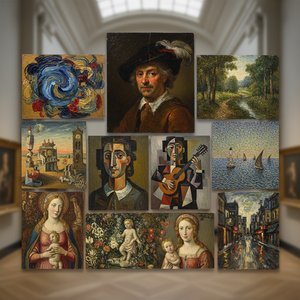
10 Legendarnych Obrazów Olejnych na Desce, Które Zmieniły Sztukę | OriginalUniqueArt
Odkryj 10 legendarnych obrazów olejnych na desce, które zrewolucjonizowały świat sztuki! Van Gogh, Munch i Klimt – poznaj historie arcydzieł impresjonizmu, ekspresjonizmu i realizmu. Znajdź inspiracje do wnętrz i reprodukcje najwyższej jakości na OriginalUniqueArt.com