
() ·
A painting made for you, by hand
Ręcznie malowana reprodukcja olejowa
Ręcznie malowany obraz olejny na płótnie, wykonany na zamówienie przez naszych artystów w wybranym przez Ciebie wymiarze i oprawie. ( Przełącz na wydania drukowane Przejdź do wersji cyfrowej)
Opis obiektu
Explore Elio Antonio de Lebrija’s ‘Latin Grammar,’ a stunning 15th-century illuminated manuscript. Discover its aged beauty, dramatic lighting & detailed realism – a unique historical art piece.
Biografia artysty
Antonio de Nebrija – pionier językoznawstwa hiszpańskiego i autor pierwszej gramatyki języka kastylijskiego. Jego praca ukształtowała literaturę i naukę w Hiszpanii oraz wywarła wpływ na europejskie badania lingwistyczne.
 Rozwiń treść
from ·
Chapter 1
How large should it be?
Slide to change the size; the picture on the left shows the frame at its real width. The proportions of the original are kept.
Wybierz spośród naszych standardowych rozmiarów, które zachowują oryginalne proporcje dzieła sztuki.

Wpisz wymaganą szerokość i wysokość, aby obraz pasował do Twojej ramy lub ściany. Ponieważ jest to dzieło malowane ręcznie, w przypadku rozmiaru o innych proporcjach artysta może domalować nieco więcej wokół obrazu lub przyciąć jego fragmenty — wybór należy do Ciebie. Przed rozpoczęciem pracy prześlemy Ci cyfrową wizualizację do zatwierdzenia. Obraz widoczny na tej stronie nie przedstawia rzeczywistego efektu — jedynie wizualizacja oddaje realny rezultat.
Chapter 2
How should it arrive?
Choose the edges of the stretched canvas
Choose your frame

White zł1

Blurside zł1

Extended zł1

P118B zł10

P118H zł10

P118W zł10

P438Z zł10

P508JH zł12

P508YH zł12

P805H zł10

P805Z zł10

P919BZ zł10

P919G zł10

P919XJ zł10

P959ZH zł10

P968JZ zł12

W106C zł8

W218G zł10

W218JH zł8

W218Y zł10

W307PJ zł10

W316G zł10

W316PJ zł8

W316Y zł10

W398PJ zł8

W4111J zł10

W500HY zł15

W500JH zł15

W692G zł12

W849H zł8

W940BG zł15

W953PJ zł8

H24-GOLD zł30

H24-SILVER zł30

H36-GOLD zł45

H36-SILVER zł45
W oprawie
Moulding: . Overall size with the frame: .
Chapter 3
Who paints it, and should anything change?
After order, OriginalUniqueArt.com team will email client for instructions and provide a mockup preview
Dostawa na całym świecie () w ciągu 3–4 tygodni zamiast standardowych 5 tygodni. (1 Listopad). Bez kompromisów w kwestii jakości.
Chapter 4
The finishing touches
A nameplate, as in a museum?
Szczegóły grawerowanej brązowej tabliczki
This elegant plaque features the artist's name and the title of the artwork, finely engraved for a timeless presentation.
It is made from bronze with a refined, elegant finish. The text is precisely laser-engraved for a sharp and permanent result. Measuring 9x2 cm, the plaque is compact yet easy to read. It's built to be durable and scratch-resistant, offering a professional, museum-quality look. Mounting is simple thanks to the included adhesive backing.
Szczegóły przezroczystej tabliczki akrylowej
The plaque includes essential engraved details such as the artist's name, the title of the artwork, the date it was created, the type of media used-like oil on canvas or watercolor-a brief description of the piece, and a QR code that links to the complete artwork information.
It is crafted from clear acrylic, offering a sleek, modern appearance. The text is UV-engraved in black to ensure strong visual contrast. With a size of 10x15 cm, it ensures optimal readability. It comes equipped with two metal hooks for secure wall mounting. The plaque is designed to be weather-resistant, making it suitable for various environments, and it includes interactive features that work seamlessly with smartphone scanning.
Szczegóły czarnej tabliczki akrylowej
This elegant plaque includes engraved information such as the artist's name, the title of the artwork, the date it was created, the type of media used (like oil on canvas or watercolor), a short description of the artwork, and a QR code for quick access to more information.
The plaque itself is made from refined black acrylic with a premium finish. The text is laser-engraved in white for high contrast and readability. Its size is 10x15 cm, designed to be easy to read. It comes with two metal hooks for professional mounting. The design is sleek and fits any interior style. It is also weather-resistant and durable, with built-in digital integration for mobile compatibility.
A protective varnish?
When do you need it?
Chapter 5
Your painting, as you ordered it

Latin Grammar with notes
Technika reprodukcji
Wymiary reprodukcji
-

Wybitny mistrz artystyczny
Większa szczegółowość, finezja i dodatkowy czas na realizację
-

Opcje oprawy reprodukcji
-
-
W przypadku dzieł sztuki lub reprodukcji, których którykolwiek z boków przekracza 105 cm (około 41 cali), rama zostanie wysłana w formie zestawu do samodzielnego montażu. Metoda ta zapewnia bezpieczną dostawę i zapobiega uszkodzeniom podczas transportu.
Wymagany profesjonalny montaż – nie jest to produkt typu DIY.
Zestaw musi zostać złożony, a płótno naciągnięte przez doświadczonego profesjonalnego ramiarza, przy użyciu kleju do drewna (brak w zestawie), kleszczy do naciągania płótna oraz ścisków, które utrzymają krosna w równej pozycji podczas schnięcia kleju. Nieprawidłowy montaż lub nierównomierne napięcie płótna może trwale uszkodzić dzieło sztuki i nie podlega naszej gwarancji.
 W przypadku dzieł sztuki lub reprodukcji, których którykolwiek z boków przekracza 105 cm (około 41 cali), rama zostanie wysłana w formie zestawu do samodzielnego montażu. Metoda ta zapewnia bezpieczną dostawę i zapobiega uszkodzeniom podczas transportu.
W zestawie znajdują się wszystkie listwy z litego drewna, precyzyjnie docięte do wymiarów.
Montaż odbywa się przy użyciu dołączonych wkrętów oraz kleju do drewna do łączenia narożników, którego zestaw nie zawiera i który musi zostać dostarczony przez ramiarza.
Wymagane są profesjonalne narzędzia, których nie ma w zestawie: kleszcze do naciągania płótna (napinacz) oraz zaciski, które pozwolą utrzymać listwy w równej pozycji podczas schnięcia kleju.
Ważne:
Do połączenia narożników niezbędny jest klej do drewna, listwy należy unieruchomić za pomocą ścisków do momentu całkowitego wyschnięcia kleju, a naciągnięcie płótna na złożoną ramę wymaga użycia kleszczy do naciągania płótna. Żaden z tych elementów nie jest dołączony do zestawu. Przed zamówieniem tego rozmiaru zalecamy konsultację z doświadczonym ramiarzem.

Etykieta obiektu
-
-

Lakier ochronny
Lakier z połyskiem (pogłębia kolory, chroni przed światłem i wilgocią)
-

Personalizacja dzieła
Przykłady możliwości personalizacji: zastąp twarz zdjęciem klienta; dodaj zwierzę domowe (np. zamień kota na psa); umieść ukrytą wiadomość w tle; zmień krajobraz lub elementy tła.
-

Ekspresowa
Dostawa na cały świat () w ciągu 3–4 tygodni zamiast standardowych 5 tygodni. (1 Listopad). Bez kompromisów w kwestii jakości.
-
Przesyłka ekspresowa
Dostawa na cały świat () w ciągu 5 tygodni. (8 Listopad).
W cenie
Cena całkowita
zł 1167
Opcja ze szkłem jest dostępna wyłącznie w rozmiarach poniżej 110 cm
Included with every order
- Bezpłatna ekspresowa wysyłka na cały świat
- Wysokiej jakości płótno lniane
- Pełne ubezpieczenie przesyłki
- Gwarancja zwrotu należności celnych i podatków importowych
- Gwarancja wiernego odwzorowania kolorów
- 100-dniowa polityka zwrotów (tylko w przypadku wad)
- Gwarancja 100% zwrotu pieniędzy
- Zniżka przy zakupie wielu sztuk


 Podgląd w skali 1:1
 Wyślij jako kartkę
 Udostępnij
 Szczegóły dzieła
 Przewodnik

 Pobierz obraz
 Podobne obiekty
 RTG
RTG Pokaz slajdów
 Q&A
Q&A Statystyki
In numbers
- 29frames to choose from
- standard sizes, in its own proportions
- 5weeks to paint and deliver it
About the original


Elio Antonio De Lebrija
1444 - 1522, Hiszpania
Quick facts about Elio Antonio De Lebrija
- Artistic Movement Or Style: Humanizm, Lingwistyka
- Artists Or Movements Influenced By This Artist: ['Lingwistyka europejska']
- Artists Who Influenced This Artist: ['Literatura klasyczna']
- Date Of Birth: 1444
- Date Of Death: 1522
- Full Name: Elio Antonio de Nebrija
- Nationality: Hiszpański
- Notable Artworks:
- Gramática castellana
- Słownik łac.-rom.
- Introductiones Latinae
- Place Of Birth: Lebrija, Hiszpania
Biografia artysty
Elio Antonio de Nebrija: The Architect of the Spanish Tongue
Elio Antonio de Nebrija, a name often whispered in the halls of Spanish linguistic scholarship, was far more than simply a scholar; he was a pivotal figure who fundamentally reshaped the landscape of the Castilian language and, arguably, the very fabric of Spanish national identity. Born in Lebrija, a small town nestled within the sun-drenched hills of Andalusia in 1444, Nebrija’s life unfolded during a period of dramatic transformation for Spain – the aftermath of centuries of conflict and the dawn of a new era under the powerful Catholic Monarchs. This confluence of historical forces profoundly shaped his intellectual trajectory, driving him to undertake a monumental task: to codify, elevate, and standardize the vernacular Castilian tongue, transforming it from a regional dialect into a vehicle for national unity and scholarly prestige. His legacy isn’t merely one of linguistic analysis; it's a testament to the power of language to shape culture and forge a collective identity.From Salamanca’s Classics to Bologna’s Humanism
Nebrija’s early education laid the bedrock for his future achievements, beginning in Salamanca, a renowned center of learning during the late Middle Ages. Immersed in the study of classical literature – Homer, Virgil, Cicero – he developed a deep appreciation for the elegance and precision of Latin. However, it was his subsequent journey to Italy, specifically to the University of Bologna, that truly ignited his intellectual fervor. Bologna, at the time, was a vibrant hub of Renaissance Humanism, a movement dedicated to reviving the values and knowledge of ancient Greece and Rome. Nebrija eagerly embraced this humanist spirit, delving into the intricacies of Latin grammar, rhetoric, and philosophy. He absorbed the emphasis on human potential, the celebration of reason, and the belief in the transformative power of education – principles that would profoundly influence his own work. The intellectual atmosphere of Bologna fostered a critical approach to knowledge, encouraging him to question established norms and seek innovative solutions. Upon returning to Spain, he secured a prestigious professorship at the University of Salamanca, a position that provided both stability and a platform to disseminate his burgeoning ideas and methodologies. Teaching Latin, Greek, and Hebrew allowed him not only to share his expertise but also to observe firsthand the challenges faced by students struggling with the complexities of these ancient languages – an observation that would ultimately inform his groundbreaking work on Castilian Spanish.The *Gramática de la Lengua Castellana*: A Revolution in Linguistic Thought
The year 1492 stands as a watershed moment in European history, marking the completion of Christopher Columbus’s voyage to the Americas and the unification of Spain under Ferdinand and Isabella. Yet, within Spain itself, it was also the year that Elio Antonio de Nebrija achieved his most enduring legacy: the publication of *Gramática de la lengua castellana* (Grammar of the Castilian Language). This wasn't simply a descriptive account of existing linguistic patterns; it was a deliberate and systematic attempt to establish rules and norms for correct usage, effectively standardizing the language. Nebrija’s grammar wasn’t merely an academic exercise; it was a strategic undertaking designed to foster a stronger sense of national identity – particularly crucial during a period of political consolidation and burgeoning imperial ambitions. He understood that a unified language would serve as a powerful tool for communication, education, and cultural cohesion, binding together the diverse regions of Spain under a common linguistic banner. The *Gramática* established norms that resonated through generations of writers and scholars, profoundly influencing the evolution of modern Spanish. It was a bold assertion of Castilian’s rightful place as a language worthy of scholarly attention and widespread use.Beyond Grammar: Lexicography and Enduring Influence
Nebrija's contributions extended far beyond his seminal grammar. Recognizing the importance of vocabulary, he also produced *Vocabulario en Romance y Latín* (Vocabulary in Romance and Latin), an early bilingual dictionary that facilitated learning and cross-referencing between the two languages – a remarkably innovative approach for its time. Furthermore, his *Introductiones Latinae*, a textbook designed to teach Latin, gained widespread popularity throughout Europe, demonstrating the far-reaching impact of his pedagogical methods. Nebrija’s intellectual curiosity also led him to explore other fields, including medicine, law, and theology, reflecting the breadth of Renaissance Humanism and his commitment to holistic learning. He wasn't simply a linguist; he was a polymath – a scholar dedicated to understanding the world through multiple lenses. His work continues to be studied, analyzed, and celebrated, ensuring that Elio Antonio de Nebrija’s name remains synonymous with linguistic innovation and cultural preservation.A Lasting Testament
- Early Life & Education: Born in Lebrija, Spain (1444), Nebrija received his initial education in Salamanca before pursuing advanced studies at the University of Bologna.
- Key Work: *Gramática de la Lengua Castellana* (1492): This groundbreaking work was the first grammar dedicated to a Romance language, establishing rules and norms for Castilian Spanish.
- Other Contributions: Nebrija authored a Spanish-Latin dictionary (*Vocabulario en Romance y Latín*) and *Introductiones Latinae*, a widely used Latin textbook.
- Humanist Scholar: His interests extended beyond linguistics to encompass medicine, law, and theology, reflecting the breadth of Renaissance Humanism.
- Historical Significance: Nebrija is considered the "father of Spanish linguistics" for his pivotal role in standardizing the language and fostering a sense of national identity.
Powiązane artykuły
International Gothic: The Elegant Dawn of European Art and the Mastery of Illuminated Manuscripts
Explore the exquisite elegance of International Gothic art. Discover the mastery of illuminated manuscripts, the brilliance of gold leaf, and the legacy of the Limbourg Brothers in this expert guide to Europe's sophisticated medieval dawn.

Antonio Zeno Shindler: A Pioneer of Cross-Cultural Portraiture in Early Modernism
Explore the life & work of Antonio Zeno Shindler, a pivotal figure in early modernist portraiture. Discover his unique style, anthropological collaborations, and lasting impact on cultural representation. Expert analysis for discerning collectors.

Sacred Symbols & Golden Light: A Journey Through the Divine Artistry of the Early Medieval Era
Embark on a visual journey through Early Medieval art. Explore the profound beauty of illuminated manuscripts, sacred symbols, and golden light through an expert historical lens, celebrating the enduring legacy of medieval craftsmanship and divine artistry.
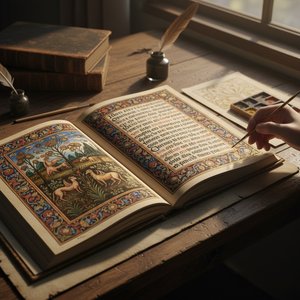
Whispers of History: Capturing the Timeless Beauty of Illuminated Manuscripts in Art
Embark on a journey through time with our deep dive into the exquisite beauty of illuminated manuscripts. Discover the sacred artistry, precious materials, and enduring legacy of medieval illumination in this cultural exploration for history lovers.
