

 Podgląd w skali 1:1
 Wyślij jako kartkę
 Udostępnij
 Szczegóły dzieła
 Przewodnik

 Pobierz obraz
 Podobne obiekty
 RTG
RTG Pokaz slajdów
 Statystyki
Paris est un véritable océan


 Rozwiń treść
Dzieło sztuki prezentowane na tej stronie podlega ochronie prawem autorskim, co oznacza, że nie mamy prawa do tworzenia ani sprzedaży jego identycznej reprodukcji. Ochrona ta jest egzekwowana na mocy umów międzynarodowych, takich jak Konwencja berneńska oraz przez przepisy prawa krajowego, w tym te określone w Prawo autorskie USA – Tytuł 17.
Jako pełną szacunku i legalną alternatywę oferujemy personalizowane, malowane ręcznie dzieła sztuki inspirowane oryginałem. Nasi wykwalifikowani i profesjonalni artyści starannie analizują styl, nastrój oraz artystyczną esencję pierwowzoru, aby stworzyć nowe, unikalne dzieło, które przywołuje te same emocje – pozostając jednocześnie w pełni oryginalną kreacją.
Metoda ta jest w pełni zgodna z przepisami prawa autorskiego, ponieważ nie polega na kopiowaniu ani powielaniu chronionego dzieła. Stanowi ona kreatywną reinterpretację – nowy obraz, który czerpie inspirację z oryginału, ale nie jest z nim tożsamy.
Ręcznie malowana reprodukcja olejowa
Ręcznie malowany obraz olejny na płótnie, wykonany na zamówienie przez naszych artystów w wybranym przez Ciebie wymiarze i oprawie. ( Przełącz na wydania drukowane Przejdź do wersji cyfrowej)




































Wybierz spośród naszych standardowych rozmiarów, które zachowują oryginalne proporcje dzieła sztuki.

Wpisz wymaganą szerokość i wysokość, aby obraz pasował do Twojej ramy lub ściany. Ponieważ jest to dzieło malowane ręcznie, w przypadku rozmiaru o innych proporcjach artysta może domalować nieco więcej wokół obrazu lub przyciąć jego fragmenty — wybór należy do Ciebie. Przed rozpoczęciem pracy prześlemy Ci cyfrową wizualizację do zatwierdzenia. Obraz widoczny na tej stronie nie przedstawia rzeczywistego efektu — jedynie wizualizacja oddaje realny rezultat.
Po złożeniu zamówienia zespół OriginalUniqueArt.com skontaktuje się z klientem drogą mailową w celu uzyskania instrukcji i prześle wizualizację projektu
Dostawa na całym świecie () w ciągu 3–4 tygodni zamiast standardowych 5 tygodni. (26 Październik). Bez kompromisów w kwestii jakości.

Bezpłatna ekspresowa wysyłka na cały świat

Wysokiej jakości płótno lniane

Pełne ubezpieczenie przesyłki

Gwarancja zwrotu należności celnych i podatków importowych

Gwarancja wiernego odwzorowania kolorów

100-dniowa polityka zwrotów (tylko w przypadku wad)

Gwarancja 100% zwrotu pieniędzy

Zniżka przy zakupie wielu sztuk
 Opcja ze szkłem jest dostępna wyłącznie w rozmiarach poniżej 110 cm

Paris est un véritable océan
Technika reprodukcji
Wymiary reprodukcji
-


Cena całkowita
zł 1151
Pytania i odpowiedzi
Kto stworzył "Paris est un véritable océan"?
Autorem dzieła „Paris est un véritable océan” jest el Seed. Praca ta figuruje w katalogu pod nazwiskiem el Seed.
Czy „Paris est un véritable océan” – el Seed to jasne czy ciemne dzieło?
Pod względem postrzeganej jasności, „Paris est un véritable océan” – el Seed jest balanced.
Gdzie mogę zobaczyć podgląd dzieła "Paris est un véritable océan"?
Aby podglądnąć reprodukcję dzieła „Paris est un véritable océan” – el Seed, otwórz stronę Podgląd w pomieszczeniu danego utworu.
Biografia artysty
el Seed: Bridging Cultures Through Calligraphy and Urban Canvas
Born in Le Chesnay, France, in 1981 – a son of Tunisian heritage – el Seed’s artistic journey is deeply intertwined with his dual identity. Growing up speaking primarily the Tunisian dialect before discovering standard Arabic as a teenager sparked an intense curiosity about his roots, a fascination that would profoundly shape his unique artistic vision. This early immersion in linguistic and cultural difference became the bedrock for his groundbreaking work: calligraffiti – a captivating fusion of Arabic calligraphy and street art.
The name “el Seed” itself carries significant weight. Derived from the French play, *Le Cid*, it’s rooted in the Arabic term ‘al sayed,’ meaning “the man.” This deliberate choice reflects el Seed's intention to represent a voice of humanity, a powerful communicator across cultural divides. The 2011 Tunisian Revolution served as a pivotal moment, opening up spaces for creative expression and solidifying his commitment to using art as a tool for social commentary and unification.
The Genesis of Calligraffiti
Early in his career, el Seed honed his skills within the vibrant street art scene, absorbing influences from artists like Hest 1 and Shuck. However, it was his deep connection to Arabic calligraphy that truly distinguished him. He recognized the inherent power of the written word – its ability to convey complex ideas, evoke emotion, and connect people across generations. This realization led him to experiment with integrating calligraphy into graffiti art, creating a visual language that was both visually arresting and intellectually stimulating.
His first large-scale mural, created in 2011 in Kairouan, Tunisia, immediately established his signature style: intricate Arabic script interwoven with dynamic street art elements. This piece, dedicated to those fighting against tyranny, demonstrated his commitment to using art as a vehicle for social change and political expression. The choice of text – a passage from Abu al-Qasim al-Husayfi – underscored the importance of justice and resistance, themes that would continue to resonate throughout his work.
Global Impact and Artistic Evolution
Since his initial breakthrough, el Seed’s art has traversed continents, adorning walls in cities as diverse as Melbourne, London, Cairo, Doha, and São Paulo. His murals have been featured on the façade of the Institut du Monde Arabe in Paris, within the favelas of Rio de Janeiro, and even on the DMZ between North and South Korea – a powerful testament to his ability to transcend geographical boundaries and connect with audiences worldwide.
A key element of el Seed’s artistic philosophy is his deliberate choice not to sign his work. He believes that art should be accessible to everyone, regardless of their familiarity with the artist's name. This democratic approach ensures that the message conveyed through his murals remains central, free from ego or personal branding.
Influences and Artistic Vision
El Seed’s artistic vision is shaped by a complex interplay of influences – from traditional Arabic calligraphy to contemporary street art movements. He cites poets such as Mahmood Darwish and Nizar Qabbani as significant literary inspirations, recognizing the power of language to evoke emotion and explore universal themes. His work also draws upon his personal experiences growing up in France and his deep connection to Tunisian culture.
He describes his artistic process as an “evolution,” emphasizing a constant willingness to experiment and embrace new challenges. He acknowledges that his background is rooted in Arabic calligraphy, but he’s not afraid to venture into uncharted territory, exploring diverse mediums and techniques. His recent project, ‘Perception,’ in Cairo's Manshiyat Nasr neighborhood, highlights this adaptability – using anamorphic art to challenge societal perceptions of the Coptic community.
Legacy and Recognition
El Seed’s work has garnered international recognition, including the UNESCO Sharjah Prize for Arab Culture in 2017. He was also named a Global Thinker by *Foreign Policy* in 2016, acknowledging his commitment to using art as a tool for social change and cultural understanding. His murals serve not only as visually stunning artworks but also as powerful symbols of unity, tolerance, and the enduring power of human connection. Through his unique blend of calligraphy and street art, el Seed continues to bridge cultures and inspire dialogue around the world.

el Seed
1981 - , France
Krótka nota
- Artistic Movement Or Style: Calligraffiti
- Artists Or Movements Influenced By This Artist:
- Graffiti art
- Arabic calligraphy
- Artists Who Influenced This Artist:
- Hest 1
- Shuck
- Mahmood Darwish
- Nizar Qabbani
- Date Of Birth: 1981
- Full Name: el Seed
- Nationality: French-Tunisian
- Notable Artworks:
- Lost Walls
- Perception
- Place Of Birth: Le Chesnay, France
Powiązane artykuły
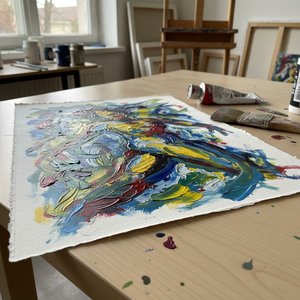
Akryl na papierze: Nowoczesny nośnik ekspresji artystycznej – historia, techniki i konserwacja dzieł
Poznaj historię, techniki i konserwację akrylu na papierze – nowoczesnego medium sztuki współczesnej. Poradnik dla kolekcjonerów i inwestorów. Eksperckie analizy i najlepsze praktyki ochrony dzieł.

Top 10 arcydzieł ekspresjonizmu abstrakcyjnego – inspiracje dla Twojego wnętrza | OriginalUniqueArt.com
Odkryj 10 arcydzieł ekspresjonizmu abstrakcyjnego – Pollock, Rothko, de Kooning i inni. Poznaj historie artystów, techniki i inspiracje dla Twojego wnętrza. Reprodukcje najwyższej jakości na OriginalUniqueArt.com!

El Greco: 25 Arcydzieł Genialnego Malarza – Kolekcja dla Koneserów Sztuki i Wystroju Domu
Odkryj 25 arcydzieł El Greco – mistrza renesansu i manieryzmu. Poznaj historie, techniki i duchowość w jego obrazach. Reprodukcje najwyższej jakości na OriginalUniqueArt.com. Inspiracje do wnętrz i kolekcja sztuki online!

Geometria Sztuki: 10 Arcydzieł Abstrakcji Geometrycznej | OriginalUniqueArt.com
Odkryj 10 arcydzieł abstrakcji geometrycznej! Poznaj historię Mondriana, Kandinskiego i Maleвича. Inspiracje wnętrzarskie z malarstwem abstrakcyjnym – reprodukcje najwyższej jakości na OriginalUniqueArt.com. Eksploruj kolekcję online!

25 Arcydzieł Kandinskiego: Kolor, Duchowość i Abstrakcja w Twoim Domu | OriginalUniqueArt.com
Odkryj 25 arcydzieł Wassily Kandinskiego – pioniera abstrakcji i ekspresjonizmu! Poznaj historie, techniki i emocje kryjące się za jego kolorowymi kompozycjami. Reprodukcje obrazów najwyższej jakości na OriginalUniqueArt.com. Eksploruj pełną kolekcję online!