
 Zobacz w skali 1:1
 Wyślij
 Udostępnij
 Szczegóły
 Przewodnik

 Pobierz plik obrazu
 Podobne obiekty
 RTG
RTG Pokaz slajdów
 Statystyki
Untitled
 Acrylic On Canvas
- WallArt
- Suprematism
 1920
1920 79.0 x 49.0 cm
 Czytaj więcej
Giclée / Wydruk artystyczny
Wydruki giclée lub płótna o jakości muzealnej, szybka realizacja i szeroki wybór opcji wykończenia. ( Kup ręcznie malowany obraz Przełącz na wersję cyfrową)




P118B zł10

P118H zł10

P118W zł10

P438Z zł10

P508JH zł12

P508YH zł12

P805H zł10

P805Z zł10

P919BZ zł10

P919G zł10

P919XJ zł10

P959ZH zł10

P968JZ zł12

W106C zł8

W218G zł10

W218JH zł8

W218Y zł10

W307PJ zł10

W316G zł10

W316PJ zł8

W316Y zł10

W398PJ zł8

W4111J zł10

W500HY zł15

W500JH zł15

W692G zł12

W849H zł8

W940BG zł15

W953PJ zł8




Wybierz spośród naszych standardowych rozmiarów, które zachowują oryginalne proporcje dzieła sztuki.

Wpisz wymaganą szerokość i wysokość, aby dopasować grafikę do ramy lub ściany. Wydruk można jedynie przyciąć, nigdy nie powiększając go poza oryginalny obraz, dlatego format o innym proporcji spowoduje utratę części kompozycji. Przed rozpoczęciem druku prześlemy Ci cyfrowy podgląd do zatwierdzenia. Obraz wyświetlany na tej stronie nie pokazuje rzeczywistego przycięcia — jedynie podgląd oddaje ten efekt.
Dostawa na cały świat () w ciągu 2 tygodni zamiast standardowych 4/5 tygodni. (22 Październik)

Bezpłatna ekspresowa wysyłka na cały świat

Wysokiej jakości płótno lniane

Pełne ubezpieczenie transportowe

Gwarancja zwrotu należności celnych i podatków importowych

Gwarancja idealnego odwzorowania barw

100-dniowy okres na zwrot dzieła w przypadku wykrycia wad produkcyjnych

Gwarancja 100% zwrotu pieniędzy

Oferta przy zakupie wielu sztuk
 Opcja ze szkłem jest dostępna wyłącznie w rozmiarach poniżej 110 cm

Untitled
Giclée / Wydruk artystyczny
Rozmiar reprodukcji
-


Suma do zapłaty
zł 304
A Pioneer of Geometric Abstraction: Exploring El Lissitzky’s “Untitled”
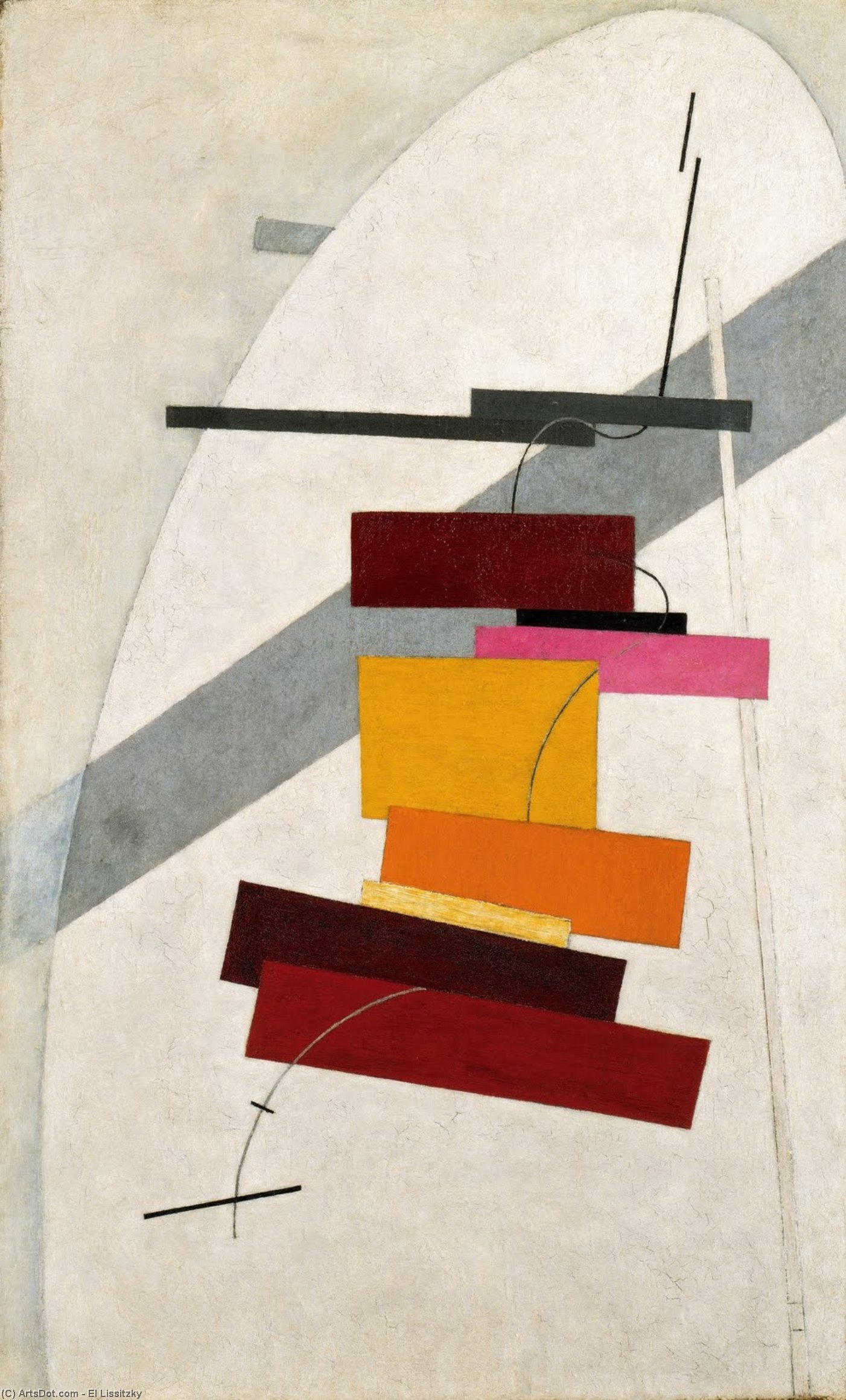
El Lissitzky's "Untitled," painted in 1920, stands as a cornerstone of Russian avant-garde art and a testament to the revolutionary spirit of its time. This striking abstract composition—a canvas bathed in hues of red, yellow, and orange—immediately captivates the viewer with its bold geometric forms and dynamic lines, reflecting Lissitzky’s unwavering commitment to distilling visual language into its purest essence. More than just aesthetically pleasing, “Untitled” embodies a profound conceptual ambition rooted in Suprematism, a movement Lissitzky spearheaded alongside Kazimir Malevich, aiming to liberate art from representational constraints and prioritize pure color and geometric abstraction as vehicles for conveying spiritual truth.- Subject Matter: The painting eschews recognizable imagery altogether, opting instead for an exploration of fundamental visual elements—primarily intersecting lines and colored squares—that transcend specific narratives. Lissitzky sought to capture not what *is* seen but what *feels* seen, prioritizing the emotional resonance of form over depiction.
- Style: Suprematism’s influence is palpable in “Untitled.” Malevich championed the idea that art should be reduced to its most basic components—squares and circles—representing the cosmos and spiritual unity. Lissitzky's work aligns perfectly with this philosophy, rejecting illusionistic techniques in favor of a deliberately reductive aesthetic.
- Technique: Executed in oil on canvas, “Untitled” demonstrates Lissitzky’s mastery of color blending and textural layering. The artist skillfully utilizes variations in hue and saturation to create depth and vibrancy within the geometric shapes, emphasizing their visual impact. Careful consideration was given to brushstrokes—likely applied with a smooth, deliberate hand—contributing to the painting's overall sense of stability and precision.
Historical Context: The Rise of Constructivism and Artistic Expression Under Lenin
“Untitled” emerged during a period of dramatic social upheaval in Russia following the Bolshevik Revolution of 1917. The avant-garde movement—including Suprematism, Cubism, Futurism, and Constructivism—became synonymous with artistic innovation and ideological fervor. Artists like Lissitzky actively engaged in disseminating socialist ideals through their art, designing propaganda posters and exhibition displays that aimed to inspire revolutionary fervor and promote the vision of a utopian society built upon rational principles. The painting’s geometric abstraction served as a deliberate rejection of bourgeois aesthetics, signaling a commitment to forging a new artistic language aligned with the transformative forces reshaping Russian culture.Symbolism Beyond Representation: Exploring Color and Form
While devoid of recognizable imagery, “Untitled” is laden with symbolic significance. The dominant colors—red, yellow, and orange—are deliberately chosen to evoke associations with warmth, energy, and vitality – mirroring the optimism inherent in the revolutionary era. Lissitzky’s geometric shapes—particularly the intersecting lines—represent dynamism and interconnectedness, symbolizing the striving for unity and harmony within a fractured world. These elements coalesce into a visual metaphor for spiritual transcendence, reflecting Lissitzky's belief that art could serve as a conduit for accessing higher consciousness.Emotional Impact: A Moment of Pure Visual Perception
Ultimately, “Untitled” transcends mere decoration; it invites contemplation and stimulates emotional response. The painting’s simplicity—its deliberate reduction to fundamental geometric forms—forces the viewer to confront pure visual perception, bypassing cognitive filters and accessing a realm of feeling untouched by narrative or symbolism. Lissitzky's masterful use of color and line creates an experience akin to encountering the cosmos itself – a powerful reminder that art can communicate truths beyond words, resonating with viewers long after they’ve gazed upon its captivating surface.Pytania i odpowiedzi
Jak kolory w dziele "Untitled" współgrają ze sobą?
Harmonia kolorystyczna dzieła "Untitled" została określona jako Balanced Harmony.
Jaki to rodzaj dzieła sztuki: „Untitled” autorstwa El Lissitzky?
W katalogu dzieło „Untitled” autorstwa El Lissitzky zostało sklasyfikowane jako WallArt. Kategoria ta ułatwia odnajdywanie podobnych prac.
Czy mogę obejrzeć podgląd „Untitled” autorstwa El Lissitzky przed złożeniem zamówienia?
Strona podglądu Podgląd dla dzieła „Untitled” umożliwia obejrzenie obrazu przed złożeniem zamówienia.
Biografia artysty
A Revolutionary Vision: The Life and Art of El Lissitzky
El Lissitzky, urodzony Lazar Markowitsch Lissitzky w 1890 roku w niewielkiej rosyjskiej miejscowości Pochinok, stał się kluczową postacią w burzliwym krajobrazie sztuki wczesnego XX wieku. Jego życie było podróżą ciągłej metamorfozy, napędzaną gorącą wiarą w moc sztuki do kształtowania społeczeństwa i odzwierciedlania dynamiki współczesnego świata. Już od początku swojej edukacji jako architekta i inżyniera – zajęcia utrudnione przez ograniczenia nakładane na studentów żydowskich – jego ścieżka artystyczna zaczęła się rozwijać, początkowo poprzez ilustracje osadzone w rosyjskim folklorze. Te wczesne prace, takie jak okładka dla ‘Chad Gadya’, ujawniają talent dopiero rozwijający się, który już mierzył się z narracją i wizualną opowieścią, sugerując głębokie korzenie kulturowe, które miały nadal wpływać na jego estetykę. Przenosiny do Berlina i Darmstadt poszerzyły jego horyzonty, ale to powrót do Rosji dał Lissitzky’emu prawdziwy głos artystyczny, nieodłącznie związany z rewolucyjnym zgiełkiem nadejście w kraju.The Embrace of Abstraction: Suprematism and Proun
Przełomowym momentem okazało się spotkanie z Kazimierzem Malevichiem i przyjęcie suprematyzmu. Ruch ten, poświęcony czystej geometrycznej abstrakcji, głęboko rezonował z pragnieniem Lissitzky’ego przekroczenia sztuki reprezentacyjnej i dotarcia do uniwersalnego języka wizualnego. Stał się kluczowym członkiem UNovis, grupy suprematystycznej założonej w Witebsku, aktywnie szerząc swoje zasady poprzez nauczanie i produkcję artystyczną. Jednak Lissitzky nie po prostu kopiował styl Malevich’a; stworzył własną, odrębną drogę z rozwojem *Proun*. Ta unikalna seria, wywodząca się z fuzji suprematyzmu i konstrukcjonizmu, badała relacje przestrzenne i geometryczne formy w dynamicznych kompozycjach, często przypominających schematy architektoniczne lub eksplozje diagramów. Proun nie był po prostu malowaniem; była to eksploracja samej struktury przestrzeni, premonicja przyszłych możliwości architektonicznych. Widoczny tu wpływ jego wykształcenia inżynierskiego jest oczywisty – dodaje on logiczny aspekt konstrukcyjny do abstrakcyjnych form.Constructivism and the Role of the Artist
Lissitzky’s artistic vision extended far beyond the canvas. He passionately believed that art should serve a social purpose, actively engaging with political ideologies and seeking ways to integrate design into everyday life. This conviction led him to become deeply involved in Soviet propaganda efforts, creating powerful posters and graphic designs intended to mobilize public support for the Bolshevik regime. His 1941 rok poster calling for tank construction stands as a testament to this commitment – a stark, impactful image reflecting the urgency of wartime. Beyond propaganda, Lissitzky revolutionized typography, exhibition design, and photomontage. He understood that effective communication required innovative visual strategies, and he fearlessly experimented with new techniques to convey his message. His photomontages, such as ‘The Constructor’ (1924), are particularly striking – self-portraits that blend photography with geometric abstraction, offering a complex commentary on identity and the role of the artist in society.Proun: A Spatial Investigation
The *Proun* series represents a pivotal shift in Lissitzky's artistic practice. Initially conceived as architectural diagrams, these works evolved into dynamic compositions that explored spatial relationships and the interplay of geometric forms. They weren’t merely representations of objects; they were investigations into how space itself could be constructed and experienced. Lissitzky described *Proun* as a “spatial poem,” a visual language designed to evoke emotions and stimulate thought. The use of floating planes, intersecting lines, and bold colors created a sense of dynamism and movement, challenging traditional notions of perspective and representation. The series can be seen as a bridge between the rationalism of engineering and the expressive power of art, reflecting Lissitzky’s belief in the potential of design to shape our perception of reality.Legacy and Enduring Influence
El Lissitzky’s life was tragically cut short in 1941 in Moscow, but his legacy continues to resonate today. He bridged the gap between art and architecture, abstraction and social purpose, leaving behind a body of work that is both intellectually stimulating and visually captivating. The establishment of the Lissitzky Foundation in 2014 underscores the ongoing commitment to preserving his artistic heritage and preparing a comprehensive catalogue raisonné of his creations. His innovations in typography, exhibition design, and photomontage continue to inspire contemporary artists and designers, while his unwavering belief in the power of art as a force for social change remains profoundly relevant. His work is held in numerous international collections, including museums in Taganrog and Novokuznetsk. Lissitzky wasn’t simply an artist; he was a visionary who dared to imagine a new world, and whose art continues to shape our understanding of visual communication and its potential for transformation.
El Lissitzky
1890 - 1941 , Rosja
Najważniejsze informacje
- Artistic Movement Or Style:
- Suprematyzm
- Konstrukcjonizm
- Proun
- Artists Or Movements Influenced By This Artist:
- Bauhaus
- De Stijl
- Artists Who Influenced This Artist: ['Kazimir Malevich']
- Date Of Birth: 1890
- Date Of Death: 1941
- Full Name: El Lissitzky
- Nationality: Rosyjski
- Notable Artworks:
- The Constructor
- Chad Gadya
- Proun
- Place Of Birth: Pochinki, Rosja
Zobacz także powiązane artykuły
Poza Formą i Kolorem: Trwała Spuścizna Abstrakcji Geometrycznej w Historii Sztuki
Poznaj fascynującą historię abstrakcji geometrycznej – od rosyjskiej awangardy po wpływ na współczesną sztukę i design. Ekskluzywne analizy, kluczowi artyści i perspektywy inwestycyjne dla kolekcjonerów.

Geometria Sztuki: 10 Arcydzieł Abstrakcji Geometrycznej | OriginalUniqueArt.com
Odkryj 10 arcydzieł abstrakcji geometrycznej! Poznaj historię Mondriana, Kandinskiego i Maleвича. Inspiracje wnętrzarskie z malarstwem abstrakcyjnym – reprodukcje najwyższej jakości na OriginalUniqueArt.com. Eksploruj kolekcję online!

El Greco: 25 Arcydzieł Genialnego Malarza – Kolekcja dla Koneserów Sztuki i Wystroju Domu
Odkryj 25 arcydzieł El Greco – mistrza renesansu i manieryzmu. Poznaj historie, techniki i duchowość w jego obrazach. Reprodukcje najwyższej jakości na OriginalUniqueArt.com. Inspiracje do wnętrz i kolekcja sztuki online!

Poza Formą i Kolorem: Ewolucja Abstrakcji Geometrycznej w Sztuce XX i XXI Wieku
Odkryj fascynującą historię abstrakcji geometrycznej w sztuce XX i XXI wieku! Analiza kluczowych nurtów, artystów i technik. Ekspercka wiedza dla kolekcjonerów na OriginalUniqueArt.com.
Kazimir Malevich: 25 Arcydzieł Suprematyzmu dla Miłośników Sztuki i Wystroju Domu
Odkryj 25 arcydzieł Kazimira Malevicha – pioniera suprematyzmu i abstrakcji. Poznaj historie, techniki i inspiracje za 'Czarnym Kwadratem' i innymi kultowymi dziełami. Reprodukcje najwyższej jakości na OriginalUniqueArt.com.


