() ·

A painting made for you, by hand

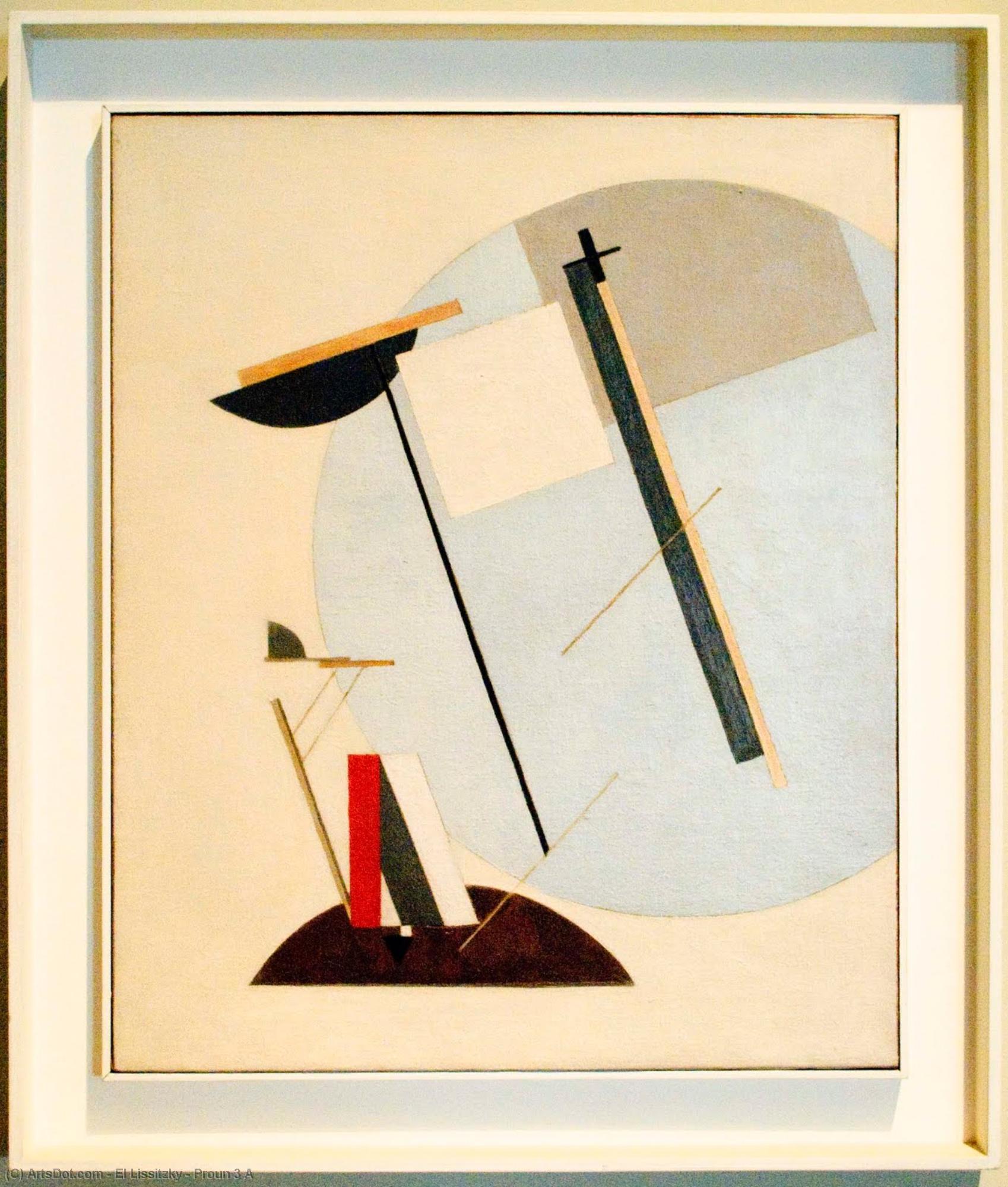
Proun 3 A

Ręcznie malowana reprodukcja olejowa

Ręcznie malowany obraz olejny na płótnie, wykonany na zamówienie przez naszych artystów w wybranym przez Ciebie wymiarze i oprawie. ( Przełącz na wydania drukowane Przejdź do wersji cyfrowej)

Opis obiektu

Explore El Lissitzky’s Constructivist masterpiece, Proun 3 A – a striking lithograph featuring a central circle intersected by a cross, embodying revolutionary geometric abstraction and inviting viewers to contemplate its enduring visual impact.

Biografia artysty

El Lissitzky (1890-1941): rewolucyjny artysta, pionier suprematyzmu i konstrukcjonizmu. Jego dzieła łączą geometrię, architekturę i ideologię. Odkryj świat jego Prounów, typografii i projektów!

from ·

Chapter 1

How large should it be?

Slide to change the size; the picture on the left shows the frame at its real width. The proportions of the original are kept.

Standardowy format
personalizowane
CM
INCH

Wybierz spośród naszych standardowych rozmiarów, które zachowują oryginalne proporcje dzieła sztuki.

szerokość
wysokość

Wpisz wymaganą szerokość i wysokość, aby obraz pasował do Twojej ramy lub ściany. Ponieważ jest to dzieło malowane ręcznie, w przypadku rozmiaru o innych proporcjach artysta może domalować nieco więcej wokół obrazu lub przyciąć jego fragmenty — wybór należy do Ciebie. Przed rozpoczęciem pracy prześlemy Ci cyfrową wizualizację do zatwierdzenia. Obraz widoczny na tej stronie nie przedstawia rzeczywistego efektu — jedynie wizualizacja oddaje realny rezultat.

Chapter 2

How should it arrive?

Choose the edges of the stretched canvas

Choose your frame

Corner sample of the WhiteWrap canvas edge finish, stretched on lite drewno bars
White zł1
Corner sample of the BlurSideWrap canvas edge finish, stretched on lite drewno bars
Blurside zł1
Corner sample of the ExtendedWrap canvas edge finish, stretched on lite drewno bars
Extended zł1
Corner sample of the P118B picture frame: polistyren formowany, 5 cm wide and 3 cm thick
P118B zł10
Corner sample of the P118H picture frame: polistyren formowany, 5 cm wide and 3 cm thick
P118H zł10
Corner sample of the P118W picture frame: polistyren formowany, 5 cm wide and 3 cm thick
P118W zł10
Corner sample of the P438Z picture frame: polistyren formowany, 5.5 cm wide and 3.5 cm thick
P438Z zł10
Corner sample of the P508JH picture frame: polistyren formowany, 7 cm wide and 3.5 cm thick
P508JH zł12
Corner sample of the P508YH picture frame: polistyren formowany, 7 cm wide and 3.5 cm thick
P508YH zł12
Corner sample of the P805H picture frame: polistyren formowany, 5 cm wide and 3.5 cm thick
P805H zł10
Corner sample of the P805Z picture frame: polistyren formowany, 5 cm wide and 3.5 cm thick
P805Z zł10
Corner sample of the P919BZ picture frame: polistyren formowany, 7 cm wide and 3.5 cm thick
P919BZ zł10
Corner sample of the P919G picture frame: polistyren formowany, 7 cm wide and 3.5 cm thick
P919G zł10
Corner sample of the P919XJ picture frame: polistyren formowany, 7 cm wide and 3.5 cm thick
P919XJ zł10
Corner sample of the P959ZH picture frame: polistyren formowany, 5 cm wide and 3 cm thick
P959ZH zł10
Corner sample of the P968JZ picture frame: polistyren formowany, 6 cm wide and 4 cm thick
P968JZ zł12
Corner sample of the W106C picture frame: lite drewno, 5 cm wide and 3 cm thick
W106C zł8
Corner sample of the W218G picture frame: lite drewno, 5 cm wide and 3 cm thick
W218G zł10
Corner sample of the W218JH picture frame: lite drewno, 5 cm wide and 3 cm thick
W218JH zł8
Corner sample of the W218Y picture frame: lite drewno, 5 cm wide and 3 cm thick
W218Y zł10
Corner sample of the W307PJ picture frame: lite drewno, 6 cm wide and 3 cm thick
W307PJ zł10
Corner sample of the W316G picture frame: lite drewno, 6 cm wide and 3 cm thick
W316G zł10
Corner sample of the W316PJ picture frame: lite drewno, 6 cm wide and 3 cm thick
W316PJ zł8
Corner sample of the W316Y picture frame: lite drewno, 6 cm wide and 3 cm thick
W316Y zł10
Corner sample of the W398PJ picture frame: lite drewno, 5 cm wide and 3 cm thick
W398PJ zł8
Corner sample of the W4111J picture frame: lite drewno, 6.5 cm wide and 3.5 cm thick
W4111J zł10
Corner sample of the W500HY picture frame: lite drewno, 7 cm wide and 5 cm thick
W500HY zł15
Corner sample of the W500JH picture frame: lite drewno, 7 cm wide and 5 cm thick
W500JH zł15
Corner sample of the W692G picture frame: lite drewno, 8 cm wide and 4 cm thick
W692G zł12
Corner sample of the W849H picture frame: lite drewno, 5 cm wide and 3 cm thick
W849H zł8
Corner sample of the W940BG picture frame: lite drewno, 7.5 cm wide and 4.5 cm thick
W940BG zł15
Corner sample of the W953PJ picture frame: lite drewno, 6 cm wide and 3.5 cm thick
W953PJ zł8
Corner sample of the H24-GOLD picture frame: rzeźbione drewno pokryte gipsem, 10 cm wide and 6 cm thick
H24-GOLD zł30
Corner sample of the H24-SILVER picture frame: rzeźbione drewno pokryte gipsem, 10 cm wide and 6 cm thick
H24-SILVER zł30
Corner sample of the H36-GOLD picture frame: rzeźbione drewno pokryte gipsem, 15 cm wide and 6.5 cm thick
H36-GOLD zł45
Corner sample of the H36-SILVER picture frame: rzeźbione drewno pokryte gipsem, 15 cm wide and 6.5 cm thick
H36-SILVER zł45

Moulding: . Overall size with the frame: .

Chapter 3

Who paints it, and should anything change?

Examples of what can be changed: Replace face with customer photo; Add pet (e.g., replace cat with dog); Include hidden message in background; Change background landscape or elements.
After order, OriginalUniqueArt.com team will email client for instructions and provide a mockup preview

Dostawa na całym świecie () w ciągu 3–4 tygodni zamiast standardowych 5 tygodni. (1 Listopad). Bez kompromisów w kwestii jakości.

Chapter 4

The finishing touches

A nameplate, as in a museum?

Szczegóły grawerowanej brązowej tabliczki

This elegant plaque features the artist's name and the title of the artwork, finely engraved for a timeless presentation.

It is made from bronze with a refined, elegant finish. The text is precisely laser-engraved for a sharp and permanent result. Measuring 9x2 cm, the plaque is compact yet easy to read. It's built to be durable and scratch-resistant, offering a professional, museum-quality look. Mounting is simple thanks to the included adhesive backing.

Szczegóły przezroczystej tabliczki akrylowej

The plaque includes essential engraved details such as the artist's name, the title of the artwork, the date it was created, the type of media used-like oil on canvas or watercolor-a brief description of the piece, and a QR code that links to the complete artwork information.

It is crafted from clear acrylic, offering a sleek, modern appearance. The text is UV-engraved in black to ensure strong visual contrast. With a size of 10x15 cm, it ensures optimal readability. It comes equipped with two metal hooks for secure wall mounting. The plaque is designed to be weather-resistant, making it suitable for various environments, and it includes interactive features that work seamlessly with smartphone scanning.

Szczegóły czarnej tabliczki akrylowej

This elegant plaque includes engraved information such as the artist's name, the title of the artwork, the date it was created, the type of media used (like oil on canvas or watercolor), a short description of the artwork, and a QR code for quick access to more information.

The plaque itself is made from refined black acrylic with a premium finish. The text is laser-engraved in white for high contrast and readability. Its size is 10x15 cm, designed to be easy to read. It comes with two metal hooks for professional mounting. The design is sleek and fits any interior style. It is also weather-resistant and durable, with built-in digital integration for mobile compatibility.

A protective varnish?

When do you need it?

Chapter 5

Your painting, as you ordered it

Proun 3 A

Technika reprodukcji

Wymiary reprodukcji

-

Wybitny mistrz artystyczny

Większa szczegółowość, finezja i dodatkowy czas na realizację

-

Opcje oprawy reprodukcji

-

-

W przypadku dzieł sztuki lub reprodukcji, których którykolwiek z boków przekracza 105 cm (około 41 cali), rama zostanie wysłana w formie zestawu do samodzielnego montażu. Metoda ta zapewnia bezpieczną dostawę i zapobiega uszkodzeniom podczas transportu.

Wymagany profesjonalny montaż – nie jest to produkt typu DIY.
Zestaw musi zostać złożony, a płótno naciągnięte przez doświadczonego profesjonalnego ramiarza, przy użyciu kleju do drewna (brak w zestawie), kleszczy do naciągania płótna oraz ścisków, które utrzymają krosna w równej pozycji podczas schnięcia kleju. Nieprawidłowy montaż lub nierównomierne napięcie płótna może trwale uszkodzić dzieło sztuki i nie podlega naszej gwarancji.

  • W zestawie znajdują się wszystkie listwy z litego drewna, precyzyjnie docięte do wymiarów.

  • Montaż odbywa się przy użyciu dołączonych wkrętów oraz kleju do drewna do łączenia narożników, którego zestaw nie zawiera i który musi zostać dostarczony przez ramiarza.

  • Wymagane są profesjonalne narzędzia, których nie ma w zestawie: kleszcze do naciągania płótna (napinacz) oraz zaciski, które pozwolą utrzymać listwy w równej pozycji podczas schnięcia kleju.

Ważne:
Do połączenia narożników niezbędny jest klej do drewna, listwy należy unieruchomić za pomocą ścisków do momentu całkowitego wyschnięcia kleju, a naciągnięcie płótna na złożoną ramę wymaga użycia kleszczy do naciągania płótna. Żaden z tych elementów nie jest dołączony do zestawu. Przed zamówieniem tego rozmiaru zalecamy konsultację z doświadczonym ramiarzem.

Etykieta obiektu

-

-

Lakier ochronny

Lakier z połyskiem (pogłębia kolory, chroni przed światłem i wilgocią)

-

Personalizacja dzieła

Przykłady możliwości personalizacji: zastąp twarz zdjęciem klienta; dodaj zwierzę domowe (np. zamień kota na psa); umieść ukrytą wiadomość w tle; zmień krajobraz lub elementy tła.

-

Ekspresowa

Dostawa na cały świat () w ciągu 3–4 tygodni zamiast standardowych 5 tygodni. (1 Listopad). Bez kompromisów w kwestii jakości.

-

Przesyłka ekspresowa

Dostawa na cały świat () w ciągu 5 tygodni. (8 Listopad).

W cenie

Cena całkowita

zł 1167

Suma całkowita zł 1167

Opcja ze szkłem jest dostępna wyłącznie w rozmiarach poniżej 110 cm

Included with every order

  • Bezpłatna ekspresowa wysyłka na cały świat
  • Wysokiej jakości płótno lniane
  • Pełne ubezpieczenie przesyłki
  • Gwarancja zwrotu należności celnych i podatków importowych
  • Gwarancja wiernego odwzorowania kolorów
  • 100-dniowa polityka zwrotów (tylko w przypadku wad)
  • Gwarancja 100% zwrotu pieniędzy
  • Zniżka przy zakupie wielu sztuk

A Geometric Symphony of Revolution

El Lissitzky’s Proun 3 A stands as a testament to the fervent idealism of Constructivism—a movement that sought to liberate art from representational illusion and forge it into a tool for social transformation. Created in 1920, this lithograph is part of a larger portfolio exploring Lissitzky's groundbreaking concept of Proun, which aimed to visualize the underlying structure of reality itself. Unlike traditional painting, Proun abandons depiction; instead, it presents a complex geometric arrangement designed to convey an emotional and intellectual resonance far beyond mere visual appearance.
  • Subject Matter: The composition centers around a prominent circle intersected by a cross—a motif that recurs throughout Lissitzky’s Proun series. This seemingly simple form embodies profound symbolic significance, representing the unity of cosmos and human consciousness according to Lissitzky's philosophical framework.
  • Style & Technique: Lissitzky’s meticulous execution demonstrates Constructivist precision. Lithography—a printing process known for its ability to reproduce intricate detail—was chosen to capture the essence of Proun’s geometric abstraction. The artist employed a bold palette, utilizing shades of ochre and crimson to heighten the visual impact.
The inclusion of elements like umbrellas and a baseball glove adds an unexpected layer of narrative to the abstract design. These objects aren't merely decorative; they serve as anchors within the geometric expanse, subtly referencing everyday life while simultaneously elevating it to the realm of conceptual art. Lissitzky deliberately juxtaposes these familiar forms with the dominant circle and cross, prompting viewers to contemplate the relationship between the tangible world and the underlying order of existence. Historical Context: Proun emerged during a period of intense artistic experimentation in Russia following the Bolshevik Revolution. Constructivism sought to dismantle bourgeois aesthetics and embrace rational principles—influences evident in Lissitzky’s unwavering commitment to geometric abstraction as a vehicle for expressing revolutionary ideals. This artwork reflects the broader ambition to construct a new visual language capable of communicating complex ideas about space, time, and human experience.

Symbolism Beyond Geometry

Beyond its formal structure, Proun 3 A resonates with deeper symbolic meanings rooted in Lissitzky’s spiritual explorations. The circle represents wholeness and unity—a concept central to Eastern philosophy and embraced by Lissitzky as a means of overcoming Western dualisms. Simultaneously, the cross symbolizes faith and transcendence—a visual counterpoint that underscores the artist's desire to reconcile reason and spirituality.

Emotional Impact & Artistic Legacy

Ultimately, Proun 3 A transcends mere aesthetic contemplation; it invites viewers into a dialogue about the nature of reality and the role of art in shaping perception. Lissitzky’s masterful manipulation of geometric form conveys an aura of intellectual conviction—a palpable sense of optimism tempered by awareness of social responsibility. This lithograph remains a cornerstone of Constructivist art, inspiring generations of artists to explore the expressive potential of abstraction while grappling with pressing societal concerns. Its enduring appeal lies in its ability to communicate profound ideas through deceptively simple visual elements—a testament to Lissitzky’s genius as both artist and visionary.

Pytania i odpowiedzi

Czy El Lissitzky, twórca "Proun 3 A", jest znany pod innymi nazwiskami?

El Lissitzky występuje również pod innymi nazwiskami: Lazar Markowitsch Lissitzky, Lasar Markowitsch Lissitzky.

Jaka paleta barw została wykorzystana w „Proun 3 A” – El Lissitzky?

Paleta dzieła „Proun 3 A” – El Lissitzky jest opisywana jako Neutrals. Stanowi ona zwięzłe zestawienie barw użytych w pracy.

W jaki sposób kolory dzieła „Proun 3 A” – El Lissitzky korespondują z jego ładunkiem emocjonalnym?

W "Proun 3 A" kolorystyka Neutrals współgra z Calm nastrojem.

More about this painting

Podgląd w skali 1:1 Podgląd AR Przełącz na wydania drukowane Przejdź do wersji cyfrowej Wyślij jako kartkę
Szczegóły dzieła Przewodnik Dodaj do ulubionych Pobierz obraz Podobne obiekty RTG Pokaz slajdów Q&A Statystyki

In numbers

  • 29frames to choose from
  • standard sizes, in its own proportions
  • 5weeks to paint and deliver it
El Lissitzky

El Lissitzky

1890 - 1941, Rosja

Quick facts about El Lissitzky

  • Artistic Movement Or Style:
    • Suprematyzm
    • Konstrukcjonizm
    • Proun
  • Artists Or Movements Influenced By This Artist:
    • Bauhaus
    • De Stijl
  • Artists Who Influenced This Artist: ['Kazimir Malevich']
  • Date Of Birth: 1890
  • Date Of Death: 1941
  • Full Name: El Lissitzky
  • Nationality: Rosyjski
  • Notable Artworks:
    • The Constructor
    • Chad Gadya
    • Proun
  • Place Of Birth: Pochinki, Rosja

Biografia artysty

A Revolutionary Vision: The Life and Art of El Lissitzky

El Lissitzky, urodzony Lazar Markowitsch Lissitzky w 1890 roku w niewielkiej rosyjskiej miejscowości Pochinok, stał się kluczową postacią w burzliwym krajobrazie sztuki wczesnego XX wieku. Jego życie było podróżą ciągłej metamorfozy, napędzaną gorącą wiarą w moc sztuki do kształtowania społeczeństwa i odzwierciedlania dynamiki współczesnego świata. Już od początku swojej edukacji jako architekta i inżyniera – zajęcia utrudnione przez ograniczenia nakładane na studentów żydowskich – jego ścieżka artystyczna zaczęła się rozwijać, początkowo poprzez ilustracje osadzone w rosyjskim folklorze. Te wczesne prace, takie jak okładka dla ‘Chad Gadya’, ujawniają talent dopiero rozwijający się, który już mierzył się z narracją i wizualną opowieścią, sugerując głębokie korzenie kulturowe, które miały nadal wpływać na jego estetykę. Przenosiny do Berlina i Darmstadt poszerzyły jego horyzonty, ale to powrót do Rosji dał Lissitzky’emu prawdziwy głos artystyczny, nieodłącznie związany z rewolucyjnym zgiełkiem nadejście w kraju.

The Embrace of Abstraction: Suprematism and Proun

Przełomowym momentem okazało się spotkanie z Kazimierzem Malevichiem i przyjęcie suprematyzmu. Ruch ten, poświęcony czystej geometrycznej abstrakcji, głęboko rezonował z pragnieniem Lissitzky’ego przekroczenia sztuki reprezentacyjnej i dotarcia do uniwersalnego języka wizualnego. Stał się kluczowym członkiem UNovis, grupy suprematystycznej założonej w Witebsku, aktywnie szerząc swoje zasady poprzez nauczanie i produkcję artystyczną. Jednak Lissitzky nie po prostu kopiował styl Malevich’a; stworzył własną, odrębną drogę z rozwojem *Proun*. Ta unikalna seria, wywodząca się z fuzji suprematyzmu i konstrukcjonizmu, badała relacje przestrzenne i geometryczne formy w dynamicznych kompozycjach, często przypominających schematy architektoniczne lub eksplozje diagramów. Proun nie był po prostu malowaniem; była to eksploracja samej struktury przestrzeni, premonicja przyszłych możliwości architektonicznych. Widoczny tu wpływ jego wykształcenia inżynierskiego jest oczywisty – dodaje on logiczny aspekt konstrukcyjny do abstrakcyjnych form.

Constructivism and the Role of the Artist

Lissitzky’s artistic vision extended far beyond the canvas. He passionately believed that art should serve a social purpose, actively engaging with political ideologies and seeking ways to integrate design into everyday life. This conviction led him to become deeply involved in Soviet propaganda efforts, creating powerful posters and graphic designs intended to mobilize public support for the Bolshevik regime. His 1941 rok poster calling for tank construction stands as a testament to this commitment – a stark, impactful image reflecting the urgency of wartime. Beyond propaganda, Lissitzky revolutionized typography, exhibition design, and photomontage. He understood that effective communication required innovative visual strategies, and he fearlessly experimented with new techniques to convey his message. His photomontages, such as ‘The Constructor’ (1924), are particularly striking – self-portraits that blend photography with geometric abstraction, offering a complex commentary on identity and the role of the artist in society.

Proun: A Spatial Investigation

The *Proun* series represents a pivotal shift in Lissitzky's artistic practice. Initially conceived as architectural diagrams, these works evolved into dynamic compositions that explored spatial relationships and the interplay of geometric forms. They weren’t merely representations of objects; they were investigations into how space itself could be constructed and experienced. Lissitzky described *Proun* as a “spatial poem,” a visual language designed to evoke emotions and stimulate thought. The use of floating planes, intersecting lines, and bold colors created a sense of dynamism and movement, challenging traditional notions of perspective and representation. The series can be seen as a bridge between the rationalism of engineering and the expressive power of art, reflecting Lissitzky’s belief in the potential of design to shape our perception of reality.

Legacy and Enduring Influence

El Lissitzky’s life was tragically cut short in 1941 in Moscow, but his legacy continues to resonate today. He bridged the gap between art and architecture, abstraction and social purpose, leaving behind a body of work that is both intellectually stimulating and visually captivating. The establishment of the Lissitzky Foundation in 2014 underscores the ongoing commitment to preserving his artistic heritage and preparing a comprehensive catalogue raisonné of his creations. His innovations in typography, exhibition design, and photomontage continue to inspire contemporary artists and designers, while his unwavering belief in the power of art as a force for social change remains profoundly relevant. His work is held in numerous international collections, including museums in Taganrog and Novokuznetsk. Lissitzky wasn’t simply an artist; he was a visionary who dared to imagine a new world, and whose art continues to shape our understanding of visual communication and its potential for transformation.

Najważniejsze informacje

  • Artist: El Lissitzky
  • Artistic style: Proun Style
  • Influences: Jewish folklore
  • Movement: Constructivism
  • Notable elements or techniques: Geometric abstraction
Odkryj dzieła sztuki uporządkowane według tematów, stylów i cech charakterystycznych.





































