Przełącz na wydania drukowane
 Rozwiń treść







































 W przypadku dzieł sztuki lub reprodukcji, których którykolwiek z boków przekracza 105 cm (około 41 cali), rama zostanie wysłana w formie zestawu do samodzielnego montażu. Metoda ta zapewnia bezpieczną dostawę i zapobiega uszkodzeniom podczas transportu.


A Window into Viennese Modernity
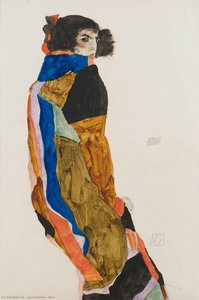
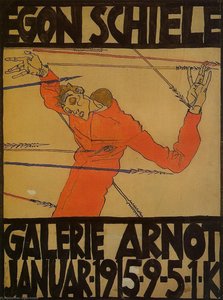
In the hauntingly beautiful Secession 49. Exhibition, Egon Schiele invites us into a moment of profound stillness amidst the social currents of 1918 Vienna. This evocative work serves as much more than a mere depiction of a café scene; it is a psychological landscape captured in monochrome. As we gaze upon the figures gathered around the dining table, we are not met with the polished elegance of traditional portraiture, but rather with an unsettling realism that defines the very essence of Expressionism. The composition breathes with a quiet tension, where every seated guest and every empty chair seems to hold a secret, contributing to a visual distillation of the anxiety and introspection that gripped the European psyche during the twilight of the Great War.
The technical mastery of Schiele is on full display through his signature linear draughtsmanship. The painting is characterized by bold, angular lines that slice through the space, creating a sense of dynamic energy that paradoxically heightens the stillness of the room. By utilizing a monochromatic palette—primarily deep, somber shades of grey—Schiele strips away the distractions of color to expose the raw, emotional marrow of the scene. This deliberate reduction of tone forces the viewer to focus on the interplay of light and shadow, the sharp contours of the figures, and the heavy atmosphere that hangs over the table like a shroud.
Symbolism and the Fragility of Existence
Beyond its formal brilliance, the painting is rich with symbolic resonance. Schiele frequently utilized scattered objects to mirror the internal state of his subjects, and here, the placement of various vases throughout the scene serves as a poignant metaphor for vulnerability. Much like the fragile porcelain they hold, the individuals in this café appear caught in a moment of precarious existence, surrounded by a world that is rapidly fracturing under the weight of political and social upheaval. The presence of everyday items—cups, bowls, and books—contrasts sharply with the underlying sense of unease, suggesting that even within the most mundane social interactions, the specter of mortality and change is ever-present.
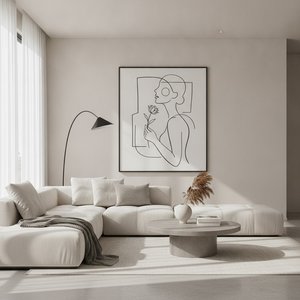
For the discerning collector or interior designer, this piece offers a sophisticated emotional depth that transcends mere decoration. It is an artwork that demands contemplation, making it a powerful centerpiece for spaces designed for reflection and intellectual engagement. A high-quality reproduction of this masterpiece allows one to bring the brooding elegance of the Vienna Secession into a modern setting, providing a focal point that is both historically significant and aesthetically arresting. To possess such a work is to hold a fragment of history—a window into a period where art dared to confront the darkest corners of the human soul with unflinching honesty.
Pytania i odpowiedzi
Co przedstawia „Secession 49. Exhibition” – Egon Schiele i jaki ma nastrój?
„Secession 49. Exhibition” – Egon Schiele łączy w sobie dining table, vienna secession, portraiture, conversation, floral arrangement, black white painting, human figure z Dramatic atmosferą.
Do którego pomieszczenia w domu najlepiej pasuje reprodukcja "Secession 49. Exhibition"?
Zalecaną przestrzenią dla „Secession 49. Exhibition” – Egon Schiele jest Restaurant. Sugestia ta może być oczywiście dostosowana do Twojego wnętrza.
W którym roku i w ramach jakiego nurtu powstało dzieło "Secession 49. Exhibition"?
„Secession 49. Exhibition” – Egon Schiele datowane jest na 1918 rok i reprezentuje nurt Expressionist Painting.
 Podgląd w skali 1:1
 Wyślij jako kartkę
 Udostępnij
 Szczegóły dzieła
 Przewodnik

 Pobierz obraz
 Podobne obiekty
 RTG
RTG Pokaz slajdów
 Q&A
Q&A Statystyki