
 Zobacz w skali 1:1
 Wyślij
 Udostępnij
 Szczegóły
 Przewodnik

 Pobierz plik obrazu
 Podobne obiekty
 RTG
RTG Pokaz slajdów
 Statystyki
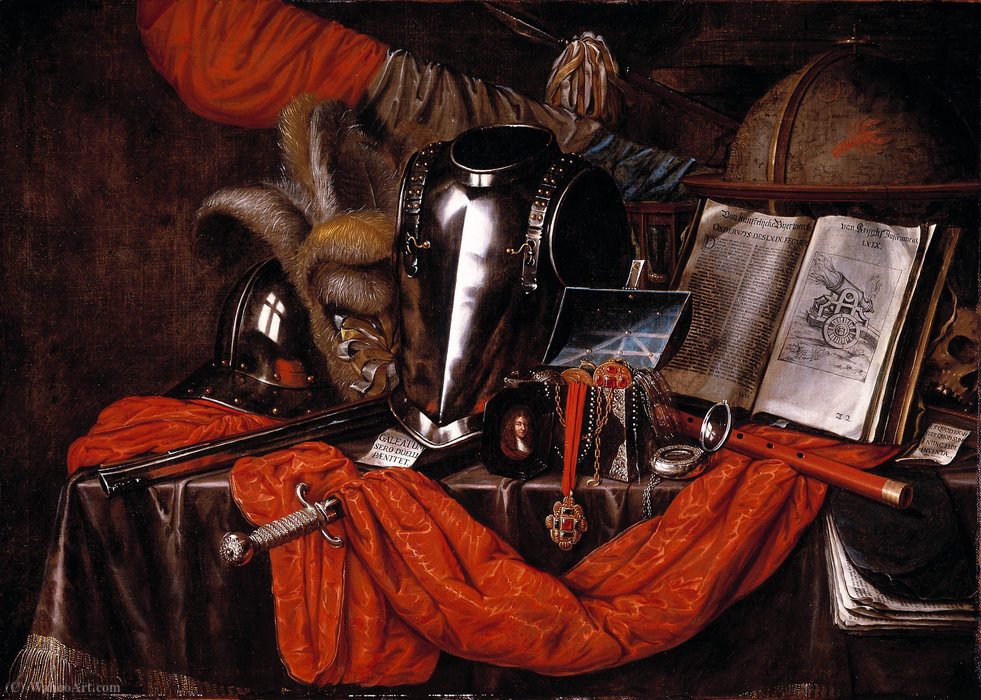
A vanitas
 Czytaj więcej
Kup wysokiej rozdzielczości, ulepszony obraz cyfrowy o jakości znacznie przewyższającej podgląd online.
Każdy plik jest starannie przygotowywany przez naszych specjalistów przy użyciu zaawansowanych narzędzi oraz profesjonalnej, ręcznej retuszy. Dbamy o to, aby każdy obraz cechował się wyjątkową ostrością, precyzyjnym odwzorowaniem kolorów i subtelnymi detalami.
Ostateczny plik dostarczany jest drogą mailową w ciągu 72 godzin, zoptymalizowany do natychmiastowego wykorzystania w profesjonalnych zastosowaniach redakcyjnych i poligraficznych. To ta sama jakość, której ufają czołowe studia projektowe, wydawnictwa oraz galerie sztuki.
Obraz cyfrowy
Pobierz plik o wysokiej rozdzielczości do osobistego użytku, druku oraz projektów kreatywnych. ( Przełącz na wersję drukowaną Kup ręcznie malowany obraz)
W każdym zamówieniu na obraz cyfrowy znajduje się
Profesjonalna dostawa cyfrowa z gwarancją
Wybierając OriginalUniqueArt.com, nie otrzymujesz jedynie obrazu – otrzymujesz profesjonalnie udoskonalone cyfrowe dzieło sztuki, stworzone z najwyższą precyzją i objęte gwarancją satysfakcji. Oto wszystko, co automatycznie dołączane jest do Twojego zamówienia:

Błyskawiczna dostawa e-mailowa
Plik z obrazem cyfrowym w wysokiej rozdzielczości zostanie przesłany na Twój adres e-mail w ciągu 72 godzin od złożenia zamówienia – gotowy do natychmiastowego użycia.

Plik cyfrowy ulepszony przez AI
Twoja grafika została profesjonalnie zoptymalizowana przy użyciu zaawansowanych narzędzi AI oraz ręcznej edycji, co zapewnia maksymalną szczegółowość, klarowność i wierność kolorów.

Bezpłatna dożywotnia ponowna dostawa
Przypadkowo usunąłeś lub zgubiłeś swój plik? Bez obaw – prześlemy go Tobie ponownie w dowolnym momencie, bez żadnych opłat.

Bez opłat importowych – zawsze
Ciesz się swoją sztuką natychmiast, bez żadnych opłat celnych, należności ani kosztów dostawy – pliki cyfrowe są zawsze wolne od podatku.

Gwarancja odwzorowania kolorów
Dzięki zastosowaniu profesjonalnych narzędzi i procesów zarządzania barwą zapewniamy, że Twoje cyfrowe zdjęcie odzwierciedla oryginalne kolory tak wiernie, jak to tylko możliwe.

100 dni na satysfakcję
Jeśli nie będziesz zadowolony ze swojego cyfrowego obrazu, poprawimy go lub zwrócimy 100% kosztów w ciągu 100 dni – bez zbędnych pytań.

100% Gwarancja zwrotu pieniędzy
Nie jesteś zadowolony? Otrzymaj pełny zwrot kosztów w ciągu 100 dni od otrzymania pliku cyfrowego – bez zbędnych pytań.

Rabaty przy zamówieniach hurtowych
Kup 3 obrazy, oszczędź 10% - Kup 5, oszczędź 15% - Kup 10+, oszczędź 20%. Idealne do projektów kreatywnych, galerii i agencji.
Biografia artysty
Edwart Collier (Evert Colyer): A Dutch Master of Mortality and Wealth
Edwart Collier, more commonly known as Evert Colyer, was a pivotal figure in 17th-century Dutch art, renowned for his poignant and meticulously detailed Vanitas still lifes. Born around 1642 in Breda, Netherlands, and tragically dying just before September 8, 1708, in Leiden, Collier’s work offers a profound meditation on the transience of life, the fleeting nature of earthly possessions, and the inevitability of death – themes deeply rooted in the philosophical currents of his time. While he initially trained under Vincent Laurensz van der Vinne in Haarlem, establishing a strong foundation in the established Dutch still-life tradition, Collier quickly developed a unique style characterized by an almost unsettling realism and a masterful manipulation of perspective to create the illusion of three-dimensionality within a two-dimensional canvas – a technique known as *trompe-l’œil*.Early Life and Artistic Training
Collier's early life remains somewhat shrouded in mystery, though it is believed he was baptized Evert Calier in Breda. His artistic education began under the tutelage of Vincent Laurensz van der Vinne, a prominent Haarlem painter whose work focused on capturing the beauty of everyday objects and domestic scenes. Van der Vinne’s influence is readily apparent in Collier's early paintings, which exhibit a similar attention to detail and a fondness for depicting still lifes of flowers, fruits, and tableware. However, Collier soon surpassed his teacher, developing a distinctive style that moved beyond mere representation towards a deeper exploration of symbolic meaning. He officially joined the Haarlem Guild of St. Luke in 1649, followed by membership in the Leiden Guild of St. Luke in 1673, marking a significant shift in his artistic career and geographic location. This move to Leiden coincided with a period of intense personal reflection and creative experimentation, culminating in the development of his signature *trompe-l’œil* technique.The Rise of Vanitas Painting
Collier's most enduring legacy lies in his masterful execution of Vanitas still lifes – a genre that gained prominence during the 17th century and became particularly associated with Dutch art. Vanitas, derived from the Portuguese word *vanitas vanitatum et omnia vanita* ("the vanity of vanities and all vanities"), served as a visual reminder of mortality and the futility of worldly pursuits. Collier’s paintings are not simply arrangements of objects; they are carefully constructed allegories designed to provoke contemplation on the ephemeral nature of existence. He skillfully combined seemingly disparate items – skulls, decaying fruit, extinguished candles, hourglasses, books, musical instruments, and coins – each laden with symbolic weight. A skull represented death, a wilting flower symbolized decay, an hourglass indicated the passage of time, and a closed book alluded to unfulfilled knowledge. These objects were not presented in a morbid or depressing manner, but rather arranged with a striking elegance and precision, highlighting their beauty alongside their inherent transience.Technique and Innovation: The Art of *Trompe-l’œil*
What truly distinguishes Collier's work is his innovative use of *trompe-l’œil*, or “fool the eye,” a technique that creates the illusion of three-dimensionality on a two-dimensional surface. He achieved this through meticulous attention to detail, precise perspective, and an understanding of light and shadow. Objects appeared to spill off the canvas, seemingly floating in space – a letter rack overflowing with documents, a collection of books stacked precariously high, or a smoking pipe resting on a table. This technique wasn’t merely decorative; it served to heighten the sense of realism and immediacy within his paintings, drawing the viewer into the scene and emphasizing the tangible nature of the objects depicted. Collier's mastery of *trompe-l’œil* set him apart from his contemporaries and established him as a pioneer in Dutch still-life painting.Legacy and Historical Significance
Evert Collier’s influence on subsequent generations of artists is considerable. His work served as a powerful commentary on the values and anxieties of 17th-century society, reflecting a growing awareness of mortality and the limitations of human ambition. His paintings continue to resonate with viewers today, offering a timeless meditation on the themes of life, death, and the pursuit of meaning. Major museums worldwide – including the Denver Art Museum, the Honolulu Museum of Art, the Indianapolis Museum of Art, the National Portrait Gallery (United Kingdom), the Rijksmuseum (Amsterdam), and the Art Institute of Chicago – house significant examples of his oeuvre, ensuring that his artistic legacy endures for centuries to come. Dror Wahrman’s book, *Mr. Collier's Letter Racks*, provides a comprehensive exploration of this artist’s unique contribution to the world of still-life painting, solidifying his place as a master of both symbolism and technique.
edwart collier (evert colyer)
1640 - 1708