

 Zobacz w skali 1:1
 Wyślij
 Udostępnij
 Szczegóły
 Przewodnik

 Pobierz plik obrazu
 Podobne obiekty
 RTG
RTG Pokaz slajdów
 Statystyki
Quarries of Syracuse
 Acrylic On Canvas
- WallArt
- Romanticism
 1847
1847 35.0 x 50.0 cm
 Narodowe Muzea Liverpool
 Czytaj więcej
Ręcznie malowana reprodukcja olejowa
Ręcznie malowany obraz olejny na płótnie, wykonany na zamówienie przez naszych artystów w wybranym przez Ciebie wymiarze i oprawie. ( Przełącz na wersję drukowaną Przełącz na wersję cyfrową)




P118B zł10

P118H zł10

P118W zł10

P438Z zł10

P508JH zł12

P508YH zł12

P805H zł10

P805Z zł10

P919BZ zł10

P919G zł10

P919XJ zł10

P959ZH zł10

P968JZ zł12

W106C zł8

W218G zł10

W218JH zł8

W218Y zł10

W307PJ zł10

W316G zł10

W316PJ zł8

W316Y zł10

W398PJ zł8

W4111J zł10

W500HY zł15

W500JH zł15

W692G zł12

W849H zł8

W940BG zł15

W953PJ zł8




Wybierz spośród naszych standardowych rozmiarów, które zachowują oryginalne proporcje dzieła sztuki.

Wpisz wymaganą szerokość i wysokość, aby obraz pasował do Twojej ramy lub ściany. Ponieważ jest to dzieło malowane ręcznie, w przypadku rozmiaru o innym proporcji artysta może domalować nieco więcej wokół obrazu lub przyciąć fragmenty — wybór należy do Ciebie. Przed rozpoczęciem pracy prześlemy Ci cyfrową wizualizację do zatwierdzenia. Obraz widoczny na tej stronie nie przedstawia rzeczywistego efektu — jedynie wizualizacja oddaje realny rezultat.
Po złożeniu zamówienia zespół OriginalUniqueArt.com skontaktuje się z klientem drogą mailową w celu uzyskania instrukcji i prześle wizualizację projektu
Dostawa na całym świecie () w ciągu 3–4 tygodni zamiast standardowych 5 tygodni. (23 Październik). Bez kompromisów w kwestii jakości.

Bezpłatna ekspresowa wysyłka na cały świat

Wysokiej jakości płótno lniane

Pełne ubezpieczenie transportowe

Gwarancja zwrotu należności celnych i podatków importowych

Gwarancja idealnego odwzorowania barw

100-dniowy okres na zwrot dzieła w przypadku wykrycia wad produkcyjnych

Gwarancja 100% zwrotu pieniędzy

Oferta przy zakupie wielu sztuk
 Opcja ze szkłem jest dostępna wyłącznie w rozmiarach poniżej 110 cm

Quarries of Syracuse
Technika wykonania
Rozmiar reprodukcji
-


Suma do zapłaty
zł 1155
The Quarries of Syracuse – A Romantic Vision of Sicilian Majesty
Edward Lear’s “Quarries of Syracuse” (1847) stands as a testament to the Romantic movement's fascination with untamed landscapes and sublime beauty—a captivating watercolor capturing the rugged grandeur of Sicily’s coastline. Executed during his travels from Rome to Europe, this sketch reveals Lear’s keen observation skills and artistic ambition, foreshadowing his later mastery of fantastical illustration alongside more grounded landscape painting. The artwork embodies a spirit of contemplative wonder, reflecting Lear's personal inclination towards solitude and introspection—qualities powerfully conveyed through its visual language.- Subject Matter: The scene depicts a dramatic vista dominated by towering cliffs plunging into the turquoise Mediterranean Sea. A distant horizon line adds to the expansive scale of the composition, emphasizing the immensity of nature’s power.
- Style & Technique: Lear employed watercolor wash—a technique prioritizing diffused color and atmospheric perspective—to achieve an ethereal quality. Loose brushstrokes contribute texture and movement, particularly noticeable in the turbulent sea foam and weathered rock surfaces.
- Composition: A prominent diagonal line created by the cliff face draws the viewer’s eye into the depth of the landscape, reinforcing the sense of grandeur and conveying a dynamic energy.
- Color Palette: Predominantly blues—ranging from deep indigo to pale azure—dominate the sky and sea, harmoniously juxtaposed with earthy browns and grays representing the cliffs and rock formations.
Historical Context & Romantic Ideals
Lear’s journey through Sicily coincided with a burgeoning interest in geological exploration and scientific observation during the Romantic era. Artists like Lear sought to depict nature not merely as decorative splendor but as an embodiment of divine power and sublime terror—themes central to Romantic philosophy. “Quarries of Syracuse” reflects this intellectual fervor, presenting a landscape imbued with symbolic significance: The cliffs symbolize resilience and permanence against the forces of time and erosion, mirroring the Romantic preoccupation with confronting mortality and embracing the beauty of decay.Symbolism & Emotional Resonance
Beyond its formal elements, “Quarries of Syracuse” resonates with profound emotional depth. The solitary figure implied by Lear’s sketch—a subtle suggestion of human presence amidst overwhelming natural grandeur—evokes feelings of contemplation and awe. The muted palette contributes to a melancholic mood, hinting at the fleeting nature of beauty and prompting reflection on our relationship with the environment. It's a piece that invites viewers to pause and appreciate the sublime power of untouched wilderness.Detailed Analysis: Watercolor Wash & Atmospheric Perspective
Lear’s masterful use of watercolor wash is particularly noteworthy. Applying thin layers of pigment over wet paper creates a luminous effect, capturing the subtle nuances of light and shadow—a technique favored by Romantic painters to convey atmospheric depth. The careful blending of colors achieves remarkable textural variation, simulating the weathered appearance of the cliffs and the shimmering surface of the sea. This meticulous attention to detail underscores Lear’s commitment to faithfully representing the natural world with artistic precision.Pytania i odpowiedzi
Jaki nastrój ma "Quarries of Syracuse"?
"Quarries of Syracuse" ma Romantic atmosferę.
W jakiej technice wykonano "Quarries of Syracuse" i jakie są jego wymiary?
"Quarries of Syracuse" powstało przy użyciu Acrylic On Canvas i w swojej oryginalnej formie ma wymiary 35 x 50 cm.
Jaką tematykę i atmosferę łączy „Quarries of Syracuse” autorstwa Edward Lear?
„Quarries of Syracuse” autorstwa Edward Lear łączy w sobie landscape, sicily, cliffs, horizon, nature, grandeur, sketch, watercolor z Romantic atmosferą.
Biografia artysty
A Life Painted in Nonsense and Light
Edward Lear, a name inextricably linked with whimsical verse and delightfully peculiar illustrations, was far more than simply the creator of limericks and fantastical creatures. Born in 1812 in Holloway, North London, into a family numbering an astonishing twenty-one children – six of whom tragically succumbed to illness – his early life was shaped by both profound financial instability and a remarkably nascent artistic talent. His father, Jeremiah Lear, faced considerable hardship following the Napoleonic Wars, forcing young Edward to begin earning a living through his drawings at the tender age of fifteen. This early necessity, however, ignited a lifelong passion that would propel him across continents, capturing the world in vibrant hues and playfully inventive lines. The shadow of familial difficulty – compounded by recurring health challenges including epilepsy and periods of melancholic introspection he termed “the Morbids” – instilled within Lear a gentle sense of solitude and an innate inclination towards imaginative escape; qualities that are profoundly reflected throughout his art and writing.From Ornithological Precision to Landscape’s Embrace
Lear's artistic journey commenced with a remarkable degree of technical precision. Initially employed by the Zoological Society, he honed his skills meticulously illustrating birds and animals, demonstrating an exceptional eye for detail and anatomical accuracy. This early work garnered considerable attention, ultimately leading to a commission from Edward Stanley, the 13th Earl of Derby, who tasked Lear with documenting the exotic creatures residing within his private menagerie at Knowsley Hall. These formative years spent amongst lions, tigers, and parrots not only refined his draftsmanship but also fostered an enduring connection with the natural world – a bond that would become a defining characteristic of his later landscape paintings. However, increasingly debilitating eyesight and respiratory issues eventually compelled him to relinquish the exacting demands of ornithological illustration. He subsequently turned his attention to landscape painting, embarking on extensive travels throughout Europe and beyond. Italy, in particular, offered a welcome respite for his health while simultaneously providing an abundance of inspiring vistas – from the rolling hills of Tuscany to the dramatic cliffs of the Amalfi Coast. His landscapes are characterized by a unique blend of topographical accuracy and atmospheric sensitivity; he masterfully employed delicate watercolors to capture the subtle nuances of light and shadow, creating images that possess both realism and a dreamlike quality.The Poet of Nonsense: A World Unbound
While celebrated primarily as a painter, it is perhaps for his literary contributions that Edward Lear has achieved enduring recognition. His “nonsense” poetry – particularly his limericks – revolutionized children’s literature and captivated audiences across generations. *A Book of Nonsense*, published in 1846 under the pseudonym "Derry down Derry," introduced a world populated by owls and pussycats sailing in pea-green boats, dongs with luminous noses, and other delightfully absurd creations. These verses weren’t merely frivolous; they were imbued with a subtle melancholy and a playful subversion of conventional logic. Lear didn't simply invent nonsensical words; he crafted entire worlds governed by their own internal rules, inviting readers to suspend disbelief and embrace the joy of imaginative exploration. *The Owl and the Pussy-Cat*, arguably his most famous poem, remains a beloved classic, its enduring appeal stemming from its lyrical rhythm and evocative imagery. The poem’s gentle humor and poignant reflection on companionship continue to resonate with readers of all ages. Lear's limericks often explored themes of loneliness, longing, and the inherent absurdity of existence – subjects he addressed with a surprising degree of emotional depth, skillfully concealed beneath a veneer of whimsicality.Influences and Artistic Development
- Early Influences: Lear’s initial artistic training was rooted in scientific illustration, demanding an unwavering commitment to precision and observation. This foundational experience shaped his meticulous approach to detail, even as he later embraced more expressive styles in his landscapes.
- Travel & Landscape Painting: His extensive travels throughout Europe – including Italy, Greece, Egypt, and beyond – profoundly influenced his artistic vision. He absorbed the light, colors, and textures of these diverse regions, developing a distinctive style characterized by atmospheric perspective and delicate brushwork.
- Literary Inspiration: While he popularized the limerick form, Lear was also inspired by earlier traditions of nonsense verse. His unique contribution lay in his ability to imbue this form with emotional depth and lyrical beauty.
- Personal Experiences: Lear’s lifelong struggles with health issues and periods of melancholy deeply informed his artistic perspective. The sense of isolation and longing that permeates much of his work reflects his own personal experiences.
A Legacy of Innovation and Enduring Charm
Edward Lear's influence extends far beyond the realm of children's literature. He pioneered a new form of poetic expression, liberating verse from rigid structures and embracing playful experimentation. His landscapes, though often overshadowed by his poetry, demonstrate a keen artistic sensibility and a mastery of watercolor technique. He was a true polymath – artist, illustrator, musician (he composed musical settings for Tennyson’s poems), author, and poet – whose diverse talents converged to create a unique and enduring legacy. He challenged conventional boundaries, blurring the lines between art, literature, and music. His work continues to inspire artists, writers, and dreamers alike, reminding us of the power of imagination and the beauty of embracing the absurd. His paintings can be found in esteemed collections such as The Ashmolean Museum in Oxford, a testament to his skill as a landscape artist. Lear’s life, marked by both personal struggles and creative triumphs, serves as a poignant reminder that even amidst darkness, there is always room for light, laughter, and the boundless possibilities of the human spirit.
Edward Lear
1812 - 1888 , Wielka Brytania
Najważniejsze informacje
- Artistic Movement Or Style: Nonsens, Viktoriański
- Date Of Birth: 12 maja 1812
- Date Of Death: 29 stycznia 1888
- Full Name: Edward Lear
- Nationality: Brytyjski
- Notable Artworks:
- Owca i kota
- Duch z latarnią
- Krajobrazy
- Place Of Birth: Londyn, UK
Zobacz także powiązane artykuły

Efemeryczne Wizje: Historia i Współczesna Praktyka Malarstwa Akwarelowego
Poznaj historię i techniki malarstwa akwarelowego! Odkryj inspiracje mistrzów, współczesne trendy oraz praktyczne porady dotyczące materiałów. Rozwiń swoją pasję z naszym przewodnikiem.
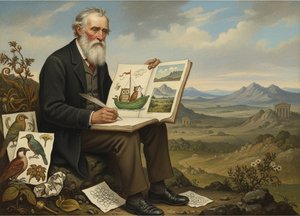
Edward Lear: A Life Beyond Nonsense – Landscape, Illustration & the Poetics of Isolation
Explore the life of Edward Lear beyond his nonsense poems. Discover his stunning landscape paintings, travel illustrations & the poignant themes of isolation in this expert art history analysis.

10 Legendarnych Akwareli, Które Zmieniły Sztukę. Inspiracje do Dekoracji Domu.
Odkryj 10 legendarnych akwareli Turner'a, Monet'a i innych mistrzów! Poznaj historie, techniki i inspiracje tych ponadczasowych dzieł. Reprodukcje obrazów najwyższej jakości na OriginalUniqueArt.com – idealne do dekoracji wnętrz.

Romantyczny Krajobraz w Malarstwie: 10 Arcydzieł, Które Zdefiniowały Epokę | OriginalUniqueArt.com
Odkryj 10 arcydzieł romantyzmu w malarstwie! Poznaj historie Caspara Davida Friedricha, Turnera i innych mistrzów. Inspiracje wnętrzarskie & reprodukcje obrazów najwyższej jakości na OriginalUniqueArt.com. Eksploruj kolekcję online!
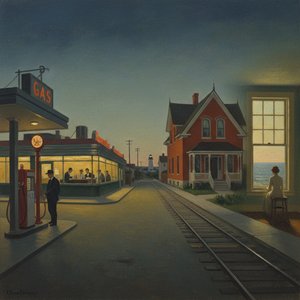
Edward Hopper: 25 Arcydzieł Malarstwa Pełnych Emocji i Amerykańskiej Duszy | OriginalUniqueArt.com
Odkryj 25 arcydzieł Edwarda Hoppera – malarstwa pełnych samotności, realizmu i amerykańskiej duszy. Poznaj historie kultowych obrazów, inspiracje wnętrzarskie i wyjątkową atmosferę jego dzieł. Reprodukcje najwyższej jakości na OriginalUniqueArt.com
