Opposite Calvi (Edward Lear)
Edward Lear (1812–1888) stworzył Opposite Calvi.

 Podgląd w skali 1:1

 Ręcznie malowany obraz olejny
 Wyślij jako kartkę
 Udostępnij
 Karta informacyjna


 Pobierz obraz
 Podobne obiekty
 RTG
 Pokaz slajdów
 Pytania i odpowiedzi

 Statystyki
Opposite Calvi w skrócie
- Tytuł
- Opposite Calvi
- Artysta
- Edward Lear (1812–1888)
- Miejsce urodzenia artysty
- Highgate, Wielka Brytania
- Temat
- rivers
Zdjęcia w wysokiej rozdzielczości dzieła Opposite Calvi
Domena publiczna: artysta zmarł w 1888.
Edward Lear, Opposite Calvi. Domena publiczna
Odpowiedzi na pytania dotyczące Opposite Calvi
Co przedstawia "Opposite Calvi"?
„Opposite Calvi” – Edward Lear przedstawia: rivers.
Czy „Opposite Calvi” – Edward Lear znajduje się w domenie publicznej?
„Opposite Calvi” – Edward Lear znajduje się w domenie publicznej (należy do domeny publicznej – autorskie prawa majątkowe wygasły). Status ten określa zasady reprodukcji obrazu tego dzieła.
Któremu artyście przypisuje się "Opposite Calvi"?
Autorem dzieła „Opposite Calvi” jest Edward Lear. Praca ta figuruje w katalogu pod nazwiskiem Edward Lear.
Z czego wynika obecny status praw autorskich dzieła "Opposite Calvi"?
„Opposite Calvi” – Edward Lear jest należy do domeny publicznej – autorskie prawa majątkowe wygasły. Okres ochrony praw autorskich liczony jest od śmierci artysty, która nastąpiła w 1888.
O artyście: Edward Lear

1812–1888, Wielka Brytania
Edward Lear
A Life Painted in Nonsense and Light Edward Lear, a name inextricably linked with whimsical verse and delightfully peculiar illustrations, was far more than simply the creator of limericks and fantastical creatures. Born in 1812 in Holloway, North London, into a family numbering an astonishing twenty-one children – six of whom tragically succumbed to illness – his early life was shaped by both profound financial instability and a remarkably nascent artistic talent. His father, Jeremiah Lear, faced considerable hardship following the Napoleonic Wars, forcing young Edward to begin earning a living through his drawings at the tender age of fifteen. This early necessity, however, ignited a lifelong passion that would propel him across continents, capturing the world in vibrant hues and playfully inventive lines.
Inne prace Edward Lear
 Cogoleto, Italy
 Crescenza
 Blue And Yellow Macaw
 View of Taormina in Sicily with Etna in the distance1852
Eseje o Opposite Calvi
 Mastering Antiquity: The Top 25 Greatest Artworks by Andrea MantegnaJourney through the Renaissance with our curated guide to the top 25 Andrea Mantegna masterpieces. Explore his mastery of perspective, clas…
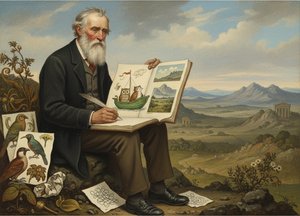 Edward Lear: A Life Beyond Nonsense – Landscape, Illustration & the Poetics of IsolationExplore the life of Edward Lear beyond his nonsense poems. Discover his stunning landscape paintings, travel illustrations & the poignant t…
 Płynące Narracje: Rzeki w Malarstwie – Historyczna Eksploracja Symboliki i EmocjiOdkryj fascynującą historię rzek w malarstwie! Eksplorujemy symbolikę, emocje i techniki artystyczne od starożytności po współczesność. Prz…