
 Zobacz w skali 1:1
 Wyślij
 Udostępnij
 Szczegóły
 Przewodnik

 Pobierz plik obrazu
 Podobne obiekty
 RTG
RTG Pokaz slajdów
 Statystyki
Tryptyk
 Akryl na płótnie
- Sztuka ścienna
- Wczesny renesans
 1305
1305- Renesans
 44.0 x 31.0 cm
 Royal Collection
 Czytaj więcej
Giclée / Wydruk artystyczny
Wydruki giclée lub płótna o jakości muzealnej, szybka realizacja i szeroki wybór opcji wykończenia. ( Kup ręcznie malowany obraz Przełącz na wersję cyfrową)




P118B zł10

P118H zł10

P118W zł10

P438Z zł10

P508JH zł12

P508YH zł12

P805H zł10

P805Z zł10

P919BZ zł10

P919G zł10

P919XJ zł10

P959ZH zł10

P968JZ zł12

W106C zł8

W218G zł10

W218JH zł8

W218Y zł10

W307PJ zł10

W316G zł10

W316PJ zł8

W316Y zł10

W398PJ zł8

W4111J zł10

W500HY zł15

W500JH zł15

W692G zł12

W849H zł8

W940BG zł15

W953PJ zł8




Wybierz spośród naszych standardowych rozmiarów, które zachowują oryginalne proporcje dzieła sztuki.

Możesz wprowadzić własne wymiary, aby dopasować dzieło do konkretnej ramy lub przestrzeni. Jeśli wybrany rozmiar nie będzie odpowiadał proporcjom oryginalnego obrazu, przytniecie dzieło lub rozszerzymy obraz za pomocą odbicia lustrzanego lub jednolitego wypełnienia krawędzi. Przed rozpoczęciem produkcji prześlemy cyfrową wizualizację do Twojej akceptacji.
Prosimy pamiętać, że podgląd na ekranie nie odzwierciedla faktycznego przycinania ani rozszerzania. Tylko wizualizacja dokładnie pokaże końcową kompozycję.
Mimo dostępności niestandardowych rozmiarów, zalecamy wybór wymiaru z listy zdefiniowanej, aby zachować oryginalne proporcje.
Dostawa na cały świat () w ciągu 2 tygodni zamiast standardowych 4/5 tygodni. (10 Październik)

Bezpłatna ekspresowa wysyłka na cały świat

Wysokiej jakości płótno lniane

Pełne ubezpieczenie transportowe

Gwarancja zwrotu należności celnych i podatków importowych

Gwarancja idealnego odwzorowania barw

100-dniowy okres na zwrot dzieła w przypadku wykrycia wad produkcyjnych

Gwarancja 100% zwrotu pieniędzy

Oferta przy zakupie wielu sztuk
 Opcja ze szkłem jest dostępna wyłącznie w rozmiarach poniżej 110 cm

Tryptyk
Giclée / Wydruk artystyczny
Rozmiar reprodukcji
-


Suma do zapłaty
zł 298
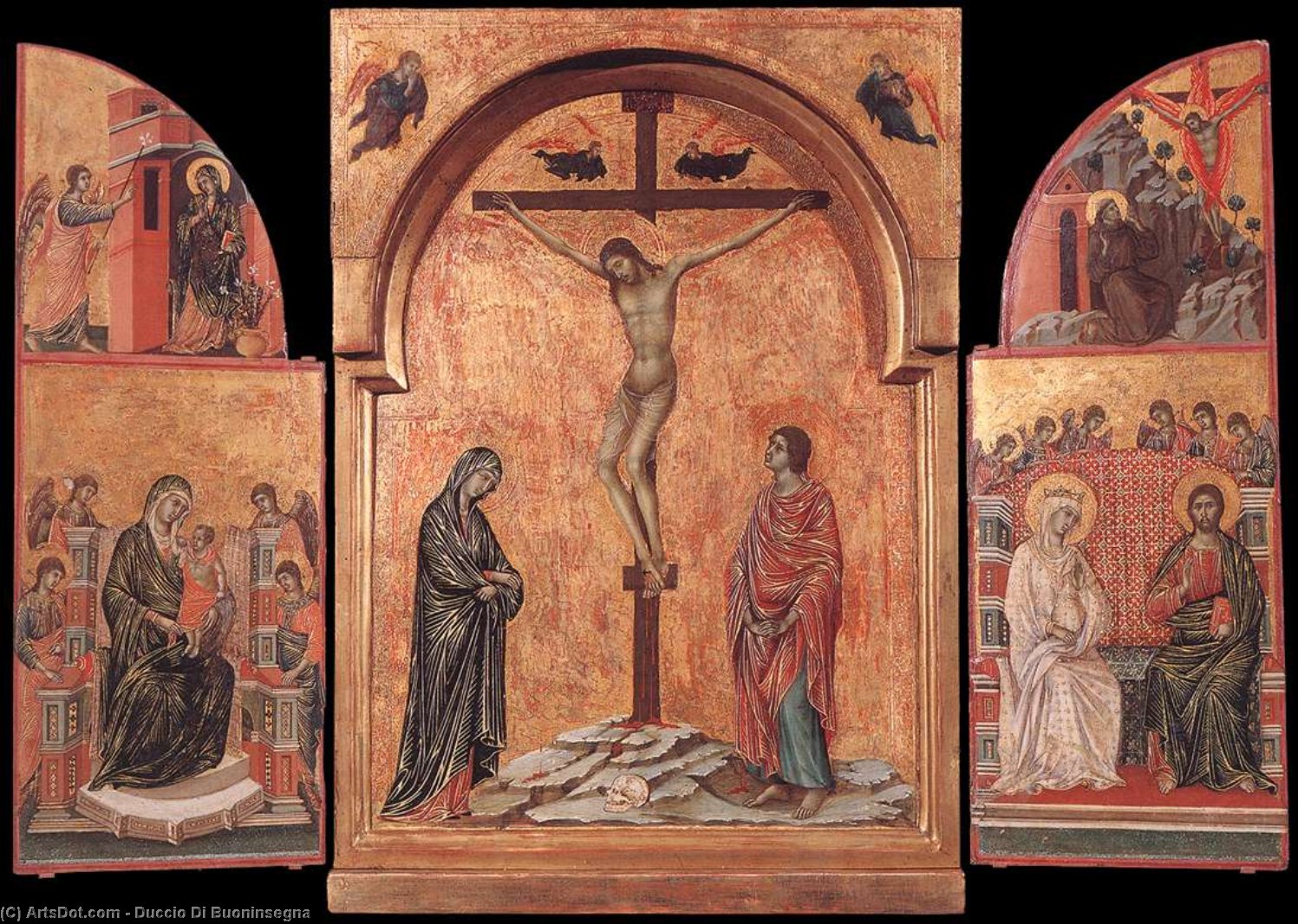
Spojrzenie w Bożą Cierpkość: Tryptyk Duccia (1305)
Ten zachwycający tryptyk, stworzony w 1305 roku przez mistrza z Sieny, *Duccia di Buoninsegnę*, stanowi głęboką medytację nad Męką Chrystusa. Ten pobożny panel o wymiarach 44 x 31 cm jest doskonałym przykładem przejścia od bizantyjskich tradycji artystycznych do rodzącego się w Italii stylu renesansowego.Tematyka i Narracja
Tryptyk rozwija się niczym wizualna opowieść rozpięta na trzech połączonych zawiasami panelach. Centralnym punktem jest bez wątpienia *Ukrzyżowanie*, przedstawiające Chrystusa na krzyżu, w otoczeniu udręczonej Matki Bożej oraz św. Jana Ewangelisty. Po lewej stronie anioł przekazuje boską wiadomość – być może zapowiadając los Chrystusa – na tle stylizowanej architektury. Na prawym panelu stajemy się świadkami *Koronacji Chrystusa w Niebie*, będącej pełną nadziei wizją odkupienia i wiecznej chwały. Kompozycja ta z niezwykłą starannością prowadzi widza przez kluczowe momenty ofiary i zbawienia.Styl i Technika: Fuzja Światów
Styl Duccia charakteryzuje się urzekającym połączeniem bizantyjskiej formalności z rodzącym się renesansowym naturalizmem. Choć artysta zachowuje ikoniczne tła ze złotego płatków oraz spłaszczoną perspektywę typową dla sztuki średniowiecznej, wprowadza subtelne modelowanie i delikatne detale, które nadają postaciom większej głębi emocjonalnej. Zastosowana technika, będąca temperą lub olejem na drewnianym panelu, pozwala na uzyskanie precyzyjnych linii i bogatego nasycenia barw. Warto zwrócić uwagę na dominujące, proste i geometryczne linie definiujące elementy architektoniczne – co stanowiło znak rozpoznawczy tej epoki.Symbolika i Ikonografia
Każdy element w tym tryptyku niesie ze sobą ciężar symboliczny. Sam krzyż reprezentuje ostateczną ofiarę i odkupienie. Postać *Maryi* ucieleśnia żal, wiarę oraz matczyną boleść, podczas gdy *Jan Ewangelista* służy jako świadek męki Chrystusa. Scena niebiańskiej koronacji oznacza boskie zwycięstwo nad śmiercią. Szerokie zastosowanie płatków złota nie jest jedynie zabiegiem dekoracyjnym; symbolizuje ono boskość, światłość oraz duchową transcendencję.Kontekst Historyczny: Siena i Trecento
Duccio di Buoninsegna (1255–1319) był kluczową postacią w malarstwie sienieńskim podczas okresu *Trecento* (XIV wiek). Siena, jako niezależna republika i rywalka Florencji, wypracowała własny, odrębny styl artystyczny. Dzieło Duccia ucieleśnia tę unikalną estetykę – charakteryzującą się elegancją, wyrafinowanym detalem i głęboką wrażliwością duchową. Artysta cieszył się ogromnym uznaniem i był poszukiwany do realizacji zleceń w całej Italii, co ugruntowało jego pozycję jako jednego z najważniejszych twórców swoich czasów.Oddziaływanie Emocjonalne i Interpretacja
Tryptyk ten wywołuje potężne poczucie czci, smutku i nadziei. Dramatyczne oświetlenie, skupione szczególnie na centralnej scenie ukrzyżowania, potęguje siłę emocjonalnego przekazu. Choć Duccio trzyma się ustalonych kanonów ikonografii religijnej, tchnie w swoje postaci ludzką jakość, która zaprasza do empatii i kontemplacji. Dzieło to służy nie tylko jako przedstawienie wydarzeń biblijnych, ale także jako głęboko osobista ekspresja wiary i oddania.Kolekcjonerstwo i Projektowanie Wnętrz
Reprodukcja tego tryptyku byłaby zachwycającym dodatkiem do każdej kolekcji sztuki lub przestrzeni wnętrza. Jego bogate barwy, misterne detale i głęboka tematyka doskonale komponują się zarówno z aranżacjami tradycyjnymi, jak i współczesnymi. Rozważenie wyeksponowania go w miejscu modlitwy, bibliotece czy jako centralny punkt salonu – jego ponadczasowe piękno z pewnością stanie się źródłem refleksji i inspiracji do rozmów.Pytania i odpowiedzi
W jaki sposób kontrast i harmonia łączą się w "Tryptyk"?
Analiza kolorystyczna dzieła „Tryptyk” autorstwa Duccio di Buoninsegna rejestruje Wyrazisty kontrast oraz Spójna paleta barw harmonię.
Gdzie mogę zobaczyć oryginał „Tryptyk” autorstwa Duccio di Buoninsegna?
Oryginał dzieła „Tryptyk” autorstwa Duccio di Buoninsegna znajduje się w Royal Collection, Windsor, Wielka Brytania. Reprodukcja pozwala na eksponowanie pracy w domu.
W jakim wieku Duccio di Buoninsegna stworzył(a) "Tryptyk"?
Duccio di Buoninsegna stworzył/a "Tryptyk" w wieku 50 lat. Artysta urodził/a się w 1255, a datowanie dzieła to 1305.
Jakiej kolorystyki używa "Tryptyk"?
Paleta dzieła „Tryptyk” autorstwa Duccio di Buoninsegna jest opisywana jako Barwy ziemi. Stanowi ona zwięzłe zestawienie barw użytych w pracy.
Jaka jest data powstania dzieła „Tryptyk” autorstwa Duccio di Buoninsegna?
Powstanie „Tryptyk” autorstwa Duccio di Buoninsegna datuje się na 1305.
W stronę jakiej tonacji skłania się "Tryptyk"?
„Tryptyk” skłania się ku Od bursztynu po szafran tonacji.
Kto jest autorem dzieła "Tryptyk"?
„Tryptyk” zostało stworzone przez Duccio di Buoninsegna. Informacje na tej stronie opisują oryginalne dzieło autorstwa Duccio di Buoninsegna.
Biografia artysty
The Sienese Luminary: Duccio di Buoninsegna and the Dawn of a New Italian Vision
Duccio di Buoninsegna, born in Siena around 1255, stands as a pivotal figure bridging the stylistic chasm between the Byzantine world and the burgeoning artistic sensibilities of Italy. While biographical details remain frustratingly scarce—the man himself often obscured by the brilliance of his art—his impact on the Sienese School and the trajectory of Italian painting is undeniable. He emerged during a period where religious iconography was deeply entrenched, yet a yearning for greater naturalism and emotional resonance was beginning to stir within artistic circles. Duccio wasn’t merely a painter; he was an innovator who dared to infuse sacred narratives with human feeling, subtly shifting the focus from rigid formality towards a more intimate connection between the divine and the earthly realm. His early training remains somewhat mysterious, though speculation suggests possible influences ranging from Florentine masters to direct exposure to Byzantine artistry—perhaps even travels to Constantinople itself. Whatever his formative experiences, they coalesced into a unique style that would define an era.
A Synthesis of Tradition and Innovation
Duccio’s artistic development wasn't a sudden rupture with the past but rather a graceful evolution. His initial works were deeply rooted in Byzantine conventions: the lavish use of gold leaf to evoke celestial light, stylized figures possessing an ethereal quality, and a meticulous attention to religious symbolism. However, even within these established parameters, Duccio began to subtly introduce elements that foreshadowed his later innovations. He experimented with spatial arrangements, hinting at depth where flatness had previously reigned supreme. His color palettes, while still vibrant, gained a newfound subtlety and harmony. More importantly, he started imbuing his figures with a nascent sense of humanity—a gentle curve of the mouth suggesting a smile, a slight tilt of the head conveying contemplation. This wasn’t a rejection of Byzantine ideals but a refinement, an infusion of life into what had often been static representations. He skillfully blended tradition and innovation, creating a style that was both reverent and remarkably fresh.
Masterpieces of Faith and Artistry
Two works stand as testaments to Duccio’s genius: the *Rucellai Madonna* (1285) and, most famously, the *Maestà* (1308-1311). The *Rucellai Madonna*, commissioned for a chapel in Florence, marked a significant departure from conventional Byzantine iconography. Its composition, while still adhering to traditional forms, displayed a greater sense of spatial organization and a more naturalistic depiction of the Virgin Mary and Child. But it was the *Maestà*—a monumental altarpiece created for Siena Cathedral—that truly cemented Duccio’s legacy. This sprawling masterpiece comprises numerous panels depicting scenes from the life of the Virgin Mary and Christ, each one a miniature work of art in itself. The Maestà is not merely a collection of paintings; it's a visual narrative, unfolding with breathtaking detail and emotional depth. Duccio’s mastery of light and shadow, his ability to convey complex emotions through subtle gestures, and his innovative use of perspective all converge in this single, awe-inspiring work. Beyond these monumental pieces, works like *Polyptych No. 28* demonstrate his continued compositional skill and meticulous attention to detail.
Influences and Artistic Development
Duccio’s artistic journey was shaped by a complex interplay of influences. While undeniably rooted in Byzantine tradition—particularly the luminosity and stylized figures characteristic of that era—he also absorbed elements from contemporary Italian art, most notably the naturalism and emotional intensity of Florentine painting. The influence of Simone Martini, a prominent Sienese artist, is often noted, as is the impact of Giotto’s emerging realism. Some scholars even speculate about Duccio's travels to Paris or Constantinople, where he may have encountered new artistic techniques and ideas. His early works demonstrate a clear adherence to Byzantine conventions—a preference for gold leaf, hierarchical compositions, and symbolic imagery. However, as his career progressed, he gradually moved towards a more naturalistic style, incorporating elements of perspective and human emotion into his paintings. This evolution reflects the broader shift in Italian art during the 14th century, away from the rigid formality of Byzantium and towards a more expressive and individualized approach.
A Lasting Legacy: Shaping the Future of Italian Art
Duccio di Buoninsegna’s influence extended far beyond his lifetime. He revolutionized Italian painting, paving the way for the development of the Sienese School—a distinct artistic tradition characterized by its elegance, refinement, and emotional intensity. His emphasis on naturalism, spatial depth, and human emotion directly impacted subsequent generations of artists, influencing not only those within Siena but also painters in Florence and beyond. While Giotto is often credited with initiating the Renaissance style, Duccio’s contributions were equally crucial, laying the groundwork for the artistic innovations that would define the 14th century and beyond. Despite facing financial hardships during his life, Duccio’s artistic legacy endures. His masterpieces continue to inspire awe and admiration, serving as a powerful reminder of the transformative power of art. He helped define the Trecento art movement, leaving an indelible mark on the history of Western painting.

Duccio di Buoninsegna
1255 - 1319 , Włochy
Najważniejsze informacje
- Artistic Movement Or Style: Gotyk sienński, Sienese School
- Artists Or Movements Influenced By This Artist:
- Sienese School
- Włoski gotyk
- Artists Who Influenced This Artist: ['Sztuka bizantyjska']
- Date Of Birth: c. 1255
- Date Of Death: 1319
- Full Name: Duccio di Buoninsegna
- Nationality: Włoski
- Notable Artworks:
- Maestà
- Rucellai Madonna
- Place Of Birth: Siena, Italia
Zobacz także powiązane artykuły
Fra Angelico: 25 Arcydzieł Sztuki Włoskiego Renesansu | Reprodukcje Obrazów Online
Odkryj 25 arcydzieł Fra Angelico – mistrza renesansu włoskiego! Poznaj historię, techniki i piękno jego fresków oraz obrazów religijnych. Reprodukcje najwyższej jakości na OriginalUniqueArt.com. Eksploruj kolekcję online!
Giotto di Bondone: 25 Arcydzieł Sztuki Niezmieniających Historii | OriginalUniqueArt.com
Odkryj 25 arcydzieł Giotta di Bondone – renesansowego mistrza fresków. Poznaj historię, techniki i emocje w jego najsłynniejszych dziełach. Reprodukcje obrazów najwyższej jakości na OriginalUniqueArt.com. Eksploruj pełną kolekcję online!
Proto-Renensans: 10 Arcydzieł, Które Zdefiniowały Sztukę – OriginalUniqueArt.com
Odkryj 10 arcydzieł proto-renesansu! Poznaj historię Giotta, Cimabue i innych mistrzów. OriginalUniqueArt.com oferuje reprodukcje obrazów najwyższej jakości – idealne do Twojego wnętrza. Eksploruj pełną kolekcję online!
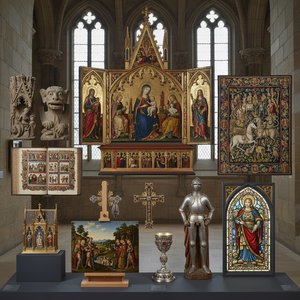
Late Medieval Masterpieces: 10 Artworks That Defined an Era | OriginalUniqueArt
Journey through 10 defining Late Medieval masterpieces – from Giotto's frescoes to Jan van Eyck’s realism. Explore the stories, techniques & vibrant colors of Gothic art. Find museum-quality reproductions and elevate your home decor with OriginalUniqueArt.com! Discover all masterpieces on OriginalUniqueArt.com
Top 25 Arcydzieł Biennale w Wenecji: Sztuka, Historia i Inspiracje dla Domu
Odkryj 25 arcydzieł Biennale w Wenecji! Poznaj historie artystów, techniki i inspiracje współczesnej sztuki. Reprodukcje obrazów najwyższej jakości – idealne do Twojego wnętrza. OriginalUniqueArt.com: Sztuka dla każdego.


