Text size

() ·

A painting made for you, by hand

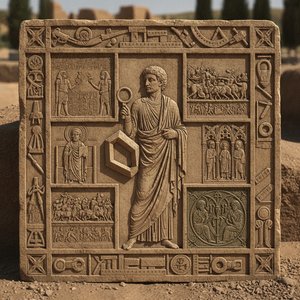
Cantoria (detail)

Ręcznie malowana reprodukcja olejowa

Ręcznie malowany obraz olejny na płótnie, wykonany na zamówienie przez naszych artystów w wybranym przez Ciebie wymiarze i oprawie. ( Przełącz na wydania drukowane Przejdź do wersji cyfrowej)

Opis obiektu

Witness Donatello's Cantoria – a breathtaking marble relief from Florence’s Duomo! Explore the dynamic artistry & intricate details of this Renaissance masterpiece, sculpted by master Donatello.

Biografia artysty

Donatello (1386-1466): Włoski renesansowy rzeźbiarz, pionier rzeźby nerkowej, znany z ekspresyjnych i klasycznie inspirowanych dzieł, takich jak "Dawid". Jego twórczość wpłynęła na rozwój sztuki włoskiego Renesansu.

from ·

Chapter 1

How large should it be?

Slide to change the size; the picture on the left shows the frame at its real width. The proportions of the original are kept.

Standardowy format
personalizowane
CM
INCH

Wybierz spośród naszych standardowych rozmiarów, które zachowują oryginalne proporcje dzieła sztuki.

szerokość
wysokość

Wpisz wymaganą szerokość i wysokość, aby obraz pasował do Twojej ramy lub ściany. Ponieważ jest to dzieło malowane ręcznie, w przypadku rozmiaru o innych proporcjach artysta może domalować nieco więcej wokół obrazu lub przyciąć jego fragmenty — wybór należy do Ciebie. Przed rozpoczęciem pracy prześlemy Ci cyfrową wizualizację do zatwierdzenia. Obraz widoczny na tej stronie nie przedstawia rzeczywistego efektu — jedynie wizualizacja oddaje realny rezultat.

Chapter 2

How should it arrive?

Choose the edges of the stretched canvas

Choose your frame

Corner sample of the WhiteWrap canvas edge finish, stretched on lite drewno bars
White zł1
Corner sample of the BlurSideWrap canvas edge finish, stretched on lite drewno bars
Blurside zł1
Corner sample of the ExtendedWrap canvas edge finish, stretched on lite drewno bars
Extended zł1
Corner sample of the P118B picture frame: polistyren formowany, 5 cm wide and 3 cm thick
P118B zł10
Corner sample of the P118H picture frame: polistyren formowany, 5 cm wide and 3 cm thick
P118H zł10
Corner sample of the P118W picture frame: polistyren formowany, 5 cm wide and 3 cm thick
P118W zł10
Corner sample of the P438Z picture frame: polistyren formowany, 5.5 cm wide and 3.5 cm thick
P438Z zł10
Corner sample of the P508JH picture frame: polistyren formowany, 7 cm wide and 3.5 cm thick
P508JH zł12
Corner sample of the P508YH picture frame: polistyren formowany, 7 cm wide and 3.5 cm thick
P508YH zł12
Corner sample of the P805H picture frame: polistyren formowany, 5 cm wide and 3.5 cm thick
P805H zł10
Corner sample of the P805Z picture frame: polistyren formowany, 5 cm wide and 3.5 cm thick
P805Z zł10
Corner sample of the P919BZ picture frame: polistyren formowany, 7 cm wide and 3.5 cm thick
P919BZ zł10
Corner sample of the P919G picture frame: polistyren formowany, 7 cm wide and 3.5 cm thick
P919G zł10
Corner sample of the P919XJ picture frame: polistyren formowany, 7 cm wide and 3.5 cm thick
P919XJ zł10
Corner sample of the P959ZH picture frame: polistyren formowany, 5 cm wide and 3 cm thick
P959ZH zł10
Corner sample of the P968JZ picture frame: polistyren formowany, 6 cm wide and 4 cm thick
P968JZ zł12
Corner sample of the W106C picture frame: lite drewno, 5 cm wide and 3 cm thick
W106C zł8
Corner sample of the W218G picture frame: lite drewno, 5 cm wide and 3 cm thick
W218G zł10
Corner sample of the W218JH picture frame: lite drewno, 5 cm wide and 3 cm thick
W218JH zł8
Corner sample of the W218Y picture frame: lite drewno, 5 cm wide and 3 cm thick
W218Y zł10
Corner sample of the W307PJ picture frame: lite drewno, 6 cm wide and 3 cm thick
W307PJ zł10
Corner sample of the W316G picture frame: lite drewno, 6 cm wide and 3 cm thick
W316G zł10
Corner sample of the W316PJ picture frame: lite drewno, 6 cm wide and 3 cm thick
W316PJ zł8
Corner sample of the W316Y picture frame: lite drewno, 6 cm wide and 3 cm thick
W316Y zł10
Corner sample of the W398PJ picture frame: lite drewno, 5 cm wide and 3 cm thick
W398PJ zł8
Corner sample of the W4111J picture frame: lite drewno, 6.5 cm wide and 3.5 cm thick
W4111J zł10
Corner sample of the W500HY picture frame: lite drewno, 7 cm wide and 5 cm thick
W500HY zł15
Corner sample of the W500JH picture frame: lite drewno, 7 cm wide and 5 cm thick
W500JH zł15
Corner sample of the W692G picture frame: lite drewno, 8 cm wide and 4 cm thick
W692G zł12
Corner sample of the W849H picture frame: lite drewno, 5 cm wide and 3 cm thick
W849H zł8
Corner sample of the W940BG picture frame: lite drewno, 7.5 cm wide and 4.5 cm thick
W940BG zł15
Corner sample of the W953PJ picture frame: lite drewno, 6 cm wide and 3.5 cm thick
W953PJ zł8
Corner sample of the H24-GOLD picture frame: rzeźbione drewno pokryte gipsem, 10 cm wide and 6 cm thick
H24-GOLD zł30
Corner sample of the H24-SILVER picture frame: rzeźbione drewno pokryte gipsem, 10 cm wide and 6 cm thick
H24-SILVER zł30
Corner sample of the H36-GOLD picture frame: rzeźbione drewno pokryte gipsem, 15 cm wide and 6.5 cm thick
H36-GOLD zł45
Corner sample of the H36-SILVER picture frame: rzeźbione drewno pokryte gipsem, 15 cm wide and 6.5 cm thick
H36-SILVER zł45

Moulding: . Overall size with the frame: .

Chapter 3

Who paints it, and should anything change?

Examples of what can be changed: Replace face with customer photo; Add pet (e.g., replace cat with dog); Include hidden message in background; Change background landscape or elements.
After order, OriginalUniqueArt.com team will email client for instructions and provide a mockup preview

Dostawa na całym świecie () w ciągu 3–4 tygodni zamiast standardowych 5 tygodni. (1 Listopad). Bez kompromisów w kwestii jakości.

Chapter 4

The finishing touches

A nameplate, as in a museum?

Szczegóły grawerowanej brązowej tabliczki

This elegant plaque features the artist's name and the title of the artwork, finely engraved for a timeless presentation.

It is made from bronze with a refined, elegant finish. The text is precisely laser-engraved for a sharp and permanent result. Measuring 9x2 cm, the plaque is compact yet easy to read. It's built to be durable and scratch-resistant, offering a professional, museum-quality look. Mounting is simple thanks to the included adhesive backing.

Szczegóły przezroczystej tabliczki akrylowej

The plaque includes essential engraved details such as the artist's name, the title of the artwork, the date it was created, the type of media used-like oil on canvas or watercolor-a brief description of the piece, and a QR code that links to the complete artwork information.

It is crafted from clear acrylic, offering a sleek, modern appearance. The text is UV-engraved in black to ensure strong visual contrast. With a size of 10x15 cm, it ensures optimal readability. It comes equipped with two metal hooks for secure wall mounting. The plaque is designed to be weather-resistant, making it suitable for various environments, and it includes interactive features that work seamlessly with smartphone scanning.

Szczegóły czarnej tabliczki akrylowej

This elegant plaque includes engraved information such as the artist's name, the title of the artwork, the date it was created, the type of media used (like oil on canvas or watercolor), a short description of the artwork, and a QR code for quick access to more information.

The plaque itself is made from refined black acrylic with a premium finish. The text is laser-engraved in white for high contrast and readability. Its size is 10x15 cm, designed to be easy to read. It comes with two metal hooks for professional mounting. The design is sleek and fits any interior style. It is also weather-resistant and durable, with built-in digital integration for mobile compatibility.

A protective varnish?

When do you need it?

Chapter 5

Your painting, as you ordered it

Cantoria (detail)

Technika reprodukcji

Wymiary reprodukcji

-

Wybitny mistrz artystyczny

Większa szczegółowość, finezja i dodatkowy czas na realizację

-

Opcje oprawy reprodukcji

-

-

W przypadku dzieł sztuki lub reprodukcji, których którykolwiek z boków przekracza 105 cm (około 41 cali), rama zostanie wysłana w formie zestawu do samodzielnego montażu. Metoda ta zapewnia bezpieczną dostawę i zapobiega uszkodzeniom podczas transportu.

Wymagany profesjonalny montaż – nie jest to produkt typu DIY.
Zestaw musi zostać złożony, a płótno naciągnięte przez doświadczonego profesjonalnego ramiarza, przy użyciu kleju do drewna (brak w zestawie), kleszczy do naciągania płótna oraz ścisków, które utrzymają krosna w równej pozycji podczas schnięcia kleju. Nieprawidłowy montaż lub nierównomierne napięcie płótna może trwale uszkodzić dzieło sztuki i nie podlega naszej gwarancji.

  • W zestawie znajdują się wszystkie listwy z litego drewna, precyzyjnie docięte do wymiarów.

  • Montaż odbywa się przy użyciu dołączonych wkrętów oraz kleju do drewna do łączenia narożników, którego zestaw nie zawiera i który musi zostać dostarczony przez ramiarza.

  • Wymagane są profesjonalne narzędzia, których nie ma w zestawie: kleszcze do naciągania płótna (napinacz) oraz zaciski, które pozwolą utrzymać listwy w równej pozycji podczas schnięcia kleju.

Ważne:
Do połączenia narożników niezbędny jest klej do drewna, listwy należy unieruchomić za pomocą ścisków do momentu całkowitego wyschnięcia kleju, a naciągnięcie płótna na złożoną ramę wymaga użycia kleszczy do naciągania płótna. Żaden z tych elementów nie jest dołączony do zestawu. Przed zamówieniem tego rozmiaru zalecamy konsultację z doświadczonym ramiarzem.

Etykieta obiektu

-

-

Lakier ochronny

Lakier z połyskiem (pogłębia kolory, chroni przed światłem i wilgocią)

-

Personalizacja dzieła

Przykłady możliwości personalizacji: zastąp twarz zdjęciem klienta; dodaj zwierzę domowe (np. zamień kota na psa); umieść ukrytą wiadomość w tle; zmień krajobraz lub elementy tła.

-

Ekspresowa

Dostawa na cały świat () w ciągu 3–4 tygodni zamiast standardowych 5 tygodni. (1 Listopad). Bez kompromisów w kwestii jakości.

-

Przesyłka ekspresowa

Dostawa na cały świat () w ciągu 5 tygodni. (8 Listopad).

W cenie

Cena całkowita

zł 1167

Suma całkowita zł 1167

Opcja ze szkłem jest dostępna wyłącznie w rozmiarach poniżej 110 cm

Included with every order

  • Bezpłatna ekspresowa wysyłka na cały świat
  • Wysokiej jakości płótno lniane
  • Pełne ubezpieczenie przesyłki
  • Gwarancja zwrotu należności celnych i podatków importowych
  • Gwarancja wiernego odwzorowania kolorów
  • 100-dniowa polityka zwrotów (tylko w przypadku wad)
  • Gwarancja 100% zwrotu pieniędzy
  • Zniżka przy zakupie wielu sztuk

The Echoes of Florence: Donatello’s Cantoria

Donatello's "Cantoria," a breathtaking detail from the larger marble relief adorning the south sacristy doors of the Duomo in Florence, isn’t merely a sculpture; it’s a vibrant snapshot of Renaissance exuberance and spiritual aspiration. Crafted between 1433 and 1439 during a pivotal moment in Florentine art history, this fragment captures the dynamism of a celestial choir – angels dancing with an almost ecstatic joy, their forms rendered with a masterful blend of classical restraint and intensely expressive emotion. The sheer scale of the original work—a monumental frieze spanning nearly sixty feet—is immediately apparent even in this detailed section, hinting at the grandeur and ambition of Cosimo de’ Medici, who commissioned it as a testament to his patronage of the arts.

The technique employed is nothing short of revolutionary for its time. Donatello masterfully utilized a complex layering of materials: gleaming white marble forms the foundation, punctuated by strategically placed glass paste – a shimmering, iridescent substance that catches and refracts light with astonishing effect – and lavish inlays of gold. These elements aren’t simply decorative; they contribute to an overall sense of ethereal beauty, elevating the scene beyond mere representation and into the realm of pure visual delight. The subtle gradations of color achieved through the manipulation of these materials create a remarkable depth and luminosity, drawing the viewer into the heart of this animated tableau.

A Symphony of Movement and Symbolism

What immediately strikes the eye is the sheer energy contained within the figures. Donatello abandons the static formality often associated with early Renaissance sculpture, opting instead for a dynamic choreography of movement. The angels aren’t posed; they *dance*, their limbs outstretched in graceful arcs, their faces alight with expressions ranging from joyous laughter to rapturous contemplation. This deliberate embrace of motion reflects the humanist ideals that were gaining momentum during this period – a shift towards celebrating earthly experience and human potential. The composition itself is carefully balanced, creating a sense of visual harmony while simultaneously conveying a feeling of unrestrained vitality.

Beyond the purely aesthetic, “Cantoria” is rich in symbolic meaning. The angels themselves represent the heavenly choir, singing praises to God. Their gestures – holding instruments, raising their hands in adoration – are direct references to biblical texts and musical traditions. The swirling patterns of their movement evoke a sense of divine harmony and the interconnectedness of all things. The inclusion of children amongst the angelic figures suggests innocence, purity, and the promise of eternal life—a potent message for a society grappling with questions of faith and morality.

Contextualizing a Florentine Masterpiece

To fully appreciate “Cantoria,” it’s crucial to understand its historical context. Donatello was a pivotal figure in the transition from the Gothic to the Renaissance style, rejecting the elongated figures and stylized poses of his predecessors in favor of a more naturalistic and emotionally charged approach. His work profoundly influenced subsequent generations of artists, including Michelangelo and Raphael. The Cantoria itself was intended for the Duomo’s sacristy doors, a space dedicated to prayer and reflection – a fitting setting for such a visually arresting and spiritually evocative artwork.

The commission by Cosimo de' Medici underscores the importance of patronage in shaping Florentine art during this era. The Medici family were avid collectors and supporters of the arts, playing a key role in fostering an environment where creativity could flourish. “Cantoria” stands as a testament to their commitment to beauty, innovation, and the celebration of human achievement – a legacy that continues to resonate today.

A Timeless Vision

Even in this detailed fragment, “Cantoria” retains its power to captivate and inspire. Donatello’s masterful use of light, color, and movement creates an immersive experience for the viewer, transporting them to the heart of Renaissance Florence. The sculpture's enduring appeal lies not only in its technical brilliance but also in its profound exploration of human emotion and spiritual aspiration – a timeless vision that continues to resonate with audiences centuries later. Reproductions offer a remarkable opportunity to bring this extraordinary artwork into your home or office, allowing you to experience the beauty and energy of Donatello’s masterpiece firsthand.

Pytania i odpowiedzi

Jaki rozmiar "Cantoria (detail)" jest sugerowany do Living Room?

Zalecane zestawienie dla „Cantoria (detail)” – Donatello: wydruk w formacie Large do Living Room.

Jaki układ ma „Cantoria (detail)” – Donatello?

„Cantoria (detail)” – Donatello to kompozycja w formacie Landscape. Warto sprawdzić proporcje przed wyborem rozmiaru wydruku.

Jak można wykorzystać „Cantoria (detail)” – Donatello w dekoracji wnętrz?

„Cantoria (detail)” idealnie sprawdzi się w Statement, a rekomendowanym miejscem jego ekspozycji jest Living Room.

More about this painting

Podgląd w skali 1:1 Podgląd AR Przełącz na wydania drukowane Przejdź do wersji cyfrowej Wyślij jako kartkę
Szczegóły dzieła Przewodnik Dodaj do ulubionych Pobierz obraz Podobne obiekty RTG Pokaz slajdów Q&A Statystyki

In numbers

  • 1439the year it was painted
  • 29frames to choose from
  • standard sizes, in its own proportions
  • 5weeks to paint and deliver it
Donatello

Donatello

1386 - 1466, Włochy

Quick facts about Donatello

  • Artistic Movement Or Style: Renesans włoski
  • Artists Or Movements Influenced By This Artist: ['Renesans']
  • Artists Who Influenced This Artist: ['Ghiberti']
  • Date Of Birth: ok. 1386
  • Date Of Death: 13 grudnia 1466
  • Full Name: Donato di Niccolò di Betto Bardi
  • Nationality: Włoski
  • Notable Artworks:
    • Dawid
    • St. Ludwika
    • Sacrificial Isaac
  • Place Of Birth: Florencja, Italia

Biografia artysty

Early Life and Artistic Beginnings

Donatello, a name synonymous with the dawn of the Italian Renaissance, was born in Florence around 1386 – though the precise date remains shrouded in some uncertainty. He emerged from a family rooted in commerce; his father, Niccolò di Betto Bardi, was a wool carder, a profession that provided a modest but respectable place within Florentine society. This background, while not of aristocratic lineage, undoubtedly exposed young Donatello to the vibrant artistic and intellectual currents flowing through the city’s workshops and studios. His early training likely began with one of the many sculptors working on the ambitious construction of Florence's Duomo – a project that would dominate much of the city’s artistic landscape for decades. This apprenticeship, steeped in the techniques of stone carving, provided him with a foundational understanding of form, texture, and the inherent beauty of materials. Crucially, Donatello’s formative years coincided with a renewed interest in classical antiquity, fueled by burgeoning humanist thought – an intellectual movement that sought to revive the values and aesthetics of ancient Greece and Rome. This rediscovery profoundly shaped his artistic vision, leading him to break away from the stylized conventions of Gothic sculpture and embrace a more naturalistic and expressive approach.

Key Works and Revolutionary Techniques

Donatello’s career blossomed during a period of intense experimentation and innovation. He quickly established himself as a master sculptor, renowned for his ability to imbue his figures with life, emotion, and psychological depth – qualities largely absent from previous Florentine sculpture. His most celebrated work, the *David* (circa 1408-1409), stands as a watershed moment in art history. Unlike earlier depictions of the biblical hero, which often portrayed him as a mature warrior, Donatello’s *David* is rendered as a youthful and vulnerable figure – a testament to the humanist ideal of celebrating human potential and beauty. This daring departure from tradition immediately captivated audiences and established Donatello's reputation for pushing artistic boundaries. Beyond *David*, his oeuvre encompasses a remarkable range of subjects and styles, including monumental bronze figures like *St. Louis of Toulouse* (circa 1422-1425) and the dramatic *Sacrifice of Isaac* (circa 1433-1437), which showcases his mastery of narrative composition and emotional intensity. Donatello’s innovative use of *rilievo schiacciato*, or “flattened relief,” is particularly noteworthy. This technique, characterized by figures emerging from a shallow plane, created an illusion of depth and volume, drawing the viewer into the scene with unprecedented realism. He also pioneered new methods for casting bronze, achieving a remarkable level of detail and expressiveness previously unattainable in this medium.

The Influence of Classical Antiquity and Humanist Ideals

Donatello’s artistic vision was deeply rooted in his fascination with classical antiquity. Unlike many of his contemporaries who simply imitated Roman forms, Donatello sought to understand the underlying principles of classical sculpture – its emphasis on proportion, anatomy, and ideal beauty. He meticulously studied ancient statues, dissecting their forms and analyzing their expressive qualities. This deep engagement with the past informed his own work, resulting in sculptures that possessed a timeless quality and a profound sense of humanity. Furthermore, Donatello’s art was inextricably linked to the rise of humanist thought. Humanists believed in the inherent worth and dignity of humankind, emphasizing reason, observation, and individual experience. Donatello’s figures – whether biblical heroes, mythological subjects, or portraits of contemporary individuals – are imbued with a sense of psychological realism that reflects this humanist sensibility. He captured not just the outward appearance of his subjects but also their inner lives, conveying their emotions, motivations, and vulnerabilities with remarkable sensitivity.

Later Years and Legacy

In 1443, Donatello moved to Padua, where he spent several years working on a monumental equestrian statue for the city’s civic center – a project that would ultimately remain unfinished upon his death. Despite this setback, he continued to produce significant works throughout his later life, including the dramatic *Judith Slaying Holofernes* (circa 1453), a powerful depiction of violence and triumph. Donatello's influence on subsequent generations of artists was immense. Michelangelo, Leonardo da Vinci, and countless other sculptors drew inspiration from his innovative techniques and expressive style. His legacy extends far beyond the specific works he created; he fundamentally transformed the course of Western art, paving the way for the High Renaissance and establishing new standards for realism, emotional depth, and artistic innovation. Donatello’s sculptures continue to captivate audiences today, serving as a testament to his genius and enduring contribution to the world of art.

Museum Collections Featuring His Work

Several museums house significant examples of Donatello's work, offering visitors a chance to experience his artistry firsthand. The Museo Nazionale del Bargello in Florence proudly displays *St. George*, a masterpiece showcasing his dynamic composition and dramatic narrative. The Galleria dell’Accademia in Florence houses the iconic *David*, a symbol of Renaissance humanism and artistic achievement. The Uffizi Gallery in Florence also holds several important works by Donatello, including fragments from the *Sacrifice of Isaac*. Furthermore, the Museo della Collegiata in Empoli showcases a hidden gem of the Renaissance, featuring works by Francesco Botticini and Raffaello Botticini. Finally, the Metropolitan Museum of Art in New York City houses a remarkable marble Madonna in *rilievo schiacciato*, demonstrating Donatello’s mastery of this innovative technique.

Najważniejsze informacje

  • Notable elements: Dynamic figures, music
  • Artistic style: Neoclassical relief
  • Artist: Donatello
  • Subject or theme: Religious narrative
  • Title: Cantoria (detail)

Quiz o sztuce

Do każdego pytania dotyczy tylko jedna poprawna odpowiedź.

Pytanie 1:
What is the primary subject depicted in Donatello’s ‘Cantoria’?
Pytanie 2:
In what year was Donatello's ‘Cantoria’ created?
Pytanie 3:
The ‘Cantoria’ is located within which landmark?
Pytanie 4:
What material is predominantly used in the construction of Donatello’s ‘Cantoria’?
Pytanie 5:
The ‘Cantoria’ is notable for its use of which technique?
Odkryj dzieła sztuki uporządkowane według tematów, stylów i cech charakterystycznych.