Zobacz w skali 1:1
 Wyślij
 Udostępnij
 Szczegóły
 Przewodnik

 Pobierz plik obrazu
 Podobne obiekty
 RTG
RTG Pokaz slajdów
 Statystyki
The Kitchen
 Acrylic On Canvas
- WallArt
- Baroque
 1646
1646 171.0 x 237.0 cm
 Muzeum Ermitażu
 Czytaj więcej
Giclée / Wydruk artystyczny
Wydruki giclée lub płótna o jakości muzealnej, szybka realizacja i szeroki wybór opcji wykończenia. ( Kup ręcznie malowany obraz Przełącz na wersję cyfrową)




P118B zł10

P118H zł10

P118W zł10

P438Z zł10

P508JH zł12

P508YH zł12

P805H zł10

P805Z zł10

P919BZ zł10

P919G zł10

P919XJ zł10

P959ZH zł10

P968JZ zł12

W106C zł8

W218G zł10

W218JH zł8

W218Y zł10

W307PJ zł10

W316G zł10

W316PJ zł8

W316Y zł10

W398PJ zł8

W4111J zł10

W500HY zł15

W500JH zł15

W692G zł12

W849H zł8

W940BG zł15

W953PJ zł8




Wybierz spośród naszych standardowych rozmiarów, które zachowują oryginalne proporcje dzieła sztuki.

Wpisz wymaganą szerokość i wysokość, aby dopasować grafikę do ramy lub ściany. Wydruk można jedynie przyciąć, nigdy nie powiększając go poza oryginalny obraz, dlatego format o innym proporcji spowoduje utratę części kompozycji. Przed rozpoczęciem druku prześlemy Ci cyfrowy podgląd do zatwierdzenia. Obraz wyświetlany na tej stronie nie pokazuje rzeczywistego przycięcia — jedynie podgląd oddaje ten efekt.
Dostawa na cały świat () w ciągu 2 tygodni zamiast standardowych 4/5 tygodni. (24 Październik)

Bezpłatna ekspresowa wysyłka na cały świat

Wysokiej jakości płótno lniane

Pełne ubezpieczenie transportowe

Gwarancja zwrotu należności celnych i podatków importowych

Gwarancja idealnego odwzorowania barw

100-dniowy okres na zwrot dzieła w przypadku wykrycia wad produkcyjnych

Gwarancja 100% zwrotu pieniędzy

Oferta przy zakupie wielu sztuk
 Opcja ze szkłem jest dostępna wyłącznie w rozmiarach poniżej 110 cm

The Kitchen
Giclée / Wydruk artystyczny
Rozmiar reprodukcji
-


Suma do zapłaty
zł 308
A Snapshot of Everyday Life: David Teniers the Younger’s “The Kitchen”
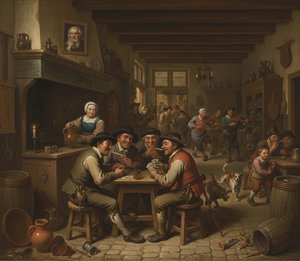
David Teniers the Younger's "The Kitchen," painted in 1646, isn’t merely a depiction of a domestic scene; it’s a vibrant tableau brimming with life, humor, and an astute observation of Flemish society. This remarkable work transcends simple genre painting, offering a glimpse into the heart of a bustling household—a microcosm reflecting the rhythms and relationships of everyday existence. Measuring 171 x 237 cm, the canvas explodes with activity, populated by thirteen individuals engaged in various tasks within a richly detailed kitchen environment. The sheer number of figures, coupled with their diverse interactions – from children playfully chasing birds to adults tending hearths and tables – immediately draws the viewer into this immersive world.
The painting’s Baroque style is evident in its dynamic composition, dramatic lighting, and meticulous attention to detail. Teniers masterfully employs a technique of *alla prima*, working directly onto the wet canvas without underdrawing, resulting in a sense of immediacy and spontaneity. Notice how he captures the textures of rough-hewn wooden furniture, the glint of metal tools, and the folds of fabric with remarkable precision. The artist’s use of color is equally noteworthy – warm earth tones dominate, punctuated by brighter accents that draw attention to key elements within the scene, such as a vibrant red tablecloth or the gleam of copper pots.
A Window into 17th-Century Flanders
To understand “The Kitchen,” it’s crucial to situate it within its historical context. The painting was created during a period of significant artistic and social change in the Netherlands, following the decline of the High Renaissance and the rise of Baroque styles. David Teniers the Younger emerged as a leading figure in this transition, skillfully blending influences from his father's earlier work with contemporary trends. His subject matter often revolved around scenes of rural life, domestic interiors, and tavern gatherings – themes that resonated deeply with the burgeoning middle class.
The inclusion of numerous animals—a dog, two cats, and a flock of birds—adds another layer of interest to the composition. Animals were frequently depicted in Flemish art, often serving as symbols of fertility, abundance, or domesticity. In “The Kitchen,” they seamlessly integrate into the human drama, contributing to the overall sense of lively chaos. The presence of books suggests an appreciation for learning and intellectual pursuits within the household, while the scattered bottles and bowls hint at a life filled with simple pleasures and convivial gatherings.
Symbolism and Social Commentary
Beyond its immediate visual appeal, “The Kitchen” offers subtle insights into 17th-century Flemish society. The scene’s bustling energy reflects the importance of family and community in this era. The various activities taking place—cooking, eating, cleaning, and socializing—highlighted the central role of the home as a focal point for social interaction. The inclusion of both adults and children underscores the multi-generational nature of Flemish households. Furthermore, the painting’s depiction of everyday life provides a valuable glimpse into the material culture and social customs of the time.
Interestingly, Teniers' career was marked by a remarkable versatility. He served as a court painter, a printmaker, and even a curator for Archduke Leopold Wilhelm, demonstrating a broad range of artistic skills and interests. His ability to capture both the grandeur of formal portraits and the intimacy of genre scenes cemented his reputation as one of the most prolific and influential artists of his generation. “The Kitchen” stands as a testament to this remarkable talent, offering a captivating window into a bygone era.
Pytania i odpowiedzi
Kto stworzył "The Kitchen" i w jakim roku?
Autorem dzieła "The Kitchen" jest David Teniers Młodszy, a datowanie pracy pochodzi z 1646 roku.
Jaki dominujący odcień przenika „The Kitchen” autorstwa David Teniers Młodszy?
Dominującym odcieniem dzieła „The Kitchen” autorstwa David Teniers Młodszy jest Golden Yellow Range. Odcień ten stanowi bazową tonację palety barw.
Czy „The Kitchen” autorstwa David Teniers Młodszy to znane dzieło sztuki?
"The Kitchen" jest klasyfikowane jako Recognized.
Biografia artysty
David Teniers the Younger: A Master of Flemish Life
David Teniers the Younger, born in Antwerp on December 15, 1610, wasn’t simply a painter; he was a chronicler of his time, a vibrant observer who captured the essence of Flemish society with an unparalleled eye for detail and a remarkable talent for portraying everyday life. His lineage – his father, David Teniers the Elder, was himself a respected artist – provided him with a solid foundation in artistic techniques, but it was through close association with giants like Peter Paul Rubens that Teniers truly blossomed, absorbing their dynamism and embracing a style uniquely his own. His story is one of family tradition intertwined with courtly patronage, ultimately culminating in a legacy as the foremost Flemish genre painter of the Baroque era.Early Influences and Artistic Training
Teniers’ early artistic development was profoundly shaped by his father's work, primarily smaller-scale cabinet paintings – intimate scenes of aristocratic life and portraits. However, a pivotal moment arrived through his marriage to Anna Brueghel, daughter of Jan Brueghel the Elder, and, crucially, Rubens himself acted as their wedding witness, forging a close connection with the master painter. This association wasn’t merely ceremonial; it provided Teniers with direct access to Rubens' studio and an invaluable understanding of his innovative approach to composition and color. Beyond his father and mentor, he also drew inspiration from other Flemish masters like Pieter Bruegel the Elder, whose landscapes instilled in him a deep appreciation for the beauty of the natural world. Despite facing periods of financial hardship within his family – necessitating the creation of copies of older works to supplement their income – Teniers’ artistic spirit remained undeterred, constantly seeking new ways to express himself and hone his craft.The Rise of Genre Painting and the "Kermess" Series
Teniers' career truly took flight as he began specializing in genre painting—a revolutionary approach at the time. Rather than focusing on grand historical narratives or religious subjects, he turned his attention to the lives of ordinary people: peasants celebrating festivals, bustling tavern interiors, lively village landscapes – scenes brimming with humor, merriment, and a keen observation of human behavior. His most celebrated works are undoubtedly his “Kermess” paintings—a series depicting elaborate peasant festivities known as *kermis*. These vibrant canvases explode with color, capturing the energy and chaos of these communal gatherings with astonishing detail. The figures are rendered with remarkable realism, their faces reflecting a wide range of emotions – joy, drunkenness, mischief, and even a touch of melancholy. The landscapes surrounding the festivals are equally captivating, showcasing the beauty of the Flemish countryside. These paintings weren’t merely depictions; they were social commentaries, offering a glimpse into the values, customs, and traditions of the time.Courtly Patronage and the Antwerp Academy
Teniers' artistic reputation quickly gained him recognition within the Habsburg court. He secured a position as court painter and curator for Archduke Leopold Wilhelm, the influential Governor General of the Spanish Netherlands, a role that afforded him considerable prestige and access to an extraordinary collection of art. As curator, he was tasked with cataloging and managing this vast collection, meticulously documenting each piece and contributing significantly to its organization. This position also led to his most ambitious undertaking: the establishment of the Antwerp Academy of Fine Arts in 1663. Driven by a desire to revive Flemish painting after a period of decline following the deaths of Rubens and Van Dyck, Teniers envisioned an institution where young artists could receive rigorous training in drawing and sculpting. Despite initial resistance, he ultimately secured royal recognition for the academy, solidifying his place as a pivotal figure in the artistic landscape of Antwerp.A Lasting Legacy
David Teniers the Younger died on April 25, 1690, leaving behind an astonishing body of work—estimated to be around two thousand paintings. His influence extended far beyond his own lifetime, inspiring numerous followers and shaping the course of Flemish painting for generations to come. Artists like Coryn Boel and Mattheus van Helmont directly emulated his style, while even figures as renowned as Antoine Watteau in France acknowledged his impact. Teniers’ legacy isn't simply one of artistic skill; it’s a testament to his ability to capture the spirit of an era, offering us a vibrant and enduring portrait of Flemish life during the Baroque period. His paintings remain treasured examples of genre painting, inviting viewers to step into a world of bustling festivals, convivial taverns, and the everyday lives of ordinary people—a world rendered with remarkable beauty, detail, and profound insight.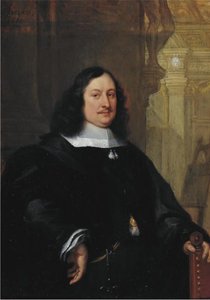
David Teniers Młodszy
1610 - 1690 , Belgia
Najważniejsze informacje
- Artistic Movement Or Style: Barok
- Artists Or Movements Influenced By This Artist: ['Watteau']
- Artists Who Influenced This Artist:
- Rubens
- Brueghel
- Date Of Birth: 1610
- Date Of Death: 1690
- Full Name: David Teniers II
- Nationality: Flamand
- Notable Artworks:
- Kermessy
- Taverny
- Krajobrazy
- Place Of Birth: Antwerp, Belgia
Zobacz także powiązane artykuły
Jacob Jordaens: Baroque Dynamism & Genre Innovation of the Antwerp School
Discover Jacob Jordaens, a leading Flemish Baroque painter renowned for his dynamic compositions & realistic genre scenes. Explore his life, art, and lasting influence with OriginalUniqueArt.
David Teniers the Younger: Genre Painting & Social Commentary in Baroque Flanders
Explore the captivating world of David Teniers the Younger, a leading Flemish Baroque painter. Discover his genre scenes, social commentary, and lasting influence on 17th-century art. Learn about his life, techniques & legacy.
David Teniers II: Master of Flemish Genre & Social Commentary
Explore the captivating world of David Teniers II, a leading Flemish Baroque painter renowned for his lively genre scenes & insightful social commentary. Discover his masterpieces and legacy with OriginalUniqueArt.

The Visceral Stage: Exploring Dramatic Narratives & Emotional Intensity in Baroque Art
Explore the dramatic world of Baroque art! Discover iconic masters like Caravaggio & Rembrandt, their techniques, and the movement's lasting impact. Expert insights for collectors & enthusiasts at OriginalUniqueArt.

Mastering Drama and Light: A Definitive Guide to the Flemish Baroque Art Movement
Explore the dramatic brilliance of the Flemish Baroque movement. Discover how masters like Peter Paul Rubens utilized chiaroscuro and dynamic composition to redefine art history through light, shadow, and unparalleled emotion.