
 Podgląd w skali
 Wyślij jako kartkę
 Udostępnij
 Szczegóły dzieła

 Pobierz
 Podobne obiekty
 RTG
RTG Pokaz slajdów
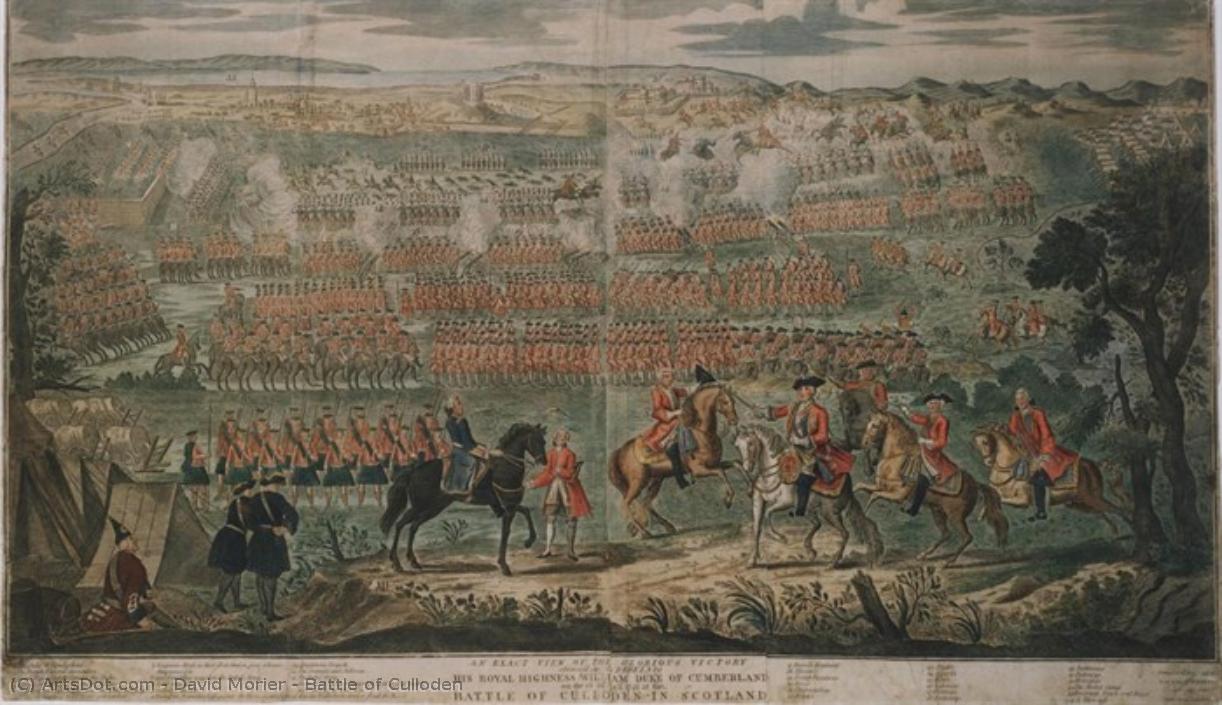
Battle of Culloden


 Rozwiń treść
Ręcznie malowana reprodukcja olejowa
Ręcznie malowany obraz olejny na płótnie, wykonany na zamówienie przez naszych artystów w wybranym przez Ciebie wymiarze i oprawie. ( Zamów wydruk Kup obraz wysokiej rozdzielczości)




































Wybierz spośród naszych standardowych rozmiarów, które zachowują oryginalne proporcje dzieła sztuki.

Możesz wprowadzić własne wymiary, aby dopasować obraz do konkretnej ramy lub przestrzeni. Jeśli wybrany rozmiar nie będzie odpowiadał proporcjom oryginału, przytniecie dzieło sztuki lub rozszerzymy je o dodatkowe elementy, ręcznie domalowane przez artystę. Przed rozpoczęciem produkcji wyślemy projekt cyfrowy do Twojej akceptacji.
Należy pamiętać, że podgląd na ekranie nie odzwierciedla rzeczywistego przycinania ani rozszerzania obrazu. Tylko projekt dokładnie pokaże ostateczną kompozycję.
Choć oferujemy możliwość zamówienia niestandardowych rozmiarów, zalecamy wybór wymiaru z gotowej listy, aby zachować oryginalne proporcje dzieła.
Po złożeniu zamówienia zespół OriginalUniqueArt.com skontaktuje się z klientem drogą mailową w celu uzyskania instrukcji i prześle wizualizację projektu
Dostawa na całym świecie () w ciągu 3–4 tygodni zamiast standardowych 5 tygodni. (20 Sierpień). Bez kompromisów w kwestii jakości.

Bezpłatna ekspresowa wysyłka na cały świat

Wysokiej jakości płótno lniane

Pełne ubezpieczenie przesyłki

Gwarancja zwrotu należności celnych i podatków importowych

Gwarancja wiernego odwzorowania kolorów

Polityka 60-dniowego zwrotu (tylko w przypadku wad)

Gwarancja 100% zwrotu kosztów

Zniżka przy zamówieniu wielu produktów
 Opcja ze szkłem jest dostępna wyłącznie w rozmiarach poniżej 110 cm

Battle of Culloden
Technika reprodukcji
Wymiary reprodukcji
-


Cena całkowita
$ 350
O artyście
A Legacy of Valor: The Life and Art of David Morier
In the grand tapestry of eighteenth-century British art, few threads are as intricately woven with military precision and aristocratic splendor as those left by David Morier. An Anglo-Swiss master whose presence in England helped define the visual language of an era, Morier navigated a world of shifting political tides, from the echoes of the War of Austrian Succession to the profound upheaval of the Jacobite Rebellion. Though his early years remain partially veiled in the mists of history—with records suggesting a birth in Bern, Switzerland, around 1705—his arrival in England near 1743 marked the beginning of a transformative period for British equestrian and military portraiture.
Morier’s ascent within the competitive London art scene was not merely a matter of talent, but of profound professional acumen. He possessed a rare ability to secure the patronage of the highest echelons of society, most notably Duke Frederick Augustus II Cumberland. This relationship served as the cornerstone of his career, providing him with more than just financial stability; it granted him unprecedented access to the very heart of military life. Through this connection, Morier was able to observe the rhythms of the camp, the discipline of the regiment, and the raw intensity of the battlefield, translating these lived experiences into works that resonated with both accuracy and grandeur.
The Art of the Equestrian and the Military Landscape
What distinguishes Morier from his contemporaries is his unparalleled ability to marry the anatomical rigor of equestrian portraiture with the dramatic narrative of military history. He did not merely paint horses and men; he captured the spirit of command. His works often centered on the idealized vision of leadership, where the powerful musculature of a mount and the resolute posture of a commander served as symbols of martial virtue and stability. This mastery is perhaps most evident in his depictions of the Duke of Cumberland, where the artist utilized the scarlet military state coat and the commanding presence of the cavalry to convey an image of unshakeable authority.
Beyond the singular portrait, Morier’s oeuvre extends into the realm of historical documentation. His engravings and paintings serve as vital windows into the chaos and consequence of 18th-century conflicts. One might consider his contributions through the following thematic lenses:
- The Drama of Conflict: Works such as his depiction of the Battle of Culloden (1746) utilize a sense of movement and atmospheric tension to convey the harrowing reality of the Jacobite defeat.
- Regimental Identity: His meticulous attention to detail allowed him to document specific military figures, such as Sir Armine Wodehouse and Major General Sir Charles Howard, preserving the lineage and pride of various regiments for posterity.
- Anatomical Excellence: A profound understanding of equine anatomy, which allowed him to celebrate legendary animals like the Godolphin Arabian alongside their human counterparts.
Historical Significance and Enduring Impression
The significance of David Morier lies in his role as a visual chronicler of a pivotal moment in British history. At a time when the nation was defining its imperial identity and navigating internal rebellions, Morier provided the imagery that helped solidify the mythos of the British military. His paintings were not merely decorative; they were instruments of prestige, designed to commemorate triumphs and immortalize the figures who shaped the destiny of the realm.
As we look back upon his career, we see an artist who successfully bridged the gap between the observational precision of a documentary artist and the emotive power of a classical painter. Though he passed away in London around 1770, leaving behind a legacy that continues to fascinate historians and art enthusiasts alike, Morier’s ability to capture the intersection of human ambition and animal grace ensures his place in the pantheon of great historical painters. His work remains an essential study in how art can serve as both a mirror to the turbulence of war and a monument to the enduring ideals of heroism.

David Morier
1705 - 1770 , Switzerland
Krótka nota
- Artistic Movement Or Style: 18th Century Painting
- Date Of Birth: Bern, Switzerland (1705)
- Date Of Death: c. 8 January 1770
- Full Name: David Morier
- Nationality: Swiss
- Notable Artworks:
- An incident in the rebellion of 1745 (The Battle of Culloden)
- George II (after David Morier)
- Frederick Louis, Prince of Wales (after David Morier)
- Place Of Birth: Bern
Powiązane artykuły
Arcydzieła XVIII Wieku: 10 Obrazów, Które Zdefiniowały Epokę | OriginalUniqueArt
Odkryj 10 arcydzieł XVIII wieku! Poznaj historie Watteau, Fragonarda i Canaletta. Reprodukcje obrazów w stylu rokoko i klasycyzmu idealne do Twojego wnętrza. Inspiracje artystyczne na OriginalUniqueArt.com
George Paul Chalmers: Rediscovering the Angus Rembrandt & Scottish Colourist Roots
Explore the captivating world of George Paul Chalmers (1833-1878), a pivotal Scottish painter. Discover his landscapes, portraits & connection to the Aesthetic Movement and Colourists. Learn about this 'Angus Rembrandt's' legacy with OriginalUniqueArt.
Sir John Watson Gordon: A Study in Scottish Landscape Painting & Tonal Impressionism
Explore the captivating portraits of Sir John Watson Gordon, a leading Scottish master. Discover his evolution from neoclassical style to atmospheric Tonalism and influence on 19th-century British art. Learn about his iconic sitters & legacy.

Jacques-Louis David: Neoclassical Ideals & Revolutionary Witness
Explore the life & art of Jacques-Louis David, leading Neoclassical painter of the French Revolution. Discover iconic works like 'The Death of Marat' and his lasting impact on art history. Expert analysis & high-quality reproductions at OriginalUniqueArt.

David Roberts: A Scottish Pioneer of Topographical Art & Orientalist Vision
Explore the captivating world of David Roberts, a pioneering Scottish painter renowned for his detailed Orientalist scenes & stunning Egyptian landscapes. Discover his legacy and find museum-quality reproductions at OriginalUniqueArt.

