
 Podgląd w skali
 Wyślij jako kartkę
 Udostępnij
 Szczegóły dzieła

 Pobierz
 Podobne obiekty
 RTG
RTG Pokaz slajdów
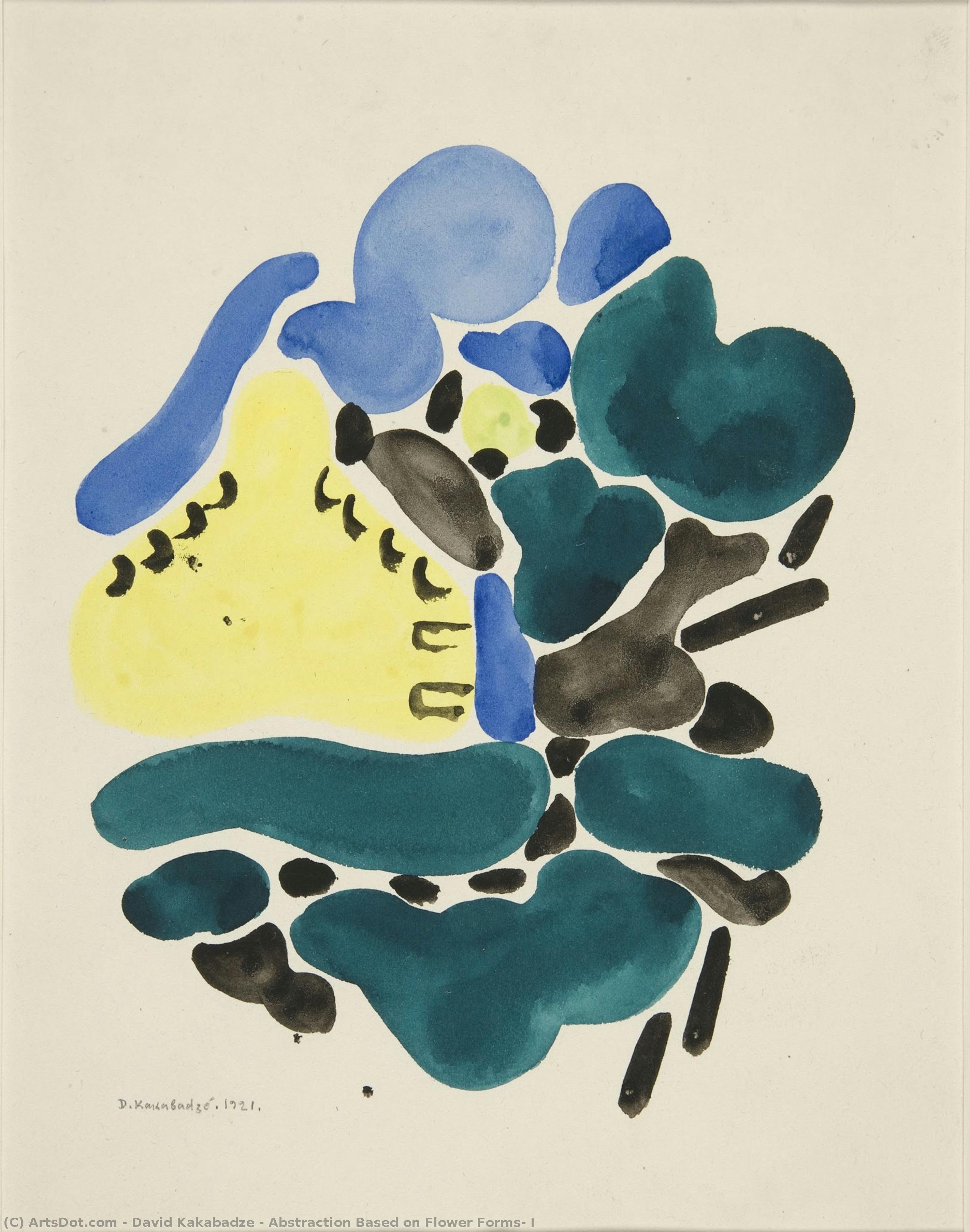
Abstraction Based on Flower Forms, I
 Watercolor
- WallArt
- Abstraction
 1921
1921- Modern
 23.0 x 18.0 cm
 Art Palace of Georgia - Museum of Cultural History
 Rozwiń treść
Kup wysokiej rozdzielczości, ulepszony obraz cyfrowy o znacznie wyższej jakości niż podgląd online.
Każdy plik jest starannie przygotowywany przez naszych specjalistów przy użyciu zaawansowanych narzędzi oraz profesjonalnej, ręcznej retuszy. Dbamy o to, aby każdy obraz cechował się wyjątkową ostrością, precyzyjnym odwzorowaniem kolorów i subtelnymi detalami.
Ostateczny plik dostarczany jest drogą mailową w ciągu 72 godzin, zoptymalizowany do natychmiastowego wykorzystania w profesjonalnych zastosowaniach redakcyjnych i poligraficznych. To ta sama jakość, której ufają czołowe studia projektowe, wydawnictwa oraz galerie sztuki.
Obraz cyfrowy
Pobierz plik o wysokiej rozdzielczości do osobistego wyświetlania, druku oraz projektów kreatywnych. ( Zamów wydruk Przełącz na obraz ręcznie malowany)
W każdym zamówieniu na obraz cyfrowy znajduje się
Profesjonalna dostawa cyfrowa z gwarancją
Wybierając OriginalUniqueArt.com, nie otrzymujesz jedynie obrazu – otrzymujesz profesjonalnie udoskonalone cyfrowe dzieło sztuki, stworzone z najwyższą precyzją i objęte gwarancją satysfakcji. Oto wszystko, co automatycznie dołączane jest do Twojego zamówienia:

Błyskawiczna wysyłka e-mailowa
Plik z obrazem cyfrowym w wysokiej rozdzielczości zostanie przesłany na Twój adres e-mail w ciągu 72 godzin od złożenia zamówienia – gotowy do natychmiastowego użycia.

Plik cyfrowy wzbogacony przez AI
Twoja grafika została profesjonalnie zoptymalizowana przy użyciu zaawansowanych narzędzi AI oraz ręcznej edycji, co zapewnia maksymalną szczegółowość, klarowność i wierność kolorów.

Dożywotnia darmowa ponowna dostawa
Przypadkowo usunąłeś lub zgubiłeś swój plik? Bez obaw – prześlemy go Tobie ponownie w dowolnym momencie, bez żadnych opłat.

Bez opłat importowych – zawsze
Ciesz się swoją sztuką natychmiast, bez żadnych opłat celnych, należności ani kosztów dostawy – pliki cyfrowe są zawsze wolne od podatku.

Gwarancja wierności kolorów
Dzięki zastosowaniu profesjonalnych narzędzi i procesów zarządzania barwą zapewniamy, że Twoje cyfrowe zdjęcie odzwierciedla oryginalne kolory tak wiernie, jak to tylko możliwe.

60-dniowa gwarancja satysfakcji
Jeśli nie będziesz zadowolony ze swojego cyfrowego obrazu, dokonamy jego poprawki lub zwrócimy 100% kosztów w ciągu 60 dni – bez żadnych pytań.

100% Gwarancja zwrotu pieniędzy
Nie jesteś zadowolony? Otrzymaj pełny zwrot kosztów w ciągu 60 dni od otrzymania pliku cyfrowego – bez zbędnych pytań.

Rabaty przy zamówieniach hurtowych
Kup 3 obrazy, oszczędź 10% - Kup 5, oszczędź 15% - Kup 10+, oszczędź 20%. Idealne do projektów kreatywnych, galerii i agencji.
Opis kolekcjonerski
A Visionary Dance of Form and Color
In the delicate interplay of "Abstraction Based on Flower Forms, I," we encounter a profound moment in the evolution of Georgian Modernism. Created in 1921 by the visionary polymath David Kakabadze, this watercolor on paper serves as a mesmerizing window into an era where the boundaries of reality were being courageously redrawn. The composition unfolds upon a deep, evocative blue background, acting as a nocturnal or celestial stage for a dreamlike arrangement of shapes. While the title suggests a botanical origin, the painting transcends mere representation, inviting the viewer into a surrealist landscape where organic floral motifs collide with unexpected, almost whimsical elements. The presence of scattered yellow and black shapes—reminance of shoes—alongside a subtle clock in the upper corner, creates a delightful tension between the natural world and the artifacts of human existence, challenging our perceptions of time and space.
The technique employed by Kakabadze is nothing short of masterful, utilizing the fluid, translucent nature of watercolor to achieve a sense of ethereal lightness. Each stroke contributes to a layered complexity, where earthy tones and vibrant accents bleed into one another, creating a rhythmic movement across the 23 x 18 cm surface. This piece exemplifies the early 20th-century shift toward abstraction, where the artist’s goal was not to mimic the physical world, but to capture its underlying energy and essence. For the discerning collector or interior designer, this artwork offers a sophisticated focal point; its intricate textures and balanced color palette provide a sense of intellectual depth and quiet contemplation, making it an ideal centerpiece for spaces that value avant-garde history and artistic nuance.
The Legacy of a Georgian Master
To understand the emotional resonance of this work, one must look to the life of David Kakabadze himself. A true pioneer, Kakabadze was a figure who bridged the gap between the traditional roots of his native Georgia and the radical currents of the European avant-garde. His scientific background in natural sciences allowed him to approach art with a unique structural understanding, which is evident in the way he deconstructs floral forms into geometric abstractions. This painting is not merely an aesthetic exercise; it is a testament to a period of intense cultural transformation. The juxtaposition of the ephemeral—the flower—with the mechanical—the clock—speaks to the broader modernist preoccupation with the fleeting nature of life amidst the encroaching industrial age.
Owning a high-quality reproduction of such a significant piece allows one to bring a fragment of art history into the contemporary home. The artwork’s ability to evoke both mystery and tranquility makes it a versatile choice for modern decor, whether placed in a minimalist gallery-style setting or a richly textured study. It serves as a conversation starter, a piece of "living" history that continues to pulse with the creative spirit of 1921. As we gaze upon these abstracted forms, we are reminded of the power of art to reshape our reality, offering a timeless escape into a world where color and shape tell stories far beyond the reach of words.
Biografia artysty
A Pioneer of Georgian Modernism: The Life and Art of David Kakabadze
David Kakabadze, born in the village of Kukhi near Khoni, Georgia, in 1889, stands as a pivotal figure in the development of twentieth-century Georgian art. His career was one of remarkable innovation, seamlessly blending the burgeoning currents of European avant-garde movements with a deep reverence for his native Georgian traditions. Kakabadze wasn’t merely an artist; he was a polymath – a painter, graphic artist, scenic designer, art scholar, cinematic innovator, and even an amateur photographer. This multifaceted approach to creativity defined his artistic journey and cemented his legacy as one of Georgia's most important modernist masters. His early life, though rooted in the simplicity of a peasant family, was marked by intellectual curiosity fostered through sponsorship that allowed him to pursue studies at St. Petersburg University, graduating with a degree in natural sciences in 1916. Simultaneously, he honed his artistic skills under Dmitroyev-Kavkazsky and immersed himself in the study of Georgia’s rich artistic heritage. This dual education – scientific rigor combined with artistic sensitivity – would become a hallmark of his work.Parisian Encounters and Artistic Transformation
Following a brief period teaching and painting in Tbilisi, Kakabadze embarked on a transformative chapter of his life in Paris from 1919 to 1927. This sojourn placed him at the epicenter of the European avant-garde, exposing him to Cubism, Futurism, and other radical artistic experiments. He actively participated in exhibitions with the Société des Artistes Indépendants, forging connections with fellow Georgian artists Lado Gudiashvili and Shalva Kikodze. It was during this period that Kakabadze’s style underwent a dramatic evolution. Initially captivated by the landscapes of his native Imereti province – particularly the ethereal beauty of misty mountains bathed in sunlight – he began to explore “subjectless painting,” experimenting with unconventional materials like metal, mirror glass, and stained glass in place of traditional paints. This exploration wasn't merely about technical innovation; it was a quest to redefine the very essence of pictorial representation. He delved deeply into Cubism, absorbing its fragmented forms and analytical approach, yet always maintaining a distinct artistic voice that prevented his work from becoming mere imitation. His theoretical writings during this time, published in Parisian art journals, demonstrate a profound engagement with the intellectual underpinnings of modern art, establishing him as a thought leader within the modernist community. He meticulously dissected visual perception, questioning established conventions and advocating for new ways of perceiving and interpreting reality—a stance that foreshadowed many developments in later artistic movements.Innovation Beyond the Canvas: Cinema and Stage Design
Kakabadze’s inventive spirit extended far beyond painting. Recognizing the potential of new technologies, he began experimenting with cinema in the early 1920s, driven by a desire to overcome what he perceived as film's inherent limitations. He envisioned a cinematic experience that transcended conventional viewing, aiming for an immersive sensation akin to witnessing reality itself. This ambition fueled his groundbreaking work on stereoscopic projection – a technique he championed and perfected, resulting in the invention of a projector capable of creating three-dimensional images without requiring special glasses. This remarkable feat of engineering and artistic vision positioned him as a pioneer of 3D cinema decades before it gained widespread acceptance, demonstrating an unparalleled understanding of visual perception and pushing the boundaries of cinematic innovation. Furthermore, Kakabadze’s theatrical endeavors were equally ambitious. Collaborating with Kote Marjanishvili, he conceived and executed stage designs that revolutionized Georgian theatre—incorporating projections, intricate lighting effects, and collage-like constructions to transform spaces into dynamic environments that captivated audiences. His productions for films by Noutsa Gogoberidze and Michail Kalatosov showcased his mastery of cinematic artistry alongside his theatrical vision.Return to Georgia and Enduring Legacy
Kakabadze’s return to Georgia in 1927 coincided with the rise of Soviet power and the imposition of Socialist Realism as the dominant artistic style. This presented a formidable challenge for an artist whose aesthetic sensibilities were firmly rooted in abstraction and experimentation—a stylistic divergence that inevitably distanced him from the prevailing ideological currents. Despite facing pressures to conform to official dogma, Kakabadze steadfastly upheld his artistic principles, continuing to contribute to Georgian art through scenic design, documentary filmmaking focused on preserving cultural heritage, and teaching at Tbilisi State Academy of Arts. His later landscapes retained a distinctive character—infused with an enduring sensitivity to the natural world—reflecting both his formative experiences in Imereti and his unwavering commitment to exploring new artistic horizons. David Kakabadze passed away in 1952, leaving behind a substantial body of work that was largely overlooked for decades. However, in recent years, there has been a resurgence of interest in Kakabadze’s oeuvre—fueled by scholarly reassessment and growing recognition of his pivotal role in shaping Georgian modernism—solidifying his position as one of Georgia's most influential artistic figures. His multifaceted creativity—spanning painting, cinema, theatre, and theoretical scholarship—continues to inspire artists today, ensuring his enduring legacy as a visionary innovator who dared to challenge conventions and forge new paths for artistic expression.
David Kakabadze
1889 - 1952 , Gruzja
Krótka nota
- Artistic Movement Or Style: Avant-garde, Cubism
- Artists Or Movements Influenced By This Artist: ['Numerous artists']
- Date Of Birth: August 20, 1889
- Date Of Death: 1952
- Full Name: David Kakabadze
- Nationality: Georgian
- Notable Artworks:
- Sailboats
- Bretagne
- Sketch for Getting Various Grades of Light in a Single Electric Bulb
- Place Of Birth: Kutaisi, Georgia

