

 Zobacz w skali 1:1
 Wyślij
 Udostępnij
 Szczegóły
 Przewodnik

 Pobierz plik obrazu
 Podobne obiekty
 RTG
RTG Pokaz slajdów
 Statystyki
Unfinished self

 Czytaj więcej
Dzieło sztuki prezentowane na tej stronie podlega ochronie prawem autorskim, co oznacza, że nie mamy prawa do tworzenia ani sprzedaży jego identycznej reprodukcji. Ochrona ta jest egzekwowana na mocy umów międzynarodowych, takich jak Konwencja berneńska oraz przez przepisy prawa krajowego, w tym te określone w Prawo autorskie USA – Tytuł 17.
Jako pełną szacunku i legalną alternatywę oferujemy personalizowane, malowane ręcznie dzieła sztuki inspirowane oryginałem. Nasi wykwalifikowani i profesjonalni artyści starannie analizują styl, nastrój oraz artystyczną esencję pierwowzoru, aby stworzyć nowe, unikalne dzieło, które przywołuje te same emocje – pozostając jednocześnie w pełni oryginalną kreacją.
Metoda ta jest w pełni zgodna z przepisami prawa autorskiego, ponieważ nie polega na kopiowaniu ani powielaniu chronionego dzieła. Stanowi ona kreatywną reinterpretację – nowy obraz, który czerpie inspirację z oryginału, ale nie jest z nim tożsamy.
Ręcznie malowana reprodukcja olejowa
Ręcznie malowany obraz olejny na płótnie, wykonany na zamówienie przez naszych artystów w wybranym przez Ciebie wymiarze i oprawie. ( Przełącz na wersję drukowaną Przełącz na wersję cyfrową)




P118B zł10

P118H zł10

P118W zł10

P438Z zł10

P508JH zł12

P508YH zł12

P805H zł10

P805Z zł10

P919BZ zł10

P919G zł10

P919XJ zł10

P959ZH zł10

P968JZ zł12

W106C zł8

W218G zł10

W218JH zł8

W218Y zł10

W307PJ zł10

W316G zł10

W316PJ zł8

W316Y zł10

W398PJ zł8

W4111J zł10

W500HY zł15

W500JH zł15

W692G zł12

W849H zł8

W940BG zł15

W953PJ zł8




Wybierz spośród naszych standardowych rozmiarów, które zachowują oryginalne proporcje dzieła sztuki.

Wpisz wymaganą szerokość i wysokość, aby obraz pasował do Twojej ramy lub ściany. Ponieważ jest to dzieło malowane ręcznie, w przypadku rozmiaru o innym proporcji artysta może domalować nieco więcej wokół obrazu lub przyciąć fragmenty — wybór należy do Ciebie. Przed rozpoczęciem pracy prześlemy Ci cyfrową wizualizację do zatwierdzenia. Obraz widoczny na tej stronie nie przedstawia rzeczywistego efektu — jedynie wizualizacja oddaje realny rezultat.
Po złożeniu zamówienia zespół OriginalUniqueArt.com skontaktuje się z klientem drogą mailową w celu uzyskania instrukcji i prześle wizualizację projektu
Dostawa na całym świecie () w ciągu 3–4 tygodni zamiast standardowych 5 tygodni. (24 Październik). Bez kompromisów w kwestii jakości.

Bezpłatna ekspresowa wysyłka na cały świat

Wysokiej jakości płótno lniane

Pełne ubezpieczenie transportowe

Gwarancja zwrotu należności celnych i podatków importowych

Gwarancja idealnego odwzorowania barw

100-dniowy okres na zwrot dzieła w przypadku wykrycia wad produkcyjnych

Gwarancja 100% zwrotu pieniędzy

Oferta przy zakupie wielu sztuk
 Opcja ze szkłem jest dostępna wyłącznie w rozmiarach poniżej 110 cm

Unfinished self
Technika wykonania
Rozmiar reprodukcji
-


Suma do zapłaty
zł 1151
David Hockney’s “Unfinished Self”: A Portrait of Observation and Quiet Reflection
David Hockney's "Unfinished Self," painted in 1978, isn’t merely a depiction of a man asleep on his bed; it’s an exquisitely crafted meditation on perception itself. Created during Hockney’s prolific period exploring the effects of aging and distance – he famously undertook a series of ambitious Yorkshire Landscapes documenting the region's changing seasons – this portrait embodies his signature approach: capturing not just what is seen, but how it feels to see.
The painting utilizes Hockney’s distinctive optical mixing technique. Rather than layering colors conventionally, he applies thin washes of pigment that blend optically as they dry on the canvas. This method achieves remarkable luminosity and vibrancy, particularly noticeable in the blue blanket enveloping the sleeping figure. It's a deliberate choice reflecting Hockney’s fascination with how our eyes perceive color – blending hues rather than juxtaposing them to create an illusion of depth.
Style and Composition: Embracing Simplicity and Spatial Illusion
Despite its rich palette, “Unfinished Self” maintains a remarkable sense of calm. Hockney employs a minimalist compositional strategy, focusing on the central figure against a subtly textured background. The inclusion of other individuals – presumably Hockney’s family – adds an element of domestic intimacy and reinforces the idea that observation extends beyond the immediate subject to encompass relationships and surroundings.
The spatial arrangement is particularly noteworthy. Hockney cleverly utilizes perspective—though not in a rigorously accurate manner—to convey a feeling of depth and distance. The dining table and chairs, positioned slightly behind the bed, contribute to this illusion, suggesting a lived-in space where objects exist alongside each other in relation to one another.
Symbolism: Light, Rest, and the Passage of Time
The dominant color – blue – carries significant symbolic weight. Traditionally associated with tranquility, introspection, and spirituality, it underscores the painting’s contemplative mood. The sleeping figure represents restfulness and surrender to the rhythms of life, while simultaneously hinting at mortality—a recurring theme in Hockney's oeuvre.
The inclusion of a potted plant symbolizes growth and vitality, offering a counterpoint to the stillness of sleep. It subtly reminds us that even within moments of repose, life continues its inexorable march forward.
Emotional Impact: A Window into Hockney’s Vision of Humanity
"Unfinished Self" transcends mere visual representation; it communicates a profound emotional resonance. Hockney's masterful handling of light—particularly the diffused glow illuminating the sleeping man—creates an atmosphere of warmth and tenderness. The painting invites viewers to contemplate not only the beauty of the scene but also the complexities of human experience – capturing a quiet dignity and accepting gaze that speaks volumes about Hockney’s enduring belief in the power of observation and the importance of embracing life's fleeting moments.
- Artist: David Hockney
- Year Painted: 1978
- Medium: Acrylic on Canvas
- Dimensions: Unknown
This artwork exemplifies Hockney’s unwavering commitment to capturing the essence of human existence through a deceptively simple yet profoundly perceptive lens.
Pytania i odpowiedzi
O czym jest "Unfinished self"?
„Unfinished self” autorstwa David Hockney przedstawia: landscape, bedroom scene, human figures, conversation, dining table, floral arrangement, relaxation, british art.
Do czego zaleca się wykorzystanie wydruku "Unfinished self"?
Sugerowanym zastosowaniem dla „Unfinished self” autorstwa David Hockney jest Accent. Może on jednak służyć również do innych celów.
Jakie miejsce zajmuje „Unfinished self” wśród powracających motywów w twórczości David Hockney?
„Unfinished self” przedstawia landscape, bedroom scene, human figures, conversation, dining table, floral arrangement, relaxation, british art, podczas gdy utrwalone motywy David Hockney to light observation, hockney style, domestic life, british tradition, human connection, shared moments, landscape echoes, yorkshire roots. Porównanie tych dwóch elementów ukazuje, jak dzieło odnosi się do typowej dla tego artysty tematyki.
Biografia artysty
A Life Painted in Light: The World of David Hockney
David Hockney, born July 9, 1937, in Bradford, England, is more than simply a painter; he’s a visual polymath whose career has spanned painting, drawing, printmaking, stage design, and photography. His story begins amidst the grit and determination of Bradford, a landscape that instilled within him a keen observational eye, even as his father, Kenneth Hockney, fostered a spirit of independent thought through conscientious objection during World War II. This early environment shaped a young artist who would consistently challenge conventions and forge his own path. Formal education at Wellington Primary School and Bradford Grammar School laid the foundation for a career that would redefine British art in the 20th and 21st centuries, culminating in studies at Bradford College of Art and later, the prestigious Royal College of Art in London. It was during these formative years that Hockney began to articulate a unique artistic voice, one that blended Pop sensibilities with a distinctly British perspective.The Rise of a Pop Icon and Beyond
The 1960s witnessed Hockney’s ascent as a pivotal figure within the burgeoning Pop Art movement. However, unlike some contemporaries who wholeheartedly embraced American commercial culture, Hockney brought a uniquely British sensibility to the genre. His work exploded with vibrant color and bold lines, depicting scenes that were both familiar and subtly subversive. A Bigger Splash (1966), perhaps his most iconic early piece, encapsulates this perfectly – a seemingly simple depiction of a swimming pool becomes a meditation on Californian leisure, artifice, and the very act of seeing. This wasn’t merely representation; it was an exploration of how we perceive reality. Critics noted Hockney's masterful use of color theory and perspective—techniques borrowed from Cubism—to create dynamic compositions that captured the immediacy of experience. His double portraits, like American Collectors (Fred and Marcia Weisman), demonstrate his remarkable ability to capture not just likeness but also the essence of personality and relationship. Hockney’s stylistic choices reflected a fascination with American culture while simultaneously grounding his work in British traditions. He skillfully employed techniques reminiscent of Surrealism—particularly juxtapositions of disparate elements—to provoke thought and challenge conventional interpretations.Experimentation, Innovation, and The Rescue Of Painting
Hockney's artistic curiosity has never been confined to a single medium. Throughout his career, he relentlessly experimented with new technologies and approaches. From his early embrace of lithography and etching to his later explorations of photography – particularly his use of Polaroid composites in the 1980s – Hockney consistently pushed the boundaries of what art could be. He famously declared painting wasn’t dead but needed “rescuing” from its own conventions, leading him to develop innovative techniques like perspective distortions and fragmented viewpoints. This desire to revitalize painting led to ambitious projects such as *Pearblossom Hwy., 11–18th April 1986*, a complex photomontage that challenged traditional notions of space and representation. Hockney’s meticulous attention to detail—evident in his preparatory sketches and finished canvases—underscored his commitment to mastering the craft of painting. He skillfully utilized optical illusions, mirroring developments in Impressionism and Futurism, demonstrating an understanding of artistic history and its influence on contemporary practice.Recognition, Legacy, And Enduring Influence
David Hockney’s contributions to the art world have been widely recognized throughout his illustrious career. He was appointed Order of the Companion of Honour (CH) in 2018, a testament to his profound impact on British culture. Prior to that, he was elected Fellow of the Royal Society (FRS) in 2003 and received the Laureate of the Praemium Imperiale for Painting in 2000. His works are held in major museum collections worldwide, and can be readily accessed through online platforms, ensuring his art continues to inspire new generations. Hockney’s influence extends beyond the visual arts; he has become a cultural icon, celebrated for his wit, intelligence, and unwavering commitment to artistic exploration. He remains an active force in the art world, continually challenging expectations and inspiring artists across disciplines. His enduring legacy rests on his ability to capture fleeting moments of beauty and emotion with unparalleled sensitivity—a feat achieved through masterful observation and innovative stylistic choices that continue to resonate with audiences today.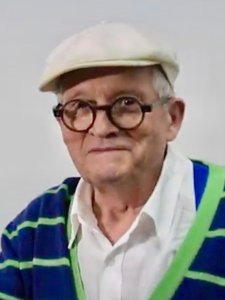
David Hockney
1937 - , Anglia
Najważniejsze informacje
- Artistic Movement Or Style: Pop Art
- Artists Or Movements Influenced By This Artist: ['Pauline Boty']
- Artists Who Influenced This Artist: ['Francis Bacon']
- Date Of Birth: 9 lipca 1937
- Full Name: David Hockney
- Nationality: Brytyjski
- Notable Artworks:
- A Bigger Splash
- Portrait of an Artist
- We Two Boys Together
- Place Of Birth: Bradford, Wielka Brytania
Zobacz także powiązane artykuły

Top 10 Sławnych Obrazów w Odcieniach Szaroniebieskiego – Inspiracje dla Wnętrz | OriginalUniqueArt.com
Odkryj 10 najsłynniejszych obrazów w odcieniach szaroniebieskiego! Poznaj historie Claude Moneta, Degasa i Van Gogha. Inspiracje wnętrzarskie i reprodukcje najwyższej jakości na OriginalUniqueArt.com – sztuka dla Twojego domu.
Błękit w Sztuce: Symbolika, Historia i Psychologiczne Oddziaływanie Koloru
Odkryj fascynującą historię błękitu w sztuce! Poznaj symbolikę, psychologię i wpływ tego koloru na arcydzieła renesansu i współczesne trendy. Ekspercka analiza dla miłośników sztuki.
David Hockney: A Retrospective on Pop Art's Chronicler of Light, Space, and the Everyday
Explore the life & work of David Hockney, Pop Art's master chronicler. Discover his iconic paintings, Californian landscapes, and lasting influence on modern art. Expert analysis for collectors.
Serene Blue Backgrounds: Discover Soulful Art to Transform Your Space with Timeless Elegance
Transform your home with soulful blue art. From serene Monet impressions to modern textured sculptures, discover curated masterpieces designed to inspire calm. Explore expert art consultations and bespoke hand-painted reproductions to create your personal sanctuary.

Liquid Vibes: Bold Water Landscapes & Deep Blue Textures to Level Up Your Space
Elevate your space with bold water landscapes and deep blue textures. Discover trending abstract art, from sculptural textiles to premium oil reproductions, designed to bring high-impact, liquid vibes to modern urban interiors.


