

 Zobacz w skali 1:1
 Wyślij
 Udostępnij
 Szczegóły
 Przewodnik

 Pobierz plik obrazu
 Podobne obiekty
 RTG
RTG Pokaz slajdów
 Statystyki
Three Trees near Thixendale

 Czytaj więcej
Kup wysokiej rozdzielczości, ulepszony obraz cyfrowy o jakości znacznie przewyższającej podgląd online.
Każdy plik jest starannie przygotowywany przez naszych specjalistów przy użyciu zaawansowanych narzędzi oraz profesjonalnej, ręcznej retuszy. Dbamy o to, aby każdy obraz cechował się wyjątkową ostrością, precyzyjnym odwzorowaniem kolorów i subtelnymi detalami.
Ostateczny plik dostarczany jest drogą mailową w ciągu 72 godzin, zoptymalizowany do natychmiastowego wykorzystania w profesjonalnych zastosowaniach redakcyjnych i poligraficznych. To ta sama jakość, której ufają czołowe studia projektowe, wydawnictwa oraz galerie sztuki.
Obraz cyfrowy
Pobierz plik o wysokiej rozdzielczości do osobistego użytku, druku oraz projektów kreatywnych. ( Przełącz na wersję drukowaną Kup ręcznie malowany obraz)
W każdym zamówieniu na obraz cyfrowy znajduje się
Profesjonalna dostawa cyfrowa z gwarancją
Wybierając OriginalUniqueArt.com, nie otrzymujesz jedynie obrazu – otrzymujesz profesjonalnie udoskonalone cyfrowe dzieło sztuki, stworzone z najwyższą precyzją i objęte gwarancją satysfakcji. Oto wszystko, co automatycznie dołączane jest do Twojego zamówienia:

Błyskawiczna dostawa e-mailowa
Plik z obrazem cyfrowym w wysokiej rozdzielczości zostanie przesłany na Twój adres e-mail w ciągu 72 godzin od złożenia zamówienia – gotowy do natychmiastowego użycia.

Plik cyfrowy ulepszony przez AI
Twoja grafika została profesjonalnie zoptymalizowana przy użyciu zaawansowanych narzędzi AI oraz ręcznej edycji, co zapewnia maksymalną szczegółowość, klarowność i wierność kolorów.

Bezpłatna dożywotnia ponowna dostawa
Przypadkowo usunąłeś lub zgubiłeś swój plik? Bez obaw – prześlemy go Tobie ponownie w dowolnym momencie, bez żadnych opłat.

Bez opłat importowych – zawsze
Ciesz się swoją sztuką natychmiast, bez żadnych opłat celnych, należności ani kosztów dostawy – pliki cyfrowe są zawsze wolne od podatku.

Gwarancja odwzorowania kolorów
Dzięki zastosowaniu profesjonalnych narzędzi i procesów zarządzania barwą zapewniamy, że Twoje cyfrowe zdjęcie odzwierciedla oryginalne kolory tak wiernie, jak to tylko możliwe.

100 dni na satysfakcję
Jeśli nie będziesz zadowolony ze swojego cyfrowego obrazu, poprawimy go lub zwrócimy 100% kosztów w ciągu 100 dni – bez zbędnych pytań.

100% Gwarancja zwrotu pieniędzy
Nie jesteś zadowolony? Otrzymaj pełny zwrot kosztów w ciągu 100 dni od otrzymania pliku cyfrowego – bez zbędnych pytań.

Rabaty przy zamówieniach hurtowych
Kup 3 obrazy, oszczędź 10% - Kup 5, oszczędź 15% - Kup 10+, oszczędź 20%. Idealne do projektów kreatywnych, galerii i agencji.
David Hockney’s “Three Trees near Thixendale”: A Celebration of Light and Landscape
The Yorkshire countryside holds a particular fascination for British artist David Hockney, whose seminal painting "Three Trees near Thixendale" embodies this enduring connection to place. Completed in 1983, the artwork isn't merely a depiction of trees; it’s an immersive experience rendered in Hockney’s signature style—a bold departure from traditional landscape painting that prioritizes luminosity and simplification.Style and Technique: Embracing Optical Illusion
Hockney’s approach distinguishes itself through his masterful manipulation of optical illusion, a technique he honed throughout his prolific career. Rather than striving for photographic realism, he employs a vibrant palette dominated by yellows and oranges—colors chosen deliberately to capture the fleeting effects of sunlight filtering through the branches. The trees themselves are rendered in broad, gestural strokes, reducing their complexity to essential forms while retaining an undeniable sense of dynamism. This simplification isn’t about diminishing beauty; it's about distilling it down to its purest essence, allowing viewers to perceive the underlying structure and rhythm of the scene. Hockney famously described his method as “painting with light,” a statement that encapsulates the core philosophy guiding this remarkable piece.Historical Context: Postmodern Reflections on Tradition
“Three Trees near Thixendale” emerged during a pivotal moment in British art history—the rise of postmodernism. Rejecting the grand narratives and stylistic conventions of Modernism, Hockney embraced experimentation and challenged established artistic hierarchies. The painting’s influence can be seen in subsequent landscape artists who sought to capture atmospheric conditions with comparable boldness and expressive freedom. It stands as a testament to Hockney's unwavering commitment to pushing boundaries while simultaneously honoring the legacy of Romantic landscape painters like Turner—a dialogue between past and present that underscores the enduring power of observation and artistic intuition.Symbolism: The Trees as Vessels of Memory
Beyond its aesthetic qualities, “Three Trees near Thixendale” resonates with deeper symbolic meanings. Trees have long been associated with resilience, growth, and connection to the natural world—themes central to Hockney’s broader artistic vision. In this specific instance, the three trees may represent interconnectedness and harmony within the landscape, mirroring Hockney's own belief in capturing fleeting moments of beauty before they vanish. Furthermore, the painting evokes memories of Yorkshire summers—a nostalgic yearning for simpler times and a celebration of the enduring spirit of place.Emotional Impact: A Moment Frozen in Time
Ultimately, “Three Trees near Thixendale” succeeds in transporting viewers to the Yorkshire countryside, capturing not just what is seen but also how it feels. The radiant colors evoke warmth and optimism, while the expressive brushstrokes convey a sense of immediacy and spontaneity. It’s a painting that invites contemplation—a reminder that true beauty lies in embracing imperfection and appreciating the transformative power of light. This artwork continues to inspire collectors and interior designers alike who seek to infuse their spaces with a touch of Hockney's distinctive vision, ensuring that “Three Trees near Thixendale” remains a cherished emblem of British landscape art for generations to come.Pytania i odpowiedzi
Gdzie mogę kupić ręcznie malowaną reprodukcję dzieła „Three Trees near Thixendale” autorstwa David Hockney?
Ręcznie malowane reprodukcje dzieła „Three Trees near Thixendale” autorstwa David Hockney można nabyć na stronie ta strona: ręcznie malowana reprodukcja olejowa na płótnie lnianym, zamawiając je poprzez ta strona.
Jaki rozmiasto wydruku "Three Trees near Thixendale" będzie odpowiedni do mojego pokoju?
W pomieszczeniu typu Living Room sugerowany jest wydruk dzieła „Three Trees near Thixendale” w rozmiarze Large.
W stronę jakiej tonacji skłania się "Three Trees near Thixendale"?
Dominującym odcieniem dzieła „Three Trees near Thixendale” autorstwa David Hockney jest Green to Violet Spectrum. Odcień ten stanowi bazową tonację palety barw.
Do jakiego nurtu i do której epoki zalicza się „Three Trees near Thixendale” autorstwa David Hockney?
„Three Trees near Thixendale” autorstwa David Hockney przynależy do nurtu Contemporary Realism, tworząc w epoce Nowoczesność swojego twórcy.
Czy w „Three Trees near Thixendale” autorstwa David Hockney wykorzystano silne kontrasty czy raczej łagodne harmonie?
Analiza kolorystyczna dzieła „Three Trees near Thixendale” autorstwa David Hockney rejestruje Balanced kontrast oraz Strong Color Unity harmonię.
Kto stworzył "Three Trees near Thixendale"?
Autorem dzieła „Three Trees near Thixendale” jest David Hockney. Praca ta figuruje w katalogu pod nazwiskiem David Hockney.
Czy dzieło "Three Trees near Thixendale" jest dostępne jako wysokiej jakości wydruk artystyczny?
Aby zamówić wydruk dzieła „Three Trees near Thixendale” autorstwa David Hockney, wystarczy złożyć zamówienie na ta strona: szlachetna odbitka na płótnie bawełnianym lub archiwalnym papierze płótnopodobnym.
Biografia artysty
A Life Painted in Light: The World of David Hockney
David Hockney, born July 9, 1937, in Bradford, England, is more than simply a painter; he’s a visual polymath whose career has spanned painting, drawing, printmaking, stage design, and photography. His story begins amidst the grit and determination of Bradford, a landscape that instilled within him a keen observational eye, even as his father, Kenneth Hockney, fostered a spirit of independent thought through conscientious objection during World War II. This early environment shaped a young artist who would consistently challenge conventions and forge his own path. Formal education at Wellington Primary School and Bradford Grammar School laid the foundation for a career that would redefine British art in the 20th and 21st centuries, culminating in studies at Bradford College of Art and later, the prestigious Royal College of Art in London. It was during these formative years that Hockney began to articulate a unique artistic voice, one that blended Pop sensibilities with a distinctly British perspective.The Rise of a Pop Icon and Beyond
The 1960s witnessed Hockney’s ascent as a pivotal figure within the burgeoning Pop Art movement. However, unlike some contemporaries who wholeheartedly embraced American commercial culture, Hockney brought a uniquely British sensibility to the genre. His work exploded with vibrant color and bold lines, depicting scenes that were both familiar and subtly subversive. A Bigger Splash (1966), perhaps his most iconic early piece, encapsulates this perfectly – a seemingly simple depiction of a swimming pool becomes a meditation on Californian leisure, artifice, and the very act of seeing. This wasn’t merely representation; it was an exploration of how we perceive reality. Critics noted Hockney's masterful use of color theory and perspective—techniques borrowed from Cubism—to create dynamic compositions that captured the immediacy of experience. His double portraits, like American Collectors (Fred and Marcia Weisman), demonstrate his remarkable ability to capture not just likeness but also the essence of personality and relationship. Hockney’s stylistic choices reflected a fascination with American culture while simultaneously grounding his work in British traditions. He skillfully employed techniques reminiscent of Surrealism—particularly juxtapositions of disparate elements—to provoke thought and challenge conventional interpretations.Experimentation, Innovation, and The Rescue Of Painting
Hockney's artistic curiosity has never been confined to a single medium. Throughout his career, he relentlessly experimented with new technologies and approaches. From his early embrace of lithography and etching to his later explorations of photography – particularly his use of Polaroid composites in the 1980s – Hockney consistently pushed the boundaries of what art could be. He famously declared painting wasn’t dead but needed “rescuing” from its own conventions, leading him to develop innovative techniques like perspective distortions and fragmented viewpoints. This desire to revitalize painting led to ambitious projects such as *Pearblossom Hwy., 11–18th April 1986*, a complex photomontage that challenged traditional notions of space and representation. Hockney’s meticulous attention to detail—evident in his preparatory sketches and finished canvases—underscored his commitment to mastering the craft of painting. He skillfully utilized optical illusions, mirroring developments in Impressionism and Futurism, demonstrating an understanding of artistic history and its influence on contemporary practice.Recognition, Legacy, And Enduring Influence
David Hockney’s contributions to the art world have been widely recognized throughout his illustrious career. He was appointed Order of the Companion of Honour (CH) in 2018, a testament to his profound impact on British culture. Prior to that, he was elected Fellow of the Royal Society (FRS) in 2003 and received the Laureate of the Praemium Imperiale for Painting in 2000. His works are held in major museum collections worldwide, and can be readily accessed through online platforms, ensuring his art continues to inspire new generations. Hockney’s influence extends beyond the visual arts; he has become a cultural icon, celebrated for his wit, intelligence, and unwavering commitment to artistic exploration. He remains an active force in the art world, continually challenging expectations and inspiring artists across disciplines. His enduring legacy rests on his ability to capture fleeting moments of beauty and emotion with unparalleled sensitivity—a feat achieved through masterful observation and innovative stylistic choices that continue to resonate with audiences today.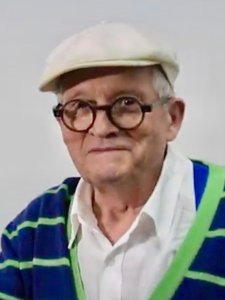
David Hockney
1937 - , Anglia
Najważniejsze informacje
- Artistic Movement Or Style: Pop Art
- Artists Or Movements Influenced By This Artist: ['Pauline Boty']
- Artists Who Influenced This Artist: ['Francis Bacon']
- Date Of Birth: 9 lipca 1937
- Full Name: David Hockney
- Nationality: Brytyjski
- Notable Artworks:
- A Bigger Splash
- Portrait of an Artist
- We Two Boys Together
- Place Of Birth: Bradford, Wielka Brytania