

 Podgląd w skali 1:1
 Wyślij jako kartkę
 Udostępnij
 Szczegóły dzieła
 Przewodnik

 Pobierz obraz
 Podobne obiekty
 RTG
RTG Pokaz slajdów
 Statystyki
Self-Portrait


 Rozwiń treść
Dzieło sztuki prezentowane na tej stronie podlega ochronie prawem autorskim, co oznacza, że nie mamy prawa do tworzenia ani sprzedaży jego identycznej reprodukcji. Ochrona ta jest egzekwowana na mocy umów międzynarodowych, takich jak Konwencja berneńska oraz przez przepisy prawa krajowego, w tym te określone w Prawo autorskie USA – Tytuł 17.
Jako pełną szacunku i legalną alternatywę oferujemy personalizowane, malowane ręcznie dzieła sztuki inspirowane oryginałem. Nasi wykwalifikowani i profesjonalni artyści starannie analizują styl, nastrój oraz artystyczną esencję pierwowzoru, aby stworzyć nowe, unikalne dzieło, które przywołuje te same emocje – pozostając jednocześnie w pełni oryginalną kreacją.
Metoda ta jest w pełni zgodna z przepisami prawa autorskiego, ponieważ nie polega na kopiowaniu ani powielaniu chronionego dzieła. Stanowi ona kreatywną reinterpretację – nowy obraz, który czerpie inspirację z oryginału, ale nie jest z nim tożsamy.
Ręcznie malowana reprodukcja olejowa
Ręcznie malowany obraz olejny na płótnie, wykonany na zamówienie przez naszych artystów w wybranym przez Ciebie wymiarze i oprawie. ( Przełącz na wydania drukowane Przejdź do wersji cyfrowej)




P118B zł10

P118H zł10

P118W zł10

P438Z zł10

P508JH zł12

P508YH zł12

P805H zł10

P805Z zł10

P919BZ zł10

P919G zł10

P919XJ zł10

P959ZH zł10

P968JZ zł12

W106C zł8

W218G zł10

W218JH zł8

W218Y zł10

W307PJ zł10

W316G zł10

W316PJ zł8

W316Y zł10

W398PJ zł8

W4111J zł10

W500HY zł15

W500JH zł15

W692G zł12

W849H zł8

W940BG zł15

W953PJ zł8




Wybierz spośród naszych standardowych rozmiarów, które zachowują oryginalne proporcje dzieła sztuki.

Wpisz wymaganą szerokość i wysokość, aby obraz pasował do Twojej ramy lub ściany. Ponieważ jest to dzieło malowane ręcznie, w przypadku rozmiaru o innych proporcjach artysta może domalować nieco więcej wokół obrazu lub przyciąć jego fragmenty — wybór należy do Ciebie. Przed rozpoczęciem pracy prześlemy Ci cyfrową wizualizację do zatwierdzenia. Obraz widoczny na tej stronie nie przedstawia rzeczywistego efektu — jedynie wizualizacja oddaje realny rezultat.
Po złożeniu zamówienia zespół OriginalUniqueArt.com skontaktuje się z klientem drogą mailową w celu uzyskania instrukcji i prześle wizualizację projektu
Dostawa na całym świecie () w ciągu 3–4 tygodni zamiast standardowych 5 tygodni. (25 Październik). Bez kompromisów w kwestii jakości.

Bezpłatna ekspresowa wysyłka na cały świat

Wysokiej jakości płótno lniane

Pełne ubezpieczenie przesyłki

Gwarancja zwrotu należności celnych i podatków importowych

Gwarancja wiernego odwzorowania kolorów

100-dniowa polityka zwrotów (tylko w przypadku wad)

Gwarancja 100% zwrotu pieniędzy

Zniżka przy zakupie wielu sztuk
 Opcja ze szkłem jest dostępna wyłącznie w rozmiarach poniżej 110 cm

Self-Portrait
Technika reprodukcji
Wymiary reprodukcji
-


Cena całkowita
zł 1151
Understanding Muralism
Muralism, as seen in the works of Roberto Montenegro, aimed to promote national identity and social change through large-scale murals painted on public buildings. This movement was heavily influenced by the Mexican Revolution (1910-1920) and sought to break away from traditional artistic conventions. For more information on Muralism, visit The Muralism Art Movement page on OriginalUniqueArt.The Artist's Style
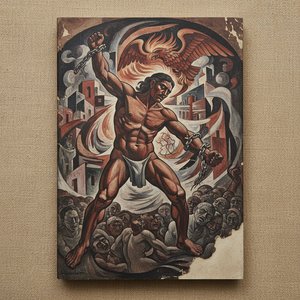
David Alfaro Siqueiros was a leading figure in the Muralism movement, and his Self-Portrait is a testament to his innovative style. The painting features a man with his hand raised in the air, possibly holding something or making a gesture, surrounded by several other people engaged in various activities. This composition suggests a sense of movement and activity, as if capturing a moment in time where people are interacting or participating in different activities.- The use of bold colors and geometric shapes is characteristic of Siqueiros' style, which was influenced by Surrealism and Post-Impressionism.
- His artwork often featured everyday people and scenes, making his paintings relatable and accessible to a wide audience.
- For more information on similar artists, visit the Salvador Dali page on OriginalUniqueArt, which features his famous Self Portrait and other notable works.
The Self-Portrait by David Alfaro Siqueiros is a significant work of art that showcases the artist's unique style and contribution to the Muralism movement. By exploring this painting and others like it, we can gain a deeper understanding of the artistic and historical context in which they were created. For more information on David Alfaro Siqueiros and his artwork, visit the OriginalUniqueArt page.
Pytania i odpowiedzi
Do którego okresu twórczości David Alfaro Siqueiros należy dzieło „Self-Portrait”?
„Self-Portrait” pochodzi z okresu Mature Period w twórczości David Alfaro Siqueiros. Klasyfikacja ta wiąże dzieło z rozwojem artysty.
Jaka jest technika i data powstania „Self-Portrait” – David Alfaro Siqueiros?
"Self-Portrait" powstało w 1945 roku przy użyciu Oil On Canvas.
Co przedstawia i jaką atmosferę oddaje „Self-Portrait” – David Alfaro Siqueiros?
"Self-Portrait" przedstawia man, red shirt, people, raised hand, figures, a jego nastrojowy charakter można określić jako Bold.
Biografia artysty
David Alfaro Siqueiros (1896–1974) – A Life Forged in Revolution
David Alfaro Siqueiros, born José de Jesús Alfaro Siqueiros in 1896 – though later research pinpointed his birthplace as Chihuahua City rather than Camargo – was more than just a painter; he was a force of nature, an embodiment of the tumultuous spirit of post-revolutionary Mexico. His life wasn’t confined to the studio but exploded onto the public stage, interwoven with political struggle and a relentless pursuit of art as a tool for social transformation. Early experiences shaped his trajectory: orphaned young, raised by his grandparents in Irapuato, Guanajuato, he was exposed to anarcho-syndicalist ideas that would deeply influence his worldview. This nascent political awareness blossomed during his student days at the Academy of San Carlos, where a protest against rigid teaching methods led to the establishment of an “open-air academy” – a defiant act marking the beginning of his artistic journey and foreshadowing a lifetime of challenging convention. The Mexican Revolution itself was the crucible in which Siqueiros’s artistic and political convictions were forged. He didn't merely observe the upheaval; he actively participated, joining the constitutional army and witnessing firsthand the hardships endured by working people and rural communities – experiences that would forever inform his art.Early Influences and Artistic Formation
Siqueiros’s formative years instilled in him a profound skepticism toward established institutions and a fervent belief in social justice. These convictions fueled his intellectual curiosity and propelled him towards anarchist thought, shaping his worldview before he even embarked on formal artistic training. His studies at the Academy of San Carlos proved pivotal, not only honing his technical skills but also fostering a rebellious spirit that would ultimately define his artistic practice. The vehement opposition to academic dogma – epitomized by the “open-air academy” movement – signaled his determination to forge an independent path, rejecting traditional artistic conventions in favor of experimentation and innovation. This ethos would characterize his entire career, driving him to constantly push boundaries and explore new techniques. Recognizing the importance of European artistic traditions, Siqueiros traveled extensively during the 1920s, immersing himself in the avant-garde currents reshaping the art world. He particularly admired Paul Cézanne’s groundbreaking use of color and form, recognizing its ability to capture the essence of reality beyond mere representation. Simultaneously, he cultivated connections with fellow Mexican artist Diego Rivera, establishing a collaborative relationship that would prove instrumental in shaping the trajectory of Mexican muralism.European Immersion and the Birth of Muralist Technique
The period between 1919 and 1923 witnessed Siqueiros’s transformative engagement with European artistic culture. His journey to Italy was particularly significant, where he studied Renaissance fresco techniques – a skill that would become central to his monumental mural projects. Unlike many artists of his time who sought to emulate classical styles, Siqueiros embraced the challenge of adapting these traditions to contemporary concerns. He understood that true artistry demanded not simply imitation but critical engagement with history and culture. This intellectual rigor informed his artistic approach, resulting in works that were both aesthetically sophisticated and politically charged. Furthermore, he recognized the potential for industrial materials and techniques – notably spray guns – to revolutionize mural painting, achieving unprecedented levels of scale and vibrancy. He championed this innovative method, arguing that it was essential for conveying the dynamism and complexity of modern life.The Mexican Mural Movement and Revolutionary Art
David Alfaro Siqueiros emerged as a leading figure in the burgeoning Mexican Mural Movement alongside Diego Rivera and José Clemente Orozco—artists united by a shared conviction that art could serve as a catalyst for social transformation. Inspired by the ideals of Marxism and fueled by his firsthand experiences during the Revolution, Siqueiros envisioned murals not merely as decorative artworks but as powerful instruments for educating the populace and promoting progressive values. His artistic output reflects this profound commitment to social realism, utilizing bold colors, dynamic compositions, and innovative techniques to depict the struggles and aspirations of ordinary people. “The New Democracy” (1940s), considered one of his most important works, exemplifies this approach. The mural’s chaotic imagery captures the turbulent spirit of the era, reflecting the contradictions inherent in achieving social justice. Similarly, “The Polished City” (1930s) confronts viewers with a critique of industrial capitalism and its dehumanizing effects. His monumental murals—spanning over 40 meters—are not passive representations but active engagements with history and society. They stand as enduring symbols of the Mexican Mural Movement’s ambition to transform public spaces into canvases for social commentary.Legacy and Influence
David Alfaro Siqueiros's contribution to art history extends far beyond his impressive oeuvre. He established a distinctive artistic style characterized by dynamism, sculptural treatment of forms, and an experimental use of industrial materials—techniques that profoundly influenced subsequent generations of artists. His unwavering commitment to political activism—documented in numerous arrests and exile experiences—solidified his reputation as an artist who dared to challenge power structures and advocate for social justice. He inspired the Chicano art movement in the United States during the civil rights era, providing a visual language for expressing cultural identity and confronting systemic oppression. Siqueiros’s legacy continues to resonate today, reminding us that art can serve as a powerful force for shaping perceptions of reality and promoting transformative change. His monumental murals—particularly “The March of Humanity”—remain iconic representations of revolutionary art and continue to inspire artists and audiences alike.
David Alfaro Siqueiros
1896 - 1974 , Meksyk
Krótka nota
- Artistic Movement Or Style: Social Realizm, Murale
- Artists Or Movements Influenced By This Artist: ['Chicano art movement']
- Artists Who Influenced This Artist:
- Paul Cézanne
- Diego Rivera
- Date Of Birth: 29 grudnia 1896
- Date Of Death: 6 stycznia 1974
- Full Name: David Alfaro Siqueiros
- Nationality: Meksykański
- Notable Artworks:
- Nowa Demokracja
- Polerowana Miasto
- Marsz Ludzkości
- Place Of Birth: Chihuahua, Meksyk
Powiązane artykuły

Od scenerii dżungli po geometryczne złoto: przewodnik po najpopularniejszych stylach murali we współczesnym designie
Odkryj najnowsze trendy w projektowaniu murali hotelowych! Ekspercki przewodnik po stylach, kolorach i technikach. Stwórz unikalny design wnętrz z naszym wsparciem.

Rewolucja we Wnętrzach: Murale w Kuchni i Łazience – Nowy Trend dla Hotelarzy
Odkryj rewolucję we wnętrzach hoteli! Eksperckie porady o muralach w kuchni i łazience – inspiracje, trwałe materiały i unikalny design. Stwórz niezapomniany klimat dla gości.
José Clemente Orozco: A Revolutionary Vision of Mexican Muralism & the Human Condition
Explore the powerful world of José Clemente Orozco, a key figure in Mexican Muralism. Discover his revolutionary art, social commentary, and lasting impact on 20th-century painting. Learn about his unique style & legacy.

Walls of Revolution: The Socio-Political Legacy and Grandeur of Mexican Muralism
Explore the profound history of Mexican Muralism. Discover how 'The Big Three' transformed public walls into powerful narratives of revolution, identity, and social realism through masterworks by Diego Rivera and José Clemente Orozco.
10 Iconic Masterpieces That Defined Geometric Abstraction
Journey through history with 10 iconic geometric abstraction masterpieces. From Mondrian to Malevich, explore the stories behind these timeless shapes and colors. Find museum-quality art reproductions and decor inspiration at OriginalUniqueArt.com. Discover all masterpieces online.


