

 Zobacz w skali 1:1
 Wyślij
 Udostępnij
 Szczegóły
 Przewodnik

 Pobierz plik obrazu
 Podobne obiekty
 RTG
RTG Pokaz slajdów
 Statystyki
Jacket


 Czytaj więcej
Dzieło sztuki prezentowane na tej stronie podlega ochronie prawem autorskim, co oznacza, że nie mamy prawa do tworzenia ani sprzedaży jego identycznej reprodukcji. Ochrona ta jest egzekwowana na mocy umów międzynarodowych, takich jak Konwencja berneńska oraz przez przepisy prawa krajowego, w tym te określone w Prawo autorskie USA – Tytuł 17.
Jako pełną szacunku i legalną alternatywę oferujemy personalizowane, malowane ręcznie dzieła sztuki inspirowane oryginałem. Nasi wykwalifikowani i profesjonalni artyści starannie analizują styl, nastrój oraz artystyczną esencję pierwowzoru, aby stworzyć nowe, unikalne dzieło, które przywołuje te same emocje – pozostając jednocześnie w pełni oryginalną kreacją.
Metoda ta jest w pełni zgodna z przepisami prawa autorskiego, ponieważ nie polega na kopiowaniu ani powielaniu chronionego dzieła. Stanowi ona kreatywną reinterpretację – nowy obraz, który czerpie inspirację z oryginału, ale nie jest z nim tożsamy.
Ręcznie malowana reprodukcja olejowa
Ręcznie malowany obraz olejny na płótnie, wykonany na zamówienie przez naszych artystów w wybranym przez Ciebie wymiarze i oprawie. ( Przełącz na wersję drukowaną Przełącz na wersję cyfrową)




P118B zł10

P118H zł10

P118W zł10

P438Z zł10

P508JH zł12

P508YH zł12

P805H zł10

P805Z zł10

P919BZ zł10

P919G zł10

P919XJ zł10

P959ZH zł10

P968JZ zł12

W106C zł8

W218G zł10

W218JH zł8

W218Y zł10

W307PJ zł10

W316G zł10

W316PJ zł8

W316Y zł10

W398PJ zł8

W4111J zł10

W500HY zł15

W500JH zł15

W692G zł12

W849H zł8

W940BG zł15

W953PJ zł8




Wybierz spośród naszych standardowych rozmiarów, które zachowują oryginalne proporcje dzieła sztuki.

Wpisz wymaganą szerokość i wysokość, aby obraz pasował do Twojej ramy lub ściany. Ponieważ jest to dzieło malowane ręcznie, w przypadku rozmiaru o innym proporcji artysta może domalować nieco więcej wokół obrazu lub przyciąć fragmenty — wybór należy do Ciebie. Przed rozpoczęciem pracy prześlemy Ci cyfrową wizualizację do zatwierdzenia. Obraz widoczny na tej stronie nie przedstawia rzeczywistego efektu — jedynie wizualizacja oddaje realny rezultat.
Po złożeniu zamówienia zespół OriginalUniqueArt.com skontaktuje się z klientem drogą mailową w celu uzyskania instrukcji i prześle wizualizację projektu
Dostawa na całym świecie () w ciągu 3–4 tygodni zamiast standardowych 5 tygodni. (23 Październik). Bez kompromisów w kwestii jakości.

Bezpłatna ekspresowa wysyłka na cały świat

Wysokiej jakości płótno lniane

Pełne ubezpieczenie transportowe

Gwarancja zwrotu należności celnych i podatków importowych

Gwarancja idealnego odwzorowania barw

100-dniowy okres na zwrot dzieła w przypadku wykrycia wad produkcyjnych

Gwarancja 100% zwrotu pieniędzy

Oferta przy zakupie wielu sztuk
 Opcja ze szkłem jest dostępna wyłącznie w rozmiarach poniżej 110 cm

Jacket
Technika wykonania
Rozmiar reprodukcji
-


Suma do zapłaty
zł 1155
Cristóbal Balenciaga’s “Jacket”: A Window into 1930s Parisian Elegance
This meticulously rendered depiction of a 1930s jacket by Cristóbal Balenciaga offers more than just a visual representation of haute couture; it's a portal to a specific moment in fashion history, a testament to the designer’s revolutionary approach and his profound understanding of silhouette and form. Executed with a masterful hand – likely through oil or acrylic on canvas – the artwork captures not merely the garment itself, but the spirit of an era defined by both opulent luxury and a subtle, almost subversive, embrace of Eastern influences. The painting's quiet elegance speaks volumes about Balenciaga’s genius: his ability to translate artistic experimentation into wearable art.
Design and Construction – A Symphony of Lines and Textures
- Form and Silhouette: The jacket, a waist-length V-neck design, immediately commands attention with its dramatic funnel sleeves extending beyond the wrist. This deliberate exaggeration, a hallmark of Balenciaga’s style, creates an undeniably feminine silhouette, meticulously narrowed at the waist – a key feature of 1930s fashion trends.
- Craftsmanship: The detailing is exquisite; the prolongation of the sides in black satin, transforming into a sophisticated belt, speaks to the meticulous construction typical of Balenciaga’s ateliers. The use of contrasting materials—the smooth white fabric juxtaposed with the sheen of the satin and the plushness of the fur trim – elevates the piece beyond mere clothing, presenting it as a sculptural object.
- Innovative Sleeve Design: The horse-hoof shaped cuffs, a direct nod to Chinese historical fashion, are particularly striking. This unexpected detail reveals Balenciaga’s willingness to challenge conventions and incorporate elements from diverse cultural sources into his designs, a characteristic that earned him the moniker "the master of us all."
Color Palette and Lighting – Evoking Mood and Atmosphere
The artwork's color palette—a restrained yet impactful combination of white, black, and subtle shades of grey and beige—serves to highlight the jacket’s form and texture. The dominant white provides a luminous backdrop, while the black accents create dramatic contrast, emphasizing the garment’s structure. The inclusion of cream or off-white in the fur trim adds a touch of warmth and softness, further enhancing the piece's luxurious feel. The diffused lighting contributes significantly to the artwork’s mood, creating a calm and neutral atmosphere that allows the viewer to fully appreciate the jacket’s intricate details.
Historical Context and Artistic Influences – Balenciaga’s Vision
Created in 1930, this piece reflects the stylistic trends of the era—the preference for narrow waists, flowing fabrics, and a touch of exoticism. Balenciaga's work was profoundly influenced by avant-garde art movements, as evidenced by his earlier pieces like “Study to ‘Song of Songs IV’,” demonstrating an experimental approach to fashion. His fascination with nature, seen in "Tree Roots," translated into a sensitivity for form and texture that informed his designs. The jacket itself embodies this fusion – a blend of classical elegance and artistic innovation.
Symbolic Resonance – Elegance and Timelessness
More than just a fashion illustration, “Jacket” evokes feelings of timeless elegance and sophistication. It’s a visual representation of the power of design to shape not only our appearance but also our perception of ourselves. The meticulous detail suggests an appreciation for artistry and craftsmanship—qualities that remain highly valued in contemporary art and design. This artwork is a beautiful reminder of Balenciaga's legacy, a testament to his ability to create enduring pieces that continue to inspire awe and admiration.
Pytania i odpowiedzi
Gdzie mogę pobrać „Jacket” autorstwa Cristóbal Balenciaga?
Obraz „Jacket” autorstwa Cristóbal Balenciaga można pobrać ze strony Pobierz dzieła: wysokiej rozdzielczości cyfrowe zdjęcie do pobrania.
Jakie są prawa do reprodukcji dzieła "Jacket" znajdującego się w Muzeum Cristóbala Balenciagi?
Status praw autorskich do dzieła „Jacket” autorstwa Cristóbal Balenciaga jest jasny: utwór znajduje się w nadal chronione prawem autorskim. Jego obecność w Muzeum Cristóbala Balenciagi nie zmienia tego stanu rzeczy.
Jaki dominujący odcień przenika „Jacket” autorstwa Cristóbal Balenciaga?
Dominującym odcieniem dzieła „Jacket” autorstwa Cristóbal Balenciaga jest Green to Violet Spectrum. Odcień ten stanowi bazową tonację palety barw.
Biografia artysty
Early Life and Artistic Beginnings
Cristóbal Balenciaga Eizaguirre, a name synonymous with unparalleled elegance and revolutionary design, was born in 1895 in the picturesque fishing village of Getaria, nestled along the rugged coast of Spain’s Basque Country. His early life, steeped in the traditions of his seafaring community, provided an unexpected foundation for a career that would ultimately reshape the world of haute couture. From a young age, Cristóbal was deeply influenced by his mother, a skilled seamstress who operated a small atelier within their home. Witnessing her meticulous craft and the artistry involved in transforming fabric into wearable works of art ignited a passion within him – a desire to master the secrets of design and construction. He began assisting her at just twelve years old, learning the fundamentals of tailoring and patternmaking, skills that would prove crucial to his later success. This early exposure instilled in him an unwavering dedication to precision, a hallmark of his distinctive style. His father’s profession as a fisherman further shaped his perspective, imbuing a deep appreciation for natural materials and their inherent qualities – a respect he consistently translated into his designs.Influences and Artistic Evolution
Balenciaga's artistic journey was profoundly shaped by the vibrant cultural landscape of early 20th-century Spain and beyond. He drew inspiration from a diverse range of sources, including the rich traditions of Basque folk art, the dramatic flair of Spanish flamenco, and the innovative spirit of European avant-garde movements. His initial training in San Sebastián exposed him to the techniques of established tailors, but it was his travels to Paris that truly ignited his creative fire. There, he encountered the groundbreaking designs of Coco Chanel and Elsa Schiaparelli, absorbing their bold experimentation with silhouette and color. Notably, he developed a deep admiration for Diego Velázquez’s paintings, particularly the dramatic use of light and shadow, which informed his approach to draping and volume. The influence of Surrealism is also evident in his later work, as seen in pieces like “Acrobat,” where he pushed the boundaries of form and challenged conventional notions of beauty. Balenciaga's ability to synthesize these diverse influences into a cohesive and utterly unique aesthetic cemented his position as a true visionary.The Rise of a Couturier
Following the Spanish Civil War, Balenciaga recognized the opportunities presented by Paris’s status as the global center of fashion. He established his couture house in 1937 on Avenue George V, quickly gaining recognition for his impeccable craftsmanship and daring designs. His early collections were characterized by their sculptural forms, inspired by historical silhouettes and infused with a distinctly Spanish sensibility. The “Infanta” gown, directly referencing Velázquez’s portraits of the Spanish royal family, became an instant sensation, demonstrating Balenciaga's ability to seamlessly blend tradition and innovation. He quickly gained the patronage of royalty, aristocracy, and Hollywood stars – a testament to his growing reputation as the "Master of Us All," a title bestowed upon him by Christian Dior. During World War II, despite the challenges posed by wartime restrictions, Balenciaga continued to create exquisite garments, utilizing innovative techniques like draping and manipulating fabric to achieve remarkable effects. His designs were highly sought after by clients willing to risk travel to Paris for his creations.Revolutionizing Silhouette and Legacy
Balenciaga’s most significant contribution to fashion was undoubtedly his radical reimagining of the female silhouette. Rejecting the prevailing hourglass shape popularized by Dior, he introduced a series of groundbreaking designs that redefined the way women dressed. His “sack dress,” unveiled in 1957, eliminated the waist altogether, creating a clean, streamlined look that challenged conventional notions of femininity. This was followed by the introduction of the "balloon hem," which dramatically expanded the volume of skirts and jackets, and the iconic “baby doll” dress, characterized by its trapeze-like shape and effortless elegance. These innovations, combined with his masterful use of fabric – particularly silk gazar – established Balenciaga as a true pioneer of modern fashion. His influence extended far beyond individual garments; he fundamentally altered the way designers approached form and construction, paving the way for subsequent generations of creatives. Cristóbal Balenciaga Eizaguirre died in 1972, leaving behind a legacy that continues to inspire awe and admiration within the world of fashion. His work remains celebrated for its timeless elegance, impeccable craftsmanship, and unwavering commitment to pushing the boundaries of design.
Cristóbal Balenciaga
1895 - 1972 , Hiszpania
Najważniejsze informacje
- Artistic Movement Or Style: Avant-garde / Surrealizm
- Artists Or Movements Influenced By This Artist: ['Diego Velázquez']
- Artists Who Influenced This Artist:
- Coco Chanel
- Christian Dior
- Date Of Birth: 21 stycznia 1895
- Date Of Death: 23 marca 1972
- Full Name: Cristóbal Balenciaga Eizaguirre
- Nationality: Hiszpański
- Notable Artworks:
- Study 'Song of Songs IV'
- Tree Roots
- Acrobat
- Place Of Birth: Getaria, Hiszpania
Zobacz także powiązane artykuły
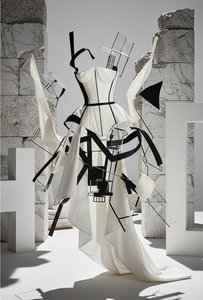
Gianfranco Ferré: Deconstructing Haute Couture – A Legacy of Architectural Form
Explore the revolutionary world of Gianfranco Ferré, 'the architect of fashion.' Discover his architectural approach to haute couture, iconic Dior designs, and lasting influence on luxury style. A deep dive for collectors & enthusiasts.

Czarne arcydzieła: Top 10 słynnych obrazów pełnych mroku i ekspresji | OriginalUniqueArt.com
Odkryj 10 słynnych obrazów, w których czerń króluje! Poznaj historie artystów, ekspresjonizm i mroczną paletę barw. Reprodukcje dzieł sztuki najwyższej jakości na OriginalUniqueArt.com – inspiracje do wnętrz i kolekcjonerstwo.
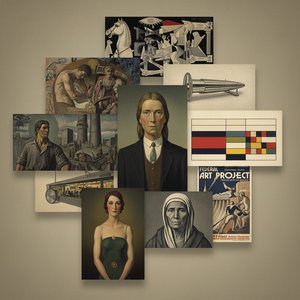
Arcydzieła lat 30.: Obrazy i artyści definiujący epokę | OriginalUniqueArt.com
Odkryj 10 arcydzieł lat 30.! Poznaj historie artystów, ekspresjonizmu i surrealizmu. Inspiracje wnętrzarskie w stylu Art Deco. Reprodukcje obrazów najwyższej jakości na OriginalUniqueArt.com – znajdź idealny obraz do Twojego domu.

Cristóbal Balenciaga: Deconstructing Haute Couture's Architectural Legacy
Explore the revolutionary world of Cristóbal Balenciaga, the 'couturier's couturier'. Discover his architectural designs, lasting influence on haute couture, and guide to collecting rare pieces. A connoisseur’s resource.
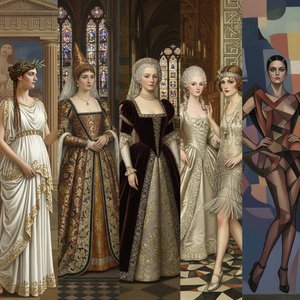
Style Through the Ages: Iconic Artworks That Defined the Evolution of Fashion Design
Explore the breathtaking intersection of fine art and high fashion. Discover how iconic masterpieces from Art Deco to Impressionism have shaped the world of luxury couture and timeless design in this curated visual journey.

