
 Podgląd w skali 1:1
 Wyślij jako kartkę
 Udostępnij
 Szczegóły dzieła
 Przewodnik

 Pobierz obraz
 Podobne obiekty
 RTG
RTG Pokaz slajdów
 Q&A
Q&A Statystyki
Hip-length jacket


 Rozwiń treść
Dzieło sztuki prezentowane na tej stronie podlega ochronie prawem autorskim, co oznacza, że nie mamy prawa do tworzenia ani sprzedaży jego identycznej reprodukcji. Ochrona ta jest egzekwowana na mocy umów międzynarodowych, takich jak Konwencja berneńska oraz przez przepisy prawa krajowego, w tym te określone w Prawo autorskie USA – Tytuł 17.
Metoda ta jest w pełni zgodna z przepisami prawa autorskiego, ponieważ nie polega na kopiowaniu ani powielaniu chronionego dzieła. Stanowi ona kreatywną reinterpretację – nowy obraz, który czerpie inspirację z oryginału, ale nie jest z nim tożsamy.
Giclée / Wydruk artystyczny
Wydruki giclée lub płótna o jakości muzealnej, szybka realizacja i szeroki wybór opcji wykończenia. ( Zamów ręcznie malowaną reprodukcję Przejdź do wersji cyfrowej)




P118B zł10

P118H zł10

P118W zł10

P438Z zł10

P508JH zł12

P508YH zł12

P805H zł10

P805Z zł10

P919BZ zł10

P919G zł10

P919XJ zł10

P959ZH zł10

P968JZ zł12

W106C zł8

W218G zł10

W218JH zł8

W218Y zł10

W307PJ zł10

W316G zł10

W316PJ zł8

W316Y zł10

W398PJ zł8

W4111J zł10

W500HY zł15

W500JH zł15

W692G zł12

W849H zł8

W940BG zł15

W953PJ zł8




Wybierz spośród naszych standardowych rozmiarów, które zachowują oryginalne proporcje dzieła sztuki.

Wpisz wymaganą szerokość i wysokość, aby dopasować grafikę do ramy lub ściany. Wydruk można jedynie przyciąć, nigdy nie powiększając go poza oryginalny obraz, dlatego format o innych proporcjach spowoduje utratę części kompozycji. Przed rozpoczęciem druku prześlemy Ci cyfrowy podgląd do zatwierdzenia. Obraz wyświetlany na tej stronie nie pokazuje rzeczywistego przycięcia — jedynie podgląd oddaje ten efekt.
Dostawa na cały świat () w ciągu 2 tygodni zamiast standardowych 4/5 tygodni. (2 Listopad)

Bezpłatna ekspresowa wysyłka na cały świat

Wysokiej jakości płótno lniane

Pełne ubezpieczenie przesyłki

Gwarancja zwrotu należności celnych i podatków importowych

Gwarancja wiernego odwzorowania kolorów

100-dniowa polityka zwrotów (tylko w przypadku wad)

Gwarancja 100% zwrotu pieniędzy

Zniżka przy zakupie wielu sztuk
 Opcja ze szkłem jest dostępna wyłącznie w rozmiarach poniżej 110 cm

Hip-length jacket
Giclée / Wydruk artystyczny
Wymiary reprodukcji
-


Cena całkowita
zł 311
The Genesis of a Masterpiece: Cristóbal Balenciaga and the 1951 Hip-Length Jacket
In the post-war years, as Europe cautiously emerged from the shadows of conflict, fashion sought solace in an embrace of understated elegance. It was within this climate of restrained optimism that Cristóbal Balenciaga, the “master of us all,” conceived his iconic 1951 hip-length jacket – a garment that transcends mere outerwear and embodies a profound understanding of form, fabric, and the human silhouette. More than just a coat, it’s a distilled essence of Balenciaga's philosophy: a celebration of simplicity achieved through meticulous construction and an almost sculptural approach to design.
Born in Getaria, Spain, Balenciaga’s early life was steeped in the traditions of Basque tailoring – a lineage he would ultimately revolutionize. He arrived in Paris in 1936, immediately establishing himself as a force to be reckoned with, challenging the established norms of haute couture with his bold silhouettes and innovative use of materials. The 1951 jacket represents a pivotal moment in this evolution; it’s a return to the fundamental principles of tailoring, stripped bare of excessive ornamentation, yet imbued with an undeniable sense of power and sophistication.
Deconstructing the Form: Construction and Materials
The jacket's structure is deceptively simple. A clean, hip-length cut establishes its immediate impact – a statement of confidence and modernity. The front is fitted to the waist with strategic darts, creating a subtly defined silhouette that accentuates the natural curves of the body. The back, conversely, flows freely, adapting gracefully to the shoulder line, offering both structure and movement. This duality—the controlled precision of the front juxtaposed against the fluid drape of the back—is a hallmark of Balenciaga’s design philosophy.
- Fabric: The jacket is constructed from ivory silk taffeta, chosen for its luxurious sheen and ability to hold its shape.
- Details: A black velvet turndown collar and lapels add a touch of formality and visual interest. An inside strap hugs the garment to the body, leaving the outside free and accentuating the fullness of the back.
- Construction: The three-quarter sleeves are assembled with three panels, ensuring a clean and polished finish.
A Tapestry of Texture and Technique
While seemingly minimalist, the jacket is far from devoid of embellishment. The true artistry lies in the intricate chenille embroidery that adorns the surface – a technique Balenciaga pioneered and mastered. The floral motifs, reminiscent of opulent Oriental gardens, are meticulously rendered with an almost obsessive attention to detail. Alongside the embroidery, acetate sequins shimmer with iridescent light, while delicate beads add a subtle sparkle. Twisted golden threads weave a luxurious tapestry across the fabric, creating a dynamic interplay of texture and color.
Balenciaga’s genius lay not just in his understanding of silhouette, but in his innovative use of materials and techniques. The jacket is a testament to this – a showcase for his signature approach to embellishment, demonstrating a mastery of both traditional and experimental methods.
Symbolism and Emotional Resonance
The 1951 hip-length jacket transcends its purely functional purpose; it’s imbued with symbolic meaning. In the post-war era, it represented a return to elegance and refinement – a rejection of the flamboyant excesses of the pre-war period. The simplicity of the design speaks to a desire for clarity and restraint, while the luxurious materials and intricate embellishment suggest an underlying celebration of beauty and craftsmanship.
The jacket’s enduring appeal lies in its ability to evoke a sense of timeless sophistication. It's a garment that embodies both strength and grace, confidence and humility – qualities that continue to resonate with contemporary audiences. A reproduction captures this essence beautifully, offering a tangible connection to the genius of Cristóbal Balenciaga and his legacy as one of fashion’s most influential designers.
Pytania i odpowiedzi
Czy mogę zamówić olejną reprodukcję "Hip-length jacket"?
"Hip-length jacket" jest dostępny jako ręcznie malowana reprodukcja olejowa na płótnie lnianym. Zamówienie można złożyć na stronie Ręcznie malowana reprodukcja, wybierając preferowany rozmiar.
Czy istnieją dzieła podobne do „Hip-length jacket”?
Dzieła podobne do „Hip-length jacket” – Cristóbal Balenciaga można znaleźć na stronie Podobne dzieła danego dzieła.
Do którego etapu kariery Cristóbal Balenciaga należy dzieło „Hip-length jacket” (1951)?
Biorąc pod uwagę datę powstania (1951), dzieło „Hip-length jacket” wpisuje się w Mature Period twórczości Cristóbal Balenciaga.
Biografia artysty
Early Life and Artistic Beginnings
Cristóbal Balenciaga Eizaguirre, a name synonymous with unparalleled elegance and revolutionary design, was born in 1895 in the picturesque fishing village of Getaria, nestled along the rugged coast of Spain’s Basque Country. His early life, steeped in the traditions of his seafaring community, provided an unexpected foundation for a career that would ultimately reshape the world of haute couture. From a young age, Cristóbal was deeply influenced by his mother, a skilled seamstress who operated a small atelier within their home. Witnessing her meticulous craft and the artistry involved in transforming fabric into wearable works of art ignited a passion within him – a desire to master the secrets of design and construction. He began assisting her at just twelve years old, learning the fundamentals of tailoring and patternmaking, skills that would prove crucial to his later success. This early exposure instilled in him an unwavering dedication to precision, a hallmark of his distinctive style. His father’s profession as a fisherman further shaped his perspective, imbuing a deep appreciation for natural materials and their inherent qualities – a respect he consistently translated into his designs.Influences and Artistic Evolution
Balenciaga's artistic journey was profoundly shaped by the vibrant cultural landscape of early 20th-century Spain and beyond. He drew inspiration from a diverse range of sources, including the rich traditions of Basque folk art, the dramatic flair of Spanish flamenco, and the innovative spirit of European avant-garde movements. His initial training in San Sebastián exposed him to the techniques of established tailors, but it was his travels to Paris that truly ignited his creative fire. There, he encountered the groundbreaking designs of Coco Chanel and Elsa Schiaparelli, absorbing their bold experimentation with silhouette and color. Notably, he developed a deep admiration for Diego Velázquez’s paintings, particularly the dramatic use of light and shadow, which informed his approach to draping and volume. The influence of Surrealism is also evident in his later work, as seen in pieces like “Acrobat,” where he pushed the boundaries of form and challenged conventional notions of beauty. Balenciaga's ability to synthesize these diverse influences into a cohesive and utterly unique aesthetic cemented his position as a true visionary.The Rise of a Couturier
Following the Spanish Civil War, Balenciaga recognized the opportunities presented by Paris’s status as the global center of fashion. He established his couture house in 1937 on Avenue George V, quickly gaining recognition for his impeccable craftsmanship and daring designs. His early collections were characterized by their sculptural forms, inspired by historical silhouettes and infused with a distinctly Spanish sensibility. The “Infanta” gown, directly referencing Velázquez’s portraits of the Spanish royal family, became an instant sensation, demonstrating Balenciaga's ability to seamlessly blend tradition and innovation. He quickly gained the patronage of royalty, aristocracy, and Hollywood stars – a testament to his growing reputation as the "Master of Us All," a title bestowed upon him by Christian Dior. During World War II, despite the challenges posed by wartime restrictions, Balenciaga continued to create exquisite garments, utilizing innovative techniques like draping and manipulating fabric to achieve remarkable effects. His designs were highly sought after by clients willing to risk travel to Paris for his creations.Revolutionizing Silhouette and Legacy
Balenciaga’s most significant contribution to fashion was undoubtedly his radical reimagining of the female silhouette. Rejecting the prevailing hourglass shape popularized by Dior, he introduced a series of groundbreaking designs that redefined the way women dressed. His “sack dress,” unveiled in 1957, eliminated the waist altogether, creating a clean, streamlined look that challenged conventional notions of femininity. This was followed by the introduction of the "balloon hem," which dramatically expanded the volume of skirts and jackets, and the iconic “baby doll” dress, characterized by its trapeze-like shape and effortless elegance. These innovations, combined with his masterful use of fabric – particularly silk gazar – established Balenciaga as a true pioneer of modern fashion. His influence extended far beyond individual garments; he fundamentally altered the way designers approached form and construction, paving the way for subsequent generations of creatives. Cristóbal Balenciaga Eizaguirre died in 1972, leaving behind a legacy that continues to inspire awe and admiration within the world of fashion. His work remains celebrated for its timeless elegance, impeccable craftsmanship, and unwavering commitment to pushing the boundaries of design.
Cristóbal Balenciaga
1895 - 1972 , Hiszpania
Krótka nota
- Artistic Movement Or Style: Avant-garde / Surrealizm
- Artists Or Movements Influenced By This Artist: ['Diego Velázquez']
- Artists Who Influenced This Artist:
- Coco Chanel
- Christian Dior
- Date Of Birth: 21 stycznia 1895
- Date Of Death: 23 marca 1972
- Full Name: Cristóbal Balenciaga Eizaguirre
- Nationality: Hiszpański
- Notable Artworks:
- Study 'Song of Songs IV'
- Tree Roots
- Acrobat
- Place Of Birth: Getaria, Hiszpania
Powiązane artykuły

The Lens of Luxury: A Visual Journey Through the Evolution and Artistry of Fashion Photography
Embark on a visual journey through the evolution of fashion photography. Discover how masters like Gianfranco Ferré blended geometry, surrealism, and texture to redefine high-fashion art for collectors and connoisseurs of luxury imagery.
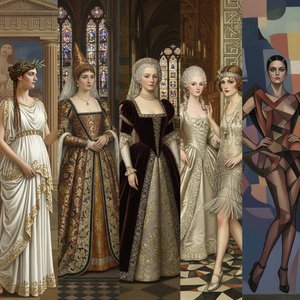
Style Through the Ages: Iconic Artworks That Defined the Evolution of Fashion Design
Explore the breathtaking intersection of fine art and high fashion. Discover how iconic masterpieces from Art Deco to Impressionism have shaped the world of luxury couture and timeless design in this curated visual journey.
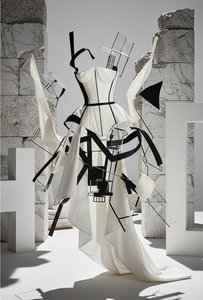
Gianfranco Ferré: Deconstructing Haute Couture – A Legacy of Architectural Form
Explore the revolutionary world of Gianfranco Ferré, 'the architect of fashion.' Discover his architectural approach to haute couture, iconic Dior designs, and lasting influence on luxury style. A deep dive for collectors & enthusiasts.

Czarne arcydzieła: Top 10 słynnych obrazów pełnych mroku i ekspresji | OriginalUniqueArt.com
Odkryj 10 słynnych obrazów, w których czerń króluje! Poznaj historie artystów, ekspresjonizm i mroczną paletę barw. Reprodukcje dzieł sztuki najwyższej jakości na OriginalUniqueArt.com – inspiracje do wnętrz i kolekcjonerstwo.

Cristóbal Balenciaga: Deconstructing Haute Couture's Architectural Legacy
Explore the revolutionary world of Cristóbal Balenciaga, the 'couturier's couturier'. Discover his architectural designs, lasting influence on haute couture, and guide to collecting rare pieces. A connoisseur’s resource.

