

 Podgląd w skali 1:1
 Wyślij jako kartkę
 Udostępnij
 Szczegóły dzieła
 Przewodnik

 Pobierz obraz
 Podobne obiekty
 RTG
RTG Pokaz slajdów
 Q&A
Q&A Statystyki
Catalan Atlas


 Rozwiń treść
Giclée / Wydruk artystyczny
Wydruki giclée lub płótna o jakości muzealnej, szybka realizacja i szeroki wybór opcji wykończenia. ( Zamów ręcznie malowaną reprodukcję Przejdź do wersji cyfrowej)




































Wybierz spośród naszych standardowych rozmiarów, które zachowują oryginalne proporcje dzieła sztuki.

Wpisz wymaganą szerokość i wysokość, aby dopasować grafikę do ramy lub ściany. Wydruk można jedynie przyciąć, nigdy nie powiększając go poza oryginalny obraz, dlatego format o innych proporcjach spowoduje utratę części kompozycji. Przed rozpoczęciem druku prześlemy Ci cyfrowy podgląd do zatwierdzenia. Obraz wyświetlany na tej stronie nie pokazuje rzeczywistego przycięcia — jedynie podgląd oddaje ten efekt.
Dostawa na cały świat () w ciągu 2 tygodni zamiast standardowych 4/5 tygodni. (29 Październik)

Bezpłatna ekspresowa wysyłka na cały świat

Wysokiej jakości płótno lniane

Pełne ubezpieczenie przesyłki

Gwarancja zwrotu należności celnych i podatków importowych

Gwarancja wiernego odwzorowania kolorów

100-dniowa polityka zwrotów (tylko w przypadku wad)

Gwarancja 100% zwrotu pieniędzy

Zniżka przy zakupie wielu sztuk
 Opcja ze szkłem jest dostępna wyłącznie w rozmiarach poniżej 110 cm

Catalan Atlas
Giclée / Wydruk artystyczny
Wymiary reprodukcji
-


Cena całkowita
zł 308
Pytania i odpowiedzi
Kto stworzył "Catalan Atlas" i w jakim roku?
Cresques Abraham, "Catalan Atlas", 1375 rok
Do którego okresu twórczości Cresques Abraham należy dzieło "Catalan Atlas"?
"Catalan Atlas" reprezentuje Late Medieval twórczości Cresques Abraham.
Jaką kolorystykę wykorzystuje "Catalan Atlas"?
Kolory dzieła "Catalan Atlas" tworzą Pastels paletę barw. Klasyfikacja ta opisuje dominujące rodziny kolorystyczne.
Biografia artysty
Early Life and Origins
- Name: Cresques Abraham (his given name was actually Cresques, Abraham being his father's name)
- Alternative Names: Eliça, son of Rabbi Abraham
- Born: Palma de Mallorca, Spain, circa 1325
- Died: 1387
- Background: Cresques was born into a Jewish family in Majorca, then part of the Crown of Aragon. His grandfather, Vidal Cresques, was a prominent figure within the local Jewish community. The family’s involvement in cartography and related crafts likely began before his birth.
The Catalan Atlas and Cartographic Expertise
- Major Work: Cresques is most renowned for his authorship of the Catalan Atlas, completed around 1375 in collaboration with his son, Jehuda Cresques.
- Commissioned by: Prince John of Aragon, intended as a gift for Charles VI of France.
- Content and Significance: The Catalan Atlas was more than just a map; it served as an encyclopedia of geographical, political, economic, and zoological information. It included the first incorporation of a compass rose on a portolan chart.
- Cartographic Style: Cresques’s work combined practical navigational charts (portolans) with decorative elements and detailed illustrations. He demonstrated expertise in geography, astronomy, and navigation.
Influences and Development
- Majorcan Cartographic School: Cresques was a leading member of the Majorcan cartographic school, which flourished during the 14th century. This school produced some of Europe’s finest nautical charts.
- Jewish Tradition in Cartography: Jews played a significant role in medieval mapmaking and instrument creation, leveraging their skills in mathematics, astronomy, and international trade.
- Arabic Influence: The cartographic traditions of the Islamic world likely influenced Cresques' work, particularly in terms of astronomical knowledge and map projections.
Legacy and Historical Significance
- Pioneering Cartographer: Cresques is considered a pioneer in nautical cartography, contributing significantly to the development of accurate and detailed sea charts.
- Impact on Navigation: His maps facilitated trade and exploration by providing sailors with reliable navigational tools.
- Cultural Significance: The Catalan Atlas reflects the cultural and scientific advancements of 14th-century Europe, showcasing a blend of art, science, and commerce.
- Family Legacy: Cresques’s son, Jehuda Cresques, continued his father's work and later became a cartographer in Portugal under Henry the Navigator, further extending the family’s influence on mapmaking.
Later Years and Conversion of His Son
- Royal Protection: Cresques and his son received royal protection from Pedro IV of Aragon, including financial support and exemptions from certain regulations.
- Jehuda's Conversion: Following anti-Jewish outbreaks in Spain in 1391, Jehuda converted to Christianity and changed his name to Jaime Ribes. He continued his cartographic work under the patronage of John I and later Martin of Aragon.
- Mestre Jacome de Mallorca: Jehuda became known as Mestre Jacome de Mallorca and worked for Henry the Navigator in Portugal, contributing to Portuguese explorations along the African coast.

Cresques Abraham
1325 - 1387 , Spain
Krótka nota
- Full Name: Cresques Abraham
- Nationality: Spanish
- Date Of Birth: 1325
- Date Of Death: 1387
- Place Of Birth: Palma de Mallorca, Spain
- Notable Artworks: ['Catalan Atlas']
- Artistic Movement Or Style: Nautical cartography
Powiązane artykuły

Sacred Symbols & Golden Light: A Journey Through the Divine Artistry of the Early Medieval Era
Embark on a visual journey through Early Medieval art. Explore the profound beauty of illuminated manuscripts, sacred symbols, and golden light through an expert historical lens, celebrating the enduring legacy of medieval craftsmanship and divine artistry.

Late Medieval Masterpieces: 10 Artworks That Defined an Era | OriginalUniqueArt
Journey through 10 defining Late Medieval masterpieces – from Giotto's frescoes to Jan van Eyck’s realism. Explore the stories, techniques & vibrant colors of Gothic art. Find museum-quality reproductions and elevate your home decor with OriginalUniqueArt.com! Discover all masterpieces on OriginalUniqueArt.com

Divine Light & Golden Splendor: A Journey Through the Sacred Grandeur of High Medieval Art
Embark on a soulful journey through High Medieval art. Explore the divine light of Gothic cathedrals, Byzantine splendor, and sacred masterpieces that shaped Western history with our expert-led cultural reflections.
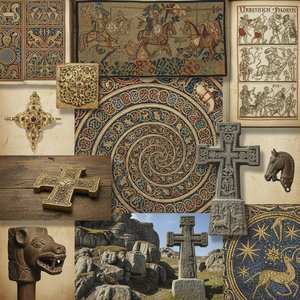
Early Medieval Art: 10 Masterpieces That Shaped a New World | OriginalUniqueArt
Journey through 10 stunning Early Medieval masterpieces – from the Book of Kells to Carolingian mosaics. Explore art history, symbolism & find museum-quality reproductions for your home at OriginalUniqueArt.com. Discover all masterpieces online!

High Medieval Art: 10 Masterpieces That Shaped an Era | OriginalUniqueArt
Journey through High Medieval Art! Explore 10 iconic masterpieces – from Giotto's frescoes to stunning Gothic cathedrals. Discover the stories behind these timeless paintings, sculptures & illuminated manuscripts. Find museum-quality art reproductions at OriginalUniqueArt.com.