

 Zobacz w skali 1:1
 Wyślij
 Udostępnij
 Szczegóły
 Przewodnik

 Pobierz plik obrazu
 Podobne obiekty
 RTG
RTG Pokaz slajdów
 Statystyki
PAYSAGE AUX CINQ BAIGNEUSES


 Czytaj więcej
Giclée / Wydruk artystyczny
Wydruki giclée lub płótna o jakości muzealnej, szybka realizacja i szeroki wybór opcji wykończenia. ( Kup ręcznie malowany obraz Przełącz na wersję cyfrową)




P118B $10

P118H $10

P118W $10

P438Z $10

P508JH $12

P508YH $12

P805H $10

P805Z $10

P919BZ $10

P919G $10

P919XJ $10

P959ZH $10

P968JZ $12

W106C $8

W218G $10

W218JH $8

W218Y $10

W307PJ $10

W316G $10

W316PJ $8

W316Y $10

W398PJ $8

W4111J $10

W500HY $15

W500JH $15

W692G $12

W849H $8

W940BG $15

W953PJ $8




Wybierz spośród naszych standardowych rozmiarów, które zachowują oryginalne proporcje dzieła sztuki.

Możesz wprowadzić własne wymiary, aby dopasować dzieło do konkretnej ramy lub przestrzeni. Jeśli wybrany rozmiar nie będzie odpowiadał proporcjom oryginalnego obrazu, przytniecie dzieło lub rozszerzymy obraz za pomocą odbicia lustrzanego lub jednolitego wypełnienia krawędzi. Przed rozpoczęciem produkcji prześlemy cyfrową wizualizację do Twojej akceptacji.
Prosimy pamiętać, że podgląd na ekranie nie odzwierciedla faktycznego przycinania ani rozszerzania. Tylko wizualizacja dokładnie pokaże końcową kompozycję.
Mimo dostępności niestandardowych rozmiarów, zalecamy wybór wymiaru z listy zdefiniowanej, aby zachować oryginalne proporcje.
Dostawa na cały świat () w ciągu 2 tygodni zamiast standardowych 4/5 tygodni. (26 Wrzesień)

Bezpłatna ekspresowa wysyłka na cały świat

Wysokiej jakości płótno lniane

Pełne ubezpieczenie transportowe

Gwarancja zwrotu należności celnych i podatków importowych

Gwarancja idealnego odwzorowania barw

100-dniowy okres na zwrot dzieła w przypadku wykrycia wad produkcyjnych

Gwarancja 100% zwrotu pieniędzy

Oferta przy zakupie wielu sztuk
 Opcja ze szkłem jest dostępna wyłącznie w rozmiarach poniżej 110 cm

PAYSAGE AUX CINQ BAIGNEUSES
Giclée / Wydruk artystyczny
Rozmiar reprodukcji
-


Suma do zapłaty
$ 80
A Symphony of Light and Myth
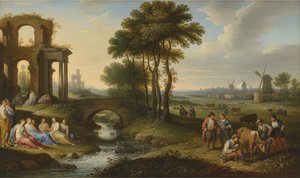
In the quiet, golden glow of an idealized Roman hillside, Cornelis van Poelenburch’s Paysage aux cinq baigneuses (Landscape with Five Bathers) invites the viewer into a realm where time seems to suspend itself. Executed between 1627 and 1630, this exquisite oil on copper masterpiece serves as a profound meditation on the harmony between humanity and the natural world. As one gazes upon the lush foliage and rugged rocky outcrops, there is an immediate sense of serenity, a palpable stillness that transcends the centuries. The painting does not merely depict a scene; it orchestrates an atmosphere, using a warm, diffused light to bathe five nude figures in a soft, ethereal radiance that suggests a moment of divine grace captured in the fleeting seconds of a summer afternoon.
The narrative woven into this landscape is deeply rooted in the humanist ideals of the seventeenth century. By portraying men and women engaged in the ritual of bathing amidst nymphs and satyrs, Van Poelenburch draws directly from the wellspring of classical mythology. This choice of subject matter elevates the work from a simple pastoral scene to a symbolic exploration of desire, beauty, and contemplation. The figures, rendered with a delicate grace, embody the Renaissance preoccupation with the human body as a vessel of both intellect and aesthetic perfection. For the discerning collector or interior designer, this piece offers more than visual splendor; it provides a window into an era that sought to find the sacred within the sensual, making it a captivating centerpiece for any space dedicated to reflection and elegance.
Mastery of the Baroque Brush
Technically, the work is a triumph of the Dutch Baroque tradition, showcasing Van Poelenburch’s ability to balance the dramatic tension of Mannerism with the clarity of the emerging Baroque style. The artist employs a sophisticated technique of layering oil paint to build a sense of profound depth and volume. While one might detect subtle distortions in form—a lingering influence from his Mannerist predecessors—the overall composition is defined by an exquisite equilibrium. The perspective recedes thoughtfully into hazy, distant mountains, creating a spatial ambiguity that draws the eye deeper into the landscape, while the organic shapes of trees and stone are anchored by a balanced, classical structure.
The color palette is a masterclass in understated luxury, dominated by earthy ochres, deep browns, and muted greens that ground the mythological fantasy in a sense of tangible reality. These somber tones are brilliantly punctuated by highlights of gold and pale blues in the sky, mirroring the way sunlight filters through a forest canopy. The texture of the skin is rendered with such smoothness that it almost invites a tactile response, contrasting beautifully with the ruggedness of the landscape. For those seeking to adorn a sophisticated interior, this painting offers a versatile emotional impact; its warm tones and tranquil subject matter can evoke feelings of peace and classical grandeur, seamlessly integrating into both traditional and contemporary settings as a testament to timeless artistic excellence.
Biografia artysty
wczesne lata i kształcenie
cornelis van poelenburgh, wybitny holenderski malarz pejzażu, przyszedł na świat w 1594 roku w utrecht, w niderlandach. jego artystyczna droga rozpoczęła się pod okiem abrahama bloemaerta, znamienitego artysty tamtej epoki. to właśnie ta fundamentalna edukacja położyła podwaliny pod przyszłe sukcesy van poelenburgha, kształtując jego wrażliwość na detal i światło.kariera artystyczna i inspiracje
podróże van poelenburgha do rzymu na początku XVII wieku wywarły głęboki wpływ na jego twórczość, czyniąc go czołowym przedstawicielem pierwszego pokolenia holenderskich malarzy pejzażu działających w słonecznej italii. jego miniaturowe płótna, często przedstawiające włoskie krajobrazy z drobnymi postaciami odgrywającymi sceny biblijne lub mitologiczne, stały się wizytówką jego unikalnego stylu. najważniejsze dzieła:- satyrs spying on nymphs (po 1627 r.), charakterystyczny przykład twórczości van poelenburgha, ukazujący archaiczne krajobrazy z postaciami kąpiącymi się w naturze. (zobacz na OriginalUniqueArt)
- council of the gods (ok. 1630 r.), malowidło prezentujące idealistyczny, pagórkowaty krajobraz oraz boginie inspirowane antykiem, które obecnie znajduje się w zbiorach mauritshuis (haga, niderlandy). (zobacz na OriginalUniqueArt)
dziedzictwo i późniejsze lata życia
dzieła van poelenburgha cieszyły się ogromnym uznaniem wśród współczesnych mu elit, w tym wielkiego księcia toskańskiego oraz holenderskiego stadholdera. artysta powrócił później do utrecht, gdzie zmarł w 1667 roku, zaledwie kilka lat po swoim dawnym mistrzu, abrahamie bloemaercie. kluczowe fakty:- urodzony w utrecht, niderlandy w 1594 roku
- kształcony przez abrahama bloemaerta
- zainspirowany pobytem w rzymie
- znany z niewielkich, włoskich pejzaży z postaciami
- zmarł w utrecht w 1667 roku zobacz dzieła cornelis van poelenburch na OriginalUniqueArt dowiedz się więcej o cornelis van poelenburgh na wikipedia

Cornelis Van Poelenburch
1594 - 1667 , Holandia
Najważniejsze informacje
- Artistic Movement Or Style: Niderlandzki pejzaż, Romanat
- Artists Or Movements Influenced By This Artist: ['Claude Lorraine']
- Artists Who Influenced This Artist: ['Abraham Bloemaert']
- Date Of Birth: 1594, Utrecht, Holandia
- Date Of Death: 1667, Utrecht, Holandia
- Full Name: Cornelis van Poelenburgh
- Nationality: Holender
- Notable Artworks:
- Satyrowie szpiegujący nimfy
- Rada bogów
- Place Of Birth: Utrecht, Holandia
Zobacz także powiązane artykuły

Masterpieces of Light: A Definitive Guide to the Landscapes of the Dutch Golden Age
Discover the luminous mastery of Dutch Golden Age landscapes. Our expert guide explores the atmospheric realism of masters like Van Goyen and Cuyp. Elevate your space with museum-quality, hand-painted oil reproductions from OriginalUniqueArt.com. Art history, beautifully realized.
Cornelis van Poelenburch: Bridging Mannerism & the Dutch Baroque Landscape
Discover Cornelis van Poelenburch, a pivotal Dutch Baroque landscape painter bridging Mannerism & Italianate styles. Explore his life, key works, and lasting influence on 17th-century art with OriginalUniqueArt.

Rembrandt van Rijn: 25 Najwybitniejszych Dzieł Sztuki – Reprodukcje i Inspiracje do Wnętrz
Poznaj 25 arcydzieł Rembrandta van Rijn! Odkryj fascynujące historie, techniki i wpływ holenderskiego mistrza baroku na świat sztuki. Reprodukcje obrazów najwyższej jakości – inspiracje do wnętrz na OriginalUniqueArt.com

Golden Light & Dutch Skies: The Timeless Magic of Dutch Golden Age Landscapes
Discover the breathtaking beauty of Dutch Golden Age landscapes. Explore the mastery of light, chiaroscuro, and 17th-century realism through an expert art history lens, celebrating the enduring legacy of the Dutch Masters for discerning collectors and art lovers.

Jan van Goyen: Master of Dutch Landscape & Atmospheric Perspective
Discover Jan van Goyen, the master of Dutch landscape painting. Explore his subtle technique, atmospheric realism & lasting influence on art history. Learn about this 17th-century pioneer at OriginalUniqueArt.