() ·

A painting made for you, by hand

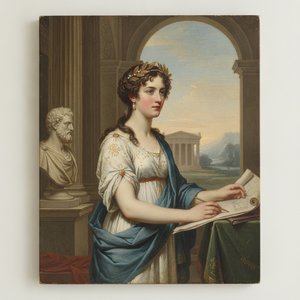
Melancholy

Ręcznie malowana reprodukcja olejowa

Ręcznie malowany obraz olejny na płótnie, wykonany na zamówienie przez naszych artystów w wybranym przez Ciebie wymiarze i oprawie. ( Przełącz na wydania drukowane Przejdź do wersji cyfrowej)

Opis obiektu

Experience 'Melancholy' by Constance Charpentier – a poignant neoclassical painting capturing quiet introspection and emotional depth. Explore its history, style & artistic significance.

Biografia artysty

Discover Constance Charpentier (1767-1849): French painter of captivating genre scenes & portraits, especially children & women. Studied with David & a leading portraitist of her era.

from ·

Chapter 1

How large should it be?

Slide to change the size; the picture on the left shows the frame at its real width. The proportions of the original are kept.

Standardowy format
personalizowane
CM
INCH

Wybierz spośród naszych standardowych rozmiarów, które zachowują oryginalne proporcje dzieła sztuki.

szerokość
wysokość

Wpisz wymaganą szerokość i wysokość, aby obraz pasował do Twojej ramy lub ściany. Ponieważ jest to dzieło malowane ręcznie, w przypadku rozmiaru o innych proporcjach artysta może domalować nieco więcej wokół obrazu lub przyciąć jego fragmenty — wybór należy do Ciebie. Przed rozpoczęciem pracy prześlemy Ci cyfrową wizualizację do zatwierdzenia. Obraz widoczny na tej stronie nie przedstawia rzeczywistego efektu — jedynie wizualizacja oddaje realny rezultat.

Chapter 2

How should it arrive?

Choose the edges of the stretched canvas

Choose your frame

Corner sample of the WhiteWrap canvas edge finish, stretched on lite drewno bars
White zł1
Corner sample of the BlurSideWrap canvas edge finish, stretched on lite drewno bars
Blurside zł1
Corner sample of the ExtendedWrap canvas edge finish, stretched on lite drewno bars
Extended zł1
Corner sample of the P118B picture frame: polistyren formowany, 5 cm wide and 3 cm thick
P118B zł10
Corner sample of the P118H picture frame: polistyren formowany, 5 cm wide and 3 cm thick
P118H zł10
Corner sample of the P118W picture frame: polistyren formowany, 5 cm wide and 3 cm thick
P118W zł10
Corner sample of the P438Z picture frame: polistyren formowany, 5.5 cm wide and 3.5 cm thick
P438Z zł10
Corner sample of the P508JH picture frame: polistyren formowany, 7 cm wide and 3.5 cm thick
P508JH zł12
Corner sample of the P508YH picture frame: polistyren formowany, 7 cm wide and 3.5 cm thick
P508YH zł12
Corner sample of the P805H picture frame: polistyren formowany, 5 cm wide and 3.5 cm thick
P805H zł10
Corner sample of the P805Z picture frame: polistyren formowany, 5 cm wide and 3.5 cm thick
P805Z zł10
Corner sample of the P919BZ picture frame: polistyren formowany, 7 cm wide and 3.5 cm thick
P919BZ zł10
Corner sample of the P919G picture frame: polistyren formowany, 7 cm wide and 3.5 cm thick
P919G zł10
Corner sample of the P919XJ picture frame: polistyren formowany, 7 cm wide and 3.5 cm thick
P919XJ zł10
Corner sample of the P959ZH picture frame: polistyren formowany, 5 cm wide and 3 cm thick
P959ZH zł10
Corner sample of the P968JZ picture frame: polistyren formowany, 6 cm wide and 4 cm thick
P968JZ zł12
Corner sample of the W106C picture frame: lite drewno, 5 cm wide and 3 cm thick
W106C zł8
Corner sample of the W218G picture frame: lite drewno, 5 cm wide and 3 cm thick
W218G zł10
Corner sample of the W218JH picture frame: lite drewno, 5 cm wide and 3 cm thick
W218JH zł8
Corner sample of the W218Y picture frame: lite drewno, 5 cm wide and 3 cm thick
W218Y zł10
Corner sample of the W307PJ picture frame: lite drewno, 6 cm wide and 3 cm thick
W307PJ zł10
Corner sample of the W316G picture frame: lite drewno, 6 cm wide and 3 cm thick
W316G zł10
Corner sample of the W316PJ picture frame: lite drewno, 6 cm wide and 3 cm thick
W316PJ zł8
Corner sample of the W316Y picture frame: lite drewno, 6 cm wide and 3 cm thick
W316Y zł10
Corner sample of the W398PJ picture frame: lite drewno, 5 cm wide and 3 cm thick
W398PJ zł8
Corner sample of the W4111J picture frame: lite drewno, 6.5 cm wide and 3.5 cm thick
W4111J zł10
Corner sample of the W500HY picture frame: lite drewno, 7 cm wide and 5 cm thick
W500HY zł15
Corner sample of the W500JH picture frame: lite drewno, 7 cm wide and 5 cm thick
W500JH zł15
Corner sample of the W692G picture frame: lite drewno, 8 cm wide and 4 cm thick
W692G zł12
Corner sample of the W849H picture frame: lite drewno, 5 cm wide and 3 cm thick
W849H zł8
Corner sample of the W940BG picture frame: lite drewno, 7.5 cm wide and 4.5 cm thick
W940BG zł15
Corner sample of the W953PJ picture frame: lite drewno, 6 cm wide and 3.5 cm thick
W953PJ zł8
Corner sample of the H24-GOLD picture frame: rzeźbione drewno pokryte gipsem, 10 cm wide and 6 cm thick
H24-GOLD zł30
Corner sample of the H24-SILVER picture frame: rzeźbione drewno pokryte gipsem, 10 cm wide and 6 cm thick
H24-SILVER zł30
Corner sample of the H36-GOLD picture frame: rzeźbione drewno pokryte gipsem, 15 cm wide and 6.5 cm thick
H36-GOLD zł45
Corner sample of the H36-SILVER picture frame: rzeźbione drewno pokryte gipsem, 15 cm wide and 6.5 cm thick
H36-SILVER zł45

Moulding: . Overall size with the frame: .

Chapter 3

Who paints it, and should anything change?

Examples of what can be changed: Replace face with customer photo; Add pet (e.g., replace cat with dog); Include hidden message in background; Change background landscape or elements.
After order, OriginalUniqueArt.com team will email client for instructions and provide a mockup preview

Dostawa na całym świecie () w ciągu 3–4 tygodni zamiast standardowych 5 tygodni. (31 Październik). Bez kompromisów w kwestii jakości.

Chapter 4

The finishing touches

A nameplate, as in a museum?

Szczegóły grawerowanej brązowej tabliczki

This elegant plaque features the artist's name and the title of the artwork, finely engraved for a timeless presentation.

It is made from bronze with a refined, elegant finish. The text is precisely laser-engraved for a sharp and permanent result. Measuring 9x2 cm, the plaque is compact yet easy to read. It's built to be durable and scratch-resistant, offering a professional, museum-quality look. Mounting is simple thanks to the included adhesive backing.

Szczegóły przezroczystej tabliczki akrylowej

The plaque includes essential engraved details such as the artist's name, the title of the artwork, the date it was created, the type of media used-like oil on canvas or watercolor-a brief description of the piece, and a QR code that links to the complete artwork information.

It is crafted from clear acrylic, offering a sleek, modern appearance. The text is UV-engraved in black to ensure strong visual contrast. With a size of 10x15 cm, it ensures optimal readability. It comes equipped with two metal hooks for secure wall mounting. The plaque is designed to be weather-resistant, making it suitable for various environments, and it includes interactive features that work seamlessly with smartphone scanning.

Szczegóły czarnej tabliczki akrylowej

This elegant plaque includes engraved information such as the artist's name, the title of the artwork, the date it was created, the type of media used (like oil on canvas or watercolor), a short description of the artwork, and a QR code for quick access to more information.

The plaque itself is made from refined black acrylic with a premium finish. The text is laser-engraved in white for high contrast and readability. Its size is 10x15 cm, designed to be easy to read. It comes with two metal hooks for professional mounting. The design is sleek and fits any interior style. It is also weather-resistant and durable, with built-in digital integration for mobile compatibility.

A protective varnish?

When do you need it?

Chapter 5

Your painting, as you ordered it

Melancholy

Technika reprodukcji

Wymiary reprodukcji

-

Wybitny mistrz artystyczny

Większa szczegółowość, finezja i dodatkowy czas na realizację

-

Opcje oprawy reprodukcji

-

-

W przypadku dzieł sztuki lub reprodukcji, których którykolwiek z boków przekracza 105 cm (około 41 cali), rama zostanie wysłana w formie zestawu do samodzielnego montażu. Metoda ta zapewnia bezpieczną dostawę i zapobiega uszkodzeniom podczas transportu.

Wymagany profesjonalny montaż – nie jest to produkt typu DIY.
Zestaw musi zostać złożony, a płótno naciągnięte przez doświadczonego profesjonalnego ramiarza, przy użyciu kleju do drewna (brak w zestawie), kleszczy do naciągania płótna oraz ścisków, które utrzymają krosna w równej pozycji podczas schnięcia kleju. Nieprawidłowy montaż lub nierównomierne napięcie płótna może trwale uszkodzić dzieło sztuki i nie podlega naszej gwarancji.

  • W zestawie znajdują się wszystkie listwy z litego drewna, precyzyjnie docięte do wymiarów.

  • Montaż odbywa się przy użyciu dołączonych wkrętów oraz kleju do drewna do łączenia narożników, którego zestaw nie zawiera i który musi zostać dostarczony przez ramiarza.

  • Wymagane są profesjonalne narzędzia, których nie ma w zestawie: kleszcze do naciągania płótna (napinacz) oraz zaciski, które pozwolą utrzymać listwy w równej pozycji podczas schnięcia kleju.

Ważne:
Do połączenia narożników niezbędny jest klej do drewna, listwy należy unieruchomić za pomocą ścisków do momentu całkowitego wyschnięcia kleju, a naciągnięcie płótna na złożoną ramę wymaga użycia kleszczy do naciągania płótna. Żaden z tych elementów nie jest dołączony do zestawu. Przed zamówieniem tego rozmiaru zalecamy konsultację z doświadczonym ramiarzem.

Etykieta obiektu

-

-

Lakier ochronny

Lakier z połyskiem (pogłębia kolory, chroni przed światłem i wilgocią)

-

Personalizacja dzieła

Przykłady możliwości personalizacji: zastąp twarz zdjęciem klienta; dodaj zwierzę domowe (np. zamień kota na psa); umieść ukrytą wiadomość w tle; zmień krajobraz lub elementy tła.

-

Ekspresowa

Dostawa na cały świat () w ciągu 3–4 tygodni zamiast standardowych 5 tygodni. (31 Październik). Bez kompromisów w kwestii jakości.

-

Przesyłka ekspresowa

Dostawa na cały świat () w ciągu 5 tygodni. (7 Listopad).

W cenie

Cena całkowita

zł 1167

Suma całkowita zł 1167

Opcja ze szkłem jest dostępna wyłącznie w rozmiarach poniżej 110 cm

Included with every order

  • Bezpłatna ekspresowa wysyłka na cały świat
  • Wysokiej jakości płótno lniane
  • Pełne ubezpieczenie przesyłki
  • Gwarancja zwrotu należności celnych i podatków importowych
  • Gwarancja wiernego odwzorowania kolorów
  • 100-dniowa polityka zwrotów (tylko w przypadku wad)
  • Gwarancja 100% zwrotu pieniędzy
  • Zniżka przy zakupie wielu sztuk

Melancholy by Constance Charpentier: A Portrait of Quietude

Constance Charpentier’s “Melancholy,” painted in 1801, is more than just a depiction of a seated woman; it's an exquisitely rendered meditation on solitude and the lingering grief of a generation. This oil-on-canvas masterpiece, currently residing within the hallowed halls of the Musée de Picardie in Amiens, France, offers a poignant glimpse into the artistic sensibilities of early 19th-century Europe – a period grappling with the aftermath of revolution and war.

The painting immediately draws the viewer’s eye to its central figure: a young woman lost in contemplative thought. Her posture is subtly slumped, her gaze fixed downwards, suggesting an inward journey of sorrow. The setting—a darkened landscape punctuated by indistinct trees—amplifies this sense of isolation and reinforces the theme of melancholy. Notice how Charpentier masterfully employs chiaroscuro, utilizing dramatic contrasts between light and shadow to sculpt the figure’s form and create a palpable atmosphere of quiet sadness. The muted palette – primarily creams, whites, and grays – further contributes to the painting's somber mood, while subtle variations within these tones hint at depth and texture.

Neoclassical Elegance: Style and Technique

“Melancholy” is a quintessential example of Neoclassicism, an artistic movement that sought inspiration from the art and ideals of ancient Greece and Rome. Charpentier’s work embodies this style through its emphasis on order, clarity, and balanced composition. The meticulous brushwork—evident in the delicate rendering of the fabric draped across the woman's body and the subtle modeling of her features—demonstrates a remarkable level of technical skill. The use of clean lines and defined edges is characteristic of Neoclassicism, lending the painting an air of formality and restraint.

Technically, Charpentier’s approach leans towards a restrained emotional palette, prioritizing form and structure over overt sentimentality. However, she skillfully captures the nuances of human emotion through her masterful use of light and shadow, creating a powerful sense of introspection within the subject's gaze. The painting’s shallow perspective further focuses attention on the figure, immersing the viewer in her internal world.

A Window into an Era: Historical Context

To fully appreciate “Melancholy,” it’s crucial to understand the historical context in which it was created. Following the tumultuous years of the French Revolution and Napoleonic Wars, France was a nation grappling with profound social and emotional upheaval. The loss of countless young men had left an indelible mark on society, particularly on women who often bore the brunt of responsibility and grief. Charpentier’s painting reflects this collective sorrow, offering a visual representation of the quiet despair that permeated French society at the time.

The Musée de Picardie, where “Melancholy” is housed, provides further context by showcasing other works from the same period, including pieces by Pierre Puvis de Chavannes and Frans Hals. These artists, like Charpentier, were deeply influenced by Neoclassicism and sought to capture the beauty and dignity of human experience through their art.

Symbolism and Emotional Resonance

Beyond its technical brilliance, “Melancholy” is rich in symbolism. The woman’s contemplative pose and downward gaze evoke a sense of introspection and sorrow, while the darkened landscape suggests a world shrouded in grief. The classical drapery—a hallmark of Neoclassicism—references ancient virtues and ideals, subtly hinting at a longing for a lost past or a more harmonious future. The painting's overall effect is profoundly moving, inviting viewers to contemplate the complexities of human emotion and the enduring power of melancholy.

Reproductions of “Melancholy” offer an accessible way to experience the beauty and emotional depth of this remarkable artwork. Whether displayed in a private residence or a public space, it serves as a timeless reminder of the capacity for art to capture and convey the most profound human experiences.

Pytania i odpowiedzi

Czy mogę obejrzeć "Melancholy" w formie pełnoekranowej prezentacji slajdów?

Dostępna jest prezentacja zdjęć: strona Prezentacja slajdów dzieła „Melancholy” – Constance Charpentier.

Czy mogę przyjrzeć się bliżej dziełu "Melancholy"?

Widok rentgenowski dzieła „Melancholy” – Constance Charpentier jest dostępny na stronie Analiza rentgenowska: to interaktywna analiza obrazu obejmująca jedenaście warstw optycznych.

Jaki jest zalecany rozmiar wydruku dla „Melancholy” – Constance Charpentier?

Dla dzieła „Melancholy” – Constance Charpentier sugerowana jest reprodukcja w formacie Medium. Rozmiar można dostosować, zachowując proporcje.

More about this painting

Podgląd w skali 1:1 Podgląd AR Przełącz na wydania drukowane Przejdź do wersji cyfrowej Wyślij jako kartkę
Szczegóły dzieła Przewodnik Dodaj do ulubionych Pobierz obraz Podobne obiekty RTG Pokaz slajdów Q&A Statystyki

In numbers

  • 1801the year it was painted
  • 29frames to choose from
  • standard sizes, in its own proportions
  • 5weeks to paint and deliver it
Constance Charpentier

Constance Charpentier

1767 - 1849, France

Quick facts about Constance Charpentier

  • Name: Constance Marie Charpentier
  • Movement: Neoclassicism, Genre painting
  • Birth Date: 1767-04-04
  • Death Date: 1849-08-03
  • Birth Place: Paris, France
  • Nationality: French
  • Date Of Birth: 1767
  • Date Of Death: 1849
  • Influenced By:
    • Jacques-Louis David
    • François Gérard
    • Pierre Bouillon
    • Louis Lafitte
    • Johann Georg Wille
    • Pierre-Alexandre Wille
  • Notable Works: Melancholy, Young Woman Drawing (attribution disputed)
  • Place Of Birth: Paris, France

Biografia artysty

Constance Charpentier: A Life in Portraiture

Early Life and Training

Constance Marie Charpentier was born in Paris, France, on April 4, 1767, and passed away in 1849. Her early life remains somewhat shrouded in mystery, particularly regarding her formal artistic training. Records are unclear, but it is widely believed she studied under several prominent artists of the time.

  • She is often associated with Jacques-Louis David, a leading figure of Neoclassicism, though this remains debated.
  • Other potential instructors include François Gérard, Pierre Bouillon, Louis Lafitte, and members of the Wille family – Johann Georg Wille or his son, Pierre-Alexandre Wille.

Artistic Development and Style

Charpentier specialized in genre scenes and portraits, with a particular focus on depicting women and children. Her style reflects the influence of Neoclassicism, characterized by clarity, precision, and a restrained emotional palette. However, she also infused her work with a sensitivity to character and an intimate portrayal of domestic life.

  • Her paintings often capture moments of quiet contemplation or everyday activity.
  • She demonstrated skill in rendering textures and details, particularly in fabrics and facial expressions.

Career and Recognition

Charpentier began exhibiting her work at the Salons – prestigious art exhibitions – from 1795 to 1819. Over this period, she presented approximately thirty paintings to the public.

  • In 1814, she received a gold medal at the Paris Salon, marking a significant achievement in her career.
  • She was also awarded a silver medal at the Salon in Douai in 1821.

Challenges and Misattributions

Charpentier’s artistic legacy has been complicated by instances of misattribution. Some of her works were initially credited to her teacher, Jacques-Louis David.

  • The painting Young Woman Drawing (1801), for example, was first attributed to David, then to Charpentier, but is now believed to be the work of Marie-Denise Villers.
  • This highlights the challenges faced by female artists in gaining recognition during this period and the tendency for their contributions to be overlooked or overshadowed.

Legacy and Historical Significance

Despite these challenges, Constance Charpentier is now recognized as one of the finest portrait painters of her era. Based on surviving works positively identified as hers, she demonstrated a remarkable talent for capturing the likenesses and personalities of her subjects.

  • Her paintings offer valuable insights into the lives of women and children in late 18th and early 19th-century France.
  • She represents an important figure in the history of French art, demonstrating the skill and creativity of female artists during a time when their opportunities were limited.

Najważniejsze informacje

  • Title: Melancholy
  • Location: Musée de Picardie, Amiens
  • Medium: Oil on canvas
  • Subject or theme: Melancholy, contemplation
  • Artistic style: Neoclassicism

Quiz o sztuce

Do każdego pytania dotyczy tylko jedna poprawna odpowiedź.

Pytanie 1:
What is the primary emotion conveyed by Constance Charpentier’s ‘Melancholy’?
Pytanie 2:
In what century was the painting ‘Melancholy’ created?
Pytanie 3:
The painting utilizes a shallow perspective. What effect does this primarily create?
Pytanie 4:
Where is ‘Melancholy’ currently housed?
Pytanie 5:
Which artistic movement is ‘Melancholy’ most closely associated with?