Abstract Expressionism · 1964
Untitled (Clyfford Still, 1964)
Clyfford Still (1904–1980) stworzył Untitled. Dzieło pochodzi z 1964. Należy do nurtu Abstract Expressionism. Wykonano w technice Acrylic On Canvas. Przechowywane jest w Guggenheim Museum Bilbao w Bilbao, Hiszpania. Wymiary to 273 × 236 cm.
- 1964
- Acrylic On Canvas
- 273 × 236 cm
- Guggenheim Museum Bilbao

 Podgląd w skali 1:1

 Ręcznie malowany obraz olejny
 Wyślij jako kartkę
 Udostępnij
 Karta informacyjna


 Pobierz obraz
 Podobne obiekty
 RTG
 Pokaz slajdów
 Pytania i odpowiedzi

 Statystyki
Untitled w skrócie
- Tytuł
- Untitled
- Artysta
- Clyfford Still (1904–1980)
- Miejsce urodzenia artysty
- Grandin, Stany Zjednoczone
- Data powstania
- 1964
- Technika wykonania
- Acrylic On Canvas
- Wymiary
- 273 × 236 cm
- Gdzie można je zobaczyć
- Guggenheim Museum Bilbao, Bilbao, Hiszpania
- Temat
- red tree, maryland farm, color field, verticality, canvas, abstraction
Co przedstawia Untitled?
The Raw Essence of Form: An Exploration of Clyfford Still's Untitled
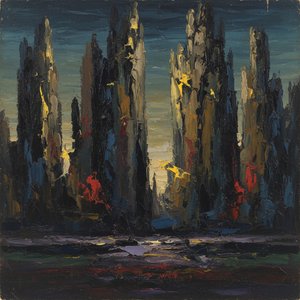
Clyfford Still’s “Untitled,” a monumental canvas from 1964, isn’t merely a painting; it’s an immersion into the heart of Abstract Expressionism and a profound meditation on American identity. Measuring a substantial 236 x 273 centimeters, this work immediately commands attention with its scale and the sheer physicality of its execution. Yet, it's not the size that dominates, but rather the intensely concentrated field of color – a restless interplay of ochre, red, and the stark, almost unsettling presence of bare canvas – that draws the viewer in. Still, a pivotal figure who largely shunned the limelight, deliberately eschewed representational imagery, opting instead to explore the very essence of form and color as conduits for emotional and philosophical experience.
The painting’s genesis lies within a specific period of Still's life – 1961 – following his deliberate retreat from New York City. This isolation in rural Maryland profoundly shaped his artistic vision, fostering a sense of detachment and a focus on the elemental. The work embodies this shift; it feels less like a depiction of something external and more like an articulation of internal states. The prominent bare canvas isn’t simply a compositional element; it acts as a visual anchor, a deliberate void that invites contemplation and forces the viewer to confront the raw materiality of the paint itself.
A Symphony of Verticality: Deconstructing Space
Perhaps the most striking aspect of “Untitled” is its insistent verticality. A dominant, deep red line – approximately two and a half meters in height – cuts diagonally across the canvas, acting as both a structural element and a powerful directional force. This line isn’t static; it appears to thrust upward, almost aggressively, challenging any sense of conventional spatial boundaries. The ochre forms that surround this central vertical are similarly oriented, creating a dynamic tension between horizontal and vertical planes. It's a deliberate disruption of perspective, suggesting an attempt to transcend the limitations of traditional representation and access a more primal, visceral experience.
This emphasis on verticality resonates with broader themes within Still’s oeuvre – his exploration of American ideals of freedom and individuality. The upward thrust can be interpreted as a symbolic reaching for something beyond the earthly realm, a striving towards an abstract notion of transcendence. The painting isn't about capturing a specific landscape or object; it’s about conveying a feeling, a state of being—a powerful declaration of independence from the constraints of the material world.
Technique and Materiality: The Language of Paint
Still’s technique is characterized by a remarkable directness. He applied paint with broad, gestural strokes, often layering colors directly onto the canvas without any intervening underpainting. This creates a palpable sense of texture and physicality – the ridges of the paint, the drips and splatters, all contribute to the painting's raw energy. The use of unprimed canvas allows the inherent qualities of the material to shine through, further emphasizing the painting’s materiality.
The color palette is deliberately restrained, yet intensely evocative. The dominant red is not a cheerful hue; it possesses an almost brooding quality, suggesting both passion and danger. The ochre tones are earthy and grounding, providing a counterpoint to the intensity of the red. It’s a carefully calibrated balance between opposing forces – chaos and order, emotion and restraint.
Symbolism and Emotional Resonance: A Portrait of an Era
“Untitled” is more than just a visually arresting composition; it's a potent symbol of its time—the mid-1960s in America. The painting reflects the anxieties and aspirations of a nation grappling with profound social and political change, while simultaneously seeking to redefine its identity. Still’s rejection of traditional representation can be seen as a deliberate act of rebellion against the prevailing cultural norms, mirroring the broader countercultural movements of the era.
Ultimately, “Untitled” invites viewers to engage in a deeply personal dialogue with the artwork. It's a painting that demands attention, provoking contemplation and eliciting a range of emotional responses—from awe and wonder to unease and perhaps even a sense of disorientation. It remains a powerful testament to Clyfford Still’s unique vision and his enduring legacy as one of America’s most important Abstract Expressionist painters.
W którym muzeum znajduje się Untitled?
Guggenheim Museum Bilbao
Bilbao, Hiszpania
Historia Guggenheim Museum Bilbao Korzenie Guggenheim Museum Bilbao sięgają 1991 roku, kiedy to rząd Kraju Basków zaproponował powołanie nowej instytucji kulturalnej. Ta śmiała inicjatywa miała na celu całkowitą transformację krajobrazu przemysłowego Bilbao w hiszpańskiej prowincji Bizkaia. Aby urzeczywistnić tę wizję, władze regionu zaangażowały ogromne zasoby, w tym 100 milionów dolarów na koszty budowy oraz 50 milionów dolarów przeznaczonych na fundusz zakupów dzieł sztuki.


Zdjęcia w wysokiej rozdzielczości dzieła Untitled

Chronione prawem autorskim: pliki te służą wyłącznie do osobistego wglądu i nie stanowią licencji na ich powielanie.
Clyfford Still, Untitled (1964), Guggenheim Museum Bilbao.
Odpowiedzi na pytania dotyczące Untitled
Gdzie można obecnie zobaczyć dzieło „Untitled” – Clyfford Still?
„Untitled” – Clyfford Still znajduje się w zbiorach Guggenheim Museum Bilbao, Bilbao, Hiszpania. Informacja o muzeum dotyczy oryginału, a nie reprodukcji.
W którym roku powstało dzieło „Untitled” – Clyfford Still?
„Untitled” – Clyfford Still powstało w 1964.
W jakiej technice wykonano „Untitled” – Clyfford Still?
Clyfford Still wykorzystał/a technikę Acrylic On Canvas w pracy „Untitled”. Technika ta definiuje materię oryginalnego dzieła.
Jakie są wymiary oryginału "Untitled"?
Oryginalne wymiary dzieła „Untitled” to 236 x 273 cm. Znajomość pierwotnej skali może być pomocna przy wyborze odpowiedniego rozmiaru reprodukcji.
Co przedstawia „Untitled” – Clyfford Still?
Tematyka dzieła "Untitled" to red tree, maryland farm, color field, verticality, canvas, abstraction, transcendental.
Czy „Untitled” – Clyfford Still znajduje się w domenie publicznej?
Jeśli chodzi o prawa autorskie, "Untitled" znajduje się w nadal objęte ochroną prawa autorskiego.
Któremu artyście przypisuje się "Untitled"?
Autorstwo dzieła "Untitled" przypisuje się Clyfford Still.
Do jakiego nurtu artystycznego należy „Untitled” – Clyfford Still?
„Untitled” to dzieło należące do nurtu Abstract Expressionism. Nurt ten określa tradycję artystyczną, w której osadzone jest dzieło.
Do którego okresu twórczości Clyfford Still należy dzieło „Untitled”?
"Untitled" reprezentuje Late Period twórczości Clyfford Still.
O artyście: Clyfford Still

1904–1980, Stany Zjednoczone
Clyfford Still
A Pioneer of Abstract Expressionism: The Life and Art of Clyfford Still Clyfford Still, born in 1904 amidst the vast landscapes of Grandin, North Dakota, stands as a pivotal figure in the evolution of American art. His journey, marked by an unwavering commitment to artistic integrity and a relentless exploration of form and color, positioned him among the leading lights of Abstract Expressionism. Though often overshadowed by contemporaries like Jackson Pollock and Mark Rothko, Still’s contribution was foundational; he ventured into non-figurative painting earlier than many of his peers, forging a path toward a new visual language that would profoundly influence modern art. His early life, spent moving between North Dakota, Washington, and Alberta, Canada, instilled in him a deep connection to the natural world – a resonance that would echo throughout his artistic career.
Inne prace Clyfford Still
 PH-2471951
 PH-10071976
 1948 C1948
 PH-9231974
Eseje o Untitled
 Clyfford Still's Abstract Expressionism: A Study of Color, Form & the Existential LandscapeExplore the profound world of Clyfford Still's Abstract Expressionism with OriginalUniqueArt. Discover his unique style, existential themes…
 Mark Rothko: 25 Arcydzieł Koloru i Emocji | Reprodukcje Obrazów | OriginalUniqueArt.comOdkryj 25 arcydzieł Marka Rothko – mistrza abstrakcji i koloru. Poznaj historie, techniki i emocje kryjące się za jego płótnami. Reprodukcj…
 The Geometry of Balance: Decoding Equilibrium and Rhythm in Mondrian’s Neo-PlasticismMaster the logic of Mondrian's Neo-Plasticism through expert analysis of balance and rhythm. Decode the geometry of modern art today.