1943
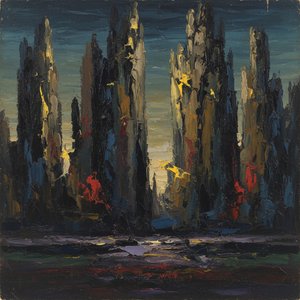
PH-487 (Clyfford Still, 1943)
Clyfford Still (1904–1980) stworzył PH-487. Dzieło pochodzi z 1943.
- 1943

 Podgląd w skali 1:1

 Ręcznie malowany obraz olejny
 Wyślij jako kartkę
 Udostępnij
 Karta informacyjna


 Pobierz obraz
 Podobne obiekty
 RTG
 Pokaz slajdów
 Pytania i odpowiedzi

 Statystyki
PH-487 w skrócie
- Tytuł
- PH-487
- Artysta
- Clyfford Still (1904–1980)
- Miejsce urodzenia artysty
- Grandin, Stany Zjednoczone
- Data powstania
- 1943
Zdjęcia w wysokiej rozdzielczości dzieła PH-487

Chronione prawem autorskim: pliki te służą wyłącznie do osobistego wglądu i nie stanowią licencji na ich powielanie.
Clyfford Still, PH-487 (1943).
Odpowiedzi na pytania dotyczące PH-487
W którym roku powstało „PH-487” – Clyfford Still?
Powstanie „PH-487” – Clyfford Still datuje się na 1943.
Czy dzieło "PH-487" znajduje się w domenie publicznej?
„PH-487” – Clyfford Still znajduje się w domenie publicznej (nadal objęte ochroną prawa autorskiego). Status ten określa zasady reprodukcji obrazu tego dzieła.
Kto jest autorem dzieła "PH-487"?
„PH-487” zostało stworzone przez Clyfford Still. Informacje na tej stronie dotyczą oryginalnego dzieła autorstwa Clyfford Still.
Ile lat miał Clyfford Still, gdy powstało dzieło „PH-487”?
Clyfford Still stworzył/a "PH-487" w wieku 39 lat. Artysta urodził/a się w 1904, a datowanie dzieła to 1943.
Czy dzieło „PH-487” autorstwa Clyfford Still znajduje się w domenie publicznej i dlaczego?
Dzieło "PH-487" autorstwa Clyfford Still znajduje się w nadal objęte ochroną prawa autorskiego. Okres ochrony praw autorskich liczony jest od daty śmierci artysty, a Clyfford Still zmarł(a) w 1980.
O artyście: Clyfford Still

1904–1980, Stany Zjednoczone
Clyfford Still
A Pioneer of Abstract Expressionism: The Life and Art of Clyfford Still Clyfford Still, born in 1904 amidst the vast landscapes of Grandin, North Dakota, stands as a pivotal figure in the evolution of American art. His journey, marked by an unwavering commitment to artistic integrity and a relentless exploration of form and color, positioned him among the leading lights of Abstract Expressionism. Though often overshadowed by contemporaries like Jackson Pollock and Mark Rothko, Still’s contribution was foundational; he ventured into non-figurative painting earlier than many of his peers, forging a path toward a new visual language that would profoundly influence modern art. His early life, spent moving between North Dakota, Washington, and Alberta, Canada, instilled in him a deep connection to the natural world – a resonance that would echo throughout his artistic career.
Inne prace Clyfford Still
 PH-2471951
 PH-10071976
 Untitled1946
 1948 C1948
Eseje o PH-487
 Clyfford Still's Abstract Expressionism: A Study of Color, Form & the Existential LandscapeExplore the profound world of Clyfford Still's Abstract Expressionism with OriginalUniqueArt. Discover his unique style, existential themes…
 British artworks of the 1940sIconic 1940s British works by Henry Moore and Barbara Hepworth define an era. Explore the full collection online at OriginalUniqueArt.com.
 The Architecture of Quietude: A Study of Domestic Stillness in Art HistoryExplore the mastery of light and stillness from Dutch Masters to Impressionism. Discover the art of domestic quietude today.